
खाली मैदान का नन्हा पौधा
The Sapling on the Empty Plot
गाजियाबाद के वैशाली उपनगर में कंक्रीट के ऊँचे-ऊँचे अपार्टमेंट्स के बीच एक पांच सौ गज का खाली लावारिस भूखंड पड़ा हुआ था। पिछले दस वर्षों से वह भूखंड पूरी कॉलोनी का सबसे बदबूदार और शर्मनाक कलंक बन चुका था। आसपास के निवासी रात के अंधेरे में अपने घरों का कचरा, सड़ा हुआ खाना, प्लास्टिक की थैलियाँ और निर्माण का जहरीला मलबा उसी खाली प्लॉट में फेंक जाते थे। बारिश के दिनों में वहाँ सड़े हुए पानी का काला दलदल बन जाता था जिसमें लाखों मच्छर पनपते थे और डेंगू तथा मलेरिया का प्रकोप फैलता था। कॉलोनी की रेजिडेंट वेलफेयर एसोसिएशन की बैठकों में लोग हमेशा सरकार और नगर निगम को गालियाँ देते थे, परंतु उस कचरे को हटाने के लिए स्वयं एक तिनका भी नहीं उठाते थे।
Sandwiched between towering concrete high-rises in the bustling suburb of Vaishali, Ghaziabad, lay an abandoned five-hundred-square-yard vacant plot. Over a decade of civic neglect, this unattended parcel had metastasized into an open-air biohazard—a foul, rotting municipal dumping ground choked with household refuse, medical waste, construction detritus, and plastic debris. During monsoon deluges, stagnant black sludge accumulated in deep craters, breeding millions of mosquitoes and triggering recurrent epidemics of dengue and chikungunya. In monthly residential association meetings, affluent citizens vehemently cursed the municipality and local politicians, yet not a single resident lifted a finger to clean the catastrophic blight festering beneath their balconies.
उसी कॉलोनी में रहने वाली ग्यारह वर्षीय नन्हीं छात्रा मीरा कक्षा छठवीं में पढ़ती थी। मीरा के अंतर्मन में प्रकृति के प्रति एक अव्यक्त, गहरा और अलौकिक प्रेम था। जुलाई के महीने में जब हल्की बारिश हुई, मीरा उस खाली प्लॉट के पास से गुजर रही थी। तभी उसकी नजर मलबे के एक विशाल पहाड़ के नीचे टूटे हुए सीमेंट के स्लैब की संकरी दरार पर पड़ी। उस दरार के बीच से दो नन्हीं, चमकीली हरी पत्तियाँ आकाश की ओर सिर उठाए जीवन की भीख माँग रही थीं—वह एक नन्हा सा जंगली नीम का पौधा था जो कचरे के उस भयानक नरक के बीच भी जीने की जिद कर रहा था।
Living in an adjoining apartment block was eleven-year-old Meera, a quiet sixth-grader whose heart possessed an intuitive, reverent kinship with the living earth. Walking home from school during a July drizzle, Meera paused beside the rusted boundary wire. Her sharp eyes penetrated the mountain of grey rubble, locking onto a microscopic miracle: pushing through a hairline fissure in a discarded slab of lead-painted concrete was a solitary, vibrant emerald shoot—a wild Neem sapling barely two inches tall, defiantly reaching toward the sunlight from the belly of a toxic hell.
उस नन्हे पौधे की जीजिविषा ने मीरा के कोमल हृदय को छू लिया। उसने सोचा—'यदि इस नन्हे पौधे में इस नरक के बीच भी जीने का इतना साहस है, तो क्या मनुष्य होकर मैं इसे मरने दूँगी?' अगली सुबह जब सूरज भी ठीक से नहीं उगा था, मीरा घर से एक खुरपी, पुराने कपड़े और पानी की बाल्टी लेकर उस कचरे के मैदान में कूद पड़ी। उसने अपने नन्हे हाथों से पौधे के चारों ओर फैले नुकीले कांच, प्लास्टिक की थैलियों और सड़े हुए कचरे को हटाना शुरू किया। बालकनी से झांकते हुए कुछ पड़ोसियों ने हँसते हुए फब्तियाँ कसीं—'अरे कर्नल साहब की पोती देखो! क्या पागल लड़की है, सुबह-सुबह कचरे में हाथ गंदे कर रही है! वह घास का तिनका दो दिन में सूख जाएगा!'
The ferocious tenacity of that tiny spark of life ignited an unshakeable maternal devotion within the young girl’s soul. She whispered to the wind: 'If this fragile seedling possesses the divine courage to fight through concrete and poison, I will be its shield!' At dawn the following morning, armed with a rusted garden trowel, heavy gloves, and a galvanized watering can, Meera climbed over the rubble embankment. With bleeding knuckles, she painstakingly cleared shattered fluorescent tubes, jagged iron rebars, and rotting plastic from the sapling's perimeter. Cynical neighbors leaning over their tea balconies smirked: 'Look at the colonel’s granddaughter playing ragpicker in the filth! Hey girl, that weed will rot in forty-eight hours; go inside and study!' Meera offered no rebuttal, quietly wiping sweat from her forehead.
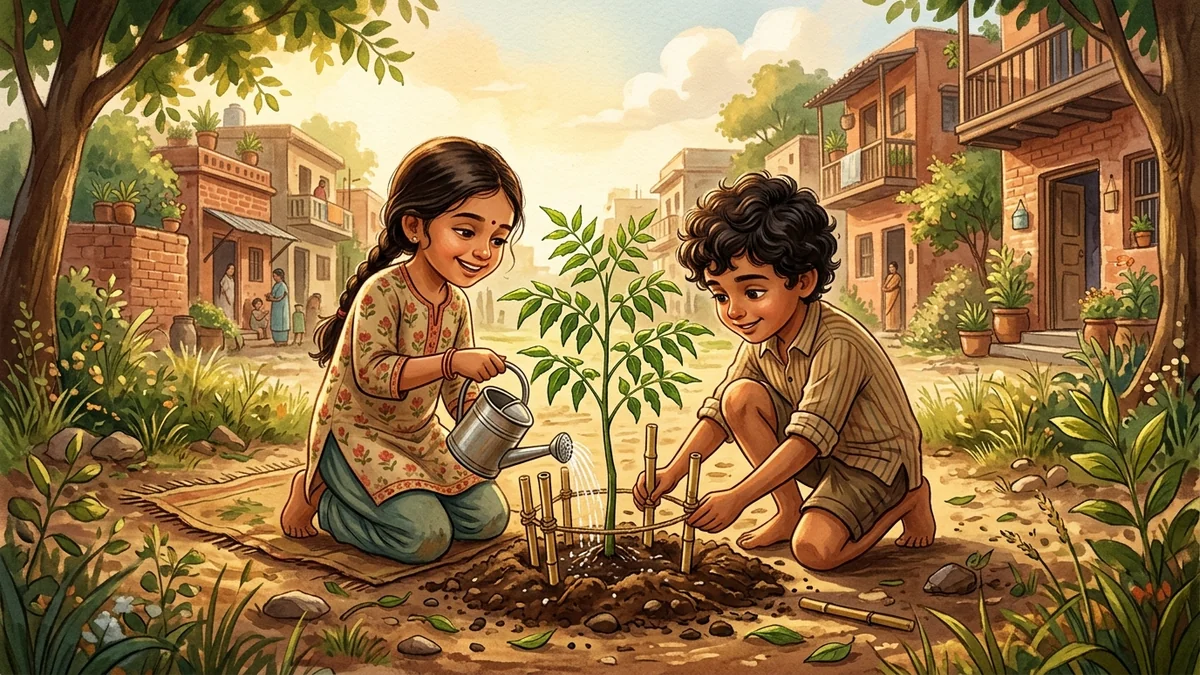
मीरा ने उन उपहासों की ओर कान नहीं दिए। उसने पास के बगीचे से सूखी लकड़ियाँ और पुराने बाँस इकट्ठे किए और उस नन्हे नीम के चारों ओर एक मजबूत सुरक्षात्मक बाड़ बना दी ताकि आवारा सुअर और बकरियाँ उसे न खा सकें। वह प्रतिदिन सुबह विद्यालय जाने से पहले और शाम को लौटने के बाद घर से दो-दो बाल्टियाँ पानी भरकर लाती और उस पौधे की जड़ों को सींचती। जब मई और जून की भीषण गर्मी आई और तापमान 46 डिग्री तक पहुँच गया, तो नीम की कोमल पत्तियाँ मुरझाने लगीं। मीरा ने हार नहीं मानी; उसने विज्ञान की कक्षा में पढ़ा 'ड्रिप इरिगेशन' याद किया। उसने कोल्ड ड्रिंक की पुरानी खाली बोतलों के ढक्कन में सुई से बारीक छेद किए, उनमें धागे पिरोए और उन्हें पौधे के ऊपर उल्टा लटका दिया जिससे दिन-रात बूँद-बूँद पानी सीधे जड़ों में गिरता रहा।
Ignoring the cynical laughter, Meera persevered with monastic resolve. Scavenging discarded bamboo laths and construction wire, she engineered a fortified palisade around the shoot to defend it from feral goats and stray cattle. Every morning before the school bus arrived, and every afternoon upon her return, she hauled heavy buckets of water down the apartment stairs, saturating the parched roots. When the brutal northern heatwave struck the capital in late spring, pushing the mercury to a blistering 46 degrees Celsius, the tender leaves began to shrivel. Refusing to let life surrender, Meera operationalized the drip-irrigation principles she had studied in biology: salvaging discarded two-liter plastic bottles, she punctured the caps with a heated needle, threaded cotton wicks through the apertures, and suspended the inverted reservoirs above the sapling, delivering a continuous, life-saving IV-drip of cool moisture directly to the root bulb.
एक नन्हीं बच्ची की इस मूक और अडिग तपस्या ने धीरे-धीरे पूरे मोहल्ले के सोए हुए विवेक पर हथौड़े का काम किया। कॉलोनी के वयोवृद्ध सेवानिवृत्त कर्नल बख्शी जी रोज अपनी बालकनी से उस नन्हीं बालिका को उस भयानक कचरे में पसीना बहाते देखते थे। एक रविवार की सुबह कर्नल साहब अपने हाथ में बड़ा फावड़ा लेकर उस प्लॉट में उतर आए। उन्हें देखकर मोहल्ले के चार अन्य युवक दौड़े। फिर कॉलोनी की महिलाएं बाल्टियाँ और झाड़ू लेकर आ गईं। एक ग्यारह वर्ष की बच्ची के मौन संकल्प ने पूरे समुदाय के भीतर छिपी निष्क्रियता को तोड़ दिया! उस रविवार को अस्सी परिवारों ने मिलकर 'श्रमदान' का शंखनाद किया। नगर निगम से विशेष डंपर मंगाए गए और मात्र तीन हफ्तों के भीतर तीस टन कचरा वहाँ से हटाकर फेंक दिया गया!
The silent, unyielding heroism of this eleven-year-old child hammered relentlessly upon the calcified conscience of the entire neighborhood. Retired Brigadier Bakshi, an eighty-two-year-old decorated war veteran, watched from his veranda every morning as the child carried buckets through the stench. On a Sunday morning, unable to bear the silent rebuke of his own passivity, the old soldier gripped a heavy spade and marched into the wasteland. Seeing the decorated veteran digging beside the little girl, four college youths dropped their smartphones and grabbed iron bars. By noon, dozens of residents—bankers, engineers, homemakers, and grandparents—swarmed into the trench armed with wheelbarrows and brooms. Meera’s solitary moral candle had ignited an unstoppable civic blaze! Over three consecutive weekends of collective labor, thirty tons of industrial rubble were cleared, and the municipal board was forced to deploy heavy earthmovers.
जहाँ कल तक सड़ांध और बदबू का नर्क था, वहाँ पूरे मोहल्ले ने मिलकर उपजाऊ मिट्टी की परत बिछाई। मीरा के उस नीम के पौधे को केंद्र में रखकर चारों ओर पीपल, बरगद, अमलतास और गुलमोहर के डेढ़ सौ पेड़ रोपे गए। पूरे क्षेत्र में सुंदर पगडंडियाँ बनाई गईं और एक सुंदर 'कम्युनिटी ग्रीन पार्क' स्थापित किया गया। सात वर्ष बीत गए। आज वह नन्हा नीम का पौधा पच्चीस फुट ऊँचा एक विशाल, हरा-भरा, घनी छाँव और औषधीय वायु देने वाला भव्य वृक्ष बन चुका है जिसकी शाखाओं पर सैकड़ों पक्षी चहचहाते हैं और जिसके नीचे बुजुर्ग बैठकर सत्संग करते हैं। पार्क के मुख्य द्वार पर लगे संगमरमर के शिलालेख पर लिखा है—'मीरा उपवन: एक नन्हे संकल्प की अमर विजय'। यह कथा सिद्ध करती है कि संसार की बुराई और पर्यावरण के विनाश का रोना रोने वाले कायर होते हैं; जब एक अकेला इंसान भी प्रकृति के प्रति सच्चा प्रेम लेकर खड़ा हो जाता है, तो वह बंजर पत्थरों में से भी जीवन का हरा-भरा स्वर्ग रचने का सामर्थ्य रखता है।
Where once lay an open sewer of rot and shame, the community brought in truckloads of fertile loamy topsoil. Encircling Meera’s heroic Neem sapling as their sacred anchor, they planted one hundred and fifty indigenous shade trees—Banyans, Peepals, Indian Laburnums, and Gulmohars. Paved walking tracks were laid, floral shrubs blossomed, and an automated irrigation perimeter was installed. Seven years elapsed. Today, that fragile two-inch shoot stands as a monumental thirty-foot arboreal giant—its fragrant, dense canopy whispering in the mountain breeze, hosting hundreds of singing cuckoos, and offering restorative shade to elderly walkers. Etched upon the polished granite archway of the sanctuary is the inscription: 'MEERA UPVAN: Born from the Sacred Will of a Single Child.' The eternal moral echoes across a wounded planet: do not waste breath lamenting the desecration of the earth; when a single soul refuses to surrender to cynicism and resolves to nurture even the tiniest green spark, she possesses the power to resurrect paradise from the ashes of neglect.