
स्वच्छ मोहल्ले का संकल्प
The Clean Lane Challenge
वाराणसी के दशाश्वमेध घाट के समीप स्थित प्राचीन आवासीय मोहल्ला 'गोपाल गली' अपनी सैकड़ों वर्ष पुरानी ऐतिहासिक इमारतों और नक्काशीदार लकड़ी के झरोखों के लिए जाना जाता था। परंतु उस समृद्ध विरासत के विपरीत, वर्तमान में उस गली की स्थिति किसी खुले नरक से कम न थी। संकरी सीलन भरी गली के दोनों किनारों पर बहने वाली खुली नालियाँ प्लास्टिक की बोतलों, सड़ी सब्जियों और पॉलीथिन से हमेशा चोक रहती थीं। सदियों पुरानी चूने की दीवारों पर पान और गुटखे की पीक के वीभत्स लाल धब्बे पुते हुए थे, और जगह-जगह कचरे के ऐसे सड़ते हुए ढेर लगे थे जिन पर आवारा सांड और कुत्ते लड़ते रहते थे।
Bordering the historic Dashashwamedh Ghat in Varanasi, the ancient alleyway of 'Gopal Gali' boasted a centuries-old heritage of intricately carved wooden balconies and stone arches. Yet in stark, tragic contrast to its architectural glory, the contemporary reality of the lane had degenerated into a civic nightmare. Open masonry storm-drains running along the cobblestones were perpetually choked with single-use plastics, rotting vegetable offal, and domestic sewage. Centuries-old lime-washed facades were vandalized by foul scarlet stains of masticated betel-nut spit, and towering mounds of decomposing domestic refuse were contested by stray bulls and packs of feral dogs.
गली के निवासियों का पाखंड देखने लायक था। हर शाम मोहल्ले के दुकानदार, शिक्षक और व्यापारी चबूतरों पर पान चबाते हुए बैठते और देश की दुर्दशा पर लंबी-लंबी बहसें करते। वे नगर निगम के सफाईकर्मियों को 'चोर और कामचोर' कहकर गालियाँ देते और सरकार की नीतियों को कोसते थे। परंतु अगली ही सुबह वही सम्मानित नागरिक अपने घरों के दरवाजे खोलते और अपने घर का सारा कचरा, गंदा पानी और जूठन सीधे बीच गली में फेंक देते थे! यदि कोई पड़ोसी टोक देता, तो लोग मरने-मारने पर उतारू हो जाते थे। पूरी गली दुर्गंध और मक्खियों से बजबजा रही थी।
The psychological hypocrisy of the township was staggering. Every evening, local merchants, retired clerks, and educated patriarchs sat upon the stone steps masticating betel quids, delivering grandiloquent lectures on the civic degeneration of India. They cursed the municipal corporation and municipal sweepers as corrupt, lazy scoundrels. Yet the following dawn, those very same citizens swung open their carved shutters, hurling plastic bags of rotting food waste, vegetable peels, and dirty dishwater directly into the center of the cobblestone street! When an errant pedestrian protested, violent shouting matches erupted. The lane choked in an ocean of flies and stench.
उसी गली में रहने वाली ग्यारहवीं कक्षा की छात्रा दीपा अपनी पर्यावरण विज्ञान की पुस्तक पढ़ रही थी। जब उसने पढ़ा कि 'गांधीजी ने कहा था कि स्वच्छता स्वतंत्रता से भी अधिक महत्वपूर्ण है और वास्तविक परिवर्तन अपने आप से शुरू होता है', तो दीपा का अंतर्मन जाग उठा। उसने सोचा—'हम सब दूसरों के सुधरने की प्रतीक्षा क्यों करते हैं? यदि यह मेरी गली है, तो इसे साफ रखना मेरा भी कर्तव्य है।' दीपा ने किसी से कोई चंदा नहीं माँगा। उसने अपने जन्मदिन के लिए बचाए गए पाँच सौ रुपयों से दो बड़े बाँस के झाड़ू, रबर के मोटे दस्ताने, चूना और लोहे का एक बड़ा कचरा उठाने वाला तसला खरीदा।
Living within the alley was eleventh-grader Deepa, an intellectually fearless student immersed in her environmental science curriculum. Reading Mahatma Gandhi’s foundational maxim—'Sanitation is more important than independence, and true change begins within one's own hands'—an ethical awakening electrified her soul. She asked her conscience: 'Why do we perpetually demand that the municipality be our saviors while we actively desecrate our own home? If this alley is my motherland, its dignity is my sacred responsibility!' Deepa solicited zero donations. Liquidating the five hundred rupees saved for her upcoming birthday, she purchased two heavy-duty coir sweepers, industrial rubber gloves, a spade, and bags of slaked lime disinfectant.
सोमवार की सुबह जब घड़ियों में भोर के ठीक पाँच बज रहे थे और गली में सन्नाटा था, दीपा अपने पुराने कपड़े पहनकर, हाथों में दस्ताने चढ़ाकर गली के सबसे गंदे मोड़ पर उतर आई। उसने बिना किसी हिचकिचाहट के उस सड़ते हुए कीचड़ में झाड़ू लगाना शुरू किया। उसने नालियों में फंसे प्लास्टिक को अपने हाथों से निकाला और तसले में भरकर दूर मुख्य कूड़ेदान में डालना शुरू किया। सुबह छह बजे जब लोगों के दरवाजे खुले और उन्होंने एक सम्मानित स्कूल मास्टर की मेधावी बेटी को घुटनों के बल बैठकर नाली साफ करते देखा, तो लोग ठिठक गए। कुछ लोगों ने हँसते हुए व्यंग्य कसा—'अरे मास्टर जी की बिटिया को क्या पागलपन का दौरा पड़ा है? यह तो भंगी बन गई!' परंतु दीपा ने अपना सिर नहीं उठाया; उसकी झाड़ू बिना रुके चलती रही।
At precisely five o’clock on a chilly Monday morning, while the ancient street lay shrouded in pre-dawn mist, Deepa tied a bandana over her mouth, donned her rubber gauntlets, and stepped into the foulest corner of the alley. Without an ounce of hesitation or false vanity, she thrust her coir broom into the rotting sludge. Bending into the open trench, her gloved hands dredged out mountains of choked polythene, shoveling the toxic mud into galvanized pans and hauling them to the municipal dumpster three hundred yards away. At six-thirty, as shutters rattled open and residents emerged for morning prayers, shock froze their steps. Seeing the top-ranking scholarship student of the district kneeling in their filth, cynical whispers echoed across balconies: 'Has Master-ji’s daughter lost her mind? The girl has become a common street scavenger!' Deepa never lifted her eyes; the rhythmic stroke of her broom continued unabated.
चार दिनों तक दीपा का यह मौन महा-यज्ञ जारी रहा। वह प्रतिदिन दो घंटे पसीना बहाती, कचरा उठाती और बदबूदार स्थानों पर सफेद चूने का छिड़काव करती। उसके हाथों में छाले पड़ गए थे, परंतु उसके चेहरे पर एक दिव्य शांति थी। चौथे दिन सुबह एक अद्भुत घटना घटी। मोहल्ले के सबसे वयोवृद्ध सेवानिवृत्त प्रधानाचार्य, पचहत्तर वर्षीय पंडित विद्याधर जी, अपने घर से बाहर निकले। उनकी आँखें आंसुओं से भरी थीं। उन्होंने बिना एक शब्द कहे अपने घर का झाड़ू उठाया और दीपा के बगल में खड़े होकर नाली साफ करने लगे! कुछ ही पलों में परचून की दुकान चलाने वाले श्यामू भैया अपनी दुकान छोड़कर फावड़ा लेकर आ गए। यह दृश्य देखकर मोहल्ले की खिड़कियों के पीछे छिपे लोगों के हृदयों पर आत्मग्लानि के भारी हथौड़े चले।
For four consecutive mornings, Deepa’s silent, monastic tapasya continued. Hauling fifteen loads of filth each dawn, she sprayed slaked lime across the scrubbed stones. Blisters bloomed across her palms, yet her visage was an icon of serene dignity. On the fourth morning, a psychological dam burst. Seventy-five-year-old retired school principal, Pandit Vidyadhar, stepped onto his flagstones. Gazing upon the solitary girl hauling the filth his own family had tossed, tears of unbearable shame carved tracks down his weathered cheeks. Without uttering a syllable, the venerable scholar gripped his household broom, stepped into the gutter, and began sweeping beside the child! Within minutes, the corner grocer dropped his weighing scales, seizing a shovel. The sight of a frail scholar and a teenage girl cleaning the street acted like lightning upon the calcified conscience of the neighborhood.
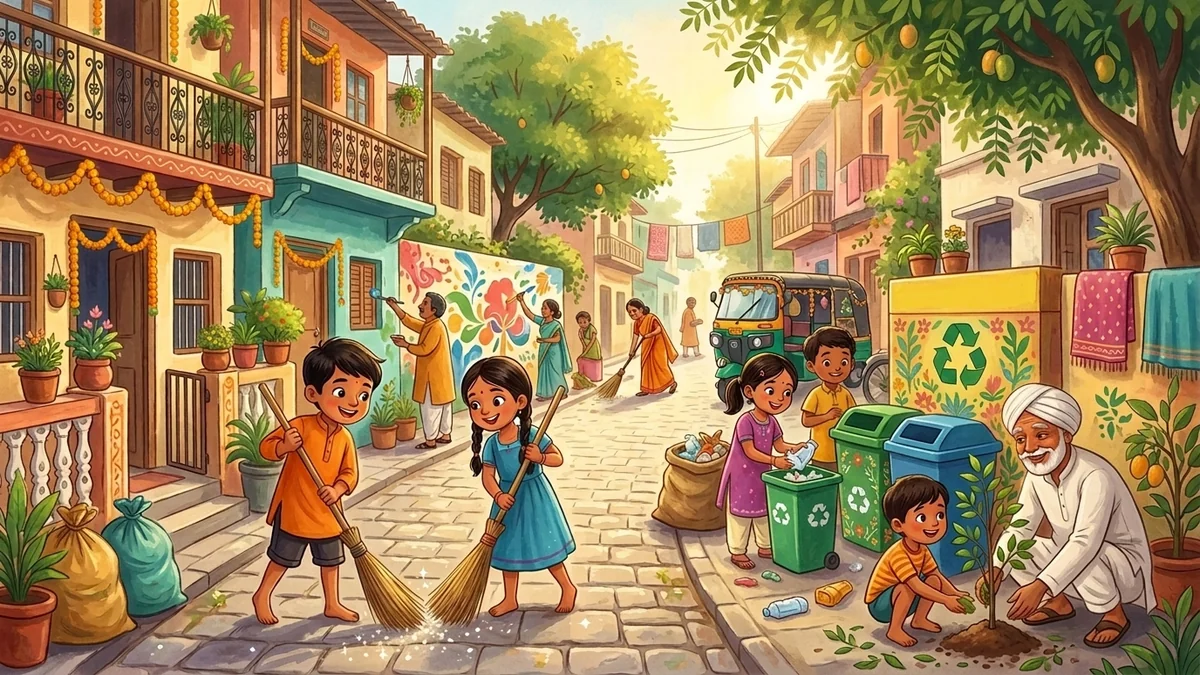
उस दिन के बाद गोपाल गली में जो हुआ, वह इतिहास बन गया। शाम को पूरे मोहल्ले की एक आपातकालीन बैठक बुलाई गई। जिन लोगों ने दीपा का मजाक उड़ाया था, वे उसके चरणों में सिर रखकर रो पड़े। युवाओं ने 'गोपाल गली स्वच्छता सेना' का गठन किया। सभी घरों ने प्रतिज्ञा ली कि कोई भी व्यक्ति कचरा बाहर नहीं फेंकेगा; हर घर के लिए सूखे और गीले कचरे के दो अलग-अलग डस्टबिन अनिवार्य किए गए। नालियों के मुँह पर लोहे की बारीक जालियाँ लगा दी गईं ताकि प्लास्टिक अंदर न जा सके। मोहल्ले के कलाकारों ने मिलकर सदियों पुरानी दीवारों को धोकर उन पर भगवान बुद्ध, कबीर और पर्यावरण संरक्षण के सुंदर मधुबनी चित्र बना दिए। मात्र तीन सप्ताह के भीतर वह बदबूदार नरक जैसी गली पूरे वाराणसी की सबसे आकर्षक, फूलों के गमलों से सजी और सुगंधित 'हेरिटेज मॉडल लेन' में तब्दील हो गई! जब उत्तर प्रदेश के नगर विकास मंत्री ने स्वयं आकर गोपाल गली का निरीक्षण किया, तो वे दंग रह गए। उन्होंने पूरे प्रदेश के लिए 'गोपाल गली मॉडल' लागू करने का आदेश दिया और दीपा को एक लाख रुपये का विशेष 'स्वच्छता रत्न' सम्मान प्रदान किया। दीपा ने वह सम्मान पूरे मोहल्ले के चरणों में समर्पित करते हुए कहा—'स्वच्छता कोई सरकारी काम नहीं, यह हमारे अंतर्मन की पवित्रता का दर्पण है।' यह अमर कथा सिखाती है कि केवल उपदेश देने से संसार कभी नहीं बदलता; जब एक निष्कपट आत्मा बिना अहंकार के सेवा का झाड़ू उठा लेती है, तो वह पूरी दुनिया के कचरे को साफ करके उसे स्वर्ग बनाने की शक्ति रखती है।
What unfolded across Gopal Gali over the next twenty-one days became folklore across the holy city. That very evening, an emergency neighborhood assembly convened upon the temple courtyard. The very men who had mocked Deepa wept openly in repentance, touching the young girl's feet. The youth chartered the 'Gopal Gali Civic Brigade.' An inviolable community covenant was signed: zero littering; mandatory two-bin domestic segregation; and iron mesh traps welded across every drain aperture to catch stray waste. Local fine-arts students washed the lime-plastered walls, adorning the ancient brickwork with magnificent Madhubani folk murals of Kabir, Buddha, and flowing forest rivers. Within three weeks, the putrid cesspool transformed into a sparkling, paved paradise lined with terracotta flowerpots and fragrant jasmine blossoms! When the State Urban Development Minister conducted a surprise inspection, he was spellbound. Announcing the statewide replication of the 'Gopal Gali Civic Model,' he presented Deepa with the prestigious 'State Sanitation Jewel Award.' Folding her hands before the assembled community, Deepa spoke with humble grace: 'Cleanliness is not an administrative burden; it is the living mirror of our spiritual purity.' The eternal truth stands: the world is never transformed by comfortable armchair sermonizing; when a pure soul possesses the humble courage to pick up the broom, she possesses the power to resurrect paradise from the ashes of decay.