युधिष्ठिर और यक्ष प्रश्न
Yudhishthira and the Yaksha's Questions
महाभारत काल में जब पांडव अपने बारह वर्ष के कठोर वनवास का अंतिम वर्ष द्वैतवन के बीहड़ों में व्यतीत कर रहे थे, तो एक दिन एक असहाय ब्राह्मण की अरणी (यज्ञ की लकड़ी) एक तेज दौड़ते हुए मृग के सींगों में उलझकर वन में चली गई। ब्राह्मण की प्रार्थना पर पाँचों पांडव उस मायावी मृग का पीछा करते हुए घने जंगलों में मीलों तक दौड़ते रहे। ज्येष्ठ मास की चिलचिलाती धूप, भूख और भीषण प्यास से पाँचों भाई निढाल हो गए। अंततः एक विशाल बरगद के वृक्ष की छाया में वे गिर पड़े। उनके गले कांटों की तरह सूख रहे थे और उनका चलना भी असंभव हो गया था।
During the twelfth year of their arduous forest exile, while traversing the rugged wilderness of the Dwaitavana, a distressed hermit implored the Pandavas to recover his sacred fire-drills (arani), which had caught in the antlers of a fleeing stag. The five brothers pursued the phantom beast through dense ravines under the blazing midsummer sun. Exhausted by the fruitless chase, parched with excruciating thirst, the princes collapsed beneath the canopy of an ancient banyan. Their limbs trembled and their throats burned like dry ash, rendering further progress impossible.
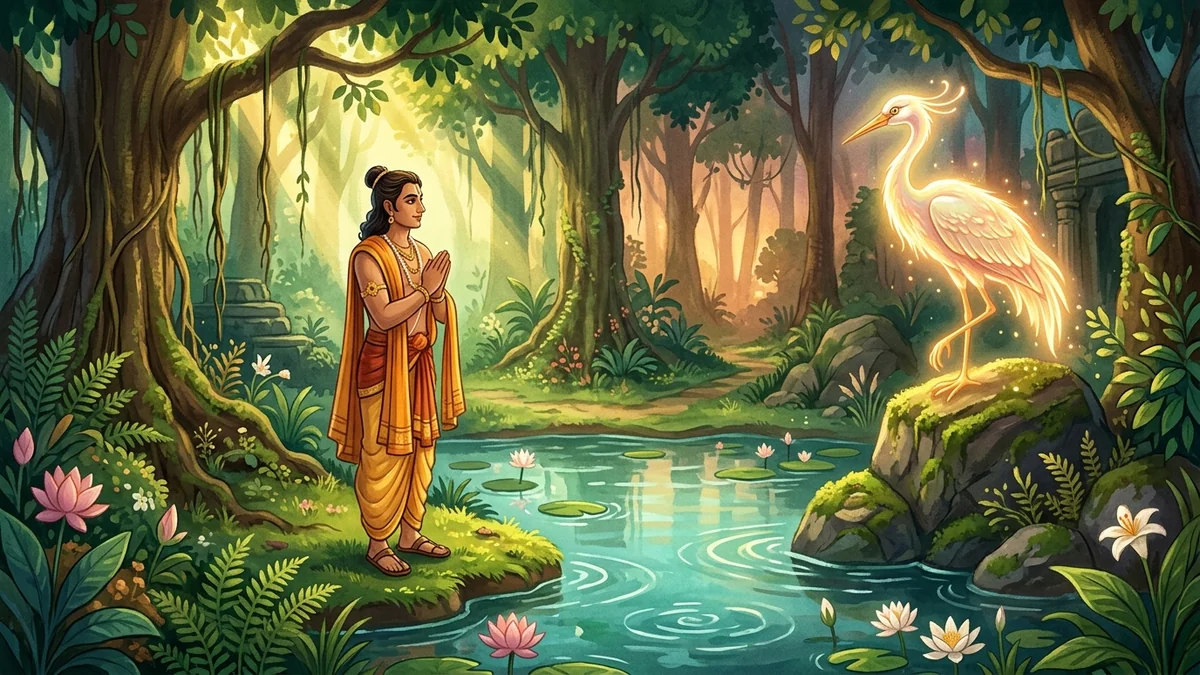
धर्मराज युधिष्ठिर ने सबसे छोटे भाई नकुल से कहा—'अनुज नकुल! किसी ऊँचे वृक्ष पर चढ़कर देखो कि क्या आसपास कहीं जल का कोई स्रोत है?' नकुल ने पेड़ पर चढ़कर देखा कि कुछ ही दूरी पर सारस पक्षी उड़ रहे हैं और हरी दूब दिखाई दे रही है। युधिष्ठिर की आज्ञा लेकर नकुल तरकश और बाण लिए जल लाने के लिए दौड़े। कुछ ही दूर जाने पर उन्हें एक अत्यंत मनोरम, शीतल और कमल के पुष्पों से आच्छादित विशाल सरोवर दिखाई दिया। जल को देखते ही नकुल अपनी सुध-बुध खो बैठे। उन्होंने अपने धनुष को रखा और अपनी अंजलि में शीतल जल भरकर जैसे ही अपने होठों से लगाने लगे, तभी सरोवर के ऊपर से एक गगनभेदी, गंभीर और अदृश्य वाणी गूँज उठी—'ठहर जा नकुल! दुस्साहस मत कर! यह सरोवर मेरा है। मेरे प्रश्नों का उत्तर दिए बिना यदि तूने इस जल का एक घूंट भी पिया, तो तू उसी क्षण अपने प्राणों से हाथ धो बैठेगा!'
King Yudhishthira addressed Nakula, the youngest: 'Climb a tall tree, brother, and scan the horizon for water.' Scaling a high bough, Nakula observed cranes circling over a grove and verdant water reeds glistening in the distance. Armed with his quiver, Nakula hastened toward the spot, discovering an enchanting, crystal-clear lake fringed by fragrant lotuses. Delirious with thirst, he cast aside his bow and knelt, scooping the liquid into his cupped palms. But as the water neared his parched lips, a thunderous, disembodied voice boomed from the heavens: 'Hold, Nakula! Commit not this fatal folly! This pool is my ancestral domain. Answer my questions first; if you drink without my consent, you shall perish upon the spot!'
प्यास की तीव्रता इतनी भयानक थी कि नकुल ने उस चेतावनी को हवा में उड़ा दिया। उन्होंने सोचा कि यह केवल कोई भ्रम है। उन्होंने जल पी लिया। पानी गले से उतरते ही एक तीखा विष उनके शरीर में फैल गया और वे निश्चेष्ट होकर हरी घास पर गिर पड़े। जब बहुत देर तक नकुल नहीं लौटे, तो युधिष्ठिर ने सहदेव को भेजा। सहदेव ने अपने भाई को मृत पड़ा देखा, परंतु प्यास के आवेग में उन्होंने भी यक्ष की चेतावनी की अवहेलना की और वे भी निष्प्राण हो गए। इसके बाद धनुर्धर अर्जुन और गदाधारी भीमसेन भी आए। दोनों महाबली योद्धाओं ने क्रोध में आकर अदृश्य यक्ष पर अपने बाणों और गदा से प्रहार करने का प्रयास किया, परंतु अदृश्य शक्ति के सम्मुख बाहुबल निष्फल रहा। दोनों ने भी जल पीया और वहीं वीरगति को प्राप्त हो गए।
Blinded by the agony of dehydration, Nakula dismissed the warning as an illusion of the wind. He drank deeply. The moment the water passed his throat, a deadly celestial numbness seized his heart, and he collapsed lifeless upon the moss. When Nakula failed to return, Yudhishthira dispatched Sahadeva. Beholding his twin brother’s corpse, Sahadeva was wracked with grief, yet desperate thirst compelled him to drink; he too collapsed dead. Next came the peerless archer Arjuna, and then the colossal Bhima. Both warriors attempted to assault the invisible challenger with divine arrows and maces, yet physical weapons were useless against an incorporeal entity. Maddened by thirst, both drank, falling lifeless beside their brothers.
जब चारों भाइयों में से कोई नहीं लौटा, तो चिंतित युधिष्ठिर स्वयं उस सरोवर के तट पर पहुँचे। वहाँ का दृश्य देखकर उनके पैरों तले की जमीन खिसक गई। संसार के अजेय महारथी—भीम, अर्जुन, नकुल और सहदेव—धनुष-बाणों सहित निष्प्राण पड़े थे! युधिष्ठिर छाती पीटकर रोने लगे—'हाय! क्या हमारे वनवास का यह अंत होना था? जिस अर्जुन और भीम को देवता भी परास्त नहीं कर सकते थे, वे यहाँ बिना किसी युद्ध के कैसे मारे गए?' परंतु युधिष्ठिर धर्म के अवतार थे; उन्होंने अपने शोक पर नियंत्रण पाया। उन्होंने देखा कि भाइयों के शरीरों पर न तो किसी अस्त्र का घाव था और न ही किसी हिंसक पशु के पंजों के निशान थे। उनके चेहरों पर एक अलौकिक शांति थी।
Alarmed by the prolonged silence, King Yudhishthira walked toward the grove himself. Reaching the lake, horror froze his soul. There lay the four invincible guardians of the world—Bhima, Arjuna, Nakula, and Sahadeva—stretched out cold and lifeless upon the turf, their celestial weapons scattered in the dirt. Yudhishthira wept bitter tears of fraternal agony: 'Is this the cruel conclusion of our exile? Could mortal arms fell Arjuna, or mere beasts overpower Bhima?' Yet even in the darkest abyss of grief, Yudhishthira’s intellect remained lucid. Inspecting the corpses, he noted no spear wounds, no traces of struggle, and no poison foam upon their lips. Their countenances radiated an eerie, supernatural repose.
जैसे ही प्यासे युधिष्ठिर जल के निकट पहुँचे, पुनः वही गगनभेदी वाणी गूँजी—'युधिष्ठिर! तुम्हारे भाइयों ने मेरे वचनों की अवहेलना की थी, इसलिए वे मृत्यु को प्राप्त हुए। यदि तुम जीवित रहना चाहते हो, तो पहले मेरे प्रश्नों का उत्तर दो, उसके पश्चात ही इस जल को ग्रहण करो!' युधिष्ठिर ने हाथ जोड़े और अत्यंत शांत भाव से कहा—'हे अदृश्य देव! मैं आपके अधिकार का अनादर नहीं करना चाहता। आप प्रश्न पूछिए, मैं अपनी अल्प बुद्धि के अनुसार उत्तर देने का यत्न करूँगा।' यक्ष ने तब संसार के सबसे गूढ़ प्रश्न पूछने आरंभ किए:
यक्ष: 'सूर्य को कौन उदित करता है और उसका रक्षक कौन है?'
युधिष्ठिर: 'ब्रह्म सूर्य को उदित करता है और धर्म उसका रक्षक है।'
यक्ष: 'पृथ्वी से भारी क्या है, और आकाश से ऊँचा कौन है?'
युधिष्ठिर: 'माता का स्थान पृथ्वी से भी भारी है, और पिता का स्थान आकाश से भी ऊँचा है।'
यक्ष: 'वायु से भी तेज गति किसकी है, और तिनके से भी अधिक असंख्य क्या है?'
युधिष्ठिर: 'मन की गति वायु से भी तेज है, और मनुष्य की चिंताएँ तिनके से भी अधिक असंख्य हैं।'
यक्ष: 'संसार का सबसे बड़ा आश्चर्य क्या है?'
युधिष्ठिर: 'प्रतिदिन अनगिनत प्राणी यमलोक (मृत्यु) को प्रस्थान करते हैं, यह सब अपनी आँखों से देखते हुए भी जो शेष बचे हैं वे सदा जीवित रहने की इच्छा करते हैं; इससे बड़ा आश्चर्य संसार में और क्या हो सकता है?'
As Yudhishthira approached the water's edge, the disembodied voice boomed once more: 'Yudhishthira! Your brothers despised my words and met their doom. If you desire life, answer my questions before you taste a single drop!' Yudhishthira folded his hands in supreme humility: 'O celestial being! I seek no unlawful trespass upon your domain. Pose your questions; I shall answer according to the light of Dharma.' The Yaksha then unleashed a volley of profound metaphysical riddles:
Yaksha: 'What makes the sun rise, and who attends him?'
Yudhishthira: 'Brahman (the Absolute) makes the sun rise, and Dharma attends him.'
Yaksha: 'What is heavier than the earth, and what is higher than the heavens?'
Yudhishthira: 'The Mother is heavier than the earth, and the Father is higher than the heavens.'
Yaksha: 'What travels faster than the wind, and what is more numerous than blades of grass?'
Yudhishthira: 'The Mind travels swifter than the wind, and the worries of the heart are more numerous than blades of grass.'
Yaksha: 'What is the greatest wonder in all the universe?'
Yudhishthira: 'Every single day, countless mortals depart for the realm of Death; yet those who remain live as though they shall never die. What wonder can surpass this blindness?'
युधिष्ठिर ने यक्ष के समस्त अड़तालीस प्रश्नों का ऐसा सटीक, शांत और अद्वितीय उत्तर दिया कि यक्ष का हृदय आनंद से भर उठा। यक्ष ने कहा—'हे धर्मराज! तुम्हारी प्रज्ञा और सत्यनिष्ठा की कोई तुलना नहीं है। मैं अत्यंत प्रसन्न हूँ। मैं तुम्हारे किसी एक मृत भाई को पुनः जीवनदान देने को तैयार हूँ। बताओ, तुम किसे जीवित देखना चाहते हो?' युधिष्ठिर ने एक क्षण का भी संकोच किए बिना कहा—'हे यक्षराज! नकुल को जीवित कर दीजिए।' यक्ष चकित रह गया और उसने पूछा—'युधिष्ठिर! जिसके पास सोलह हजार हाथियों का बल है उस भीम को तुमने छोड़ दिया? जिसकी गांडीव की टंकार से तीनों लोक कांपते हैं उस अर्जुन को छोड़ दिया? तुमने अपनी सौतेली माता के पुत्र नकुल को क्यों चुना?' युधिष्ठिर ने हाथ जोड़कर वह अमर उत्तर दिया जो धर्म का सर्वोच्च शिखर है—'हे यक्षराज! मेरे पिता पांडु की दो पत्नियाँ थीं—माता कुंती और माता माद्री। मैं कुंती का पुत्र जीवित हूँ, अतः मेरी माँ सर्वथा निपुत्री नहीं हुई। परंतु मेरी दूसरी माँ माद्री का कोई पुत्र जीवित नहीं है। धर्म का तकाजा है कि मैं दोनों माताओं के साथ समान न्याय करूँ ताकि माद्री माँ का कुल भी समाप्त न हो। इसलिए मैं नकुल का जीवन माँगता हूँ।' युधिष्ठिर की इस निष्काम, अगाध और निष्पक्ष धर्मनिष्ठा को देखकर यक्ष साक्षात धर्मराज यम के दिव्य रूप में प्रकट हो गए। उन्होंने युधिष्ठिर को गले से लगा लिया और कहा—'हे धर्मराज! तुम्हारे जैसा धर्मात्मा तीनों लोकों में नहीं है।' यमराज ने अमृत छिड़ककर भीम, अर्जुन, नकुल और सहदेव—चारों भाइयों को जीवित कर दिया और पांडवों को अज्ञातवास में विजयी होने का आशीर्वाद दिया। यह कथा सिखाती है कि चाहे कितना भी बड़ा संकट क्यों न आ जाए, जो मनुष्य धैर्य, संयम और धर्म का पल्ला नहीं छोड़ता, स्वयं मृत्यु भी उसकी रक्षा करती है।
Yudhishthira answered every profound riddle with unblemished philosophical wisdom. The celestial voice resonated with delight: 'O King of Righteousness, your wisdom is peerless. I grant you the life of one brother of your choice. Declare whom you wish revived!' Without a heartbeat's hesitation, Yudhishthira replied: 'Let Nakula arise and live.' Stunned, the Yaksha asked: 'How strange, Yudhishthira! You forsake Bhima, possessing the strength of ten thousand elephants? You abandon Arjuna, whose Gandiva bow shields your destiny? Why choose the son of a stepmother over your own blood brothers?' Yudhishthira delivered the immortal reply of cosmic justice: 'O Yaksha, my father Pandu had two wives: Queen Kunti and Queen Madri. I, a son of Kunti, survive to offer oblations; therefore, my mother is not entirely bereft. But if Nakula remains dead, mother Madri’s lineage is extinguished forever. Equality of maternal grief and unbending justice demand that both mothers retain a living son. Therefore, I choose Nakula.' Hearing this supreme embodiment of selflessness and cosmic justice, the Yaksha revealed his divine identity as Lord Yama, the celestial God of Dharma. Embracing his spiritual son, Dharma proclaimed: 'In all the three realms, none rivals your righteousness!' Sprinkling celestial nectar, Dharma restored Bhima, Arjuna, Nakula, and Sahadeva to vibrant life, blessing the Pandavas with invincibility. The immortal epic stands as an eternal beacon: when adversity strikes like a deluge, he who holds fast to composure, equanimity, and justice transforms catastrophic ruin into absolute spiritual triumph.