साझा औज़ारों की कुटिया
The Shared Tool Shed
जब सामुदायिक भवन की कुछ कुर्सियों की मरम्मत करनी थी, तो पड़ोसियों को एहसास हुआ कि सबके पास अलग-अलग औज़ार थे — पर वे किसी को पता नहीं थे। एक के पास पेंचकस था, दूसरे के पास हथौड़ा, तीसरे के पास रेती। अगर ये मिल जाते तो काम हो सकता था — पर हर बार नए औज़ार खरीदना भी ज़रूरी नहीं था। किसी ने कहा, "क्यों न हम मिलकर एक साझा औज़ार-कुटिया बनाएँ जहाँ जो चाहे उधार ले सके?" विचार सबको पसंद आया — पर सवाल था: यह काम करेगा कैसे?
When some chairs in the community hall needed fixing, neighbours realised that different people owned different tools — but nobody knew who had what. One had a screwdriver, another a hammer, a third a file. If these could be pooled, the work could be done — and buying new tools every time wasn't necessary. Someone said, "Why don't we create a shared tool shed together, where anyone can borrow what they need?" Everyone liked the idea — but the question was: how would it actually work?
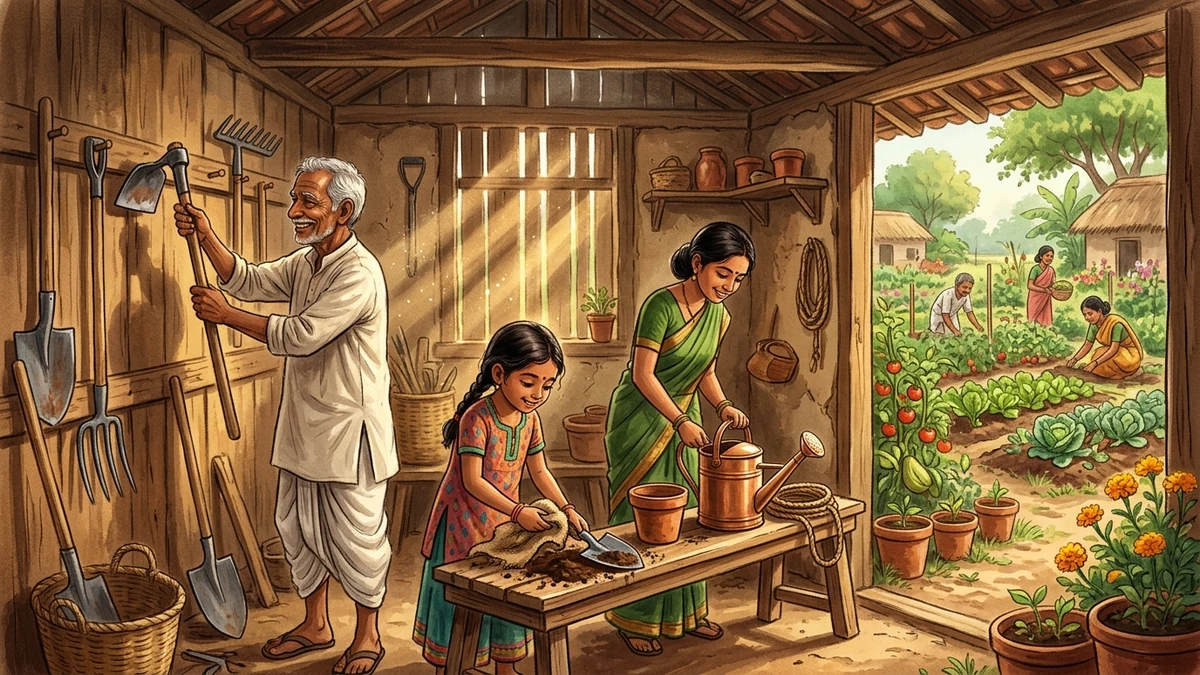
समूह ने पहले उन औज़ारों की सूची बनाई जो लोग उधार देने के लिए तैयार थे। भाग लेना पूरी तरह स्वैच्छिक था — जो देना चाहता था, वह दे सकता था; जो नहीं, उस पर कोई दबाव नहीं था। एक बड़े लकड़ी के बक्से को कुटिया की जगह तय किया गया जो सामुदायिक भवन के बरामदे में रखा गया। हर औज़ार पर एक छोटा लेबल लगाया गया जिस पर उसका नाम और मालिक का नाम लिखा था। किसी का सामान "सामुदायिक" नहीं बन गया — वह अभी भी उसी का था, बस उधार दिया जा सकता था।
The group first made an inventory of tools that people were willing to lend. Participation was entirely voluntary — those who wanted to share could; no one was pressured if they didn't. A large wooden box was designated as the shed and placed in the community hall's veranda. Each tool had a small label with its name and the owner's name. No one's item became "community property" — it still belonged to its owner, and could simply be borrowed.
एक कागज़ी रजिस्टर रखा गया जिसमें लिखा जाता: औज़ार का नाम, किसने उधार लिया, कब लिया, और कब वापस करना है। अगर औज़ार में पहले से कोई खराबी थी — जैसे पेंचकस की पकड़ थोड़ी ढीली — तो वह भी लिखी जाती। इस तरह जब कोई उधार लेता, उसे पता होता कि किस हाल में मिलेगा। देखभालकर्ता के रूप में मोहल्ले के एक बुज़ुर्ग रमेश काका ने ज़िम्मेदारी ली — वे हफ्ते में एक बार औज़ार जाँचते और छोटी मरम्मत करवाते।
A paper log was kept in which everyone recorded: the tool's name, who borrowed it, when it was taken, and when it was to be returned. If a tool already had a minor issue — such as a screwdriver with a slightly loose grip — that was noted too. This way, when someone borrowed it, they knew what condition to expect. As caretaker, an elderly resident Ramesh Kaka took responsibility — he checked the tools once a week and arranged minor repairs.
शुरू में एक पड़ोसी स्पैनर समय पर लौटाना भूल गया। रमेश काका ने सबके सामने आरोप लगाने की बजाय उस पड़ोसी को अकेले में याद दिलाया। अगले दिन स्पैनर वापस आ गया — साथ में वह पड़ोसी खुद आए और बोले, "माफ करना, मैं भूल गया था।" काका ने मुस्कुराकर कहा, "कोई बात नहीं — अगली बार रजिस्टर में वापसी की तारीख लिख देना।" इस तरह भूल को बड़ा मुद्दा बनाए बिना सुलझा लिया गया।
At first, one neighbour forgot to return a spanner on time. Instead of accusing him in front of everyone, Ramesh Kaka quietly reminded him in private. The next day the spanner came back — and the neighbour himself came along saying, "Sorry, I forgot." Kaka smiled and said, "No problem — next time just write the return date in the register." The oversight was resolved without turning it into a big issue.
धीरे-धीरे लोग छोटे घरेलू काम — एक कील ठोकना, एक पाइप कसना — बिना नया सामान खरीदे करने लगे। जब एक पुराना हथौड़ा टूट गया, तो सब मिलकर उसकी जगह नया हथौड़ा लाने का खर्च बाँट लिया — एक-एक रुपये का बोझ सबका था। इससे भी ज़रूरी बात यह हुई कि लोग एक-दूसरे को जानने लगे। "पड़ोसी से काम पड़ना" कोई शर्म की बात नहीं रही — यह एक-दूसरे की देखभाल का हिस्सा बन गई।
Gradually, residents completed small household jobs — hammering a nail, tightening a pipe — without buying new tools every time. When an old hammer broke, everyone shared the cost of replacing it — each contributed a small amount. More importantly, people began to know each other better. "Needing something from a neighbour" stopped being embarrassing — it became a part of looking after one another.
एक साल बाद एक दूसरे मोहल्ले ने यह सुनकर अपने यहाँ भी ऐसी व्यवस्था शुरू करनी चाही। रमेश काका ने जाकर समझाया: "तीन बातें याद रखो — स्वैच्छिक भागीदारी, रजिस्टर में पूरा रिकॉर्ड, और एक ज़िम्मेदार देखभालकर्ता।" उन्होंने जोड़ा, "साझा संसाधन तब काम करते हैं जब लोग नियमों का पालन करते हैं — इसलिए नहीं कि उन पर नज़र रखी जा रही है, बल्कि इसलिए कि वे समझते हैं कि हर औज़ार उनके साथ-साथ दूसरों का भी इंतज़ार करता है।"
A year later, a neighbouring locality heard about this and wanted to start a similar arrangement. Ramesh Kaka went and explained: "Remember three things — voluntary participation, a complete record in the register, and one responsible caretaker." He added, "Shared resources work when people follow the agreements — not because they are being watched, but because they understand that every tool waits for others just as it waits for them."
📚 नैतिक शब्दकोश (महत्वपूर्ण शब्द व अर्थ)
कहानी में आए इन प्रेरणादायी शब्दों के अर्थ और उनका जीवन में प्रयोग सीखें:
ऐसी चीज़ें जो एक समुदाय के सभी सदस्यों के उपयोग के लिए एक साथ रखी जाएँ
किसी साझा स्थान या संसाधन की नियमित देखभाल करने की ज़िम्मेदारी उठाने वाला व्यक्ति
किसी उधार ली गई वस्तु का लिखित विवरण जो सबको जवाबदेह बनाता है
🧠 नैतिक चिंतन व मूल्यांकन
कहानी से आपने क्या सीखा? नीचे दिए गए प्रश्नों के उत्तर देकर अपने विचारों को परखें: