राजा जनक की सभा में अष्टावक्र
Ashtavakra in the King's Court
प्राचीन भारत के मिथिला राज्य में विदेहराज राजा जनक का शासन ज्ञान, अध्यात्म और दार्शनिक चिंतन का स्वर्णिम युग माना जाता था। राजा जनक स्वयं एक राजर्षि थे—अर्थात् राजपाट संभालते हुए भी वे पूर्णतः विरक्त और ब्रह्मज्ञानी थे। उनके भव्य दरबार में नित्य दर्शन, उपनिषदों और आत्म-साक्षात्कार पर गूढ़ शास्त्रार्थ होते थे। उस समय राजा जनक ने एक विशाल ब्रह्म-ज्ञान सम्मेलन का आयोजन किया था, जिसमें संपूर्ण आर्यावर्त के सबसे बड़े ऋषि, वेदांती और प्रकांड विद्वान स्वर्ण-मुद्राओं और राजसम्मान की लालसा में आमंत्रित थे।
In the ancient realm of Mithila, the reign of King Janaka stood as the golden zenith of philosophical enquiry and spiritual contemplation. Janaka was a Rajarshi—a royal sage who governed an empire while remaining established in unbroken transcendental awareness. In his marble court, scholars, yogis, and metaphysicians engaged in ceaseless dialogues concerning the eternal Self. The monarch had convened a grand assembly of spiritual luminaries, inviting the foremost scholars of Aryavarta to debate the ultimate mysteries of consciousness.
उसी समय मिथिला की सीमा में बारह वर्ष का एक अनोखा बालक प्रविष्ट हुआ, जिसका नाम अष्टावक्र था। जब वह अपनी माता के गर्भ में था, तभी अपने पिता महर्षि कहोड़ के अशुद्ध वेद-पाठ को सुनकर उसने गर्भ से ही टोक दिया था; क्रुद्ध होकर पिता ने उसे शाप दे दिया था, जिसके कारण जन्म से ही उसका शरीर आठ स्थानों से टेढ़ा-मेढ़ा था। उसके पैर मुड़े हुए थे, रीढ़ की हड्डी धनुष जैसी थी और गर्दन झुकी हुई थी। वह एक लकड़ी की लाठी के सहारे अत्यंत कष्टपूर्वक, झूलते हुए चलता था। परंतु उस कुरूप और विकृत शरीर के भीतर साक्षात ज्ञान का सूर्य देदीप्यमान था। जब अष्टावक्र को ज्ञात हुआ कि उसके पिता बंदी बना लिए गए हैं, तो वह पिता को मुक्त कराने और सत्य की स्थापना के लिए जनक की सभा की ओर बढ़ा।
Approaching the capital was twelve-year-old Ashtavakra. Legend held that while still in his mother’s womb, hearing his father Kahoda recite Vedic verses with flawed pronunciation, the unborn child had corrected him from within; affronted, the father cursed him, causing the boy to be born with eight physical deformities. His knees bent inward, his spine arched like an uneven bow, and his neck listed sideways. He traversed the roads with excruciating slowness, leaning heavily upon a hazel staff. Yet within that contorted frame blazed a transcendental intellect brighter than a thousand suns. Learning that his father had been defeated and imprisoned in Janaka’s court, Ashtavakra journeyed to restore truth.
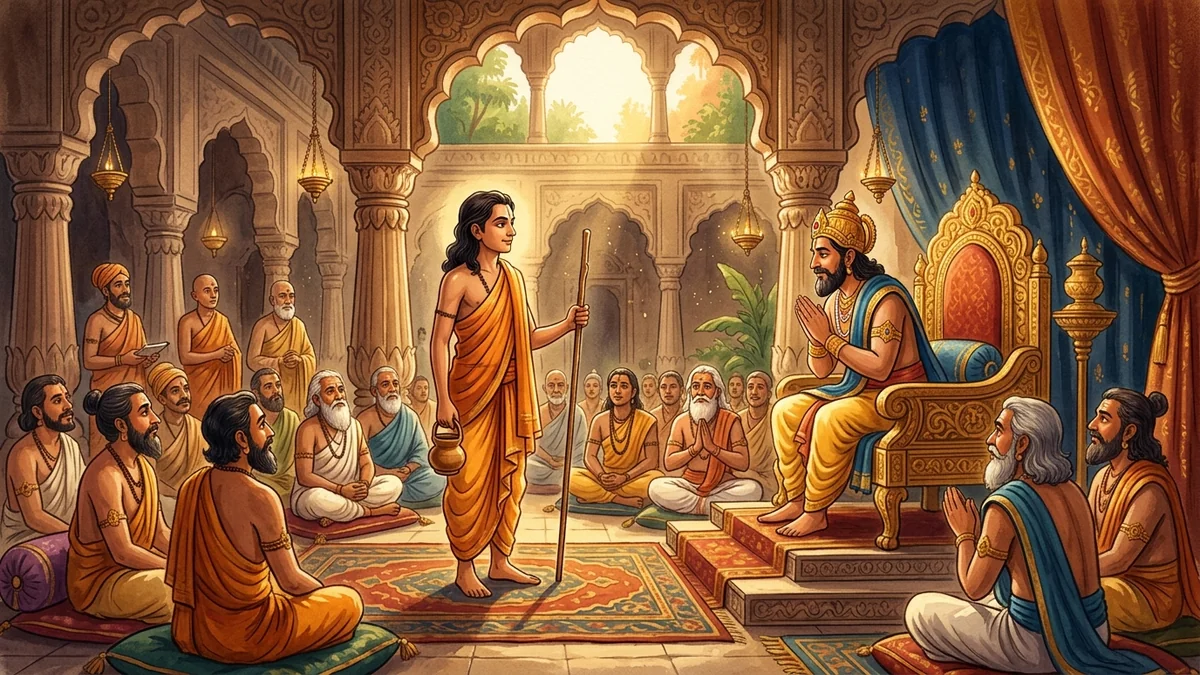
अष्टावक्र जब लाठी टेकते हुए राजा जनक के भव्य दीवान-ए-आम में प्रविष्ट हुए, तो उनके चलने का ढंग इतना हास्यास्पद और विचित्र था कि उन्हें देखकर द्वारपाल, मंत्री और राजपुरोहित स्तब्ध रह गए। जैसे-जैसे अष्टावक्र आगे बढ़े, उनके अंगों के मुड़ने और झूलने को देखकर सभा में बैठे प्रकांड पंडित अपनी हँसी न रोक सके। धीरे-धीरे एक की हँसी दूसरे तक पहुँची और कुछ ही पलों में पूरा दरबार ठहाकों से गूँज उठा। यहाँ तक कि राजा जनक के चेहरे पर भी एक व्यंग्यभरी मुस्कान तैर गई। दरबारियों को लगा कि कोई विदूषक या सर्कस का पात्र राजसभा में आ गया है।
As Ashtavakra limped through the royal gateway, leaning upon his staff with awkward gait, the sentries and court pandits stared in astonishment. Watching the boy twist his misshapen limbs with every step, the gathered scholars could not contain their amusement. A titter arose from the front row, spreading like wildfire until the entire hall reverberated with booming, derisive laughter. Even King Janaka allowed a condescending smirk to cross his lips. The assembly assumed that an entertaining circus clown had stumbled into their solemn philosophical conclave.
परंतु उस भयानक उपहास और तिरस्कार के सम्मुख अष्टावक्र तनिक भी लज्जित या भयभीत नहीं हुए। वे सभा के मध्य में आकर स्थिर खड़े हो गए। उन्होंने दरबारियों की ओर देखा और एकाएक उन्होंने अपना सिर पीछे फेंका और अपनी पूरी शक्ति से खिलखिलाकर हँसना शुरू कर दिया! अष्टावक्र का वह अट्टहास इतना प्रखर, गगनभेदी और आत्मविश्वास से भरा हुआ था कि पूरा राजमहल दहल उठा। दरबारियों के ठहाके एक ही झटके में बंद हो गए। सब सन्न रह गए कि जिस बालक का वे मजाक उड़ा रहे थे, वह स्वयं उनके ऊपर इस प्रकार हँस रहा था जैसे वे कोई मूर्ख हों।
Yet before that wall of mocking laughter, Ashtavakra did not flinch, blush, or cast down his eyes. Reaching the center of the marble floor, he planted his staff firmly, surveyed the laughing assembly, threw back his crowned head, and burst into a booming, ecstatic roar of laughter! His laughter was so vibrant, fearless, and overflowing with sovereign amusement that it shattered the court’s mockery into stunned silence. The courtiers gaped in bewilderment; the child they had mocked was laughing at them with supreme pity.
राजा जनक ने विस्मित होकर सिंहासन से पूछा—'हे नन्हे ब्राह्मण बालक! इस सभा के विद्वान तुम्हारे इन आठ टेढ़े अंगों को देखकर हँस रहे हैं। परंतु तुम किस कारण से इतना प्रखर अट्टहास कर रहे हो? तुम्हारी इस हँसी का रहस्य क्या है?' अष्टावक्र ने अपनी लाठी को जमीन पर पटका और सिंह जैसी गर्जना में उत्तर दिया—'हे राजन जनक! मैं इस आशा से आपके दरबार में आया था कि यहाँ तीनों लोकों के श्रेष्ठ ब्रह्मज्ञानी, आत्मज्ञानी और सत्य के खोजी बैठे होंगे। परंतु इस सभा में प्रविष्ट होते ही मुझे यह देखकर असीम हँसी आ गई कि राजा जनक ने विद्वानों की नहीं, बल्कि 'चर्मकारों' (चमड़े के व्यापारियों) की सभा सजा रखी है!'
King Janaka arose from his golden throne, genuinely intrigued: 'Child, my courtiers laugh because your physical limbs are twisted in eight directions. But what moves you to laugh with such thunderous amusement? Reveal the secret of your mirth.' Striking his staff against the flagstones, Ashtavakra projected a voice like thunder: 'O King Janaka! I walked to this assembly believing that here sat enlightened sages, holy seers, and seekers of the immortal Soul. But upon entering this hall, I realized with overwhelming amusement that King Janaka has assembled not a council of wise men, but a gathering of shoemakers and skin-traders (chamars)!'
अष्टावक्र के इस वाक्य से पूरे दरबार में सन्नाटा छा गया; कई पंडितों के चेहरे क्रोध से लाल हो गए। राजा जनक ने कांपते स्वर में पूछा—'बालक! तुमने हमारे इन प्रकांड विद्वानों को चर्मकार कहने का दुस्साहस क्यों किया?' अष्टावक्र ने अत्यंत शांत और दार्शनिक वाणी में उत्तर दिया—'राजन! चर्मकार वही होता है जिसकी दृष्टि केवल चमड़े (त्वचा) पर होती है। ये सभासद मेरी आत्मा, मेरे ज्ञान और मेरे विवेक को नहीं देख सके; इनकी दृष्टि केवल मेरे इस नश्वर शरीर के चमड़े, माँस और टेढ़ी हड्डियों पर ही अटक कर रह गई। जो व्यक्ति बाहरी रूप-रंग को देखकर मनुष्य का मूल्यांकन करता है, वह अज्ञानी है। राजन, क्या नदी के टेढ़े-मेढ़े होने से उसका जल अशुद्ध हो जाता है? क्या मिट्टी के घड़े के टेढ़े होने से उसके भीतर का अमृत विष बन जाता है? क्या गन्ने के टेढ़े होने से उसकी मिठास कम हो जाती है? फिर इस नश्वर शरीर के टेढ़े होने से मेरी आत्मा का ज्ञान कैसे कम हो सकता है?' अष्टावक्र के इन वज्र जैसे तर्कों ने राजा जनक और समस्त सभासदों के अंतःकरण को झकझोर कर रख दिया। उनका सारा पांडित्य धूल में मिल गया। राजा जनक तुरंत अपने सिंहासन से उतरे, उन्होंने अष्टावक्र के चरणों में अपना मस्तक रख दिया और हाथ जोड़कर क्षमा याचना की। राजा जनक ने उन्हें अपने राजसिंहासन पर बिठाया और उनसे वह परम उपदेश प्राप्त किया जो आज विश्व साहित्य में 'अष्टावक्र गीता' के नाम से आत्मज्ञान का सर्वोच्च शिखर माना जाता है। यह अमर प्रसंग संसार को सिखाता है कि किसी भी व्यक्ति का मूल्य उसके शारीरिक रूप, रंग या वेशभूषा से नहीं, बल्कि उसके आंतरिक आत्म-बल, विवेक और चारित्रिक ज्ञान से ही निर्धारित होता है।
A collective gasp echoed through the court; furious pandits gripped their scriptures. King Janaka demanded in a strained voice: 'Insolent boy! How dare you brand the most revered scholars of the subcontinent as leather-tanners?' Ashtavakra replied in words of piercing metaphysical splendor: 'Sire, a tanner is one whose awareness is consumed solely by the grade, grain, and color of animal skin. These men looked upon me and perceived not my intellect, not my consciousness, not the eternal Atman shining within, but saw only mortal skin, flesh, and crooked bones. He who evaluates human nobility by biological exterior is steeped in utter ignorance! Tell me, O King: when a mountain river winds in crooked bends, does its water lose its purity? When an earthen urn is fashioned with an uneven curvature, does the milk inside sour? When a stalk of sugarcane grows twisted by the wind, does its juice lose its sweetness? How then does the bending of this mortal clay diminish the infinite majesty of the eternal Soul?' The searing realization struck King Janaka like a bolt of divine lightning. The vanity of the assembly turned to ashes. Stepping down from his dais, King Janaka cast his royal crown at the crippled boy's feet, weeping tears of spiritual repentance. Lifting Ashtavakra to the royal throne, Janaka sat at his feet as a humble disciple, receiving the sublime verses of the Ashtavakra Gita—the crowning pinnacle of non-dual philosophy. The legend endures as an unshakeable monument: human majesty is never dictated by the contours of physical clay, but by the immortal depth of wisdom, virtue, and character.