रास्ते का पत्थर
The Stone in the Middle of the Road
प्राचीन विदर्भ के समृद्ध राज्य में राजा चंद्रवर्मन का शासन था। राजा अपनी प्रजा की भलाई के लिए नित्य नए उपाय करते थे, परंतु उन्हें अक्सर यह देखकर पीड़ा होती थी कि राज्य के अधिकांश नागरिक अपने अधिकारों के प्रति तो अत्यंत सजग थे, परंतु अपने नागरिक कर्तव्यों और सामाजिक उत्तरदायित्व के प्रति घोर उदासीन और लापरवाह थे। लोग छोटी-छोटी समस्याओं के लिए भी राजदरबार और प्रशासन को दोष देते थे, परंतु स्वयं समाज सुधार के लिए एक तिनका भी उठाने को तैयार न थे। राजा ने अपने नागरिकों की इस मानसिकता को बदलने और उनके चरित्र की परीक्षा लेने के लिए एक विशेष युक्ति सोची।
In the ancient kingdom of Vidarbha ruled King Chandravarman, a ruler deeply devoted to public welfare. Yet a chronic disappointment weighed upon his royal heart: while his subjects were vocal in demanding rights and privileges, they exhibited profound apathy toward civic duty and shared social responsibility. Citizens routinely blamed the administration for every minor inconvenience, yet none would lift a finger to improve communal well-being. The monarch resolved to engineer a practical demonstration that would test their character and awaken their conscience.
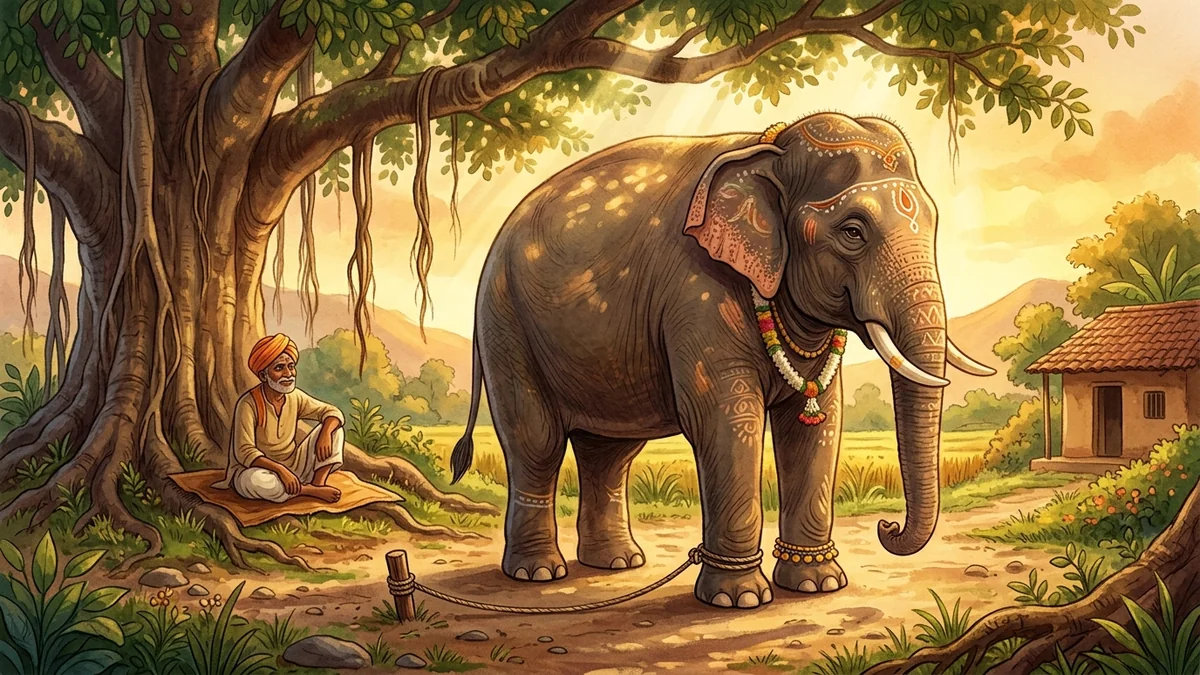
अमावस्या की एक अंधियारी रात में, राजा अपने कुछ निष्ठावान सैनिकों के साथ राजधानी को जाने वाले सबसे व्यस्त और मुख्य राजमार्ग पर पहुँचे। उन्होंने सैनिकों से कहकर खदान से लाया गया एक अत्यंत विशाल, भारी और नुकीला शिलाखंड (पत्थर) सड़क के ठीक मध्य में स्थापित करवा दिया। वह पत्थर इतना बड़ा था कि उसने राजमार्ग का आधा मार्ग पूरी तरह अवरुद्ध कर दिया था। इसके पश्चात राजा ने अपने सैनिकों को विदा किया और स्वयं पास की घनी झाड़ियों और एक विशाल वटवृक्ष की आड़ में छिपकर बैठ गए, ताकि वे प्रत्यक्ष देख सकें कि इस बाधा के सम्मुख नागरिकों का क्या दृष्टिकोण रहता है।
On a moonless night, accompanied by a few trusted guards, the king journeyed to the kingdom’s busiest highway, which connected agricultural hamlets to the capital bazaars. He commanded his men to haul a massive, jagged boulder from an adjacent quarry and position it dead-center in the roadway, blocking half the thoroughfare. Dismissing his soldiers, Chandravarman concealed himself amidst a dense thicket beneath a sprawling banyan tree, resolved to observe firsthand the public’s reaction to an obstruction on their shared path.
प्रातःकाल होते ही सड़क पर आवागमन शुरू हो गया। सबसे पहले राज्य के कुछ अत्यंत धनी व्यापारी अपने रेशमी वस्त्रों में सजे, घोड़ों और मालगाड़ियों के साथ वहाँ पहुँचे। पत्थर को सड़क के बीच देखकर उनके काफिले को रुकना पड़ा। व्यापारियों ने क्रोध से अपने हाथ पटके और चिल्लाने लगे—'कैसा अंधेरगर्दी का राज्य है! राजा सारा कर वसूलता है, परंतु राजमार्ग की सफाई का तनिक भी प्रबंध नहीं है!' वे पत्थर को गालियाँ देते रहे, परंतु किसी ने भी उतरकर उसे हटाने का कष्ट नहीं किया; वे अपनी गाड़ियों को संकरे किनारे से किसी तरह निकालकर आगे बढ़ गए। इसके बाद कुछ शाही दरबारी और विद्वान आए, उन्होंने भी पत्थर को देखकर राजा की अकर्मण्यता पर लंबे-चौड़े भाषण दिए और कन्नी काटकर चले गए।
With the morning sun, traffic commenced. First arrived a caravan of wealthy textile merchants clad in fine silks, driving heavily laden bullock carts. Confronted by the boulder, their procession halted abruptly. The merchants cursed loudly, shaking their fists in indignation: 'What disgraceful governance! The crown collects tariffs, yet permits monstrous boulders to choke the imperial highway!' Venting their irritation, none made the slightest physical exertion to displace the hazard; they merely maneuvered their wagons through the ditch and trotted away. Next came court scribes and philosophers, who delivered pompous monologues on bureaucratic failure, yet walked around the stone without lifting a hand.
दोपहर बीती और शाम ढलने लगी। सैकड़ों लोग उस मार्ग से गुजरे—सैनिक, किसान, छात्र और यात्री। कई लोग पत्थर से टकराकर गिरते-गिरते बचे, कई घोड़ों के पैर फिसले, परंतु प्रत्येक व्यक्ति ने केवल अपना समय शिकायत करने, दोषारोपण करने और सरकार को कोसने में ही नष्ट किया। किसी एक व्यक्ति के मन में भी यह विचार नहीं आया कि वह आगे बढ़कर उस पत्थर को सड़क से हटा दे ताकि पीछे आने वाले किसी अनजान यात्री को चोट न लगे। झाड़ियों के पीछे बैठे राजा नागरिकों की इस स्वार्थी और निष्क्रिय मानसिकता को देखकर गहरे शोक में डूब गए।
Midday passed and purple shadows of dusk stretched across the road. Hundreds traversed the route—mercenaries, travelers, scholars, and cart drivers. Several tripped over the sharp edges; an ox sustained a bruised knee. Yet invariably, every traveler expended their energy in bitter complaints and accusations, skirting around the inconvenience. Not a single soul reflected that clearing the road might safeguard an unsuspecting traveler walking in the nocturnal gloom. Watching from the shadows, Chandravarman was plunged into profound sorrow by the pervasive selfishness of his people.
तभी गोधूलि वेला में, खेत से लौट रहा एक अत्यंत निर्धन किसान वहाँ पहुँचा। वह दिन भर खेतों में हल चलाकर बुरी तरह थक चुका था। उसके सिर पर ताजी सब्जियों की एक बहुत भारी बाँस की टोकरी थी और उसके नंगे पाँव धूल से सने थे। जैसे ही वह उस स्थान पर पहुँचा, उसकी नजर सड़क के बीच पड़े उस भयानक शिलाखंड पर पड़ी। किसान तुरंत ठिठक गया। उसने मन ही मन सोचा—'अब रात हो रही है। कुछ ही देर में चारों ओर घोर अंधकार छा जाएगा। यदि कोई थका-हारा राहगीर या बैलगाड़ी इस मार्ग से गुजरी, तो इस भयानक पत्थर से टकराकर उसकी जान जा सकती है। मुझे इसे यहाँ से हटाना ही चाहिए।' किसान ने बिना किसी शिकायत या संकोच के अपनी भारी टोकरी को सड़क के किनारे उतारा।
Just as twilight deepened into dusk, a solitary, impoverished peasant trudged down the highway. Having labored through grueling heat since dawn, his limbs ached, his bare feet were calloused with mud, and he balanced a heavy wicker hamper of root vegetables upon his head. Spotting the jagged boulder in the middle of the roadway, he halted immediately. He muttered softly to himself: 'Darkness falls swiftly over the valley. If a weary pilgrim or family wagon passes this way in the night, they will crash against this rock and be grievously injured. I cannot leave this peril for my brothers.' Setting down his heavy hamper without hesitation, he stepped toward the stone.
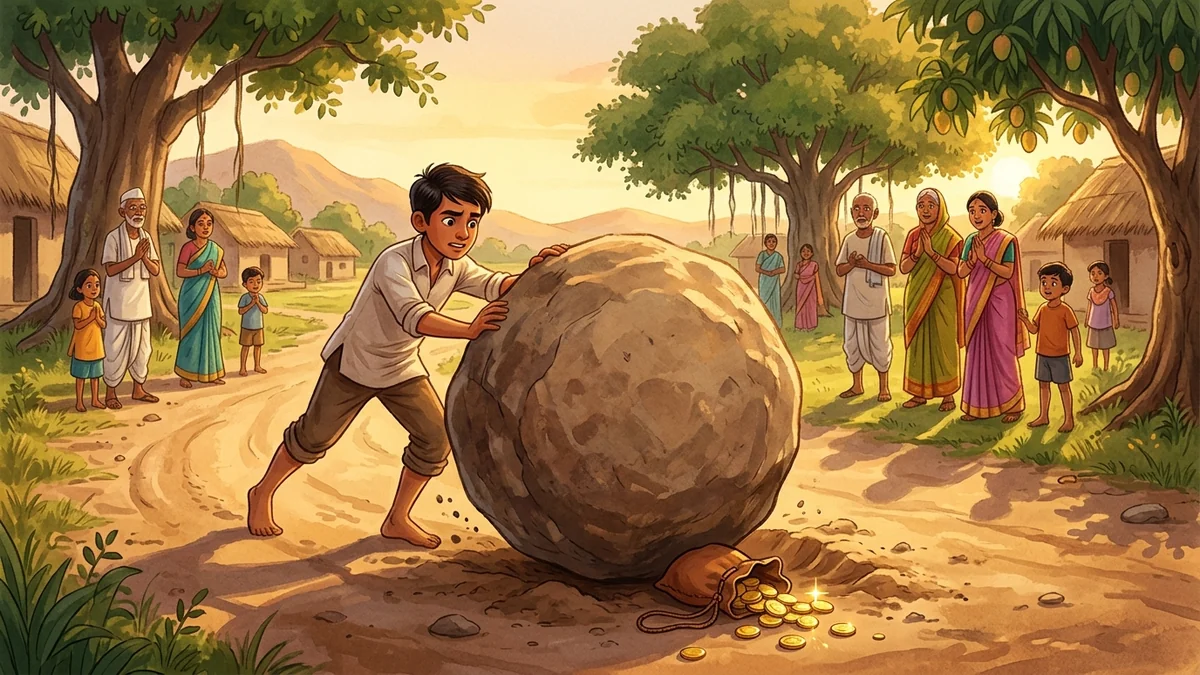
किसान ने पत्थर के पास जाकर उसे दोनों हाथों से पकड़ा। पत्थर अत्यंत भारी और मिट्टी में धंसा हुआ था। किसान ने अपने पैरों को जमीन पर जमाया, गहरी साँस ली और अपनी पूरी शारीरिक शक्ति से पत्थर को धकेलना आरंभ किया। उसकी भुजाओं की नसें तन गईं, माथे से पसीना बहकर आँखों में जाने लगा और हाथ छिल गए। वह इंच-इंच करके पत्थर को खिसकाता रहा। भीषण श्रम और निरंतर धक्के के पश्चात अंततः उसने उस विशाल शिलाखंड को सड़क के किनारे गहरी खाई में लुढ़का दिया—'धड़ाम!' पत्थर नीचे गिर गया और राजमार्ग पूरी तरह निर्बाध और सुरक्षित हो गया। हांफते हुए जब किसान अपनी टोकरी उठाने के लिए वापस उस स्थान पर आया जहाँ पत्थर रखा था, तो उसकी आँखें विस्मय से चौड़ी हो गईं। उस खाली गड्ढे में एक रेशमी लाल मखमली थैली रखी हुई थी। जब उसने थैली उठाई, तो वह शुद्ध सोने के सौ चमचमाते सिक्कों से भरी थी! थैली के साथ राजा की मोहर लगा एक पत्र रखा था, जिस पर लिखा था—'यह स्वर्ण मुद्राएँ विदर्भ के उस सच्चे और महान नागरिक के लिए राजा का उपहार हैं, जिसने दूसरों पर दोष मढ़ने के बजाय सार्वजनिक कल्याण के लिए स्वयं पुरुषार्थ करने का साहस दिखाया।' ठीक उसी समय राजा चंद्रवर्मन झाड़ियों से बाहर आए और उन्होंने उस निष्कपट किसान को गले से लगा लिया। राजा ने उसे राज्य का श्रेष्ठ नागरिक घोषित किया और उसे अपनी परिषद में स्थान दिया। यह अमर कथा प्रत्येक नागरिक को यह शाश्वत संदेश देती है कि समस्याओं पर रोना कायरता है; जो व्यक्ति स्वयं आगे बढ़कर बाधाओं को हटाता है, भाग्य और ईश्वर उसके लिए समृद्धि का द्वार खोल देते हैं।
Bracing his feet against the gravel, the peasant placed his calloused palms against the rough stone. The boulder was deeply embedded and exceedingly heavy. Taking a deep breath, he strained with all his muscular power. Veins bulged against his neck, sweat burned his eyes, and raw friction abraded his palms, yet he refused to yield. Inch by inch, he dislodged the mass, rolling it forward with relentless grit until, with a heavy thud, the boulder crashed harmlessly into the roadside gully. The imperial highway was pristine and unobstructed once more. Panting and wiping the grime from his brow, the peasant returned to shoulder his basket. His breath caught in his throat: resting within the hollow depression where the boulder had sat was a crimson velvet pouch. Opening the drawstring, he gasped—it was filled to the brim with one hundred glistening gold mohurs, alongside a royal parchment bearing the sovereign seal: 'This gold is the sovereign’s tribute to that noble citizen who, rather than wasting his breath in empty complaints, exercised courageous initiative to remove peril from the public way.' Stepping out from the shadowed boughs, King Chandravarman embraced the stunned farmer, proclaiming him the premier citizen of Vidarbha and appointing him to the council of public works. The immortal fable stands across all ages: passive lamentation changes nothing; he who rolls away the stones of adversity not only clears the path for mankind, but discovers the hidden treasures of destiny.