गांधीजी की सच्चाई
Gandhi's Childhood Confession
गुजरात के पोरबंदर और राजकोट की गलियों में मोहनदास करमचंद गांधी का बाल्यकाल बीत रहा था। मोहनदास अत्यंत संकोची, शर्मीले और संवेदनशील बालक थे। उनके पिता करमचंद गांधी राजकोट के दीवान थे—एक अत्यंत कठोर, सिद्धांतप्रिय, सत्यवादी और क्रोधी स्वभाव के व्यक्ति। मोहनदास अपने पिता का बहुत आदर करते थे, परंतु उनके कड़े अनुशासन के कारण उनके सम्मुख बोलने में उनका गला सूख जाता था। किशोरावस्था के उस चंचल दौर में मोहनदास एक ऐसे मित्र की संगति में पड़ गए जिसने उन्हें कई अनुचित आदतों की ओर आकर्षित किया।
In the quiet towns of Porbandar and Rajkot in Gujarat unfolded the boyhood of Mohandas Karamchand Gandhi. Young Mohandas was an intensely shy, sensitive, and introspective youth. His father, Karamchand Gandhi, was the Chief Minister (Diwan) of Rajkot—a man of unbending rectitude, strict moral principles, and a fiery temper. While Mohandas revered his father deeply, the elder Gandhi’s formidable presence often struck awe and nervousness into the boy's heart. During the vulnerable transitions of adolescence, Mohandas fell under the sway of a companion who introduced him to clandestine vices.
शुरुआत बीड़ी पीने के शौक से हुई। नौकरों की जेब से पैसे चुराकर बीड़ी के ठूँठ पीना, और फिर कर्ज लेकर धूम्रपान करना शुरू हुआ। धीरे-धीरे उनके बड़े भाई के ऊपर पच्चीस रुपये का एक भारी कर्ज चढ़ गया, जो उस जमाने में एक बहुत बड़ी राशि थी। कर्ज चुकाने के लिए दोनों भाइयों ने एक योजना बनाई। बड़े भाई के हाथ में शुद्ध सोने का एक मजबूत कड़ा था। मोहनदास ने एक सुनार की मदद से उस कड़े में से लगभग एक तोला सोना चुपके से काट लिया और उसे बेचकर कर्ज चुका दिया। बाहर से देखने पर समस्या सुलझ चुकी थी, परंतु मोहनदास के अंतरात्मा में एक भयंकर गृहयुद्ध छिड़ गया।
The downward spiral began innocently with a desire to smoke cigarettes. Scavenging discarded stumps of smoked bidis and stealing copper coins from household servants soon graduated into borrowing money from shopkeepers. Before long, his elder brother found himself trapped under a debt of twenty-five rupees—a substantial sum in those times. Desperate to discharge the obligation, the brothers conceived a scheme: the elder brother wore a solid gold armlet. With stealthy precision, Mohandas filed off a small nugget of gold weighing roughly a tola, sold it to a goldsmith, and cleared the debt. Externally, the crisis was averted, but internally, a tempest of agonizing guilt consumed Mohandas’s conscience.
कर्ज तो उतर गया, परंतु उस चोरी के पश्चात मोहनदास का प्रत्येक क्षण नरक बन गया। उन्हें अपनी ही दृष्टि में स्वयं से घृणा होने लगी। वे जब भी अपने पिता के चेहरे को देखते, उनका कलेजा कांप उठता। उन्हें लगता कि उन्होंने अपने माता-पिता के पवित्र विश्वास की हत्या की है। झूठ और चोरी का यह बोझ इतना भारी था कि उन्हें अपना जीवन निरर्थक प्रतीत होने लगा। उन्होंने आत्महत्या तक करने का विचार किया, परंतु धतूरे के बीज जुटाने के बाद भी वे प्राण त्यागने का साहस न जुटा सके। अंततः उन्हें आत्मबोध हुआ कि पाप से मुक्ति का एकमात्र मार्ग मृत्यु नहीं, बल्कि सत्य का निर्भय साक्षात्कार और पूर्ण प्रायश्चित है।
The debt was settled, but the theft left an indelible stain upon the boy’s sensitive soul. Each passing day became living purgatory; he despised himself for his moral cowardice. Whenever his father looked upon him with paternal trust, Mohandas felt like a fraudulent traitor. The spiritual burden of deceit felt far heavier than the fear of physical punishment. At one desperate juncture, the despair drove him to contemplate suicide; he even gathered poisonous seeds of the datura plant, but lacked the nerve to swallow them. Finally, an intuitive clarity dawned: the true antidote to sin is not cowardice in death, but the fearless embrace of truth through unconditional confession.
मोहनदास ने निश्चय किया कि वे अपने पिता के समक्ष अपने संपूर्ण अपराध को स्वीकार करेंगे। परंतु पिता के सामने मुँह से बोलने का साहस उनमें न था। उन्हें भय था कि कहीं उनके पिता को गहरा आघात न लगे, या वे क्रोध में आकर स्वयं का सिर न पीट लें। अतः मोहनदास ने एक पत्र लिखने का निर्णय किया। उन्होंने एक सादे कागज पर अपने सारे अपराधों—बीड़ी पीने, नौकरों के पैसे चुराने, और सबसे बढ़कर सोने के कड़े की चोरी—का एक-एक विवरण निष्कपट भाव से लिख दिया। उन्होंने अंत में लिखा कि वे इस पाप के लिए पिता द्वारा दिए जाने वाले कठोरतम दंड को भुगतने के लिए तैयार हैं, और उन्होंने प्रतिज्ञा की कि वे भविष्य में कभी ऐसा कुकृत्य नहीं करेंगे।
Mohandas resolved to lay bare his entire transgression before his father. Yet the prospect of vocal confession paralyzed his tongue. He dreaded not a physical beating, but the shattering of his father’s pride and the pain it would inflict upon a noble heart. Therefore, he chose the medium of the written word. Upon a scrap of paper, he penned an exhaustive, unvarnished confession: the smoking, the domestic pilfering, and the crowning crime of desecrating the golden armlet. He concluded by begging for the severest chastisement he deserved, solemnly imploring his father not to punish himself for the son's sins, and vowing never again to stray from righteousness.
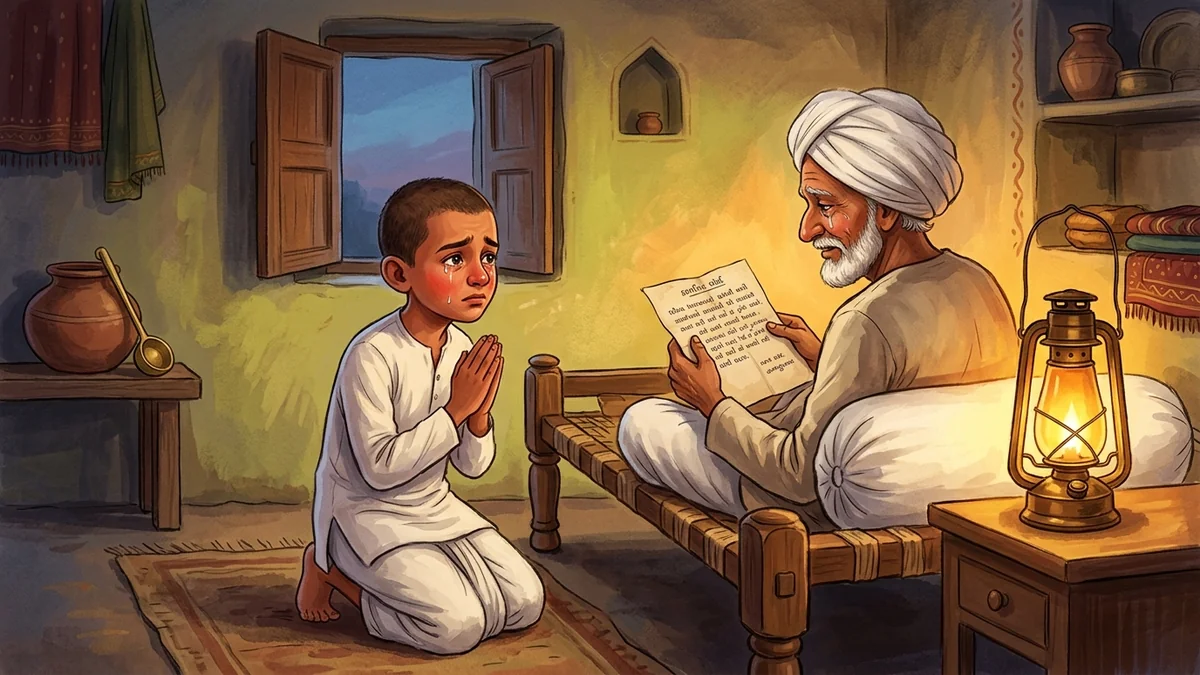
उस समय करमचंद गांधी भगंदर (नासूर) के गंभीर रोग से पीड़ित थे और लकड़ी के एक साधारण तख्ते पर लेटे हुए थे। मोहनदास कांपते हुए कदमों से पिता के कमरे में प्रविष्ट हुए। उनका शरीर पसीने से तर था और हृदय धौंकनी की तरह चल रहा था। उन्होंने वह पत्र चुपचाप पिता के तकिए के पास रख दिया और स्वयं तख्ते के पाँयताने बैठ गए। पिता ने करवट ली, पत्र उठाया और चश्मा लगाकर उसे पढ़ना शुरू किया। जैसे-जैसे पिता की आँखें उस पत्र की पंक्तियों पर आगे बढ़ीं, मोहनदास अपनी साँसें रोककर उस क्षण का इंतजार कर रहे थे जब पिता क्रोधित होकर चिल्लाएँगे या अपनी लाठी उठाएँगे।
At that time, Karamchand Gandhi lay bedridden, suffering from a painful fistula, resting upon a simple wooden pallet. With knocking knees and an erratic pulse, Mohandas entered the sickroom. Sweating with visceral anxiety, he placed the folded confession into his father’s hands and sat silently upon the floor at the foot of the bed. Adjusting his spectacles, the ailing patriarch opened the paper. As his eyes traversed the lines of self-incrimination, Mohandas braced himself for the explosion: a storm of wrath, a heavy hand, or bitter curses upon his lineage.
परंतु जो हुआ, उसने इतिहास की दिशा बदल दी। पत्र पढ़ते-पढ़ते पिता के मुख पर न तो कोई क्रोध आया और न ही कोई कटु शब्द निकला। एकाएक पिता की आँखों से आंसुओं की अविरल धारा बह निकली। वे गर्म आँसू मोती की तरह टप-टप गिरकर उस पत्र को भिगोने लगे। पिता ने एक क्षण के लिए आँखें मूँद लीं, पत्र को फाड़कर फेंक दिया और पुनः लेट गए। उन मौन, निष्कलंक आंसुओं ने पिता के हृदय के दर्द और अपने पुत्र के प्रति अगाध प्रेम को अभिव्यक्त कर दिया था। मोहनदास भी फूट-फूटकर रो पड़े। पिता के उस अहिंसक प्रेम और क्षमा ने मोहनदास के अंतःकरण से पाप के सारे मैल को एक ही क्षण में धो डाला। यदि पिता क्रोध करते या पीटते, तो शायद वह घाव केवल शरीर पर रहता; परंतु पिता के उन मौन आंसुओं ने मोहनदास की आत्मा को हमेशा के लिए सत्य और अहिंसा के मार्ग पर समर्पित कर दिया। गांधीजी ने बाद में लिखा कि यही संसार की सबसे शुद्ध अहिंसा थी। यह अमर प्रसंग सिखाता है कि अपनी गलतियों को ईमानदारी से स्वीकार करना ही चरित्र का सबसे बड़ा शौर्य है, और सच्चा प्रेम दंड से कहीं अधिक शक्तिशाली होता है।
What transpired instead altered the trajectory of human history. As he reached the end of the note, no roar of anger erupted from the father’s throat. Instead, glistening pearls of silent sorrow welled within his eyes, overflowing down his hollow cheeks and splashing onto the parchment, dissolving the fresh ink. The father closed his eyes in profound grief, gently tore the paper into fragments, and turned his face to the wall. Not a single word of rebuke was spoken. Those tears were not of hatred, but of transcendent love and boundless forgiveness. Mohandas buried his face in the mattress and wept uncontrollably. That sublime, non-violent response washed away every impurity from the boy’s soul far more effectively than a thousand strokes of a whip. Had the father raged, the son might have grown defensive; but the father’s silent suffering awakened an indelible moral consciousness within him. Decades later, Gandhi wrote that this was his first immaculate revelation of pure Ahimsa (non-violence). The episode remains an enduring monument for humanity: the courage to confess one’s sins with naked honesty is the ultimate valor of character, and unconditional love possesses an alchemical power to transform the human soul forever.