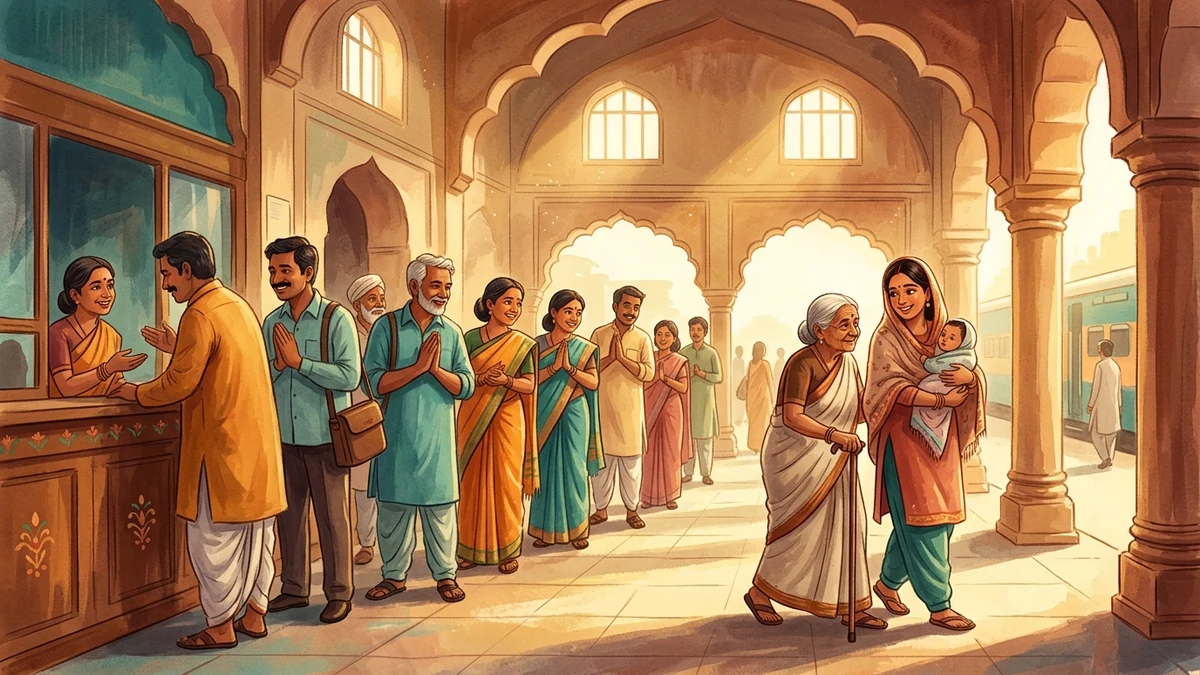
पीछे चलती कतार
The Queue That Moved Backward
शनिवार की सुबह नगर के सामुदायिक स्वास्थ्य केंद्र में भारी भीड़ थी। मौसमी बुखार और खाँसी के कारण रजिस्ट्रेशन काउंटर पर मरीज़ों की एक लंबी कतार लगी हुई थी। नौ वर्षीय लीला अपनी दादी जी के घुटनों के दर्द की दवाई लेने के लिए कतार में खड़ी थी। कतार धीरे-धीरे आगे बढ़ रही थी और सभी लोग अपने नंबर का इंतज़ार कर रहे थे। लीला अपनी बारी गिन रही थी — वह सातवें नंबर पर थी।
On a chilly Saturday morning, the neighbourhood community health centre was crowded with patients. Due to seasonal flu, a lengthy queue stretched out from the registration counter across the waiting hall. Nine-year-old Leela stood patiently in line alongside her grandmother, who had come for her regular arthritis consultation. The line shuffled forward slowly, and Leela was keeping track of their place — they were seventh from the front.
तभी मुख्य द्वार से एक माँ अपनी गोद में तेज़ बुख़ार से बेसुध पड़े नन्हे बच्चे को लेकर रोती हुई दौड़ी। उसी समय एक बुज़ुर्ग सज्जन भी व्हीलचेयर पर आए जिन्हें साँस लेने में बहुत तकलीफ़ हो रही थी। काउंटर पर मौजूद नर्स ने तुरंत कतार रोक दी और उस माँ तथा व्हीलचेयर वाले बुज़ुर्ग को सीधे डॉक्टर के इमरजेंसी कक्ष में अंदर भेज दिया। कतार में खड़े कई लोग बुदबुदाने लगे, "यह क्या बात हुई? हम इतनी देर से खड़े हैं और ये लोग बाद में आकर पहले चले गए!"
Suddenly, a weeping mother rushed through the double doors, cradling a toddler burning with a dangerously high fever and struggling to stay conscious. Moments later, an elderly gentleman arrived in a wheelchair, gasping for breath. The triage nurse immediately stepped out, paused the general line, and escorted the mother and the elderly man straight into the emergency examination room. Grumbling erupted along the queue: "How is this fair? We have waited for an hour, yet they arrive late and walk right in!"
लीला ने देखा कि लोगों का गुस्सा बढ़ रहा था। उसने पास खड़ी सीनियर नर्स सुजाता से पूछा, "दीदी, क्या कतार का नियम यह नहीं होता कि जो पहले आए, उसे पहले देखा जाए?" नर्स सुजाता ने लीला और आसपास खड़े लोगों को प्यार से समझाया, "बेटा, कतार का नियम सामान्य दिनों के लिए बहुत अच्छा है। लेकिन अस्पताल में हमारा पहला धर्म जीवन की रक्षा करना है। जो बच्चा तड़प रहा है, उसके पास कतार में खड़े होने का समय नहीं है। इसे 'प्राथमिकता उपचार' (ट्राईआज़) कहते हैं।"
Leela noticed the irritation rising among tired commuters and families. She looked up at senior nurse Sujata and asked softly, "Sister, doesn't fairness mean whoever arrives first gets seen first?" Nurse Sujata knelt gently beside Leela and addressed the crowd in an empathetic voice: "Child, first-come, first-served is a splendid rule for railway tickets or movie seats. But in healthcare, our primary duty is to save life. A gasping patient does not have the luxury of time. This is called medical triage."
लीला ने एक पल सोचा और बोली, "दीदी, आपकी बात तो बिल्कुल सही है, लेकिन कतार में खड़े लोग शायद इसलिए परेशान हो रहे हैं क्योंकि उन्हें यह नियम पता ही नहीं है। अगर यहाँ कोई साफ़ सूचना लगी हो, तो कोई ग़लतफ़हमी नहीं होगी।" नर्स सुजाता को लीला का सुझाव बहुत व्यावहारिक और समझदारी भरा लगा। उन्होंने तुरंत क्लिनिक के नोटिस बोर्ड पर एक बड़ा और रंगीन चार्ट बनाने का फ़ैसला किया।
Leela thought for a moment and remarked wisely, "Sister, your explanation makes complete sense, but the people in line are anxious simply because nobody explained it beforehand. If clear, compassionate notices were displayed, no one would feel ignored or cheated." Nurse Sujata was struck by the young girl's practical insight. She resolved then and there to put up clear signage to demystify the clinic's compassionate intake policy.
लीला और उसकी दादी ने डॉक्टर को दिखाने के बाद नर्स सुजाता की मदद की। उन्होंने कार्डबोर्ड पर सुंदर और बड़े अक्षरों में लिखा: "हमारी प्राथमिकता — 1. गंभीर आपातकालीन मरीज़, 2. अत्यंत बुज़ुर्ग व दिव्यांगजन, 3. सामान्य कतार। निष्पक्षता का अर्थ केवल पहले आना नहीं, बल्कि सबसे कमज़ोर की तुरंत रक्षा करना है।" यह बोर्ड जब काउंटर के ऊपर लगाया गया, तो कतार में खड़े लोगों का नज़रिया पूरी तरह बदल गया।
After completing her grandmother's appointment, Leela enthusiastically helped Nurse Sujata design a bright poster. In neat, legible letters, they wrote: "Our Care Priority: 1. Critical emergencies, 2. Frail elders and persons with disabilities, 3. General queue sequence. True fairness means tending to the most vulnerable first." When the notice was hung visibly above the counter, the grumbling ceased and an atmosphere of patient empathy enveloped the hall.
कुछ ही देर में डॉक्टर बाहर आए और उन्होंने बताया कि समय पर ऑक्सीजन मिलने से बुज़ुर्ग सज्जन और नन्हे बच्चे दोनों की हालत अब ख़तरे से बाहर है। कतार में खड़े सभी लोगों ने राहत की साँस ली। एक नाराज़ सज्जन ने आगे बढ़कर नर्स से क्षमा माँगी। घर लौटते हुए लीला ने दादी से कहा, "दादी, आज मैंने सीखा कि असली निष्पक्षता हर किसी के साथ आँख मूँदकर एक जैसा बर्ताव करना नहीं है, बल्कि जिसकी जैसी ज़रूरत हो, उसे वैसी मदद देना है।"
Shortly thereafter, the doctor emerged to announce that prompt oxygen therapy had stabilized both the struggling elder and the young child. A collective sigh of relief washed over the waiting room. The gentleman who had complained earlier stepped forward and apologized sincerely to the nurse. On their stroll home, Leela smiled up at her grandmother: "Dadi, today I realized that true equity isn't blindly treating every circumstance identically; it is offering compassionate care where the need is most urgent."
📚 नैतिक शब्दकोश (महत्वपूर्ण शब्द व अर्थ)
कहानी में आए इन प्रेरणादायी शब्दों के अर्थ और उनका जीवन में प्रयोग सीखें:
गंभीरता और तात्कालिक ज़रूरत के आधार पर मरीज़ों की सहायता का क्रम तय करना
हर व्यक्ति की वास्तविक ज़रूरत और परिस्थिति को समझकर न्यायपूर्ण व्यवहार करना
दूसरों की पीड़ा और लाचारी को अपने दिल से महसूस कर सहयोग की भावना रखना
🧠 नैतिक चिंतन व मूल्यांकन
कहानी से आपने क्या सीखा? नीचे दिए गए प्रश्नों के उत्तर देकर अपने विचारों को परखें: