वह अभ्यास जिसे किसी ने नहीं देखा
The Practice Nobody Saw
अनाया छठी कक्षा में पढ़ती थी और उसे संगीत से बहुत प्रेम था। जब स्कूल संगीत कार्यक्रम की घोषणा हुई, तो उसने तुरंत तय कर लिया कि वह बाँसुरी बजाएगी। पर उसने कोई आसान धुन नहीं चुनी — उसने वह धुन चुनी जो उसकी संगीत शिक्षिका रागिनी मैडम बजाती थीं, जो बेहद मुश्किल और नाज़ुक थी। पहली बार जब अनाया ने उसे बजाने की कोशिश की, उसकी उँगलियाँ उलझ गईं, वह उसी एक जगह पर बार-बार अटक गई और झल्लाकर बाँसुरी नीचे रख दी। दो निराशाजनक शामों के बाद उसके मन में आया — 'क्यों न कोई आसान धुन चुन लूँ जो आराम से बज जाए?'
Anaya was in sixth grade and loved music deeply. When the school concert was announced, she immediately decided she would perform on the flute. But she did not choose an easy melody — she chose the beautiful, delicately difficult piece her music teacher Ragini Ma\'am always played. The first time Anaya attempted it, her fingers stumbled, she stopped at the same passage repeatedly, and in frustration she set the flute aside. After two discouraging evenings, the thought crept in: 'Why not choose something simpler that I can play comfortably?'
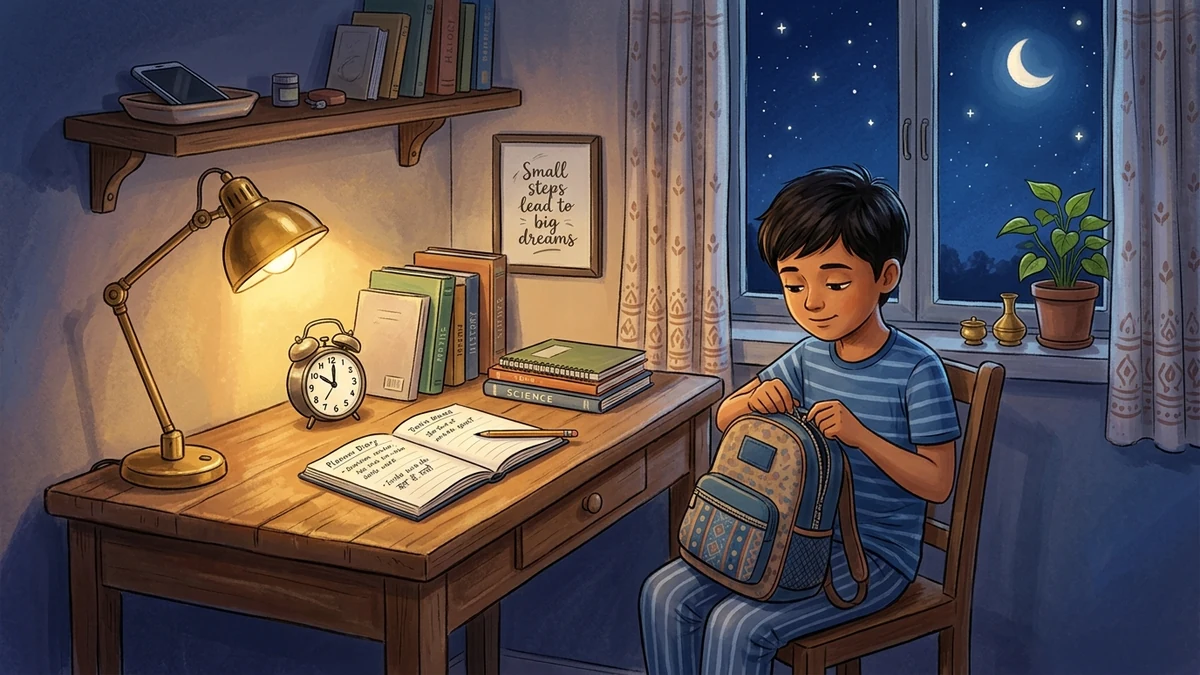
अगले दिन अनाया ने रागिनी मैडम से बात की। मैडम ने उसे ध्यान से सुना और फिर कहा, 'अनाया, मुझे बताओ — क्या तुम इस धुन को इसलिए सीखना चाहती हो कि लोग वाह-वाह करें? या इसलिए कि यह धुन तुम्हें सच में खूबसूरत लगती है?' अनाया ने एक पल सोचा और कहा, 'दूसरी वजह।' मैडम बोलीं, 'तो फिर धीरे-धीरे सीखो। हर दिन दस मिनट — बस उस एक हिस्से पर जो अटक रहा है। बाकी का वक्त उसे जोड़कर बजाओ। जो बदलाव हो, वह नोट करती जाओ।' अनाया ने वादा किया। उसने डायरी में समय लिखा — 'शाम सात बजे, गृहकार्य के बाद।'
The next day, Anaya spoke with Ragini Ma\'am. The teacher listened carefully and then asked, 'Anaya, tell me — do you want to learn this piece so people will praise you? Or because this melody genuinely moves you?' Anaya thought for a moment and said, 'The second reason.' Ma\'am replied, 'Then learn it slowly. Ten focused minutes each day — only on the passage that trips you up. For the rest, join the sections and play through. Note down whatever changes.' Anaya made the promise. She wrote in her diary: 'Every evening at seven, after homework.'
पहले हफ्ते में कोई बड़ी तरक्की नहीं दिखी। अनाया बजाती, एक-दो सुर ठीक होते, फिर वही मुश्किल हिस्सा आता और उँगलियाँ फिर उलझतीं। पर उसने हर दिन अपनी डायरी में एक छोटा सा सुधार लिखा — 'आज 'रे' के बाद 'ग' थोड़ा साफ निकला', 'आज लय टूटी नहीं'। कोई सहपाठी ताली नहीं बजाता था, माँ-पिताजी को पता था पर वे रोज़ नहीं पूछते थे। पर अनाया ने रुकना बंद नहीं किया। उसे समझ आ गया था — यह मेहनत किसी को दिखाने के लिए नहीं, खुद को पक्का बनाने के लिए है।
The first week showed no dramatic improvement. Anaya would play, one or two notes would come out cleanly, then the difficult passage would arrive and her fingers would stumble again. But every single day she wrote a small improvement in her diary: 'Today \'Re\' flowed better into \'Ga\'', 'Today the rhythm did not break.' No classmate applauded, her parents knew but did not ask daily. Yet Anaya never stopped. She had understood — this effort was not to impress anyone; it was to build herself.
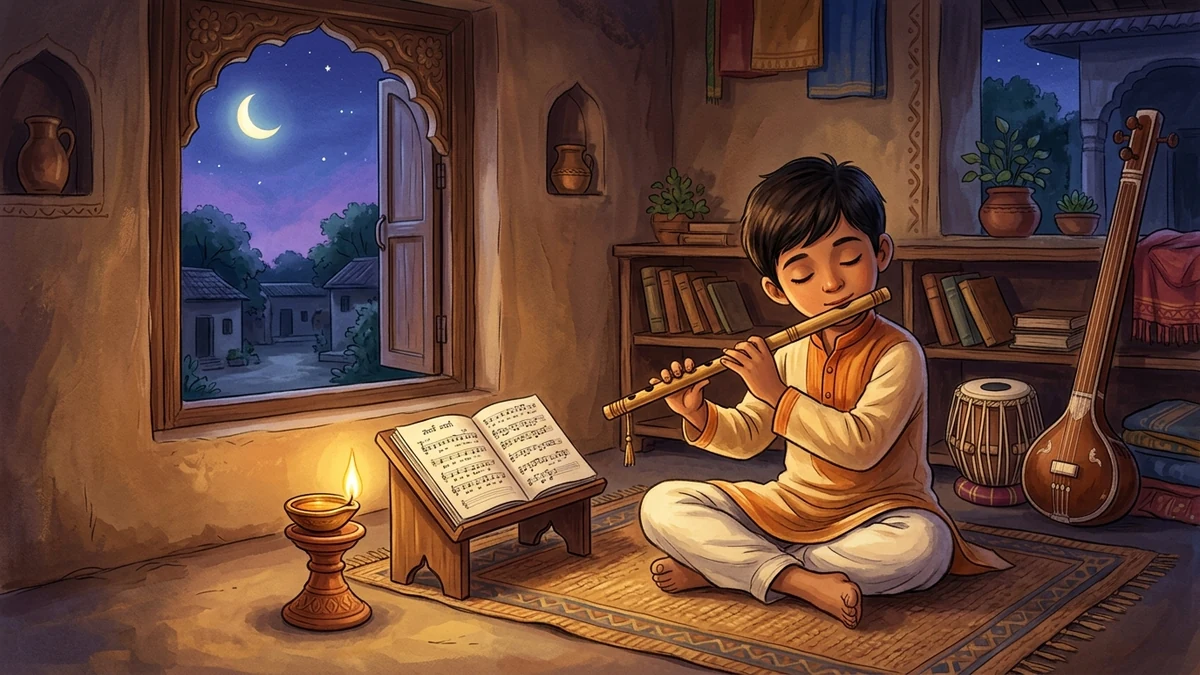
तीन हफ्ते बाद, एक शाम जब अनाया ने बजाना शुरू किया, वह पूरी धुन बिना रुके बज गई — एकदम साफ, एकदम सहज। उस कमरे में वह अकेली थी। कोई ताली नहीं, कोई 'वाह!' नहीं। पर अनाया की आँखें भर आईं — खुशी से। वह क्षण उसका अपना था, किसी और का नहीं। कार्यक्रम के दिन जब वह मंच पर बजाने लगी, तो बीच में एक सुर छूट गया। पर उसने न घबराई, न बंद की — उसने गहरी साँस ली, अपनी जगह ढूंढी और आगे बजाती रही। अंत में पूरे हॉल ने ताली बजाई।
Three weeks later, one quiet evening when Anaya began playing, the entire melody flowed through without a single pause — clear, effortless, and whole. She was alone in the room. No applause, no exclamation. Yet Anaya\'s eyes filled with tears — of joy. That moment belonged entirely to her, to nobody else. On the day of the concert, when she stepped onto the stage and began playing, one note slipped away in the middle. But she did not panic, did not stop — she took a deep breath, found her place, and played on to the end. The entire hall burst into applause.
बाद में रागिनी मैडम ने उससे पूछा, 'जब सुर छूट गया, डर नहीं लगा?' अनाया ने जवाब दिया, 'लगा। पर मुझे याद था कि तीन हफ्तों में मैंने यह धुन सौ बार बजाई है — अकेले, बिना किसी के सुने। इसलिए मुझे खुद पर भरोसा था।' मैडम ने मुस्कुराते हुए कहा, 'यही असली आत्मविश्वास है — जो किसी की ताली से नहीं, अपनी मेहनत से आता है। और यह कभी नहीं टूटता।'
Afterwards, Ragini Ma\'am asked her, 'When that note slipped, were you not afraid?' Anaya answered, 'I was. But I remembered that I had played this melody a hundred times over three weeks — alone, without anyone listening. So I trusted myself.' Ma\'am smiled and said, 'That is what real confidence is — not born from applause, but from your own effort. And it never breaks.'
उस साल स्कूल की पत्रिका में अनाया की कहानी छपी। पर जो बात उसने सबसे पहले अपनी डायरी में लिखी, वही सबसे असली थी: 'मैंने सीखा कि जब कोई नहीं देख रहा, तब भी काम करते रहना — यही सबसे बड़ी परीक्षा है। और अगर तुम उसमें पास हो जाते हो, तो मंच पर जो भी हो, तुम तैयार हो।' अनाया की बाँसुरी की धुन आज भी स्कूल की सबसे यादगार प्रस्तुतियों में गिनी जाती है — पर जो लोग नहीं जानते, वह यह है कि उसकी असली सुंदरता उन तीन हफ्तों की खामोश शामों में बनी थी, जब सिर्फ अनाया और उसकी बाँसुरी थी।
That year, Anaya\'s story was published in the school magazine. But what she had first written in her diary was the most honest truth of all: 'I learned that continuing to work when nobody is watching — that is the biggest test of all. And if you pass it, then whatever happens on stage, you are ready.' Anaya\'s flute performance is still counted among the most memorable in the school\'s history. But what most people do not know is that its true beauty was built across three weeks of silent evenings — when it was only Anaya and her flute.
📚 नैतिक शब्दकोश (महत्वपूर्ण शब्द व अर्थ)
कहानी में आए इन प्रेरणादायी शब्दों के अर्थ और उनका जीवन में प्रयोग सीखें:
किसी लक्ष्य को पाने के लिए बिना थके, बिना रुके और बिना तारीफ की परवाह किए लगातार काम करते रहने की भावना।
अपनी क्षमताओं और अभ्यास पर वह भरोसा जो भीतर से आता है, दूसरों की तारीफ या प्रोत्साहन पर निर्भर नहीं होता।
वह छोटा-छोटा सुधार जो रोज़ होता है और जिसे तुरंत नहीं देखा जा सकता, पर समय के साथ बड़े बदलाव में बदल जाता है।
🧠 नैतिक चिंतन व मूल्यांकन
कहानी से आपने क्या सीखा? नीचे दिए गए प्रश्नों के उत्तर देकर अपने विचारों को परखें: