Nachiketa and Yama
नचिकेता और यमराज का संवाद
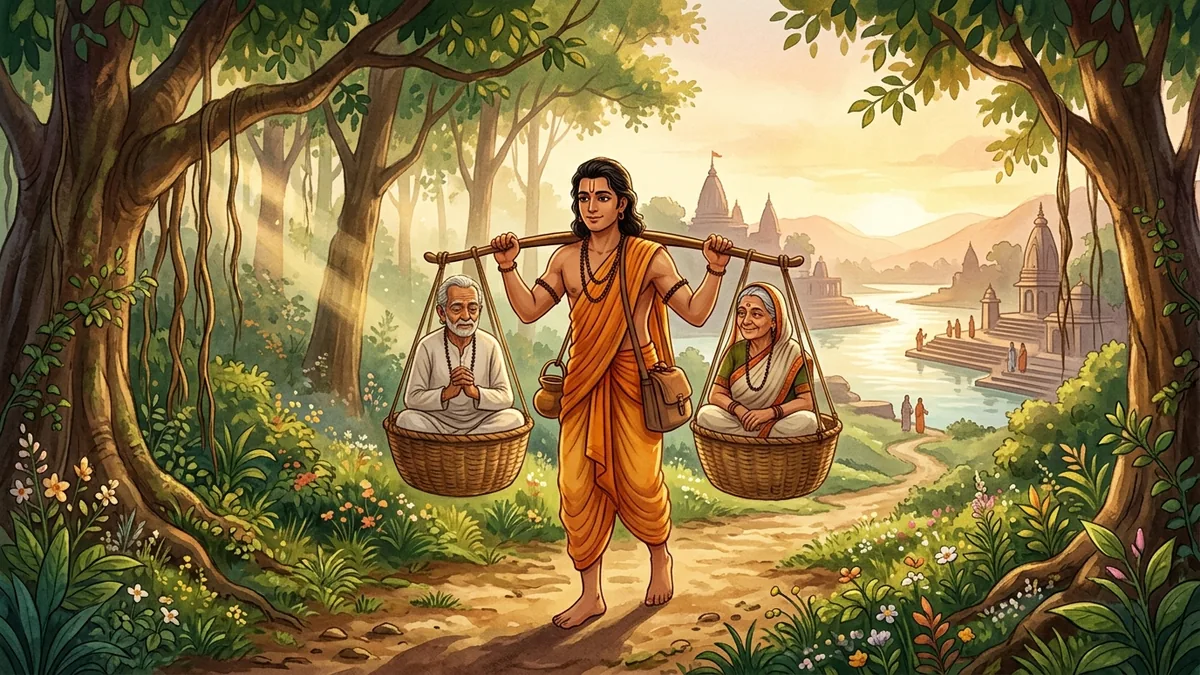
वैदिक काल के स्वर्णिम युग में महर्षि वाजश्रवा ने स्वर्गलोक की प्राप्ति की कामना से 'विश्वजित्' (सर्वमेध) नामक एक अत्यंत विशाल महायज्ञ का आयोजन किया था। शास्त्रों का यह कठोर नियम था कि इस महायज्ञ में यजमान को अपनी समस्त प्रिय और मूल्यवान वस्तुओं का दान करना होता था। वाजश्रवा का बारह वर्षीय पुत्र नचिकेता बाल्यकाल से ही अत्यंत कुशाग्र बुद्धि, शांत स्वभाव और सत्यवादी था। जब यज्ञ की पूर्णाहुति के पश्चात दान देने का समय आया, तो नचिकेता ने देखा कि उसके पिता कपट और लोभ के वशीभूत होकर केवल उन गायों को ब्राह्मणों को दान कर रहे थे जो अत्यंत वृद्ध थीं, दुर्बल थीं, जिन्होंने घास खाना और पानी पीना भी बंद कर दिया था और जो कभी दूध नहीं दे सकती थीं।
During the sacred Vedic antiquity, Sage Vashishrava convened the grand Vishwajit sacrifice, an austere ritual designed to attain celestial realms. By sacred scriptural mandate, this rite demanded that the sacrificer renounce his entire earthly wealth in selfless charity. Vashishrava had a twelve-year-old son named Nachiketa, a youth endowed with rare purity, profound philosophical discernment, and unshakeable truthfulness. As the concluding rites unfolded, Nachiketa watched with mounting sorrow as his father, gripped by clinging attachment, bestowed upon the holy priests only aged, emaciated cows—beasts that were barren, blind, toothless, and incapable of yielding milk or bearing calves.
नचिकेता के अंतःकरण में धर्म और सत्य की गहरी ज्योति जल रही थी। उसने सोचा—'जो व्यक्ति ऐसा निष्फल और कपटपूर्ण दान करता है, वह पुण्य के स्थान पर घोर अंधकारमय नरक का भागी बनता है। पिता के इस पाप को रोकने के लिए मुझे स्वयं को समर्पित करना होगा।' नचिकेता अपने पिता के सम्मुख आया और हाथ जोड़कर अत्यंत विनम्रता से पूछा—'हे पूज्य पिताश्री! आप अपनी प्रिय वस्तुओं का दान कर रहे हैं; मैं भी तो आपका प्रिय पुत्र हूँ। आप मुझे किस ब्राह्मण को दान में देंगे?' पिता ने पहले तो उसकी बात की उपेक्षा की। परंतु जब नचिकेता ने बार-बार वही प्रश्न दोहराया, तो वाजश्रवा ने क्रोध के आवेग में अपना आपा खो दिया और चिल्लाकर कहा—'जा! मैं तुझे मृत्यु के देवता यमराज को दान करता हूँ!'
A sacred fire of righteousness burned in the young boy's soul. He reflected with sorrow: 'He who gifts joyless, useless offerings invites spiritual darkness rather than liberation. To redeem my father's broken vow, I must offer what he holds most dear.' Approaching the altar, Nachiketa bowed reverently: 'Revered Father! You are renouncing all that belongs to you; am I not your beloved possession? To whom among the priests do you bestow me?' Preoccupied and irritated, Vashishrava ignored the query. But when the boy pressed the question a second and third time with earnest gravity, the sage lost all restraint and roared in fury: 'To Death (Yama) I surrender thee!'
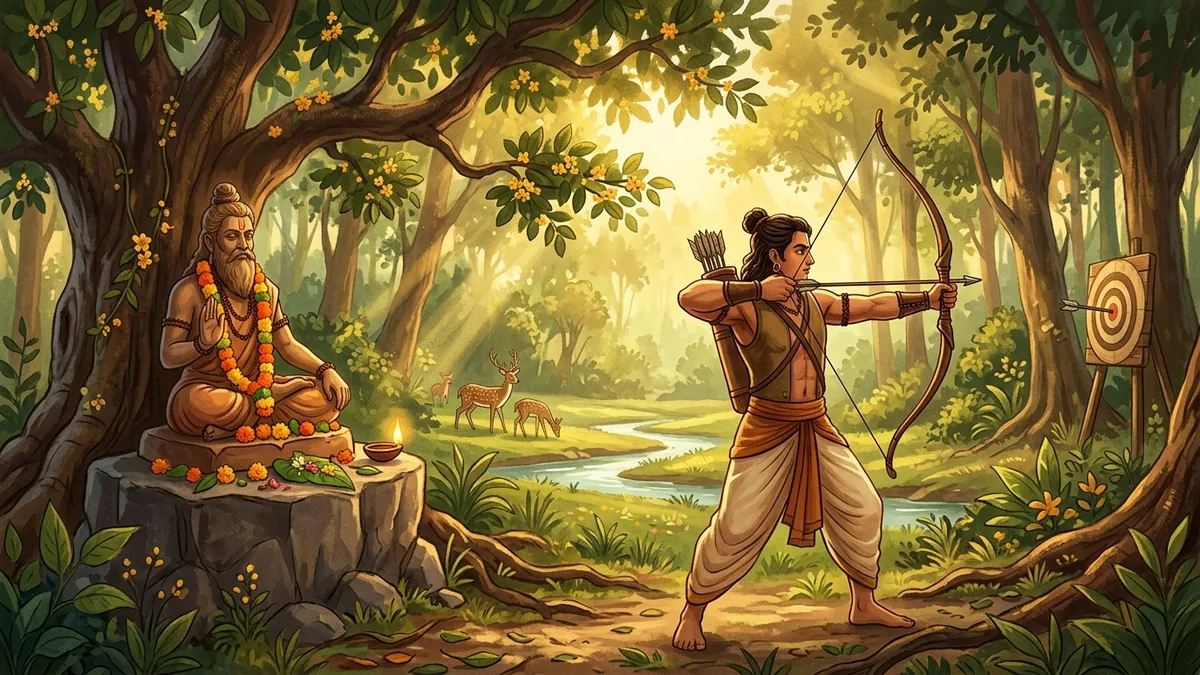
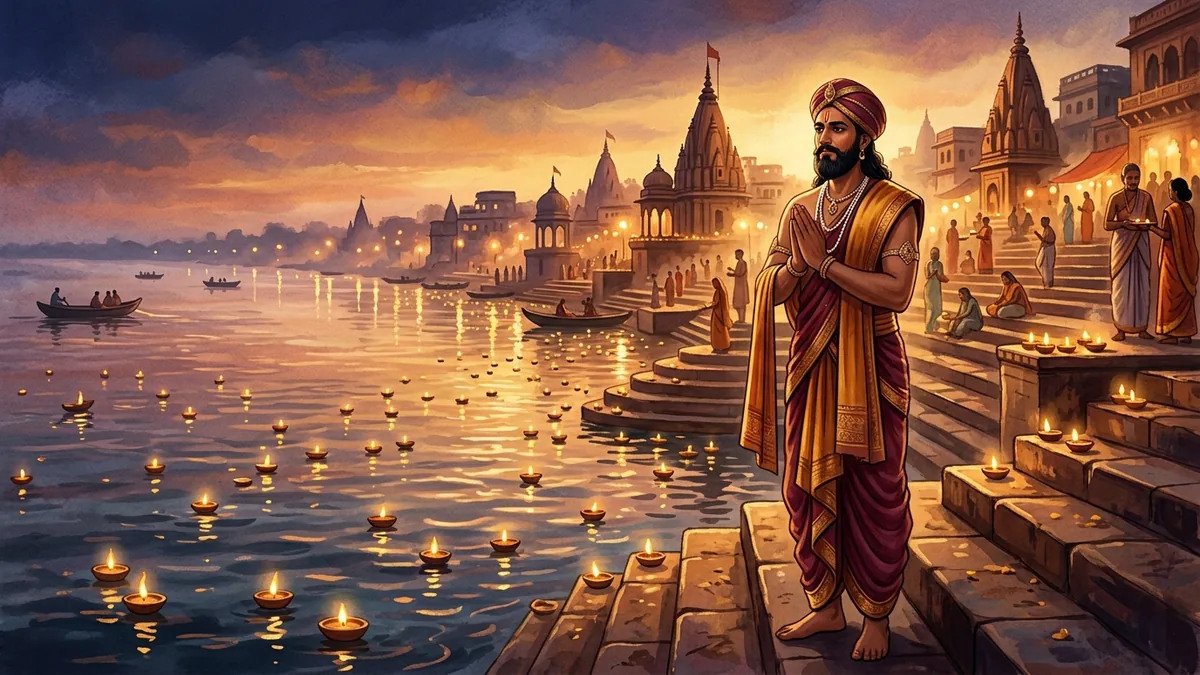
पिता के मुख से यह शाप निकलते ही यज्ञशाला में सन्नाटा छा गया। वाजश्रवा पश्चाताप से कांप उठे, परंतु नचिकेता विचलित नहीं हुआ। उसने कहा—'पिताजी! सत्यवादी पुरुषों का वचन कभी व्यर्थ नहीं होता। आपके पूर्वजों ने सत्य का पालन किया था; मैं आपके वचन को सत्य करने के लिए सहर्ष यमलोक जाऊँगा।' नचिकेता अपने भौतिक शरीर की सीमाओं को लांघकर मृत्यु के अधिपति यमराज की दिव्य राजधानी यमपुरी पहुँच गया। परंतु उस समय यमराज अपने भवन में उपस्थित नहीं थे। नचिकेता ने यम के द्वार पर ही आसन लगाया और भूखा-प्यासा, बिना जल ग्रहण किए, तीन रात्रियों तक यमराज की प्रतीक्षा में ध्यानमग्न बैठा रहा।
A stunned silence paralyzed the assembly. Horrified by his own venomous utterance, Vashishrava wept in bitter regret. But Nachiketa stood unperturbed, his countenance shining with sublime peace: 'Father, grieve not for what is spoken. The noble ancestors never retreated from their vows; truth is the foundation of the cosmos. I shall gladly depart for Yamaloka to preserve the sanctity of your word.' Transcending the physical realm, the boy journeyed to the shadowy citadel of Yama, the Lord of Death. Finding Yama absent on cosmic duties, Nachiketa seated himself upon the stone threshold, refusing sustenance or water, waiting in unbroken meditation for three full days and nights.
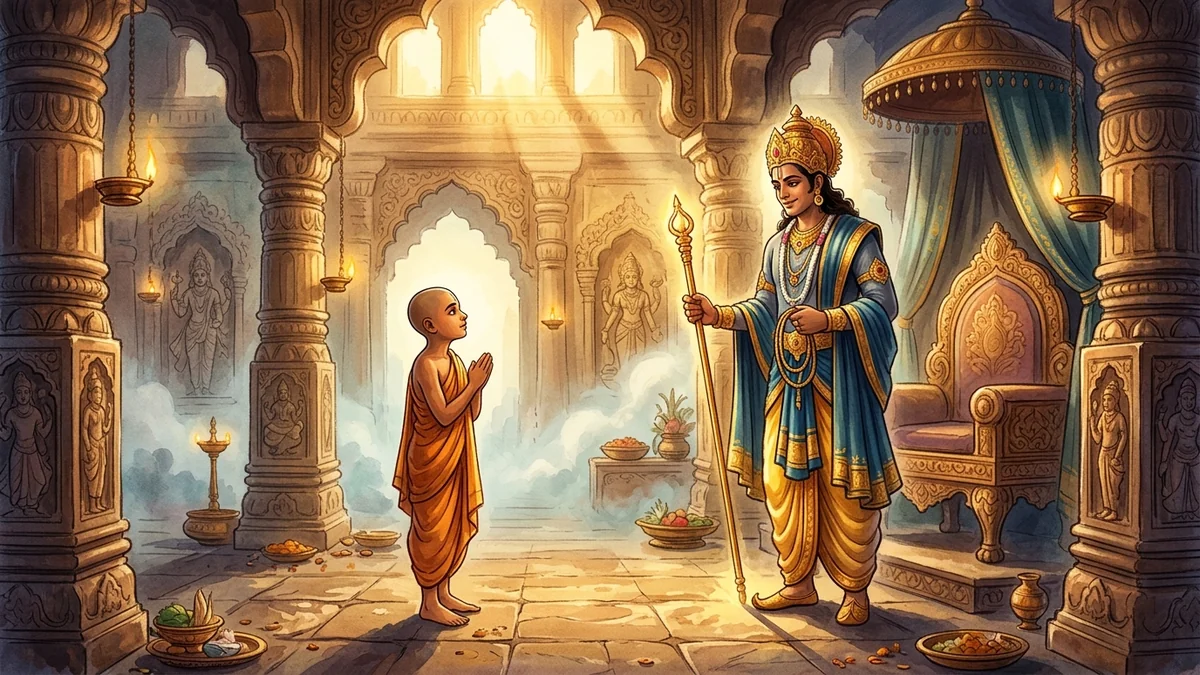
चौथे दिन जब यमराज लौटे, तो उन्होंने अपने द्वार पर एक दिव्य, तेजोमय ब्राह्मण बालक को तीन दिनों से भूखा-प्यासा बैठा देखा। यमराज की पत्नी ने भयभीत होकर कहा कि एक अतिथि का बिना सत्कार के तीन दिन द्वार पर भूखा रहना संपूर्ण कुल और राज्य के पुण्यों को भस्म कर देता है। यमराज ने स्वयं अपने हाथों से नचिकेता के चरण धोए और पश्चाताप करते हुए कहा—'हे निष्पाप तपस्वी बालक! तुम मेरे द्वार पर तीन रात भूखे रहे हो, अतः इस पाप के प्रायश्चित स्वरूप तुम मुझसे अपनी इच्छा के तीन वरदान माँग लो!'
Returning on the fourth morning, Yama was shocked to discover a luminous youth meditating outside his portal, dehydrated and fasting. The ancient scriptures warned that allowing a guest to starve upon a threshold for three nights incinerates the host’s accumulated virtues and spiritual destiny. Approaching with hands folded, Yama washed the boy’s dust-stained feet with his own hands and proclaimed: 'O holy seeker, three nights hast thou dwelled at my gates without food or water; therefore, to expiate my house’s neglect, ask of me three boons, one for each night of thy fast!'
नचिकेता ने पहले वरदान में माँगा—'हे यमदेव! जब मैं यहाँ से पृथ्वी पर लौटूँ, तो मेरे पिता का क्रोध शांत हो जाए, उनका हृदय मेरे प्रति वात्सल्य से भर जाए और वे मुझे पहचानकर प्रेम से गले लगाएँ।' यमराज ने कहा—'तथास्तु!' दूसरे वरदान में नचिकेता ने उस दिव्य 'अग्नि-विद्या' का ज्ञान माँगा जिससे मनुष्य स्वर्गलोक और आत्म-शुद्धि प्राप्त करता है। यमराज ने उसे वह गूढ़ विद्या सिखाई। नचिकेता ने उसे इतनी तीव्र गति से कंठस्थ कर लिया कि यमराज ने उस अग्नि का नाम ही 'नाचिकेत अग्नि' रख दिया। अब तीसरे वरदान की बारी आई। नचिकेता ने हाथ जोड़े और अत्यंत गंभीर स्वर में पूछा—'हे मृत्युंजय! मृत्यु के पश्चात जब यह देह भस्म हो जाती है, तो कुछ कहते हैं कि आत्मा का अस्तित्व रहता है और कुछ कहते हैं कि सब कुछ समाप्त हो जाता है। मृत्यु के इस पार और उस पार का परम सत्य क्या है? मुझे आत्मा और अमरत्व का ज्ञान प्रदान कीजिए!'
For his first boon, Nachiketa requested filial reconciliation: 'O Lord of Death, when I return to the mortal world, let my father’s wrath be extinguished; let his heart be filled with peace and parental love, recognizing me with joy.' Yama granted it gladly: 'Be it so!' For his second boon, Nachiketa requested the esoteric science of the celestial sacrificial fire (Agni-Vidya), through which humanity attains higher consciousness and transcends suffering. Pleased by his extraordinary intellect, Yama taught him the cosmic fire, naming it the 'Nachiketa Fire' forevermore. Then arrived the third boon. Nachiketa gazed directly into the eyes of Death and spoke: 'O Yama! When mortal breath ceases, a profound doubt haunts mankind: some say the Self continues to exist, while others claim all is extinguished. Reveal unto me the supreme mystery of death: what is the true nature of the Soul (Atman)?'
नचिकेता का यह प्रश्न सुनते ही यमराज स्तब्ध रह गए। उन्होंने कहा—'वत्स! यह प्रश्न अत्यंत सूक्ष्म है, देवता भी इसे नहीं जान पाते। तुम मुझसे संसार के समस्त भोग माँग लो—शताब्दियों की लंबी आयु, सोने-चाँदी के भंडार, हाथी-घोड़े, अप्सराओं के नृत्य और संपूर्ण पृथ्वी का निष्कंटक साम्राज्य ले लो! परंतु इस प्रश्न को छोड़ दो।' नचिकेता ने मुस्कुराते हुए उन सारे प्रलोभनों को एक ही झटके में ठुकरा दिया और कहा—'हे यमराज! ये समस्त भोग और अप्सराएँ केवल मनुष्य की इंद्रियों के तेज को नष्ट करती हैं। सारा धन और सारा साम्राज्य भी मृत्यु के सम्मुख एक दिन राख बन जाता है। जो स्वयं नश्वर है, वह मुझे क्या तृप्ति देगा? मुझे इन क्षणिक सुखों (प्रेय) की तनिक भी चाह नहीं है; मुझे केवल उस शाश्वत सत्य और आत्मज्ञान (श्रेय) का उपदेश दीजिए!' नचिकेता के इस अद्वितीय वैराग्य, प्रज्ञा और अडिग संकल्प को देखकर यमराज का हृदय आनंद से झूम उठा। यमराज ने उसे वह परम ज्ञान दिया—'न जायते म्रियते वा विपश्चित्... यह आत्मा न कभी जन्म लेती है और न कभी मरती है। यह अजन्मा, नित्य, शाश्वत और पुरातन है। शरीर के नष्ट होने पर भी इसका कभी विनाश नहीं होता। जो स्वयं को जान लेता है, वह मृत्यु के भय से सदा के लिए मुक्त हो जाता है।' नचिकेता वह अमर ब्रह्मज्ञान प्राप्त करके संसार का सबसे महान आत्मज्ञानी बना। यह अमर आख्यान सिद्ध करता है कि सांसारिक प्रलोभनों की चकाचौंध से परे हटकर आत्मज्ञान और शाश्वत सत्य की खोज ही मनुष्य का सर्वोच्च धर्म है।
Yama recoiled in astonishment at the depth of the inquiry: 'Ask not this mystery, young boy! Even the gods of heaven remain bewildered by this subtle truth. Choose instead horses of gold, herds of elephants, empires spanning the oceans, heavenly damsels bearing lutes, and centuries of unclouded bodily pleasure! But demand not the secret of death.' Nachiketa surveyed the celestial bribes with sovereign disdain and replied: 'O Lord of Mortality, all sensory pleasures wither the vigor of the senses. A life extended for ten thousand years remains an eye-blink before eternity. Keep thy chariots and thy celestial dancers! How can wealth satisfy a man who has stood face-to-face with Death? I seek not fleeting pleasure (Preyas); unveil unto me the immortal, unchanging Truth of the Self (Shreyas)!' Transported with reverence by such peerless dispassion, Yama recognized the ideal disciple. Opening the floodgates of Upanishadic revelation, Yama declared: 'The Soul is never born, nor does it ever die; uncreated, eternal, ancient, and indestructible, it is not slain when the body is slain. He who realizes this Atman transcends the illusion of death forever.' Armed with this supreme realization, Nachiketa returned to the world as an immortal master. The eternal parable stands through millennia: true greatness lies not in accumulating transient worldly treasures, but in possessing the relentless courage to pierce through illusion and realize the deathless divinity within.