

Digital Ethics
The Phone in the Lost-and-Found Box
A child finds a phone at a community event and gives it to the official lost-and-found desk instead of opening messages or trying to identify the owner privately.
Technology must serve human well-being, not enslave it. Practicing mindfulness, privacy, and kindness online is our modern moral duty.
A child finds a phone at a community event and gives it to the official lost-and-found desk instead of opening messages or trying to identify the owner privately.
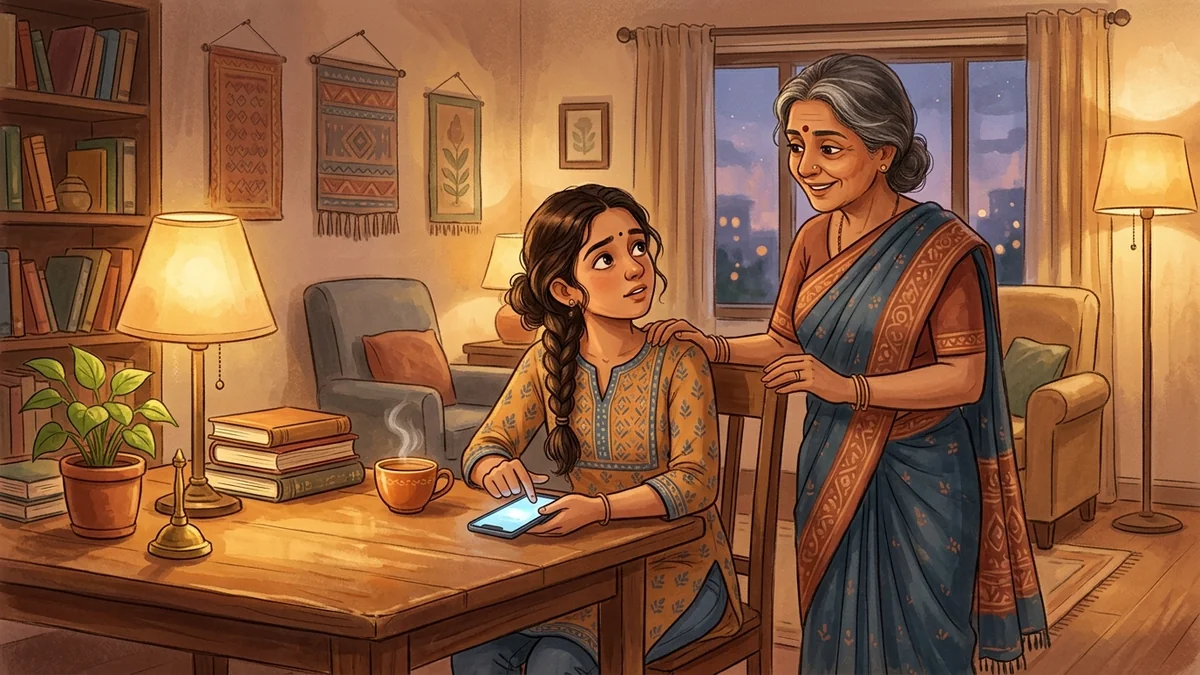
During the auspicious festive week of Diwali, an incendiary and fabricated video began circulating across local WhatsApp channels, falsely alleging that a revered, fifty-year-old family sweet shop was adulterating festive confections with industrial toxic dyes and animal tallow. Aryan, a reckless tenth-grader hungry for viral social clout and attention, received the clip. Without verifying a single factual syllable, he forwarded the defamatory video into five massive residential society groups alongside a sensational caption: 'Boycott these poisoners immediately! Forward to save your families!' That solitary, careless click unleashed a catastrophic chain reaction. Within hours, an enraged vigilante mob descended upon the innocent merchant's storefront, vandalizing the glass counters, dumping thousands of kilograms of sweets into gutters, and brutally beating the merchant’s elderly seventy-year-old father into a coma. When the state forensic food laboratory published its emergency analysis, the truth detonated: the confectionery was pure, and the clip was a malicious, deepfake smear campaign fabricated by an envious competitor. Summoned to the police cyber-crime division and brought face-to-face with the shattered, sobbing merchant beside his father's hospital bed, Aryan’s conscience was torn to shreds. He realized that an unverified forward is not harmless gossip, but a lethal weapon of mass destruction. Liquidating his college savings and selling his motorcycle, Aryan paid for the medical bills and led a youth rehabilitation campaign. The story demonstrates that forwarding unverified rumors is an act of criminal negligence; in the digital era, verifying facts before sharing is the sacred moral duty of every conscious citizen.

During an opulent family wedding reception, ninth-grader Riya, obsessed with cultivating her social media following, candidly snapped an embarrassing and unflattering photograph of her introverted cousin, Megha. The picture captured Megha accidentally tripping into the dessert table, her silk lehenga and face smeared with dark chocolate cake. Blinded by the lust for viral likes and algorithmic engagement, Riya published the photograph onto her public Instagram feed alongside a mocking hashtag, without asking for Megha’s consent. What Riya dismissed as 'just harmless banter' metastasized into a living nightmare: regional high-school meme pages scraped the image, superimposing cruel text that went viral across hundreds of thousands of screens. Subjected to ruthless nationwide cyberbullying and locker-room mockery, Megha suffered severe panic attacks, locked herself within a darkened room, and refused to sit for her final board trials. Visiting her cousin’s home and finding Megha shivering in clinical depression on the verge of self-harm, Riya’s shallow world collapsed. Confronted by the catastrophic human cost of her vanity, Riya deleted the post, mobilized cyber-complaints to take down the abusive memes, and uploaded an unvarnished public video confessing her callousness and championing the inviolable sanctity of digital consent. The story demonstrates that another person's dignity is never content for your social media amusement; sharing someone's image without explicit consent is an unforgivable violation of personal boundaries.
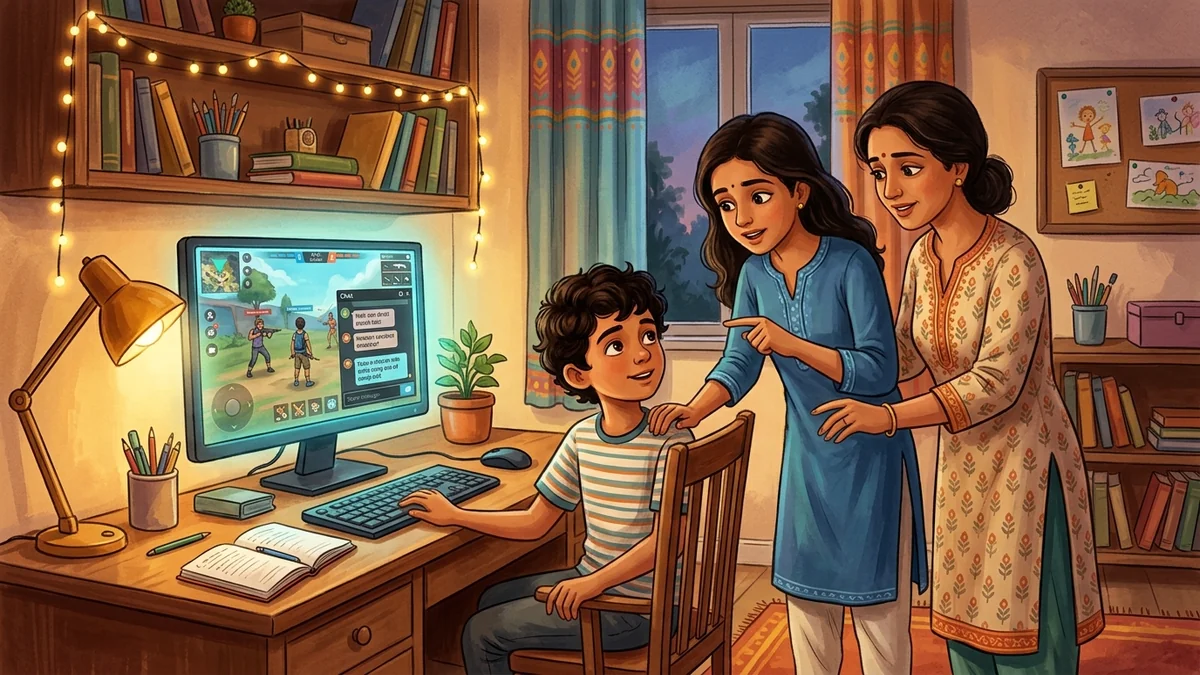
Thirteen-year-old Dev was an avid enthusiast of competitive online multiplayer battle-royale games, desperate to climb the regional leaderboards. During an intense match, he was befriended by a prodigiously skilled and exceptionally generous player operating under the handle 'ShadowDominator.' To cultivate Dev’s uncritical trust, the stranger gifted him hundreds of dollars worth of rare weapon skins and elite battle passes. Over several weeks, the virtual camaraderie turned intimate; the stranger gradually probed into Dev’s personal life: 'Which school do you attend?', 'Where do your parents work?', 'Can you take a video tour of your house when you are alone?' Finally, the predator set the trap: promising Dev the game’s ultimate mythical dragon rifle, he instructed Dev to sneakily relay a six-digit bank OTP sent to his father's smartphone. Blinded by gaming lust, Dev was entering the secret digits when his observant older sister, Shreya, intervened. Intercepting the chat logs, Shreya alerted their parents and the cyber-crime unit immediately. Forensic digital tracking unmasked a horrifying reality: 'ShadowDominator' was not a teenage gamer, but an operative of an international cyber-extortion cartel that groomed children through gaming incentives to siphon bank accounts and orchestrate ransom schemes! Police apprehended the predator before irreparable harm occurred. Dev wept in terrifying realization, learning never to bridge virtual play with real-world personal exposure. The story demonstrates that predatory wolves frequently wear sheep's clothing behind digital avatars; absolute vigilance and strict boundaries with online strangers are non-negotiable for personal safety.
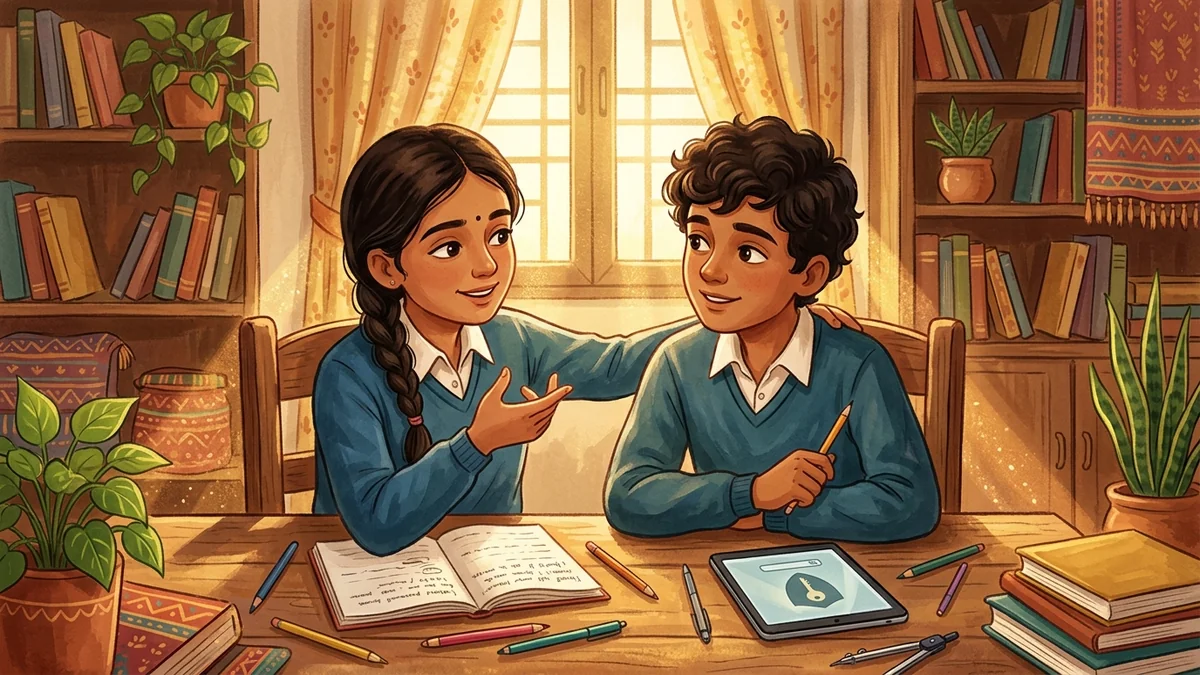
Twelfth-graders Kunal and Tarun were elite computer science prodigies, inseparable childhood companions, and co-developers of an award-winning assistive navigation application for the blind titled 'SmartVision.' In a moment of naive sentimentality and misplaced idealism, Kunal shared his master credentials—his institutional portal, cloud storage, and repository root passwords—with Tarun, declaring that true brotherhood harbored zero secrets. Forty-eight hours prior to the National Software Hackathon Grand Finale, a petty ego clash erupted between the two over who would deliver the keynote demonstration to venture capitalists. Blinded by sudden venomous jealousy and wounded vanity, Tarun logged into Kunal's cloud drive at midnight utilizing the confidential password, permanently wiping out Kunal’s primary code modules and presentation decks. Discovering his empty directory at dawn, Kunal’s world collapsed in grief. However, an emergency forensic audit conducted by the school IT department traced the deletion timestamps directly to Tarun’s home IP address. Shattered by his brother's unforgivable betrayal, Kunal wept bitter tears, while Tarun faced immediate disciplinary suspension and digital expulsion. Fortunately, Kunal’s disciplined practice of maintaining an encrypted offline hardware backup salvaged the project, earning him the national trophy. The harrowing ordeal imparted a permanent, life-saving axiom: passwords are like personal keys—sacred, non-negotiable boundaries that must never be surrendered to anyone, regardless of emotional intimacy. The story illustrates that human passions are volatile, but digital security must remain absolute; guarding your credentials is the fundamental discipline of the modern digital soul.

Neha, an impoverished and exceptionally talented tenth-grader at Government Girls School, brought regional glory to her institution by clinching the State Classical Vocal Championship. When a video recording of her sublime performance was featured on the school’s official digital portal, it received widespread acclaim. Consumed by bitter jealousy, her classmate Harsh could not stomach her ascension. Convinced that the internet afforded impenetrable anonymity, Harsh fabricated a burner account titled 'DarkKnight_Trolls99,' unleashing an unrelenting barrage of vile, abusive, and defamatory comments across Neha's performance thread and student confession pages—cruelly ridiculing her modest background, physical appearance, and artistic voice. The vicious cyber-assault shattered Neha’s sensitive spirit; traumatized by the faceless hostility, she smashed her musical instruments, fell into clinical depression, and vowed never to sing again. Recognizing the criminal severity of the digital bullying, the administration alerted the State Cyber Crime Task Force. Employing advanced packet inspection, device fingerprinting, and ISP routing telemetry, forensic investigators unmasked the 'anonymous' troll within twenty-four hours: tracing the hardware signature directly to Harsh's smartphone! When uniformed cyber officers arrived at his home, confronting his horrified parents with the forensic evidence, Harsh’s illusion of digital invisibility shattered into pathetic terror. Dragged before the school assembly, Harsh wept in profound disgrace, falling at Neha's feet to beg for mercy. The story demonstrates that digital anonymity is a coward's myth; every keystroke leaves an indelible footprint, and weaponizing anonymous cruelty leaves permanent, bleeding scars upon living human hearts.
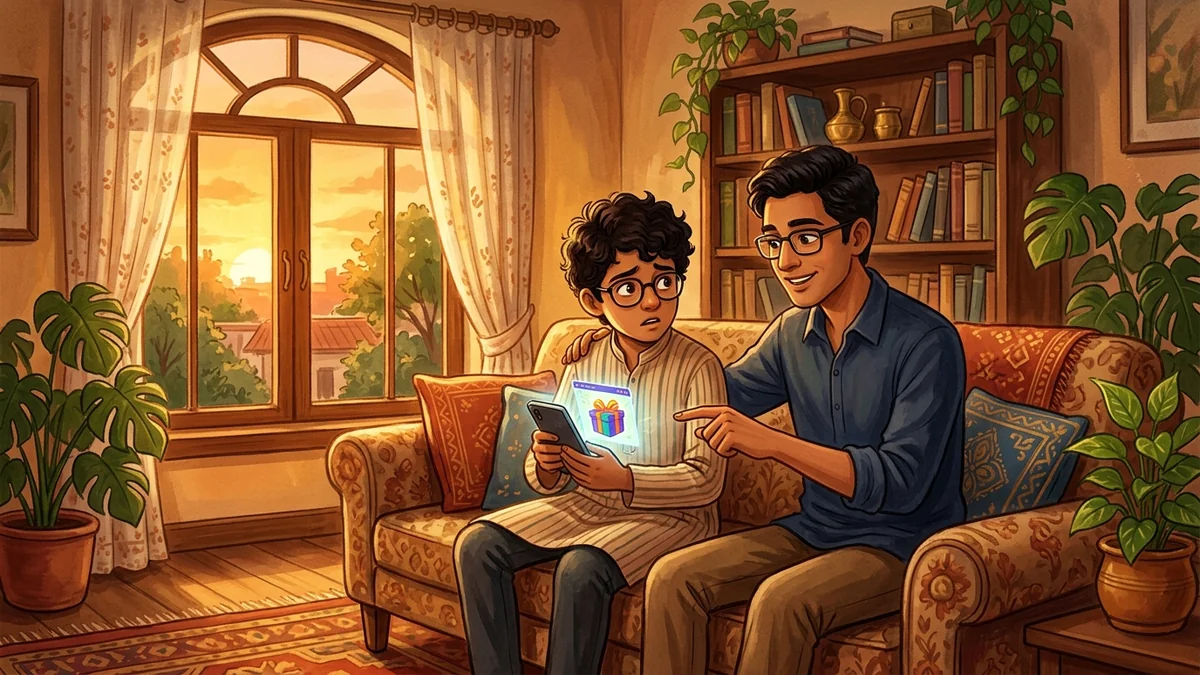
Pranav, a superficial and impressionable tenth-grader desperate to flaunt an elite smartphone before his affluent classmates, received an alluring SMS notification: 'CONGRATULATIONS! You are the grand winner of the Diwali Mega Raffle! You have won an iPhone 15 Pro and Rs. 50,000 in cash! Click the portal link below to claim your prize instantly; only a nominal courier dispatch fee of Rs. 199 applies!' Blighted by naive greed and adrenaline, Pranav bypassed critical reflection and clicked the link. The forged phishing portal mimicked a premier national banking portal with terrifying fidelity. Frantic to secure the gadget, Pranav retrieved his widowed mother’s debit card from her purse, entering the sixteen-digit account number, expiration dates, and the confidential CVV security digits. When a six-digit bank authorization code arrived on his mother’s phone, Pranav entered the OTP without reading the text. Within ninety seconds, a catastrophic notification pinged: the entire forty-five-thousand-rupee monthly salary of his mother—intended for domestic rent and his younger sister’s medical fees—had been siphoned by a cyber-phishing cartel! The household collapsed into hysteria; his mother fainted in anguish. Consumed by searing remorse, Pranav dialed the National Cyber Crime Emergency Helpline (1930) and ran across town to freeze the beneficiary gateway, successfully interdicting thirty thousand rupees before it cleared. To repay the remaining balance, Pranav spent six months delivering dawn newspapers and tutoring primary students, returning every rupee to his mother's hands. He established a school cyber-vigilance cell titled 'The Myth of Free Cheese.' The story illustrates that the lure of unearned luxury is the deadly bait of digital predators; in cyberspace, if something appears too good to be true, it is an engineered trap; guard your financial keys with unyielding vigilance.
During the high-stakes annual student council presidential elections at Government Model School, eleventh-grader Divya was the undisputed favorite. Known across the province for unblemished scholastic integrity, humble service, and advocacy for disadvantaged students, her victory seemed assured. Her political opponent, Yash, an arrogant and entitled boy, could not stomach imminent defeat. Determined to annihilate her campaign at any cost, Yash engineered a sinister and criminal cyber-conspiracy: utilizing open-source Generative AI deepfake neural architectures, he cloned Divya’s facial likeness and synthesized her vocal timbre, manufacturing a hyper-realistic, defamatory video. The fabricated recording depicted Divya covertly accepting bundles of cash from a predatory private coaching cartel while using foul profanities to mock underprivileged students. Twelve hours before polling commenced, Yash weaponized the deepfake across student WhatsApp networks. The campus detonated in mob hysteria: former loyalists branded Divya a corrupt hypocrite, and the election tribunal served an emergency disqualification citation. Paralyzed by the assassination of her pristine character, Divya collapsed in traumatic despair. However, the school’s computer science luminary, Kabir, refused to succumb to viral hysteria. Deploying digital forensics, Kabir dissected the video frame-by-frame—identifying telltale neural artifacts, abnormal corneal specular reflections, and synthetic acoustic frequency anomalies. Partnering with the state cyber-crime unit, they extracted the rendering hash signatures directly from Yash’s personal hard drive! Law enforcement apprehended Yash under cyber-defamation provisions, resulting in his immediate expulsion. Vindicated before the assembly, Divya won the presidency in a historic landslide. The story demonstrates that in an era of synthetic media, sensory perception is no longer the arbiter of reality; truth requires forensic skepticism, and judging character without verifiable proof is a monstrous moral crime.

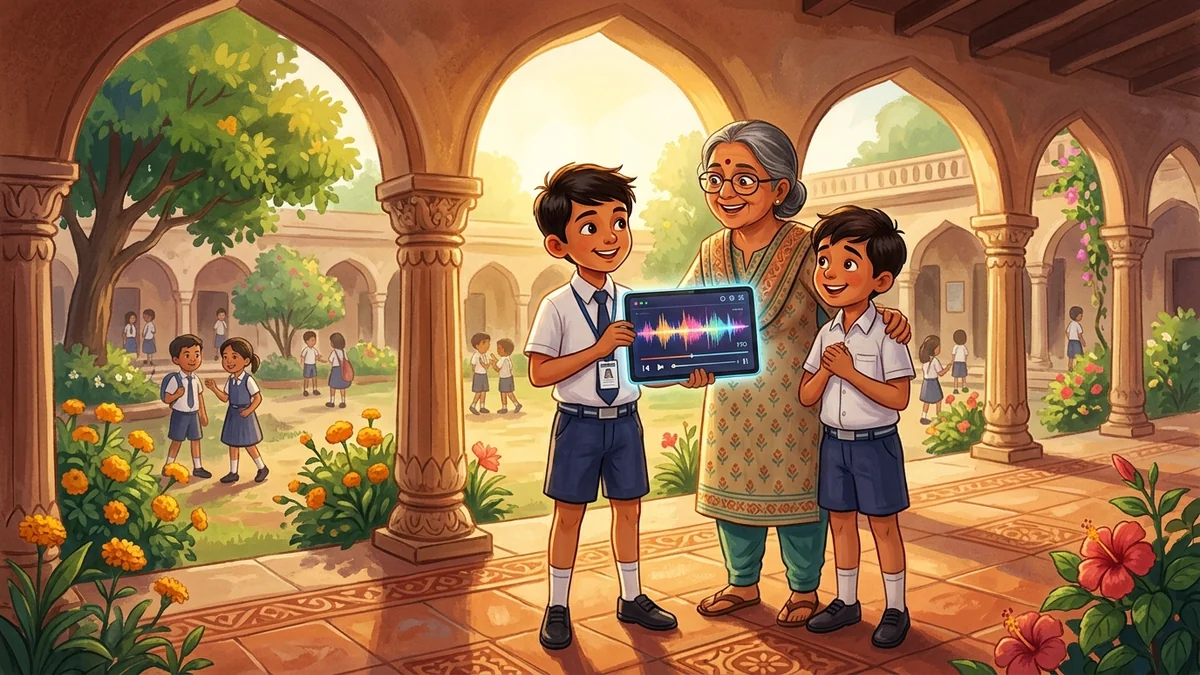
Upon receiving his first smartphone for his twelfth birthday, seventh-grader Aarav was dazzled by the intoxicating allure of social media likes and notifications. In a classroom group chat, a classmate named Mayank was mocked for wearing torn canvas shoes; swept up in digital peer pressure, Aarav posted a laughing reaction. Witnessing Mayank’s silent humiliation and academic withdrawal, Aarav’s conscience stirred. Through a profound dialogue on character and empathy with his grandfather, Aarav recognized that typed words carry the same karmic weight as spoken speech. Apologizing with sincere humility, he transformed his digital habits, becoming a champion for online kindness.