Courage
🎯 Topic Pillar Hub 📚 15 Illustrated Stories

Courage

True courage is not the absence of fear, but the moral conviction to stand firm for truth and justice even when alone.

✕ Clear
All Stories Friendship Discipline & Duty Courage Honesty Kindness Patience & Humility Digital Ethics Environment Civic Duty & Safety Wisdom Fairness & Inclusion Compassion
Shravan Kumar's Devotion

Shravan Kumar's Devotion

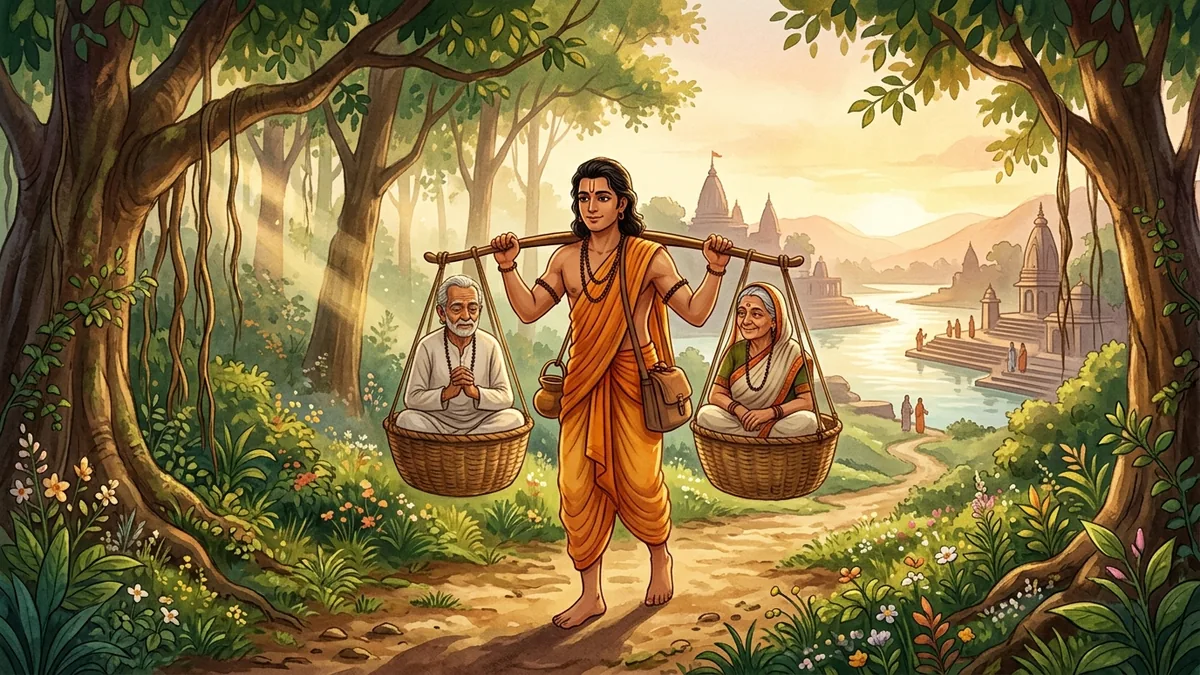
In ancient India lived Shravan Kumar, a noble youth whose entire existence was consecrated to the loving service of his elderly, visually impaired parents. When his parents expressed a dying wish to visit the sacred shrines of the land, Shravan, possessing neither wealth nor beasts of burden, fashioned a sturdy bamboo palanquin (kanwar). Placing his parents in balanced wicker baskets, he bore them upon his youthful shoulders across hundreds of leagues. Reaching the forests of the Sarayu river, his parents grew parched with thirst. As Shravan dipped his brass urn into the dark waters, King Dasharatha of Ayodhya mistook the bubbling sound for a wild elephant and unleashed a sound-seeking arrow (Shabdabhedi Bana). The deadly shaft pierced Shravan’s chest. In his dying breath, the devoted son thought not of his agonizing wound, but implored the grief-stricken king to carry water to his waiting parents. The tragedy remains an eternal monument to filial devotion, unswerving duty, and boundless selflessness.

Eklavya's Dedication

Eklavya's Dedication

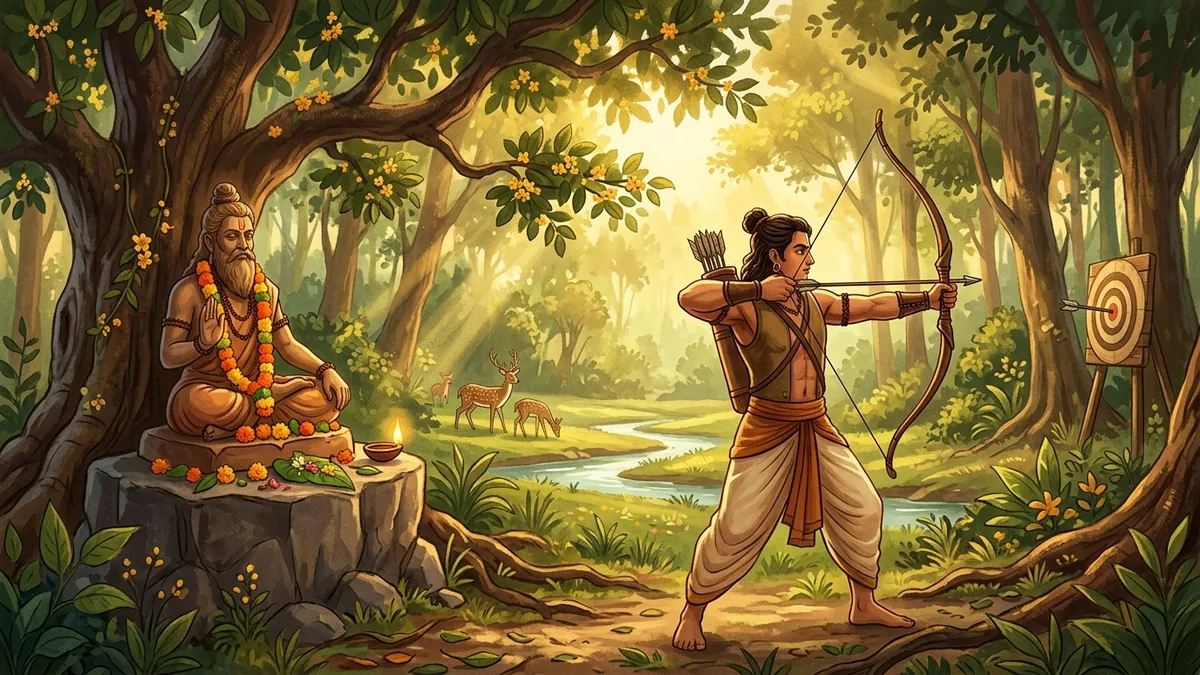
During the epic era of the Mahabharata, Eklavya, son of the Nishada chieftain Hiranyadhanus, burned with an insatiable aspiration to master the divine science of archery. Journeying to the royal academy of Hastinapur, he prostrated before Acharya Dronacharya, seeking initiation. Constrained by royal oaths and aristocratic social conventions, Dronacharya refused to accept the forest-dwelling tribal youth. Undeterred by rejection, Eklavya returned to the wild woods, sculpting a lifelike clay icon of Drona beneath a sacred tree. Consecrating this image as his living preceptor, he practiced with monumental discipline and unbroken concentration day and night. His self-directed mastery soared until his precision surpassed even the royal princes. When he painlessly stitched shut the barking jaws of a hound with seven crisscrossed arrows without spilling a single drop of blood, Dronacharya was awed by his supreme genius. To honor his prior oath to make Arjuna the world's greatest archer, Drona demanded Eklavya's right thumb as Guru Dakshina. Without a tremor of hesitation or malice, Eklavya severed his thumb with his dagger and placed it at his master's feet. The legend stands as an immortal testament to the triumph of autodidactic determination and boundless devotion.

Raja Harishchandra

Raja Harishchandra

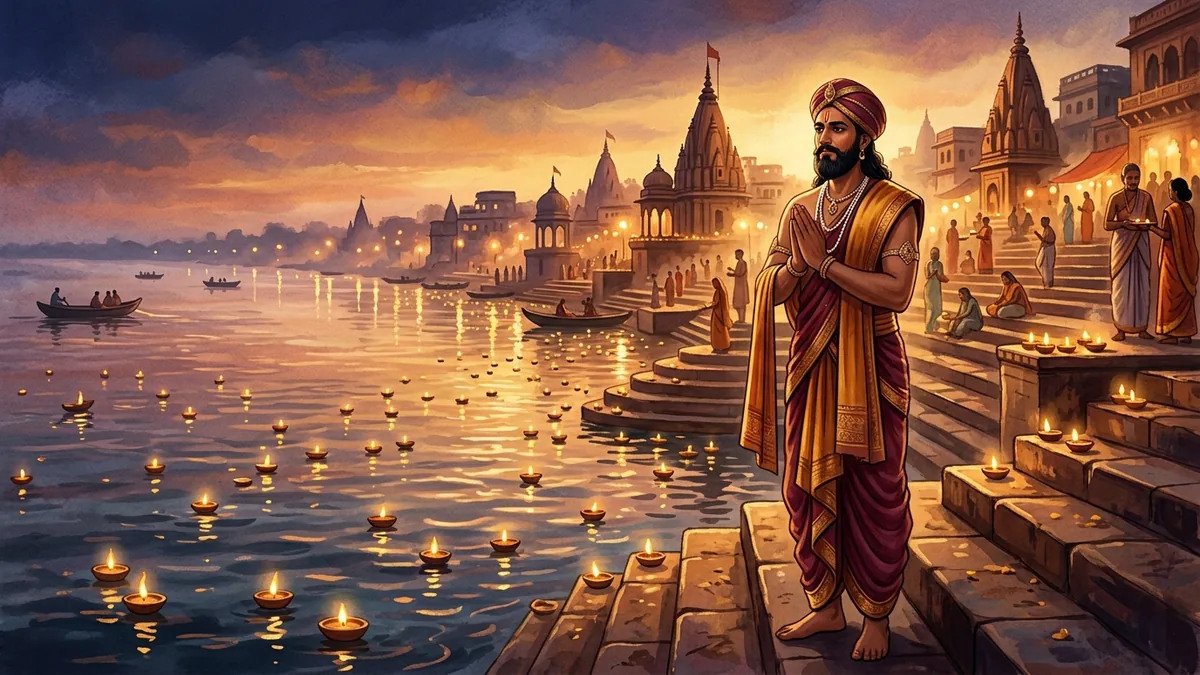
King Harishchandra of Ayodhya, a noble scion of the Solar dynasty, was celebrated across the three realms for his incorruptible truthfulness, justice, and sacred commitment to his word. To test his moral fortitude, the sage Vishwamitra initiated a divine trial. In a vivid dream, Harishchandra bequeathed his entire empire to the sage; upon waking, he treated the dream promise as an inviolable vow, relinquishing his throne, treasury, and royal robes. To pay the customary sacrificial fee (dakshina), the monarch sold his queen Taramati and young son Rohitashva into domestic servitude, and sold himself to a cremation ground keeper (chandala) in Kashi. Working night and day, Harishchandra collected the shroud tax from the grieving. Tragedy deepened when young Rohitashva died from a fatal cobra bite. In the dead of midnight, Queen Taramati bore the child's lifeless body to the cremation grounds in the pouring rain. Recognizing his wife and dead son, Harishchandra wept bitter tears, yet refused to compromise his duty, demanding the mandatory shroud fee. As Taramati prepared to tear her ragged garment to satisfy the tax, the heavens parted; celestial deities and Sage Vishwamitra appeared, restoring the child to life and blessing the king for holding truth higher than mortal life. The legend demonstrates that integrity outshines worldly power and that truthfulness is the ultimate pillar of human nobility.

Arjuna and the Bird's Eye

Arjuna and the Bird's Eye

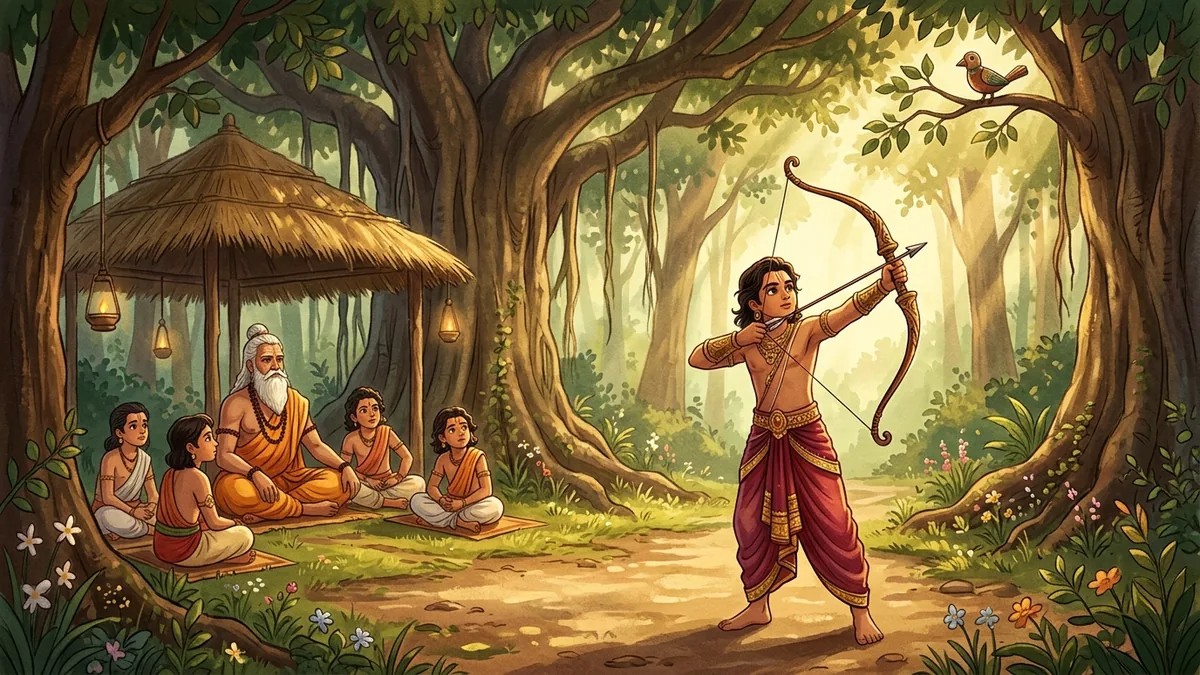
At the royal martial academy of Hastinapur, Acharya Dronacharya convened a pivotal examination to evaluate the focus and mental discipline of the Kuru princes. High upon a remote branch of a sprawling pipal tree, he affixed a painted wooden bird. Lining up the Kaurava and Pandava brothers with their bows strung, Dronacharya tested them individually. First, he summoned Yudhishthira and asked what he observed. Yudhishthira replied that he saw the sky, the foliage, the tree trunk, the bird, and the master himself. Drona ordered him to lower his bow. Duryodhana, Bhima, and the others offered similar comprehensive descriptions and were dismissed. Finally, Arjuna stepped to the mark. Drawing his bowstring to his cheek, Drona asked, 'Arjuna, what do you behold?' Arjuna replied with calm intensity that he saw neither the sky, nor the tree, nor the leaves, nor even the bird’s body—he saw solely the black pupil of the bird's eye. Drona commanded him to loose the shaft, and the arrow struck dead-center through the target. The classic story proves that monumental achievement requires laser-like concentration that eliminates every surrounding distraction.

Lord Ganesha and Kartikeya's Race

Lord Ganesha and Kartikeya's Race

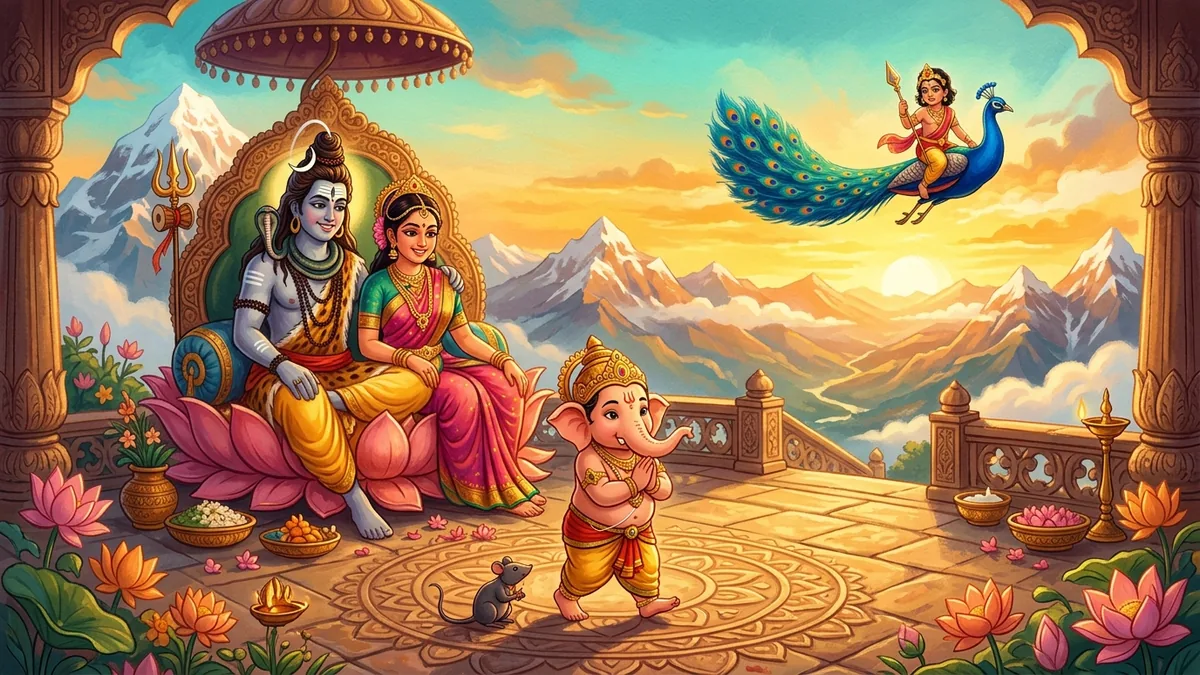
Upon sacred Mount Kailash, the celestial sage Narada arrived bearing an extraordinary divine fruit of supreme wisdom and transcendental enlightenment. Both divine brothers, Kartikeya and Ganesha, expressed an eager desire to receive the sacred prize. To resolve the dispute justly, Lord Shiva and Goddess Parvati decreed a contest: whoever circled the entire cosmos (the universe) three times and returned first to Kailash would be crowned the worthy recipient. The athletic Kartikeya mounted his swift peacock and shot into the celestial spheres like a meteor. In contrast, Ganesha possessed a heavy, gentle frame and rode a humble field mouse. Recognizing that physical velocity was not his path, Ganesha invoked the supreme philosophical truth embedded in the scriptures: within one's parents reside all universes, sacred shrines, and divine wisdom. Folding his hands with profound devotion, Ganesha walked three reverent circumambulations (pradakshina) around Shiva and Parvati. When the divine parents questioned his act, Ganesha answered that honoring parents encompasses the circumambulation of the entire cosmos. Deeply moved by his profound wisdom, Shiva and Parvati bestowed the divine fruit upon him. The immortal legend teaches that spiritual discernment, wisdom, and reverent devotion infinitely transcend mere physical speed and brute force.

Gautam Buddha and Angulimala

Gautam Buddha and Angulimala

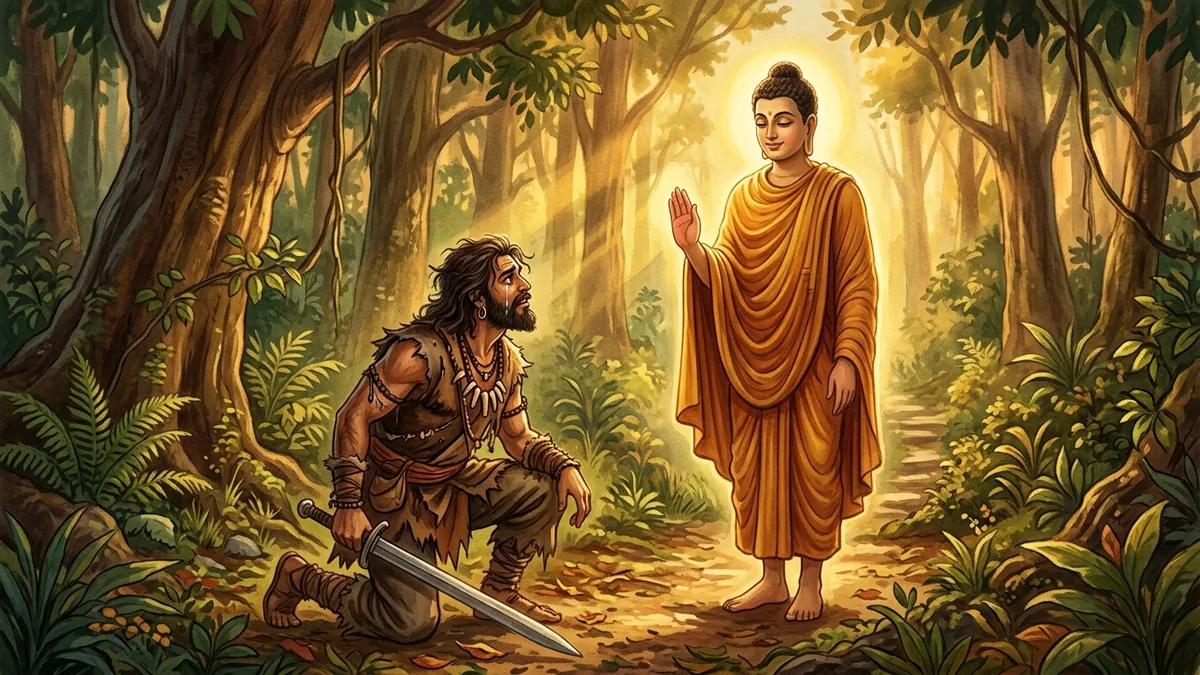
In the untamed, jagged ravines of Kosala dwelled Angulimala, an infamous, bloodthirsty outlaw who murdered travelers and wore a gruesome necklace woven from the severed fingers of his victims. His terror was so absolute that even King Prasenajit’s royal cavalry feared to enter his forest domain. When Gautama Buddha journeyed toward that wilderness alone on foot, terrified villagers begged him to turn back. Moved by boundless compassion, the Tathagata smiled and walked calmly into the outlaw's territory. Brandishing a dripping broadsword, Angulimala charged the solitary monk, bellowing: 'Halt, ascetic!' Continuing his serene stride, Buddha turned and spoke with transcendent gentleness: 'Angulimala, I have halted long ago, having ceased all violence and desire; it is you who have not yet halted your cycle of slaughter.' The fearless majesty of Buddha’s countenance and the profound metaphysical piercing of his words shattered the bandit's hardened soul. Casting down his blade, Angulimala wept and prostrated before the Master, seeking monastic refuge. Buddha initiated him as the monk Ahimsaka. The legend demonstrates that hatred cannot be extinguished by violence, but dissolves forever before the power of unconditional love and fearless truth.

Maharana Pratap and Chetak

Maharana Pratap and Chetak

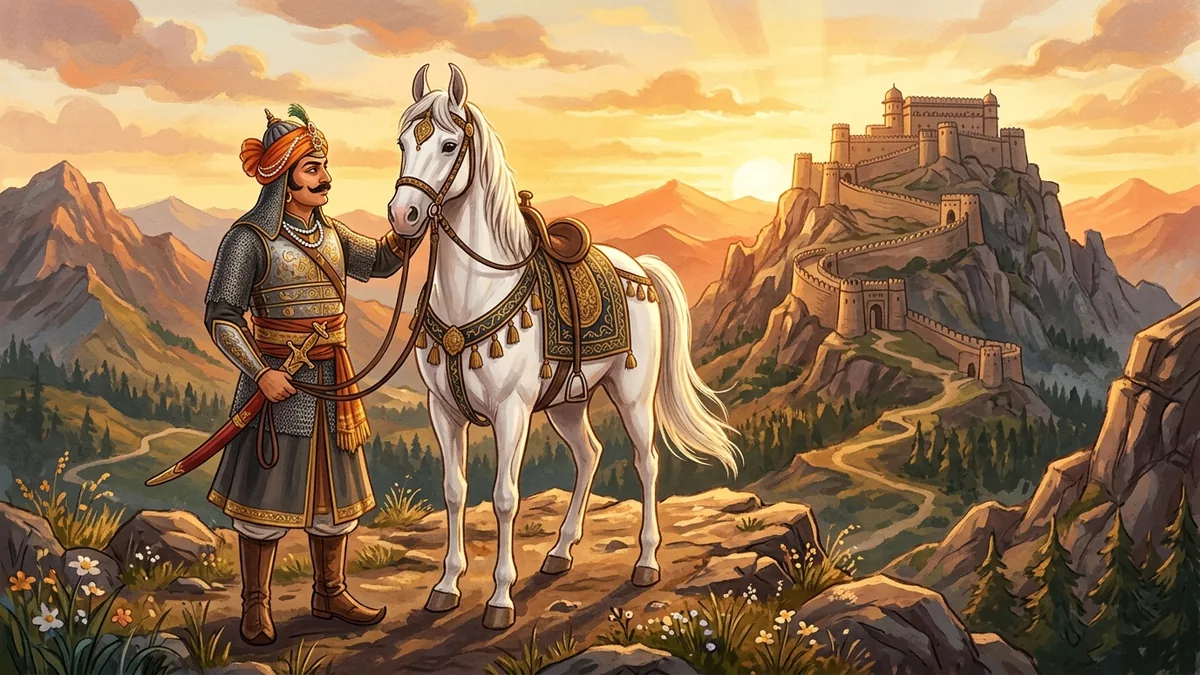
In the historic, bloody battle of Haldighati in 1576, Maharana Pratap, the immortal beacon of Mewar’s independence, and his legendary warhorse Chetak etched an unmatched saga of valour and fidelity into the annals of history. Facing the overwhelming imperial Mughal host led by Raja Man Singh, Pratap and his band of Rajput and Bhil warriors fought desperately to defend their motherland. In the tempest of combat, Chetak performed the legendary feat of rearing high and planting his forelegs directly upon the head of Man Singh’s armored war elephant. Pratap hurled his spear, but a scythe-blade bound to the elephant’s trunk severed Chetak’s rear leg. Despite bleeding profusely and wracked with agony, the loyal steed prioritized his master’s survival above his own breath. Bearing the wounded Maharana out of the encirclement, Chetak cleared a raging 21-foot mountain ravine with a single heroic leap that no imperial pursuer dared attempt. Reaching a safe haven, the divine stallion collapsed, laying his head in Maharana Pratap’s weeping lap as he breathed his last. The legend remains an eternal tribute to unmatched loyalty, valor, and supreme sacrifice in defense of freedom.

Young Vivekananda and the Monkeys

Young Vivekananda and the Monkeys

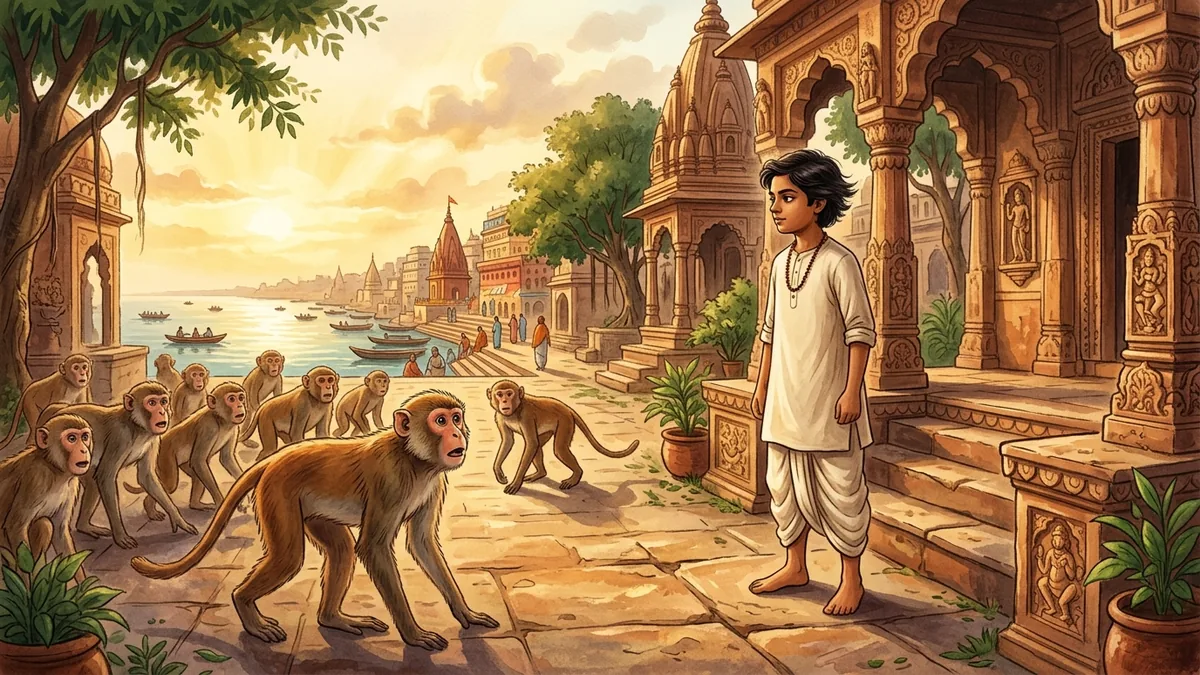
During his youth, when Narendranath Datta (the future Swami Vivekananda) resided in the sacred city of Varanasi seeking spiritual realization, he visited the renowned Durga Temple. Returning through a narrow, walled lane bordered by an ancient reservoir, he was suddenly ambushed by a troop of aggressive, territorial rhesus monkeys. As the large primates snarled, bared their fangs, and snapped at his heels, young Narendra panic-struck turned on his heel and sprinted in the opposite direction. Seeing him flee, the emboldened beasts gave chase with predatory fury, shrieking and clawing at his robes. Observing the chaotic retreat from a gateway, an aged sannyasin bellowed with commanding authority: 'Do not run! Face the brutes!' The thunderous command struck Narendra like an electric shock. Halting instantly, he pivoted, straightened his spine, and stared down the oncoming troop with fearless, blazing eyes. Stunned by his unyielding defiance, the monkeys skidded to a halt, whined in fear, and scrambled up the brick walls. The incident became a foundational cornerstone of Vivekananda’s philosophy. The fable teaches that when we flee from fear and adversity, they multiply their terror; but when we turn and confront them with resolute courage, they dissolve into harmless shadows.

Shivaji and the Enemy's Daughter-in-Law

Shivaji and the Enemy's Daughter-in-Law

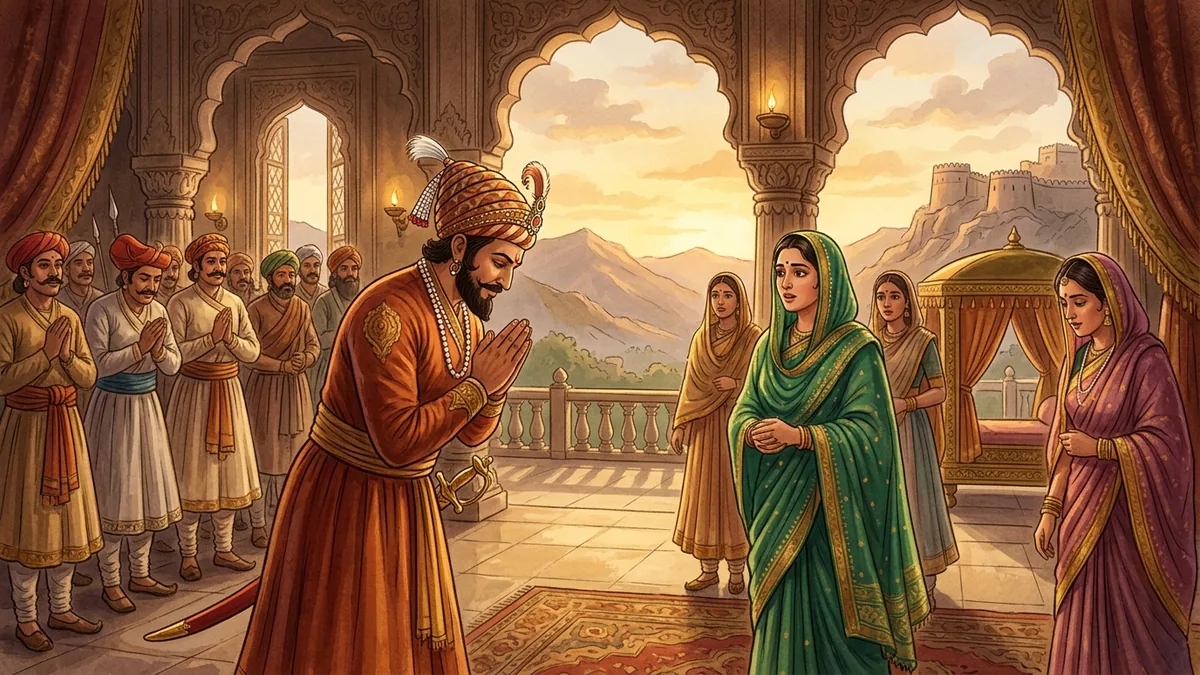
Chhatrapati Shivaji Maharaj, founder of the Maratha Empire, is immortalized in history not merely for his peerless military genius, but for his transcendent moral character and veneration of women. Following the conquest of the Kalyan fortress, his trusted general Abaji Sondev captured the fortress from the Mughal governor Mulla Ahmad. In the spoils, Abaji took captive the exceptionally beautiful daughter-in-law of the defeated governor, bringing her in a closed palanquin to the royal court as a 'gift' for the young Chhatrapati, anticipating lavish praise. When the palanquin opened and the situation became clear, Shivaji’s countenance flushed with righteous wrath and shame. Severely rebuking his general for dishonoring Maratha ethics, Shivaji stepped down from his throne, bowed with folded hands before the trembling Muslim noblewoman, and addressed her with filial reverence: 'O respected Mother! Had my own mother Jijabai possessed beauty such as yours, I too might have been slightly handsome!' Showering her with royal silks and jewelry, Shivaji dispatched an elite guard to escort her home to her family with full sovereign honors. The legendary incident stands as an unperishing beacon: genuine nobility lies in honoring the sanctity and dignity of women, even amidst the bitter heat of war.

Gandhi's Childhood Confession

Gandhi's Childhood Confession

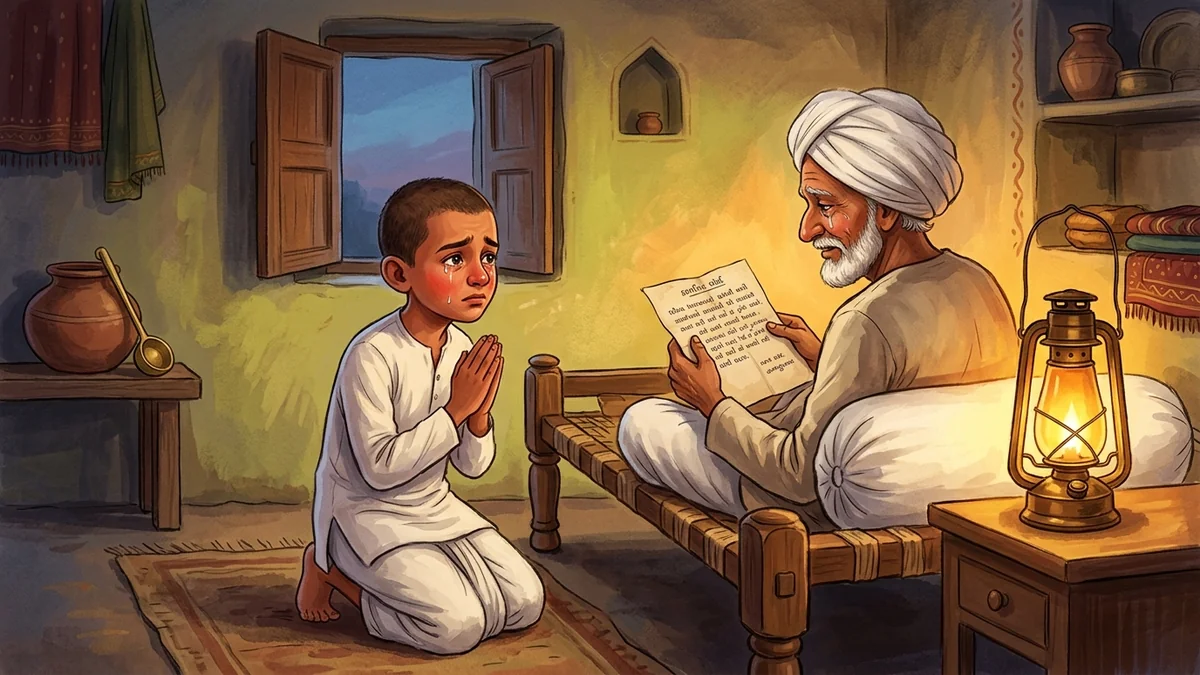
A transformative episode from the adolescence of Mohandas Karamchand Gandhi (the future Mahatma Gandhi) is candidly recorded in his autobiography, 'The Story of My Experiments with Truth.' In his youth, under the influence of poor companionship and a furtive habit of smoking, Mohandas and his brother fell into debt. To clear the balance of twenty-five rupees, Mohandas chipped off a small piece of solid gold from his brother’s armlet and sold it. The debt was settled, but the theft ignited an unbearable fire of guilt within his conscience. Living a lie felt more painful than physical death. Terrified of confronting his ailing, strict father yet refusing to carry the burden of deceit, the fifteen-year-old youth resolved upon a courageous step: he drafted a full written confession. Detailing every sin, he begged for appropriate punishment and solemnly pledged never to steal again. Approaching his father’s sickbed with knocking knees, he handed over the slip of paper. His father read the confession; he did not rage, nor did he strike the boy. Instead, silent pearls of sorrow and unconditional love streamed down the father's cheeks, soaking the paper. Those tears of sublime love purified Mohandas’s soul forever, teaching him his first profound lesson in Ahimsa (non-violence) and Truth, laying the bedrock that would transform an ordinary boy into the Mahatma.

Nachiketa and Yama

Nachiketa and Yama

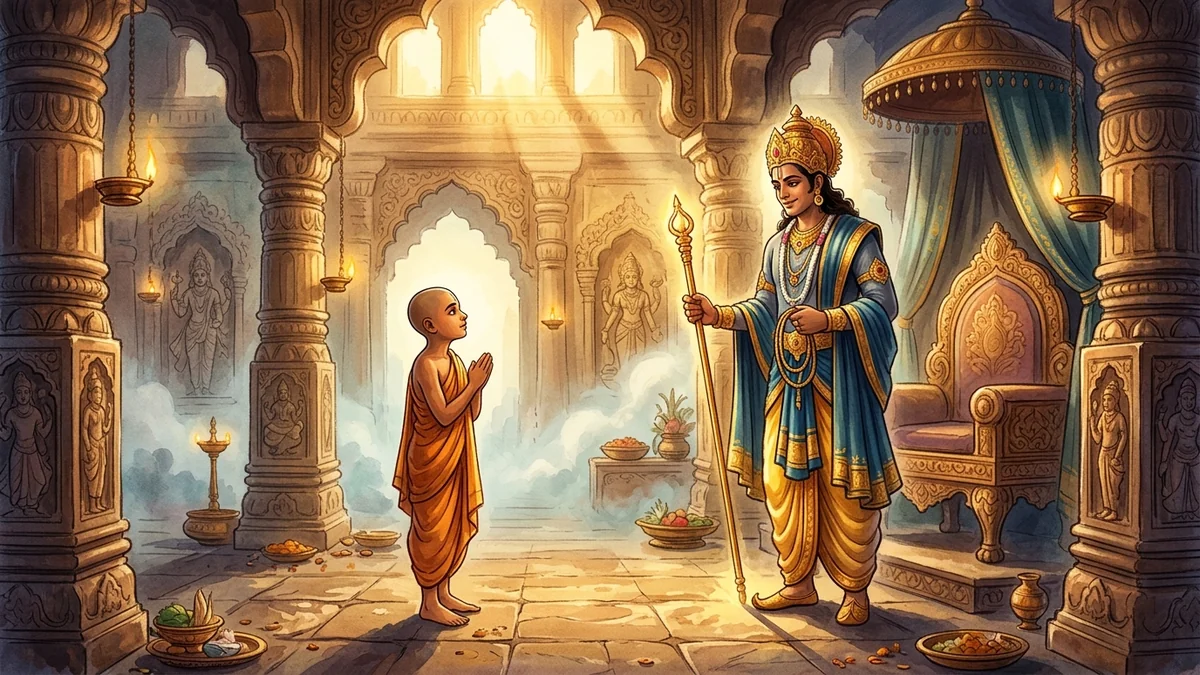
Drawn from the immortal verses of the Katha Upanishad, this sacred dialogue unfolds between the fearless young seeker Nachiketa and Yama, the Lord of Death. Observing his father, Sage Vashishrava, offering emaciated, barren cows in a solemn sacrifice, the pious boy questioned the authenticity of such hollow charity and asked to whom his father would donate his son. Angered by the persistence, the father retorted: 'I give thee unto Death!' Honoring his father’s spoken word, Nachiketa journeyed to the realm of Yamaloka. Finding Yama away, the boy waited steadfastly outside the gates for three days and nights without food or water. Stricken by the failure of hospitality, Yama offered the noble guest three boons. For his first boon, Nachiketa requested his father's peace of mind; for his second, the divine science of the sacred fire. But for his third boon, the boy asked the ultimate cosmic secret: 'What is the mystery of death? Does the soul survive beyond the mortal frame?' To test his resolve, Yama offered boundless gold, heavenly celestial maidens, long life, and earthly empires if only he would abandon the question. Nachiketa rejected the glittering illusions: 'All these wither tomorrow; teach me only the eternal Truth of the Self (Atman).' Awed by such uncompromising spiritual maturity, Yama revealed the supreme doctrine of the immortal Soul. The Upanishadic legend teaches that discerning lasting spiritual truth (Shreyas) above fleeting sensory pleasure (Preyas) is the highest glory of human existence.

Savitri and Satyavan

Savitri and Satyavan

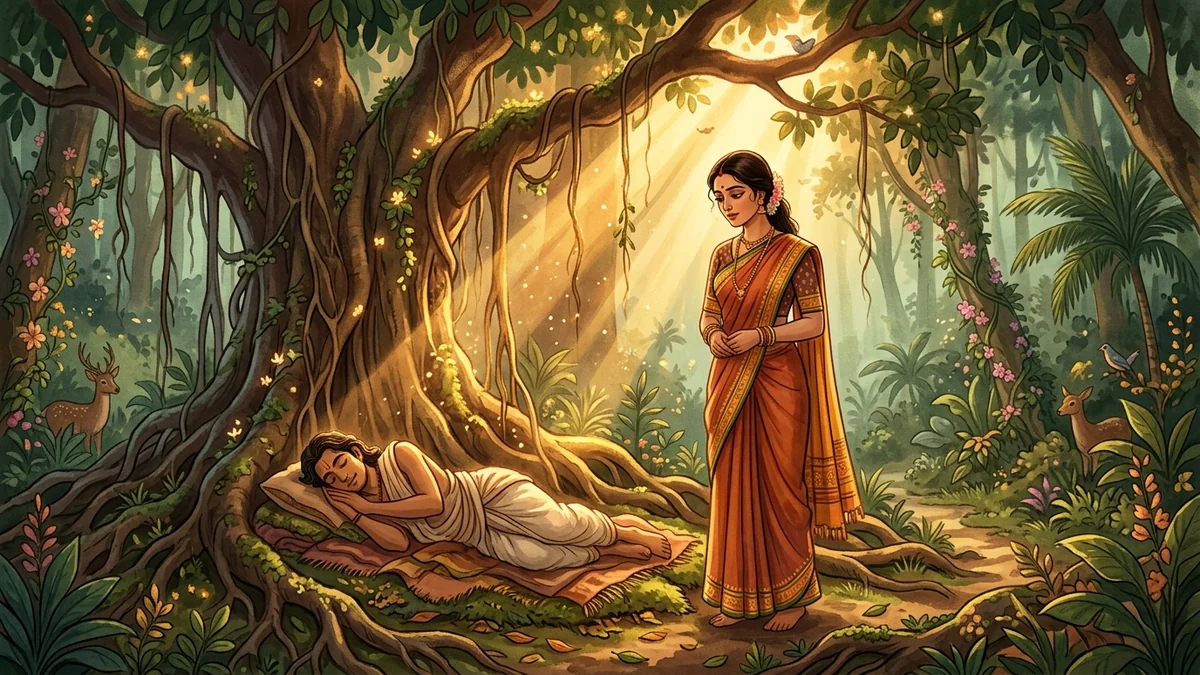
Princess Savitri, the learned, virtuous daughter of King Ashwapati of Madra, chose as her husband Satyavan, the noble son of the blind, exiled king Dyumatsena dwelling in a forest hermitage. When the celestial sage Narada revealed that Satyavan, despite possessing every heroic virtue, was fated to die in exactly one year, Savitri remained resolute, affirming that the soul commits itself but once in truth. Renouncing palace luxuries, she dwelled in the forest, serving her husband and blind in-laws with deep humility. On the fated day of doom, as Satyavan fell unconscious while chopping firewood, Yama, the Lord of Death, appeared in majestic darkness, drawing Satyavan’s soul in his noose. Leaving her husband’s body beneath a banyan tree, Savitri followed the footsteps of Death across trackless, thorny wildernesses. Repeatedly commanded by Yama to turn back, Savitri responded with discourses of such sublime philosophical eloquence concerning righteousness, companionship, and cosmic duty that Yama was awed by her intellect. Granting her multiple boons excluding her husband’s life, Savitri brilliantly secured the restoration of her father-in-law's sight and kingdom, male heirs for her father, and finally the boon of bearing a hundred righteous sons through Satyavan. Realizing that his own decree bound him to restore Satyavan's breath, Yama surrendered before her pure devotion and released the prince’s soul. The timeless epic demonstrates that unwavering love, moral purity, and razor-sharp intellect can triumph over destiny itself.

The Friend Who Said No

The Friend Who Said No

On the eve of the crucial Class 10 board examinations, a profound moral crisis confronted two inseparable friends, Aryan and Vicky. Aryan was a disciplined, hardworking student who spent months burning the midnight oil to master the sciences. Vicky, conversely, had squandered the academic year in sports, online gaming, and procrastination. Confronting imminent failure, a panicked Vicky visited Aryan’s home, applying heavy emotional blackmail: 'Aryan, you claim to be my best friend! Tomorrow during the physics exam, tilt your answer sheet so I can copy, and flash objective answers with your fingers. If you refuse, I will fail, and our brotherhood is severed forever!' Aryan was plunged into agonizing turmoil: should he compromise his integrity to appease a friend, or endure the sorrow of rejection to uphold truth? After a night of soul-searching, Aryan resolved that authentic loyalty never participates in corruption. The next morning outside the examination hall, Aryan held Vicky’s hands, speaking with gentle yet unshakeable firmness: 'Vicky, you are dearer to me than a brother; but I will not assist you in cheating. Cheating will poison your character and murder my conscience. If saying 'no' shatters our friendship, I must bear that sorrow, but I will not dishonor truth.' Enraged, Vicky stormed away, severing all contact. Vicky performed poorly, while Aryan topped the district. Weeks later, finding Vicky weeping over his academic probation, Aryan arrived at his doorstep with textbooks: 'I refused to facilitate your deceit, brother; but I never refused to teach you.' For six months, Aryan tutored Vicky daily, helping him master every complex theorem. When Vicky cleared his supplementary exams with distinction, he wept upon Aryan’s breast: 'Had you indulged my cheating that morning, I would have remained a fraudulent coward forever; your courageous 'No' saved my soul.' The story proves that standing firm against unethical peer pressure and having the courage to utter a principled 'No' is the highest hallmark of genuine love and moral maturity.


The Courage to Ask for Help

The Courage to Ask for Help

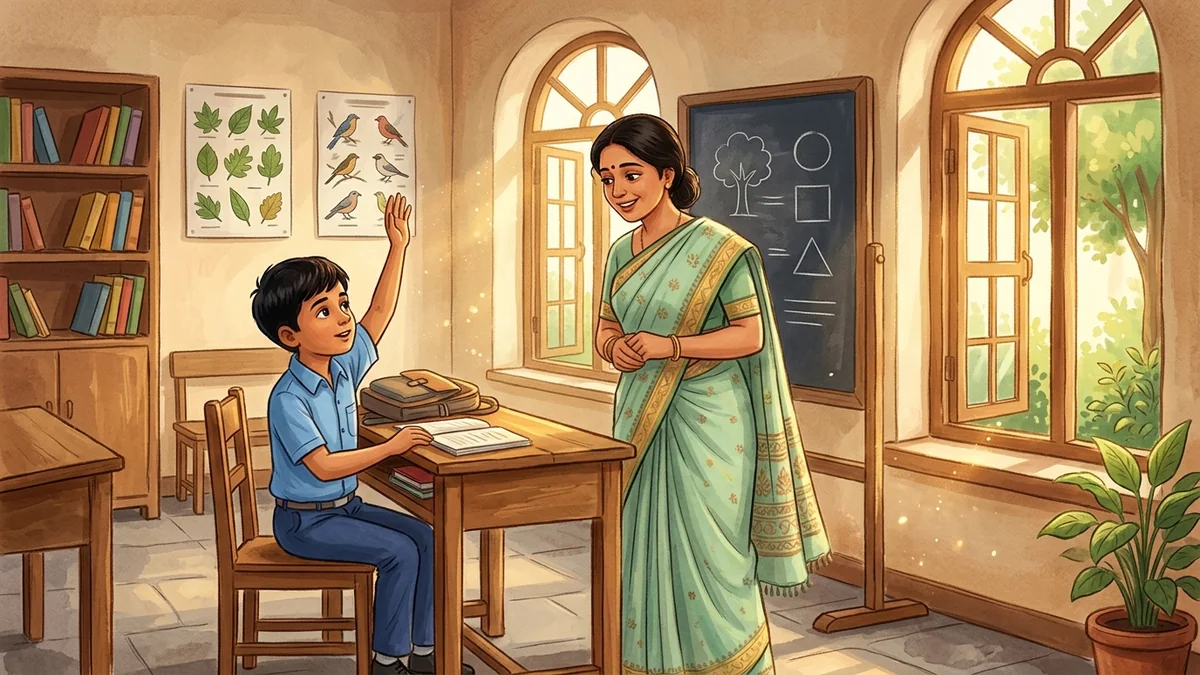
Ninth-grader Meena had always been celebrated as the apex academic achiever of her institution—a fiercely independent, brilliant, and proud young woman who consistently secured top honors without tutoring. Unfortunately, this unblemished track record cultivated in her a dangerous psychological blind spot: the deep-seated pride of believing that soliciting assistance was a shameful admission of intellectual inferiority. When the academic curriculum advanced into complex trigonometry and quadratic proofs, Meena encountered an impassable cognitive wall. The theorems appeared utterly incomprehensible. Day after day, as the instructor demonstrated intricate proofs, Meena’s mind blanked out in panic. Burning the midnight oil, she wept over her desk in solitary exhaustion, yet refused to open her mouth. Terror gripped her soul: she feared that asking for help would expose her vulnerability, inviting ridicule and destroying her reputation as a genius. The chronic stress manifested in insomnia, migraines, and severe anxiety. With the mid-term examinations a mere seventy-two hours away, she stood on the verge of emotional collapse. Sensing her internal agony, her retired grandfather held her hands and imparted an immortal truth: 'My child, asking for help in the hour of difficulty is not a confession of weakness; it is the ultimate declaration of courage! It demonstrates the humility to acknowledge boundaries and the strength to seek growth.' The revelation shattered Meena’s prideful cage. Stepping into the staffroom the next morning, she approached her mathematics instructor, Mr. Verma, stating with naked honesty: 'Sir, I am completely lost in trigonometry; please help me.' Touched by her sincerity, the teacher guided her through the foundational proofs, while an advanced peer, Aarav, shared intuitive problem-solving methods. Within days, the conceptual fog dissolved, and Meena scored ninety-five percent on the examination. The story proves that breaking the shackles of false ego to ask for guidance is not an act of surrender, but the highest wisdom of authentic strength and lifelong learning.