The Crosswalk Chalk
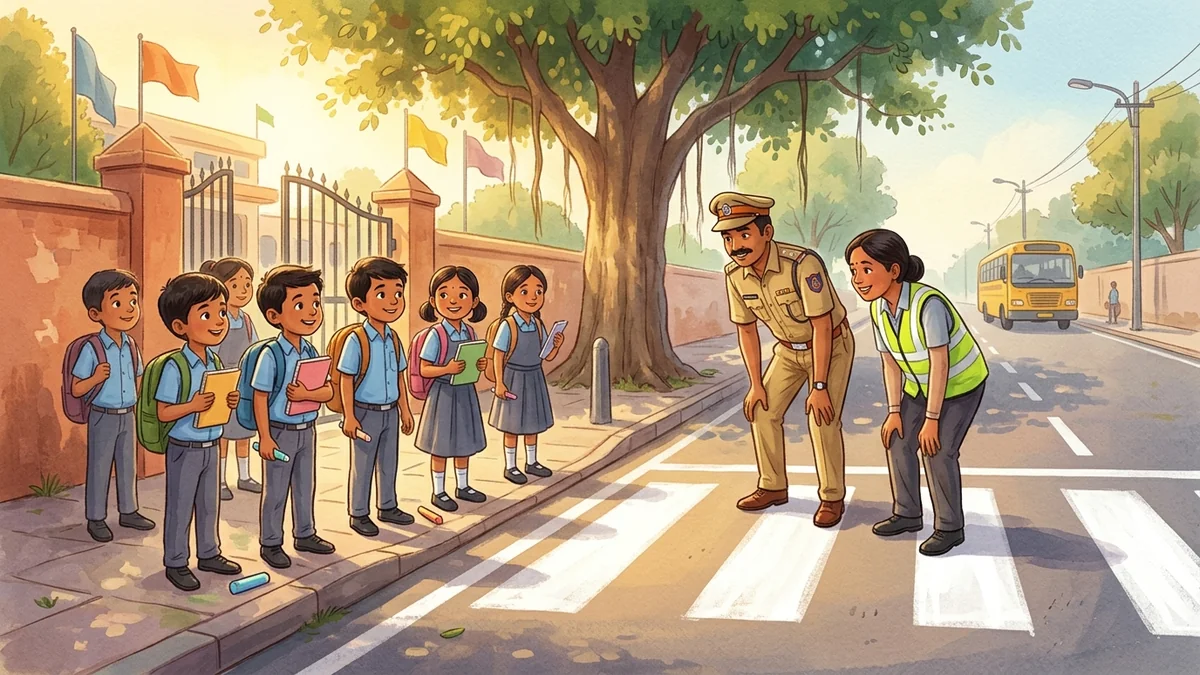
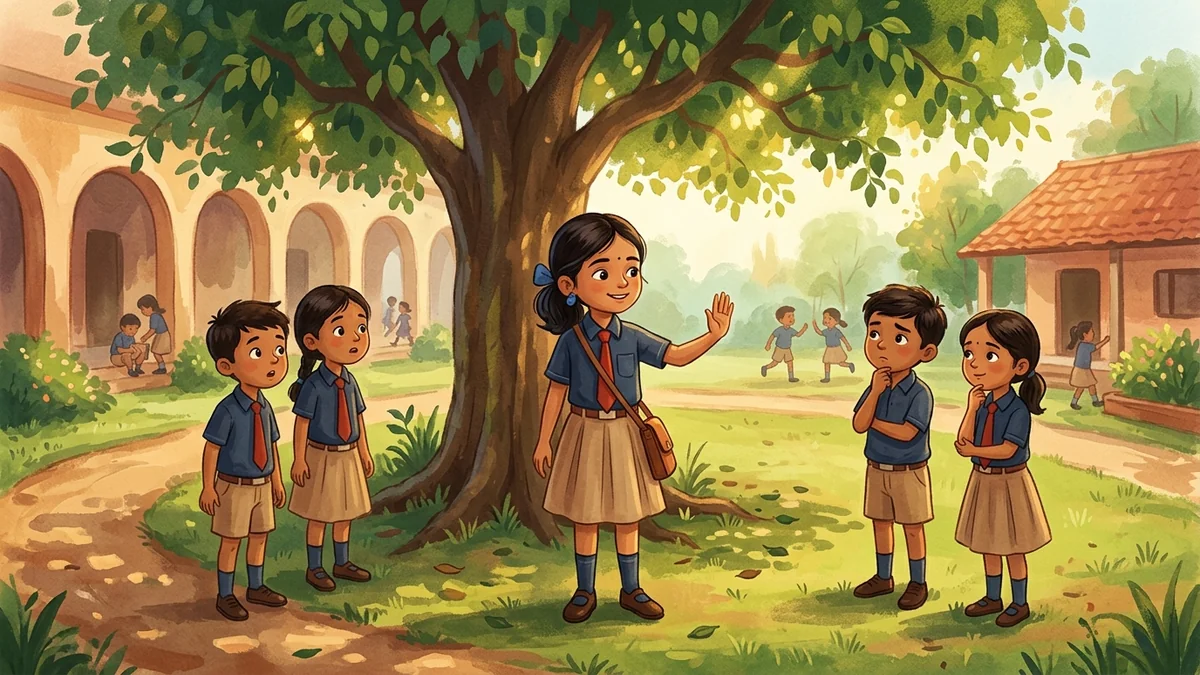
Children notice that drivers often miss the school crossing. Instead of marking the road themselves, they document the problem and work with adults to request a safe, approved solution.
Explore enriching illustrated tales inspiring empathy, honesty, and noble character
Children notice that drivers often miss the school crossing. Instead of marking the road themselves, they document the problem and work with adults to request a safe, approved solution.
A school club borrows a telescope for a night-sky event. The students learn to handle shared equipment carefully, take turns, and make room for beginners to observe.
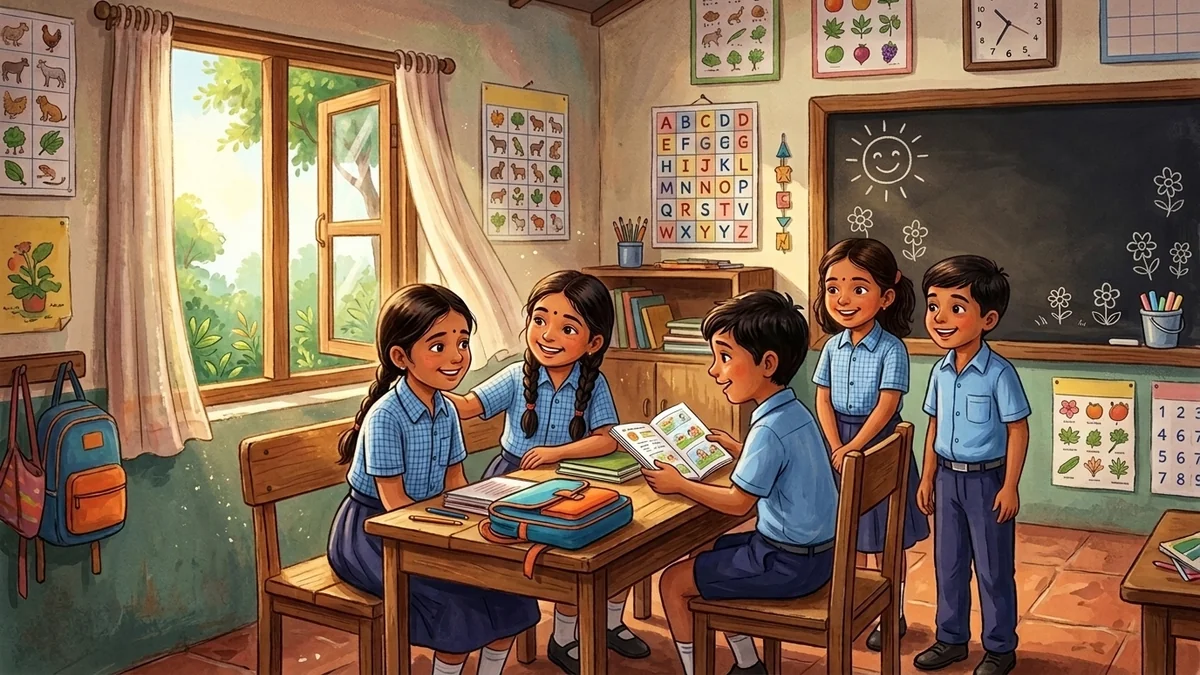
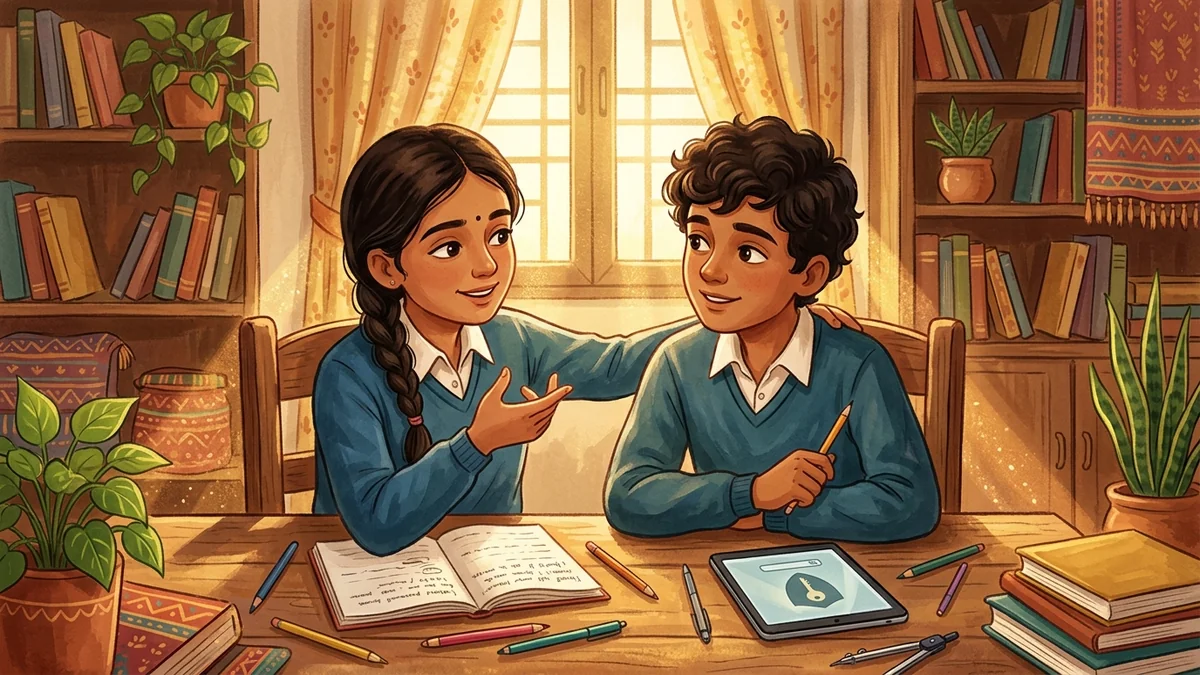
A new student’s name is repeatedly mispronounced by classmates. The class learns to ask respectfully, practise the correct pronunciation, and accept corrections without making the new student responsible for everyone else’s comfort.
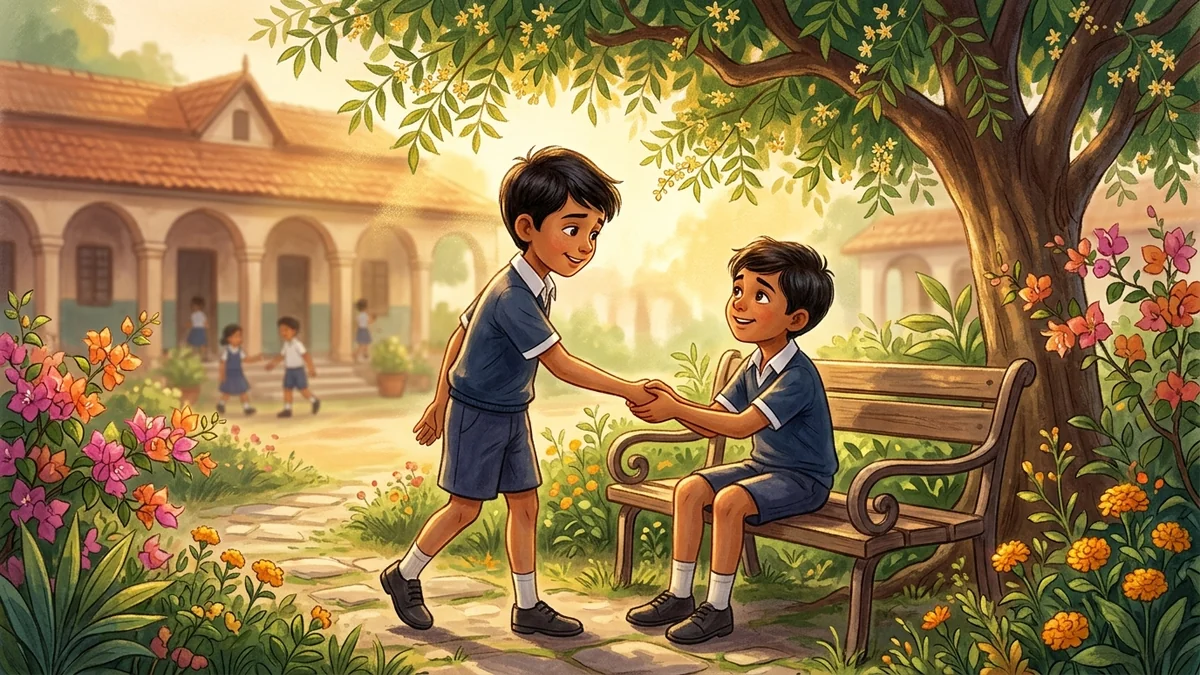
A funny nickname spreads through a classroom, but the classmate it targets no longer finds it funny. The group learns to notice the effect of its words, stop when asked, apologize sincerely, and rebuild trust through changed behaviour.
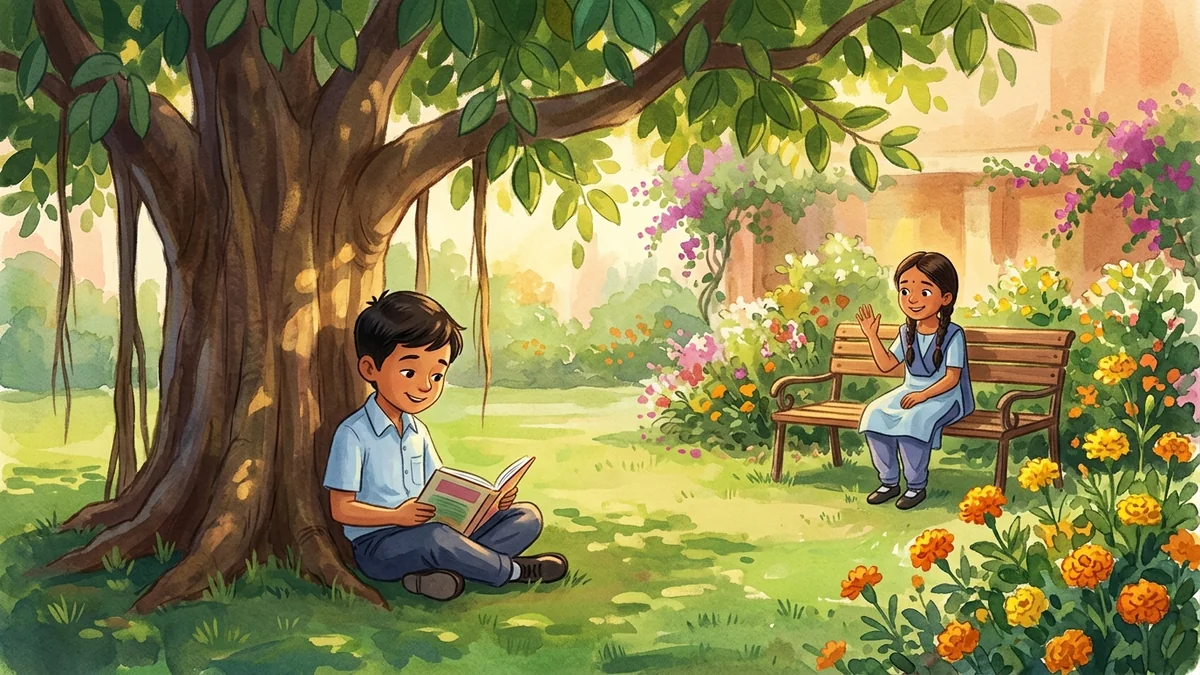
Two close friends want different things during school breaks: one wants company, while the other needs quiet time. They learn to express their needs kindly, respect boundaries, and make a plan that protects both friendship and personal space.
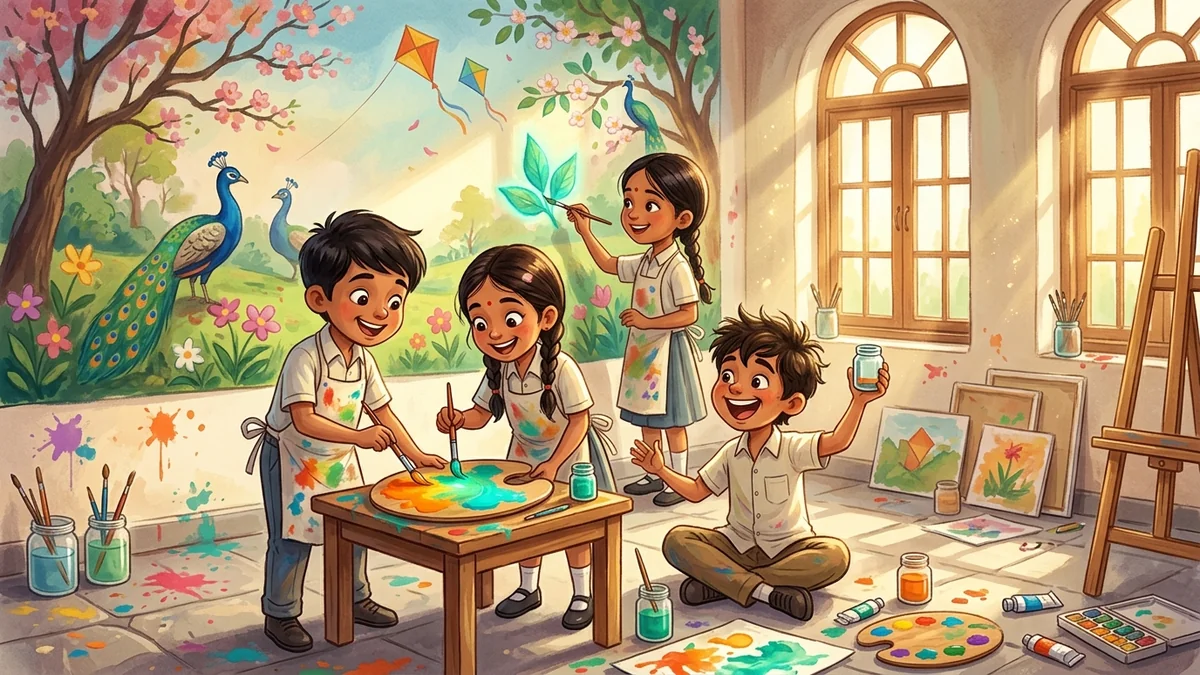
A class mural project seems impossible when a pot of an important colour is empty. Students experiment with mixtures and discover that people can contribute through different skills, ideas, patterns, and ways of working together.
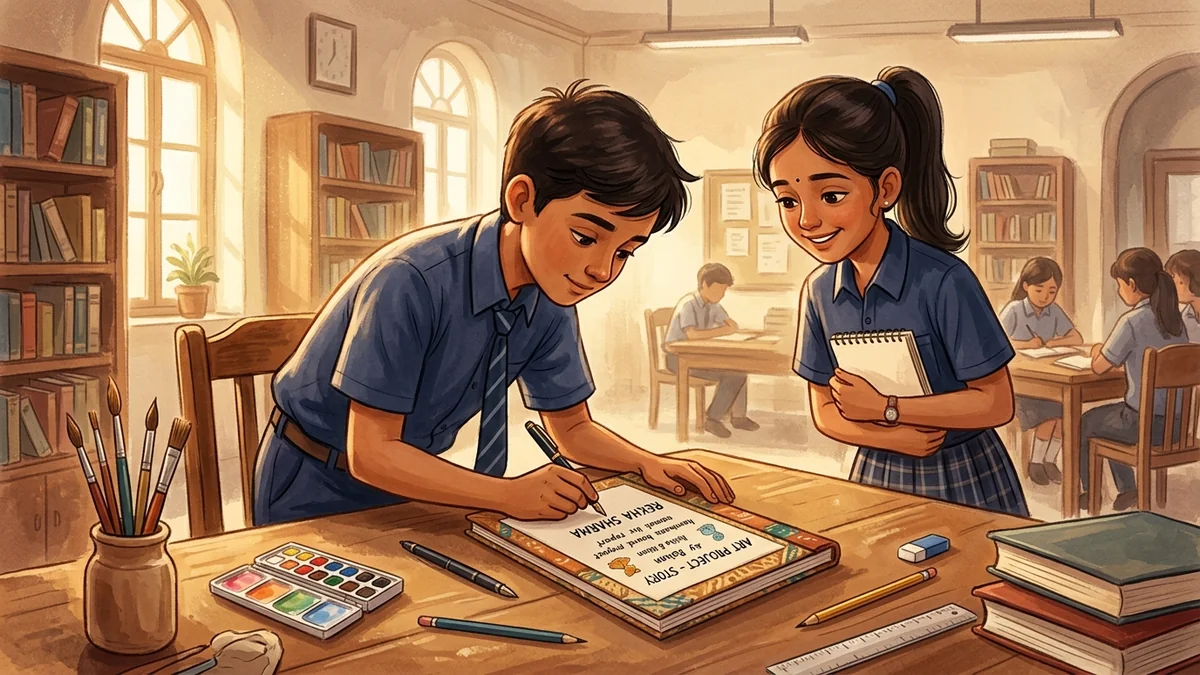
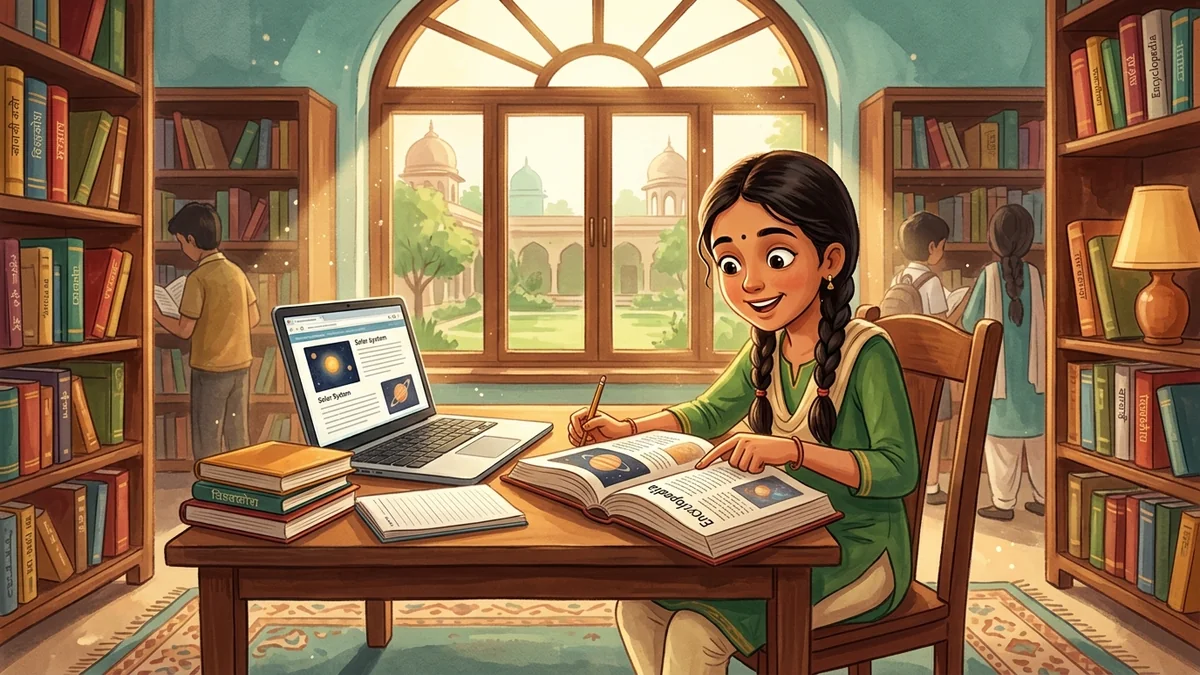
A student places a classmate’s illustration on a project cover but forgets to credit the artist. The group corrects the omission and learns that fairness includes asking permission and clearly acknowledging other people’s work.
A child works hard on a musical performance, but the audience is distracted and barely applauds. A supportive mentor helps the child recognize real progress while also showing why encouragement and thoughtful feedback still matter.
A school game unintentionally excludes a wheelchair-using student because the rules assume everyone moves in the same way. The team listens to the student’s ideas and changes the format so that everyone can take part in a meaningful challenge.
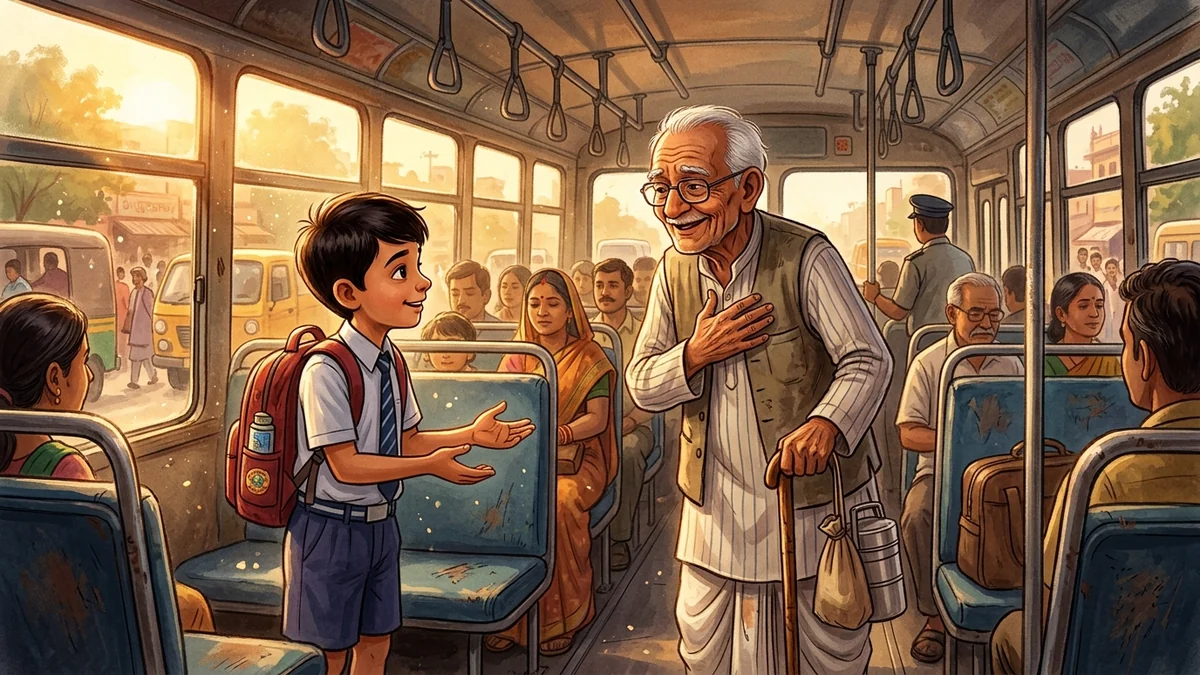
Two travellers want the same window seat for different reasons. Instead of assuming one person is selfish, they explain their needs, listen carefully, and find an arrangement that is considerate and fair to both.
A school celebration succeeds because many people do behind-the-scenes work that students rarely notice. The class learns to express gratitude respectfully, recognize every contribution, and show appreciation through considerate everyday behaviour.
A group argues about who is late and who is leaving early, until they discover that the clock they all rely on is five minutes fast. They learn to verify shared information before blaming one another and to fix the system together.
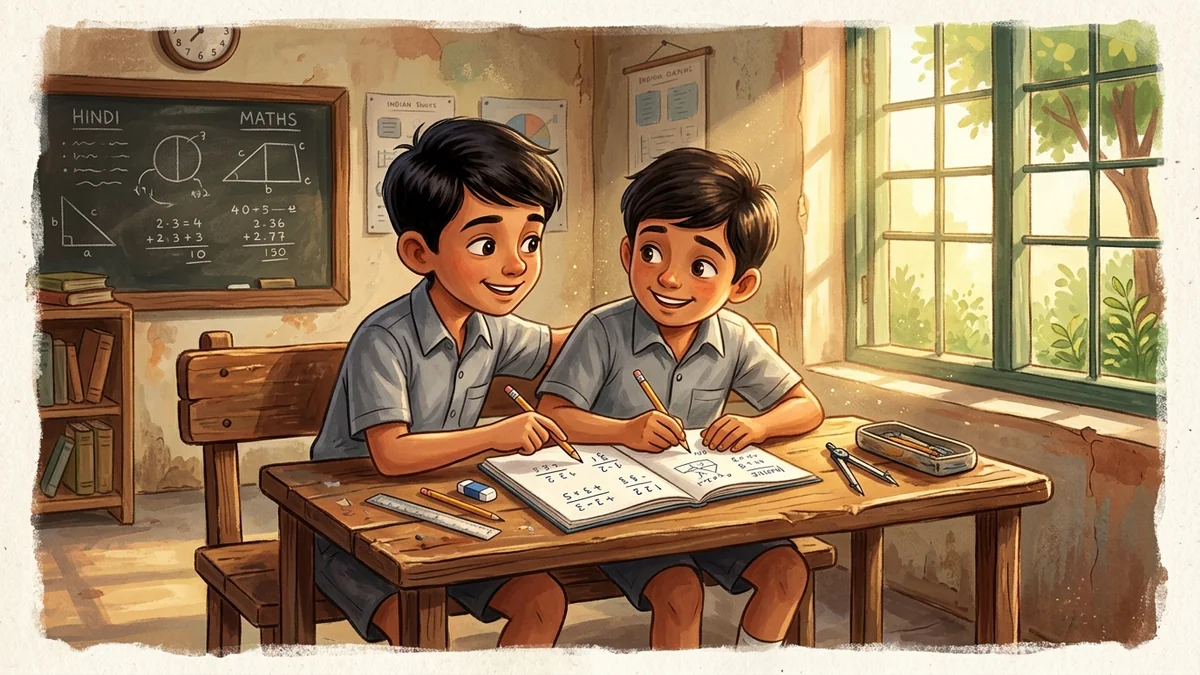
A class tries to find the area of a rectangle when only its perimeter is given. Different students discover that more than one rectangle fits the clue, so they learn to question assumptions and explain their reasoning.
When a ball breaks a classroom window, students give different accounts. One child calmly separates what they directly saw from what they guessed and helps the teacher understand what is known.
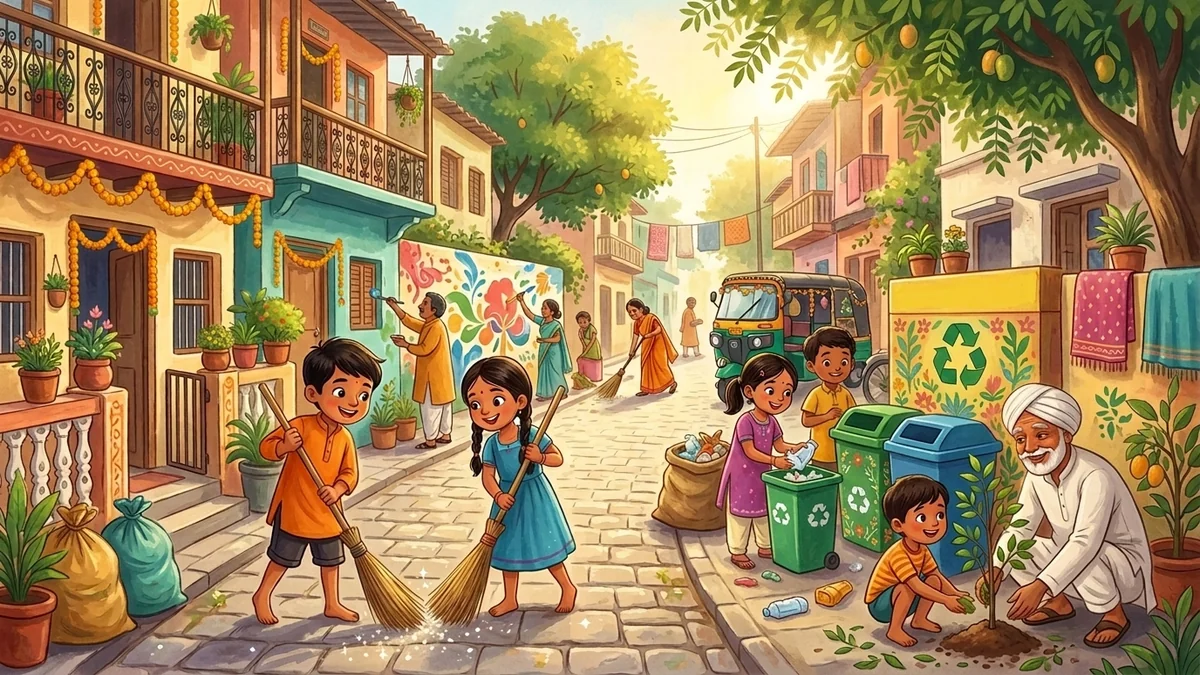
Students cut across a garden to save a minute and damage young plants. Instead of blaming one another, they accept the impact, choose a better route, and help restore the garden.
A student notices a faint burning smell near a classroom device. They do not touch the equipment or investigate alone; they alert a teacher and move away, showing that asking for help early is responsible.
A student prepares for a school music performance through short, regular practice sessions. Progress comes gradually, reminding them that unseen effort matters more than a sudden display.
After years of training, a young runner finishes second. They congratulate the winner and choose a specific skill to improve, learning that rank matters in a race but does not define a person’s worth.
A club’s rule is intended to save meeting time but repeatedly prevents one member from contributing. The group listens, reviews the rule’s purpose, and makes a transparent adjustment without abandoning fairness.
A student science team gets an unexpected result while testing a paper bridge. They stop, record what happened, and ask their teacher to review the method instead of forcing the experiment to continue.
A class plans a celebration with limited time and supplies. By considering what younger students will need after the event, they create a realistic plan that balances present enjoyment with future responsibility.
A storm damages a rigid garden frame but leaves flexible bamboo supports standing. A gardener learns to combine strength with adaptability and rebuilds a sturdier structure.
A group of weavers prepare a large cloth for a shared community space. Their styles seem different at first, but a common border helps every design belong without making them identical.
A young market helper notices that a weighing scale gives different readings. Instead of accusing anyone, the vendors check it openly, correct the problem, and explain the process to customers.
A storyteller presents two possible endings to a disagreement. Listeners discover how missing information changes their judgment, while still recognizing the harm caused by careless actions.
A bridge needs repairs while residents still depend on it. The keeper asks who will be affected, identifies risks and alternatives, and helps the community agree on a clear, safer schedule.
A drum used at community celebrations is damaged after everyone assumes someone else will store it. The neighbours create a shared care rota and small repair fund so access comes with responsibility.
A traveller sees a distant lantern in thick fog but does not rush toward it. Waiting for a companion and checking marked signs helps the traveller choose a reliable, safer path.
A fisher has a smaller catch than expected but leaves young fish in a breeding area. The fisher and neighbours agree on fair, voluntary practices that protect both today’s livelihoods and tomorrow’s supply.
A family wants to welcome a visitor but has limited time and food. They offer what they can, explain their limits kindly, and arrange a better time to meet without shaming either person.
A lantern maker discovers that a cheaper design becomes unstable during testing. The craftsperson delays delivery, seeks advice, and improves the product rather than risking users’ safety.
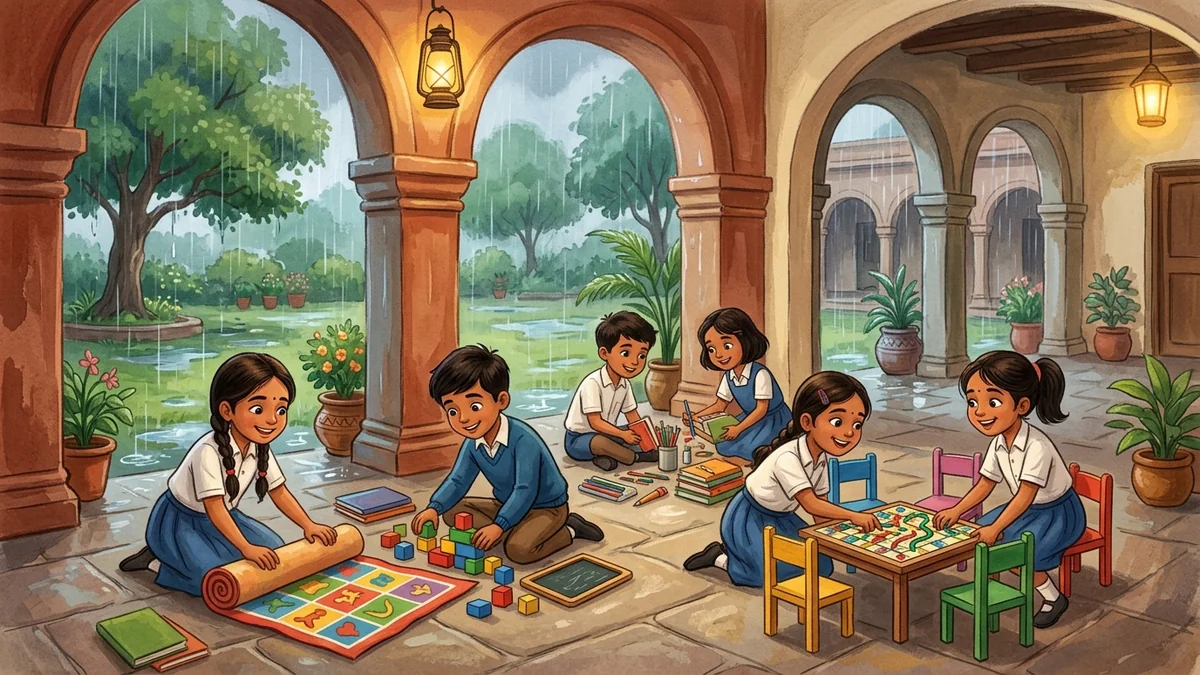
Two friends promise to hold an outdoor reading afternoon, but heavy rain changes their plans. They communicate early, find a safer indoor option, and keep the promise in a realistic way.
Residents map hot streets and shaded paths, then work together to protect existing trees and choose suitable places for more shade.
When a storm cuts power, neighbours check on one another, use safe light sources, and share reliable updates instead of spreading rumours.
A class plans a picnic with reusable containers, realistic portions, water refill points, and a plan to take all waste back.
Residents notice that a temporary barrier blocks the ramp to a public building. They report it, arrange a safe alternative, and follow up until access is restored.
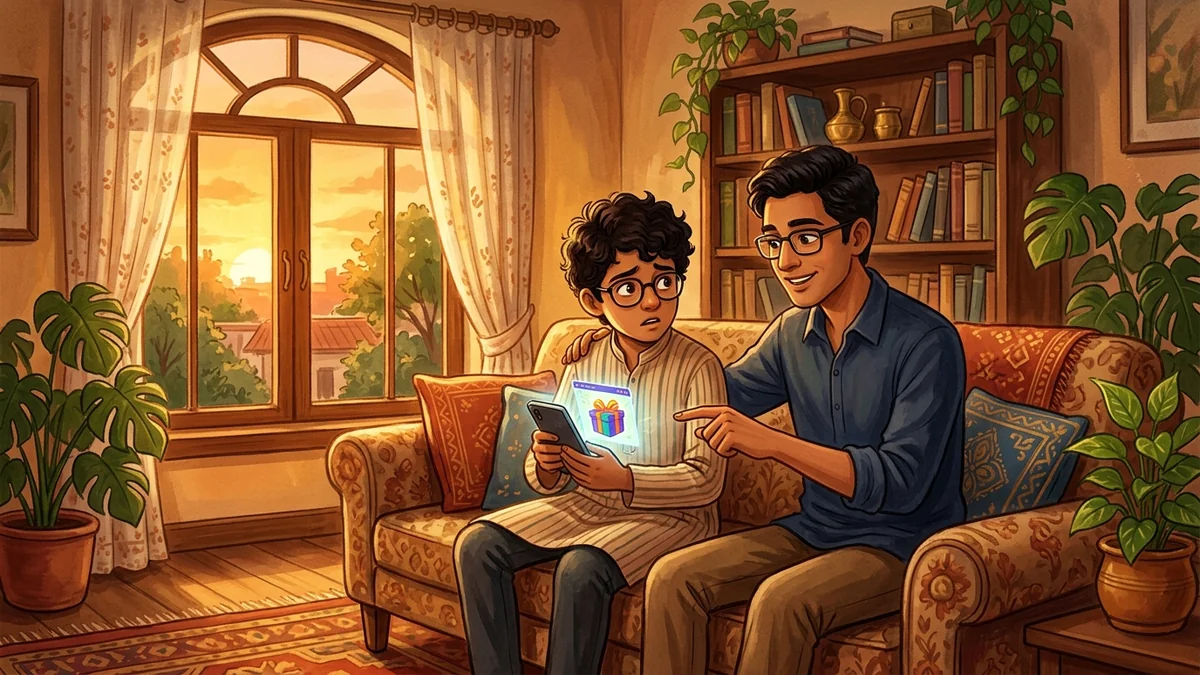
A child finds a phone at a community event and gives it to the official lost-and-found desk instead of opening messages or trying to identify the owner privately.
A family compares three products by purchase price, expected lifespan, and repair cost before choosing what fits their needs and budget.
Before buying new sports equipment, children organize a safe swap for clean, usable items and agree to check condition and suitability.
Children learn that an old tree shelters nesting birds. They document what they observe and ask local experts before proposing a careful plan for the area.
A neighbourhood creates a tool shed for occasional-use equipment. Clear borrowing records, safety checks, and repairs keep the resource available to everyone.
A class writes letters describing what they hope future children will inherit: clean spaces, useful knowledge, welcoming communities, and the freedom to improve what remains.
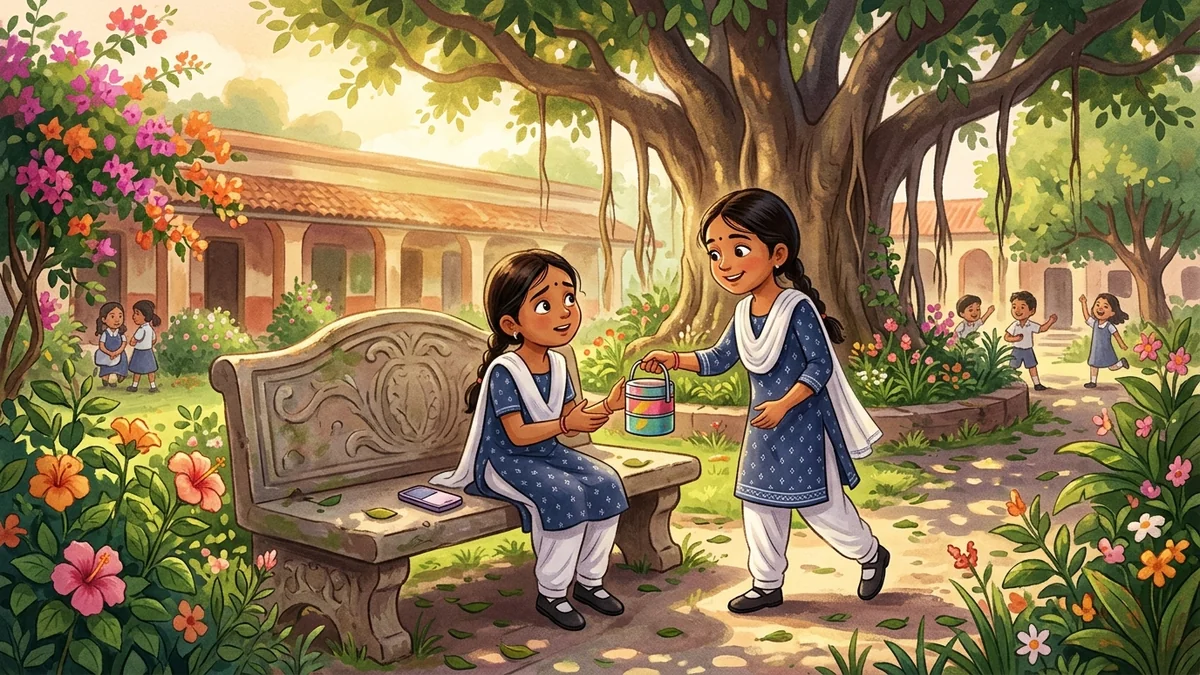
Anaya finds a wallet at a busy railway station. She must decide how to return it safely without exposing its owner’s private information.
Two neighbouring communities disagree about which bridge should be repaired first. They compare risks, listen to different needs, and create a transparent repair plan.
A baker discovers that a measuring scoop has become inaccurate. Fixing it costs time, but customers deserve fair quantities and clear communication.
At a busy clinic, children notice that a strict first-come queue does not account for urgent need or accessibility. They ask an adult to help the clinic explain a fair system.
A school starts a seed library where families save and exchange suitable local seeds and record what grows well.
During a long journey, a group has one warm meal left. They discuss who is hungry, what supplies remain, and how to share without hiding anyone’s needs.
A child’s kite gets caught near power lines. Friends resist a risky rescue and call a responsible adult and the electricity service instead.
A child borrows an umbrella from a neighbour, then forgets it on a bus. The child tells the neighbour honestly and helps arrange a replacement.
A hiking group discovers that a shortcut marked on an old map is closed. They stop, check reliable information, and choose a safer route.
A neighbourhood meeting keeps hearing only the loudest voices. A young organiser introduces quiet writing time and turns so more residents can contribute.
On the serene banks of the Narmada, a clever monkey named Raktamukha befriended a crocodile named Karalamukha by sharing luscious berries. When the crocodile's greedy spouse demanded the monkey's heart, the crocodile carried his friend into deep waters under false pretenses. Sensing grave betrayal, the monkey maintained composure and claimed his heart was safely preserved inside the hollow tree trunk. Once returned to the riverbank, he leapt to safety, proving that presence of mind conquers raw physical danger.
Kambugriva, an outspoken tortoise, shared a deep friendship with two wise geese, Sankata and Vikata. When a catastrophic drought withered their sacred lake, the geese devised a plan to airlift him using a wooden staff clamped in his jaws, warning him strictly to remain silent. As they flew above a bustling town, the tortoise could not resist answering the taunts of the crowd below. Losing his grip, he plummeted to tragedy, imparting the timeless lesson that indiscretion and uncontrolled speech destroy even the most meticulous rescue.
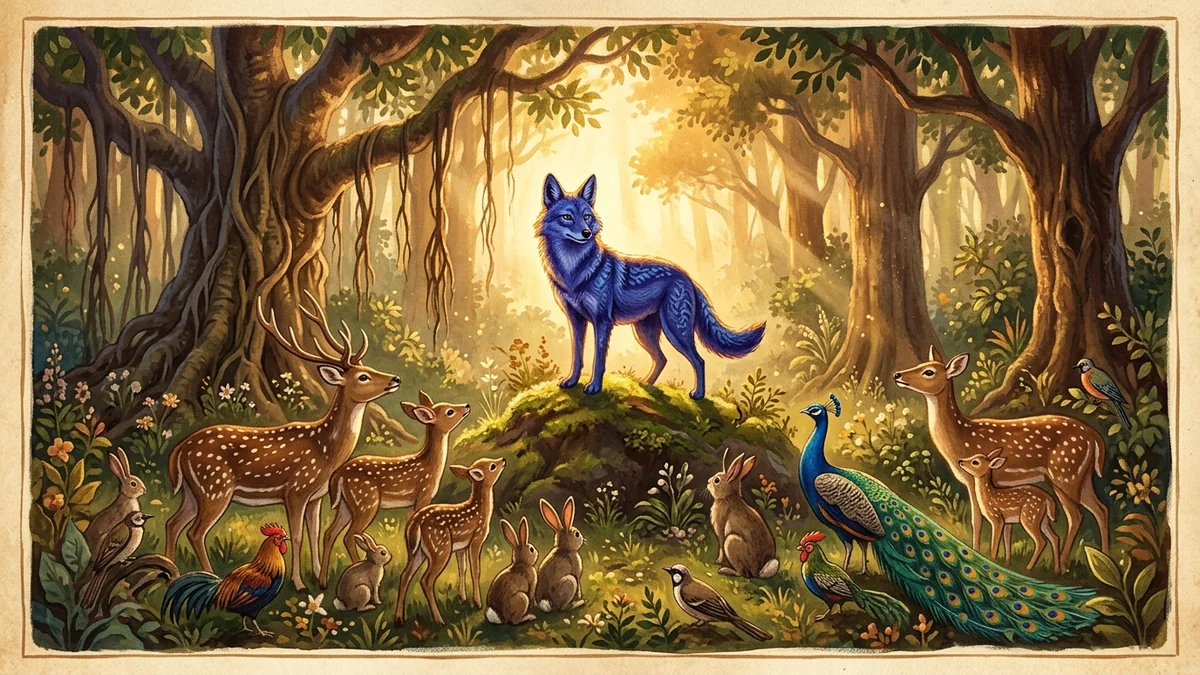
Chandarava, a hungry scavenger jackal, accidentally fell into a vat of indigo dye while escaping city hounds. Transformed with an azure coat, he returned to the forest proclaiming himself an envoy of the creator, appointed king over all beasts. Lions and tigers bowed before his divine facade. Yet on a full moon night, when a distant pack began their ancestral howl, his ingrained instincts overwhelmed him and he howled in chorus. Unmasked, he paid the ultimate price, teaching that borrowed appearances cannot conceal one's true character.
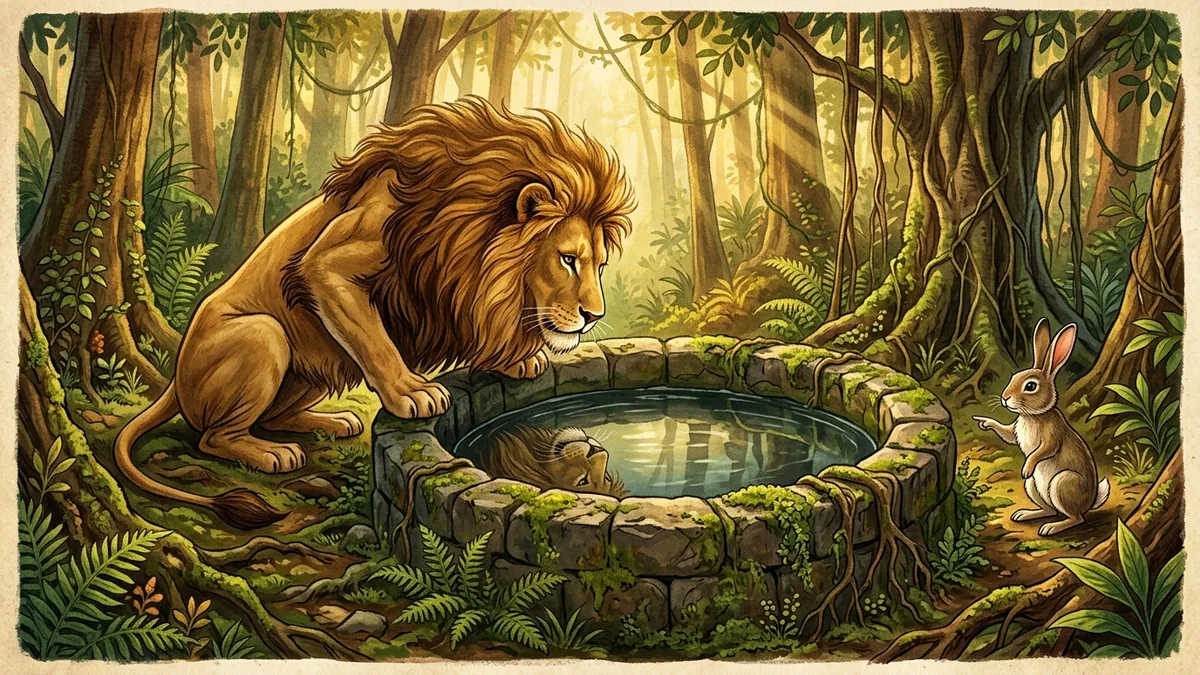
Bhasuraka, a ferocious and tyrannical lion, terrorized the forest by slaughtering beasts indiscriminately. To halt the massacre, the animals agreed to send one creature daily for his meal. When an unassuming rabbit was chosen, he used strategic delay and sharp intellect to lead the tyrant to an ancient, deep well. Deceiving the lion into mistaking his own reflection for a rival king, the enraged beast leaped to his death, teaching that intellectual supremacy and composure outmatch sheer physical might.
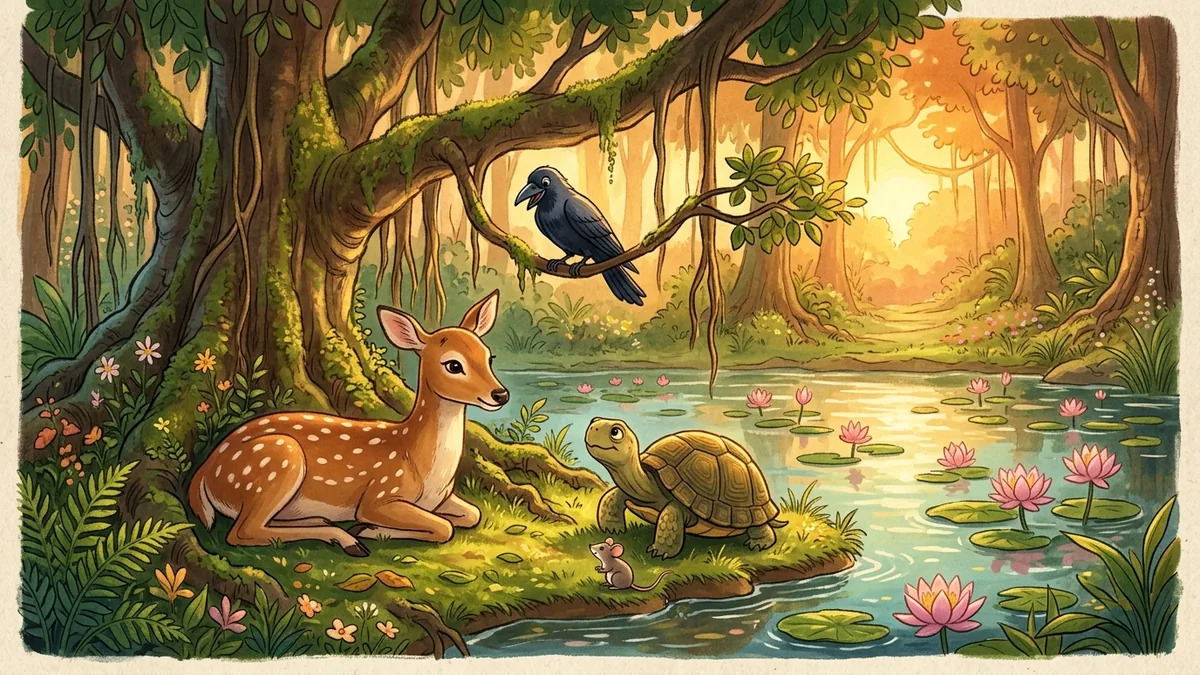
In the sacred grove of the Godavari dwelt four dissimilar companions: Chitrangada the gazelle, Laghupatanaka the crow, Mantharaka the tortoise, and Hiranyaka the field mouse. When the gazelle was snared in a hunter’s woven cords, the crow gave intelligence, the mouse severed the knots, and the tortoise guarded their retreat. When the hunter trapped the sluggish tortoise in retaliation, the friends orchestrated a masterclass in distraction: the deer feigned death while the crow pecked his eyes. As the hunter dropped his sack to secure the venison, the mouse freed the turtle, epitomizing the truth that selfless alliance renders the humble invincible.
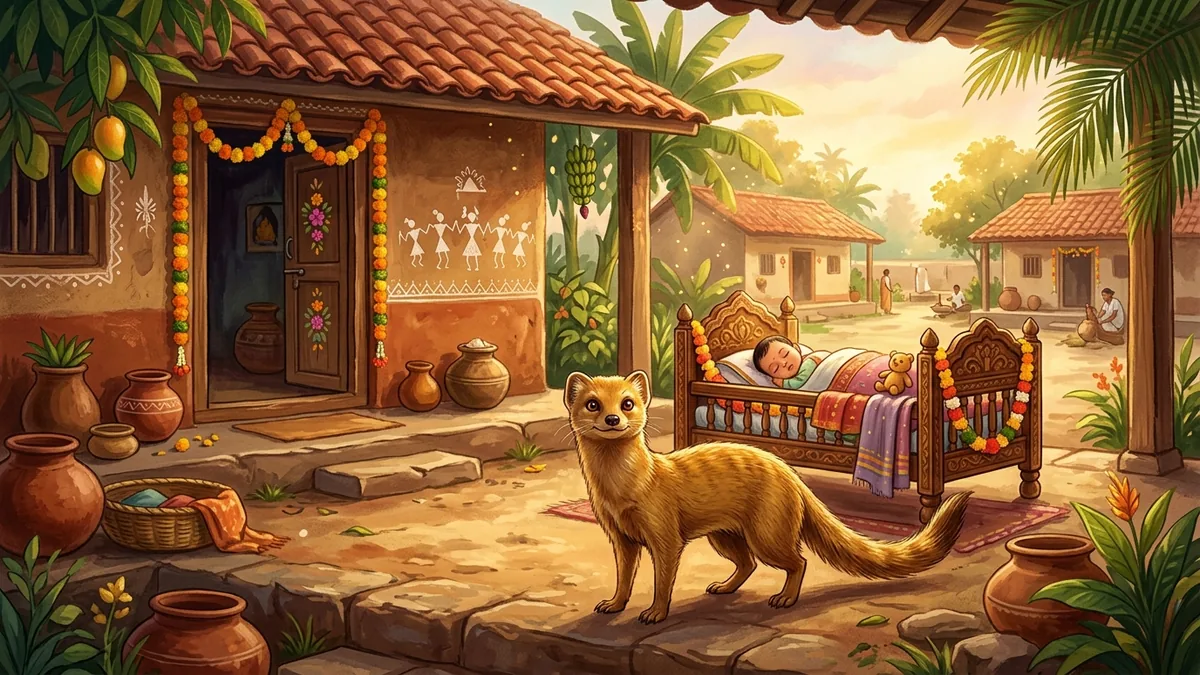
Devasharma, a devout Brahmin, and his wife lovingly raised an orphaned mongoose alongside their newborn child. One afternoon, while the Brahmin was away begging for alms and his wife went to fetch water from the river, a venomous black cobra slithered toward the infant's cradle. The loyal mongoose fought a desperate battle, tearing the serpent to pieces to save the baby. When the mother returned and saw the mongoose at the threshold with blood dripping from its jaws, she assumed in blind rage that it had harmed her son and hurled her heavy water pot onto the creature. Rushing inside, she discovered her child sleeping peacefully beside the mangled snake. Overwhelmed by bitter sorrow, she realized the tragic cost of hasty judgment without verifying truth.
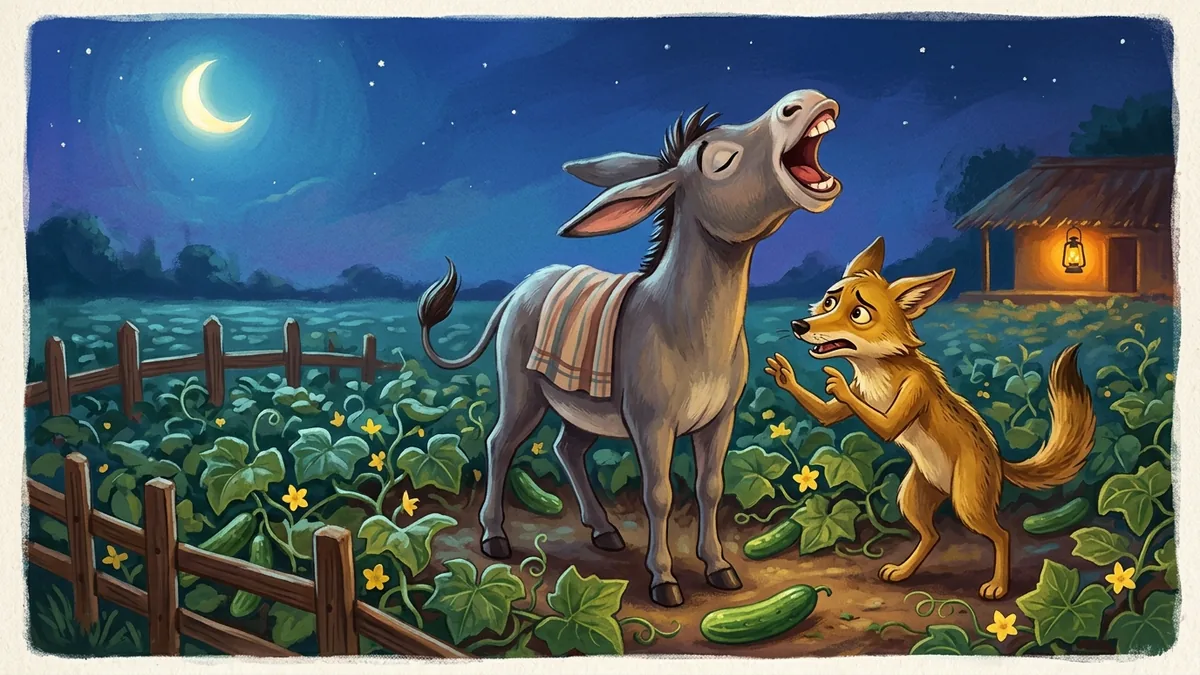
Uddhata, an overworked washerman's donkey, spent exhausting days hauling heavy laundry and wandered the town outskirts at night. He befriended a cunning jackal, and together they made nocturnal raids on a farmer’s lush cucumber and melon plantation, gorging on juicy produce. One full-moon night, delighted by his feast, the donkey felt an overwhelming urge to display his 'musical talents' and announced his intention to sing. The jackal urgently advised restraint, warning that nocturnal braying in a guarded field would merely alert the watchmen with heavy clubs. Dismissing wisdom as jealousy of his fine art, the stubborn donkey brayed at the top of his lungs. The jackal slipped away through the hedge, while the furious farmers thrashed the foolish singer. The story teaches that vanity blind to timing and wise counsel invariably leads to self-inflicted ruin.
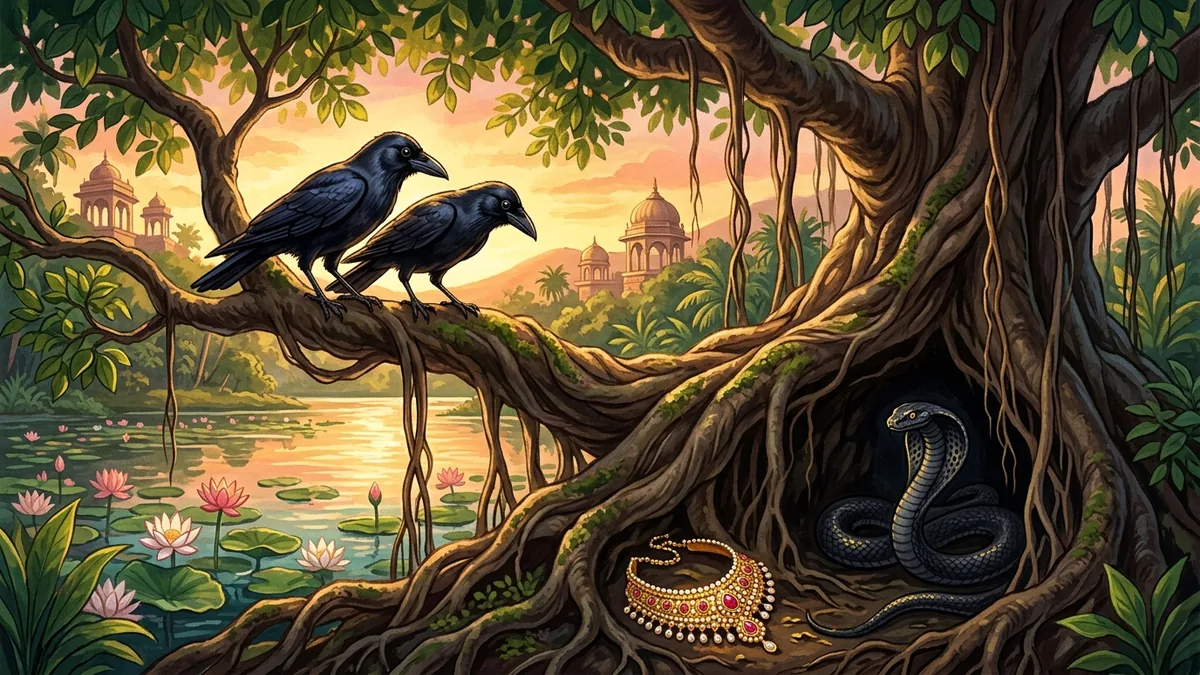
A devoted pair of crows resided in the lush canopy of an ancient banyan tree. Unknown to them, a venomous black serpent took refuge inside a hollow fissure at the tree's base. Each breeding season, the cobra slithered up and devoured the newly hatched fledglings, plunging the parent birds into inconsolable grief. Refusing to succumb to despair, the crow consulted a clever jackal friend for counsel. The jackal remarked that physical force against a superior foe is futile, but strategic intellect can enlist greater powers to eradicate the menace. Following his plan, the crow seized a priceless pearl necklace belonging to the queen as she bathed in the royal lake and dropped it deliberately into the serpent’s lair. Pursuing soldiers dug into the hole to recover the jewel and slaughtered the serpent. The fable demonstrates that ingenuity and tactical intelligence conquer adversaries that brute force cannot overcome.
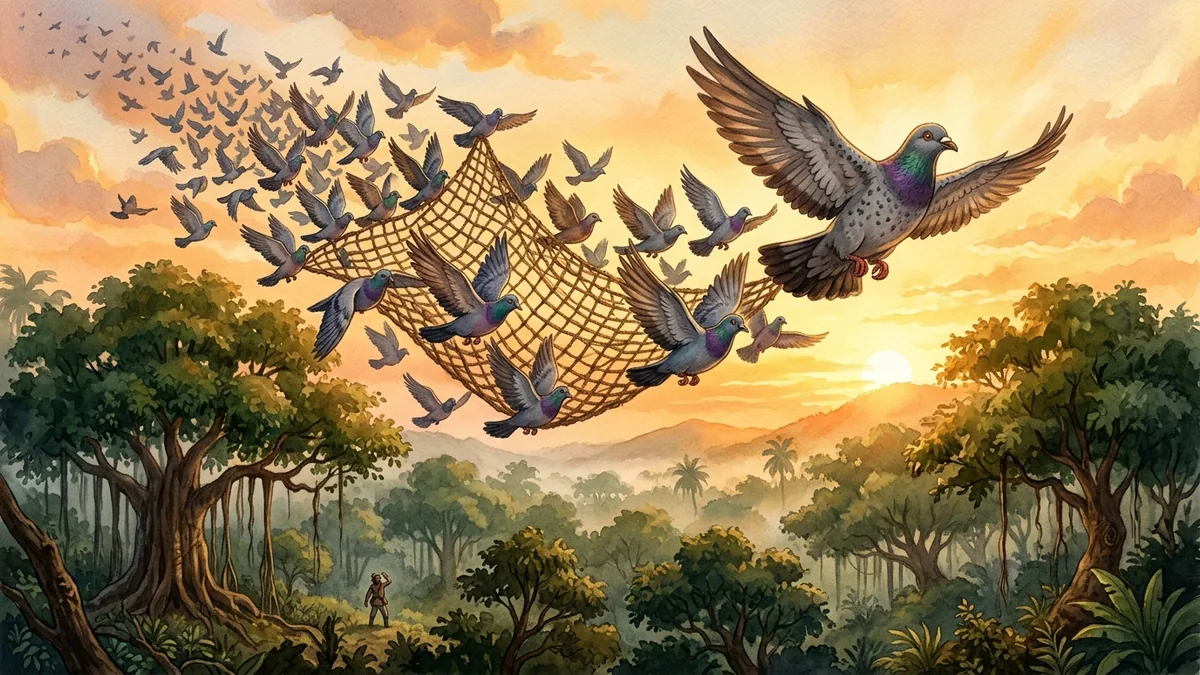
Chitragriva, the sagacious king of pigeons, soared across a dense forest with his flock in search of nourishment. Spotting an abundance of pristine rice grains scattered across a clearing, the hungry pigeons clamored to land. Chitragriva cautioned against haste, pointing out that solitary grains in a wild, uninhabited jungle betrayed the treacherous trap of a fowler. Overruled by youthful impatience and hunger, the flock descended, only to find their claws ensnared in a concealed mesh. As the hunter charged toward them with a heavy club, panic threatened their destruction. Chitragriva maintained absolute composure and commanded every pigeon to synchronize their wingbeats and lift the net together into the sky. Acting as one single entity, the united flock took flight bearing the net aloft, landing near the burrow of Hiranyaka, a noble mouse, who chewed through the bonds. The immortal tale demonstrates that cohesive unity and disciplined leadership overcome seemingly insurmountable perils.
In an expansive freshwater lake lived three large fishes of contrasting temperaments: Anagatavidhata (the forethinking planner who anticipated crises), Pratyutpannamati (the resourceful wit who improvised brilliantly during emergencies), and Yadbhavishya (the fatalist who relied blindly on destiny without taking action). One evening, fishermen inspected the lake and agreed to cast extensive nets at dawn to haul in the abundant fish. Hearing this, Anagatavidhata wasted no time and swam that very night through a narrow drainage canal into a deeper, safer river. When the nets were drawn the following morning, both Pratyutpannamati and Yadbhavishya were caught. Pratyutpannamati feigned death with stiffened gills; assuming her already lifeless, the fishermen tossed her onto the damp bank, from where she leaped back into the deep waters. But Yadbhavishya, stubbornly waiting for fate to rescue her, flapped helplessly until she was clubbed and perished. The story teaches that proactive preparation and sharp wit preserve life, whereas indolent fatalism leads directly to destruction.
A graceful royal swan inhabiting the pristine waters of Manasarovar was befriended by an owl of the shadowy woodlands. Flattering the swan with honeyed compliments, the nocturnal bird persuaded the swan to visit his dark, hollow roost in the ancient forest. Disregarding the perils of ill-matched company, the swan accepted the invitation. That night, an exhausted hunter stopped to rest beneath the tree. The owl, driven by its sinister instinct, shrieked an eerie omen into the stillness. Enraged by the discordant cry, the hunter notched an arrow toward the canopy. The owl vanished instantly into the safety of its deep knot-hole, leaving the luminous swan exposed in the foliage to receive the fatal shaft. The fable warns that succumbing to shallow flattery and befriending incompatible natures invariably invites destruction.
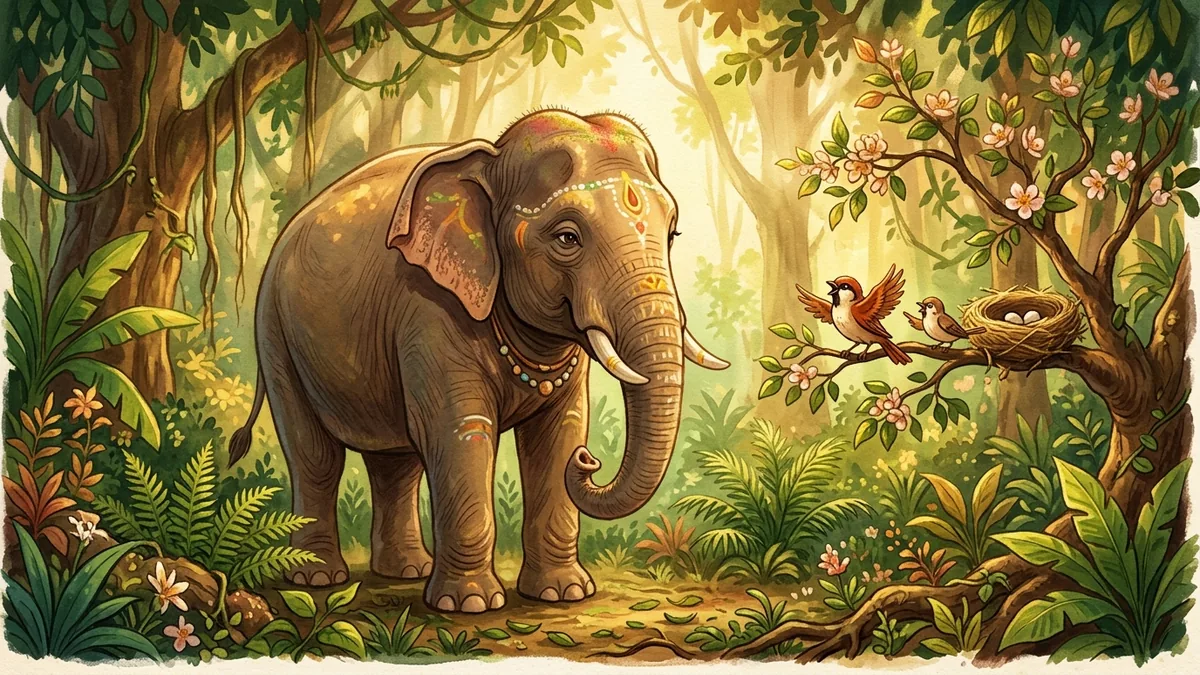
In a lush woodland, a devoted pair of sparrows built a delicate nest in a banyan tree, sheltering three fragile eggs. Driven mad by summer heat and sheer arrogance, a rogue wild elephant shook the ancient tree and ripped the branch apart with his trunk, crushing the unhatched eggs into the dust. Weeping inconsolably over the ruin of their lineage, the sparrows sought counsel from loyal woodland comrades: a woodpecker, a sharp-buzzing fly, and Meghnada, a wise frog. Together, they executed a synchronized stratagem against the tyrant. The fly buzzed an entrancing drone into the elephant's ears to entrance him; the woodpecker pecked out both his eyes; and the frog croaked from across a treacherous quicksand marsh, deceiving the blinded, thirsty beast into believing cool water lay ahead. Lunging forward, the elephant plunged into the quagmire and perished. The story demonstrates that even the smallest and frailest can bring down an arrogant giant through solidarity and intellect.
Gangadhar, a destitute yet deeply virtuous woodcutter, sustained his impoverished family by collecting deadwood along the riverbank. One afternoon, while chopping a withered branch overhanging the rushing waters, his sole iron axe slipped from his sweat-slicked fingers and plunged into the river's unfathomable depths. Deprived of his only means of livelihood, the honest man wept in despair. Moved by his grief, the River Deity materialized from the waters. The divine being first drew forth a gleaming axe of solid gold, which Gangadhar immediately disowned as not his. Next, a magnificent silver axe was offered, which he also gently declined. Finally, when his own modest, rusted iron axe was retrieved, Gangadhar cried out in joyous gratitude. Deeply moved by such incorruptible integrity, the deity bestowed all three axes upon him. The classic fable affirms that unyielding honesty brings rewards far surpassing dishonest gain.
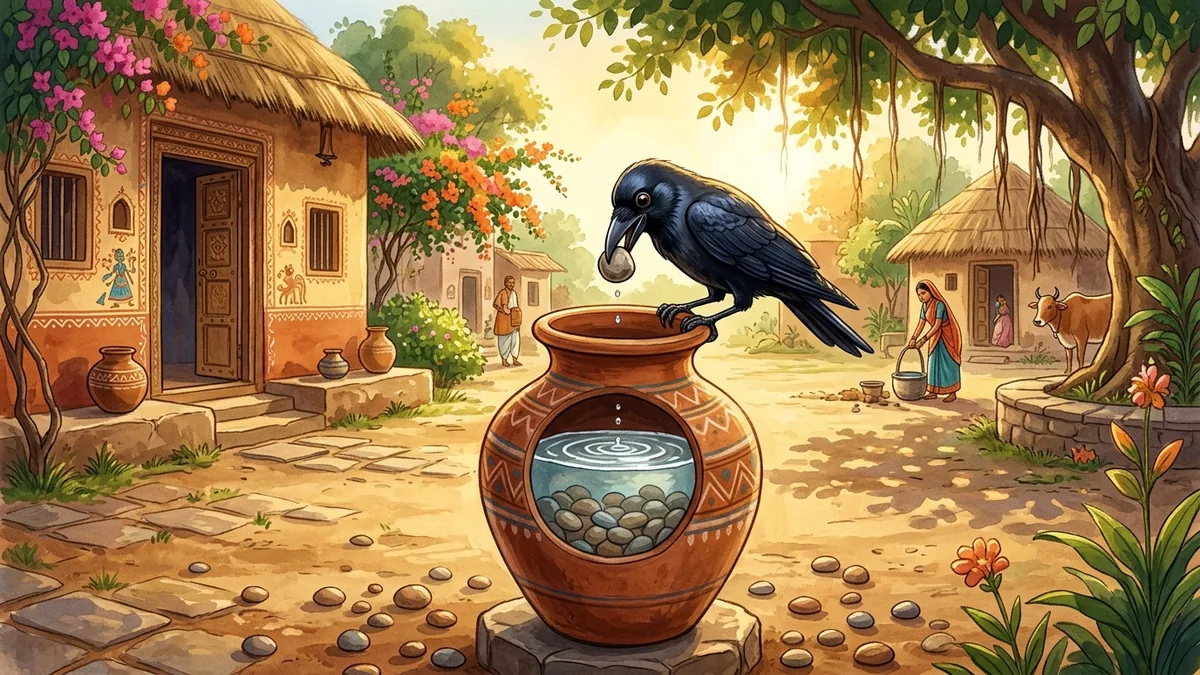
During a devastating summer drought when forest streams and village ponds dried to parched dust, Meghavarna, an observant crow, was on the verge of collapsing from dehydration. After hours of scouring the scorched plains, he discovered an earthen pitcher in an abandoned orchard. At the very bottom lay a small reserve of cool water; however, the pitcher’s narrow neck prevented his beak from reaching the surface. Pushing or overturning the heavy vessel proved impossible. Refusing to yield to despair, Meghavarna observed the gravel scattered across the garden path and devised an ingenious method. With tireless patience, he picked up smooth pebbles one by one and dropped them into the vessel. As the stones displaced the water, the liquid gradually rose to the brim until he drank his fill. The timeless fable proves that patience, observation, and methodical ingenuity overcome obstacles that sheer physical force cannot budge.
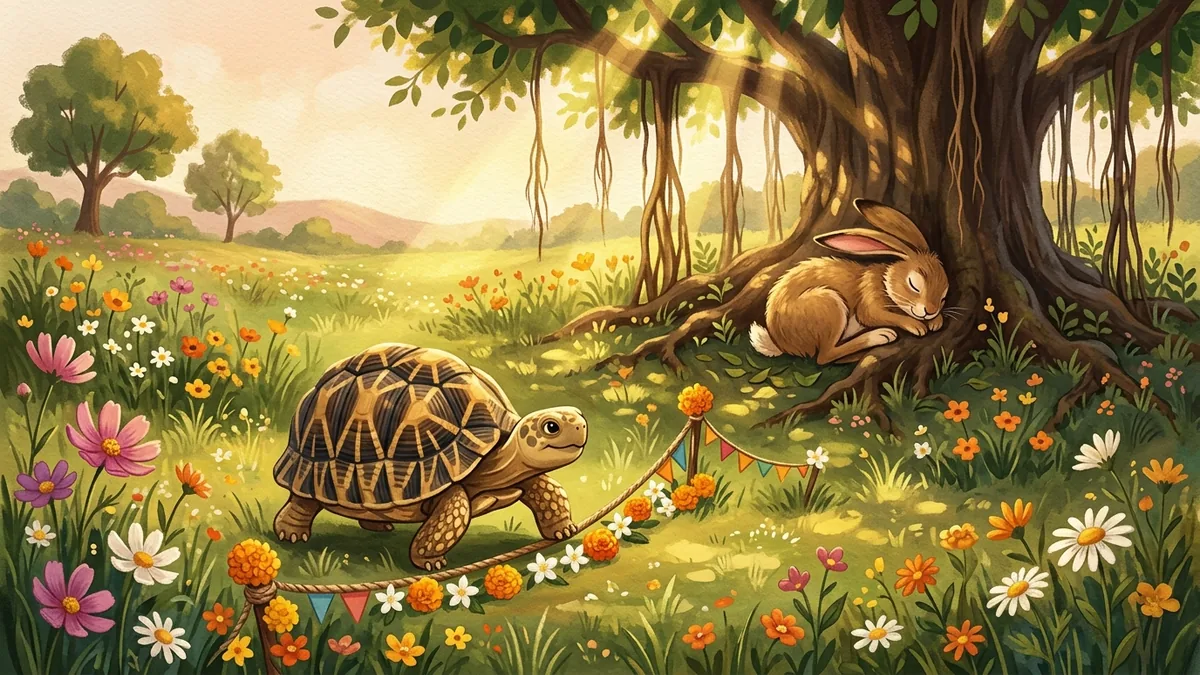
In the foothills of Mount Mandara lived Chapala, an exceptionally swift hare whose arrogance matched his speed. He relentlessly mocked Mantharaka, an elderly tortoise who moved with deliberate, plodding steps. Weary of the constant ridicule, the tortoise challenged the boastful hare to a long-distance race to the mountain ridge. Roaring with derisive laughter, Chapala accepted. As the race commenced, the hare bolted ahead like an arrow, vanishing over the hill. Looking back and seeing no sign of his opponent, Chapala grew dangerously overconfident and lounged beneath a shady banyan tree, slipping into deep slumber. Meanwhile, Mantharaka plodded forward with unswerving discipline, never pausing, never despairing. By the time the hare awoke in the setting sun, the tortoise had crossed the finish line to the cheers of the woodland realm. The immortal fable demonstrates that consistent, disciplined persistence triumphs over sporadic talent ruined by complacency.
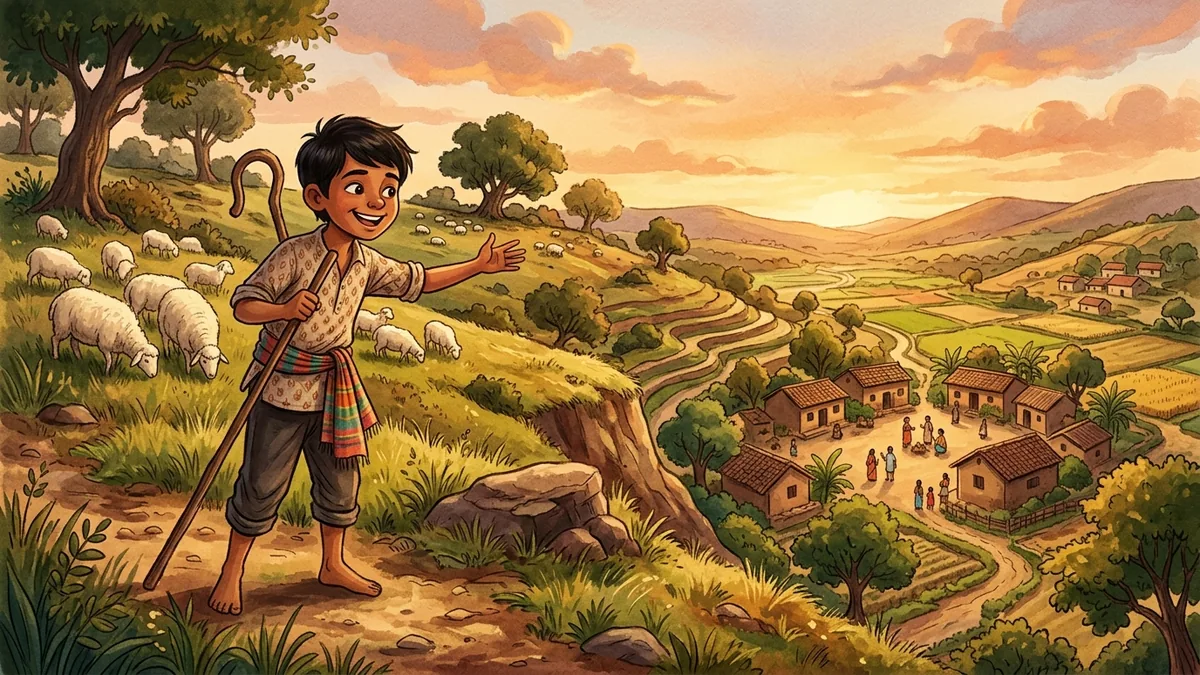
Hariya, an impulsive and restless shepherd boy, tended village sheep upon the mist-veiled mountain slopes. Bored by the quiet monotony of his chores, he concocted a reckless amusement to startle the nearby hamlet. Scrambling atop a high crag, he screamed with theatrical terror: 'Wolf! Wolf! Help me, the flock is under attack!' Alarmed villagers dropped their scythes and ran uphill armed with cudgels to defend him, only to find the boy rolling in laughter at their expense. Weeks later, he repeated the callous deception. But one stormy twilight, a genuinely ferocious grey wolf emerged from the ravines. Hariya shrieked in mortal dread, but the weary villagers assumed it was another cruel prank and ignored his cries. The predator mauled the flock, leaving Hariya shivering in despair. The immortal fable warns that habitual deceit shatters trust, ensuring that a liar is disbelieved even when uttering absolute truth.
A mighty lion slept peacefully in the shade of a dense forest canopy after a heavy feast. An inquisitive field mouse, foraging for wild berries, accidentally scurried onto the sleeping beast's massive paws and scrambled through his thick mane. Awakened and infuriated, the monarch pinned the tiny rodent beneath his lethal claws, preparing to crush it. Trembling, the mouse begged for mercy, promising that even the humblest creature might one day return the royal kindness. Amused by the absurdity of a tiny mouse aiding the lord of beasts, the lion chuckled and magnanimously released him. Months later, the lion stepped into an iron-bound rope snare set by big-game hunters. Bound hand and foot, his thunderous roars of anguish shook the jungle. Recognizing the voice of his benefactor, the mouse rushed to the trap and gnawed through the heavy cords with razor-sharp teeth, setting the emperor of beasts free. The classic fable teaches that no act of kindness is ever wasted and that greatness must never despise the humble.
During the lush, sun-drenched months of spring and summer, a dedicated worker ant laboured from dawn to dusk, carrying heavy grains into her deep subterranean storehouse to prepare for the inevitable winter. On an adjacent thistle rested an indolent grasshopper who spent entire days strumming his mandolin, basking in the sun, and mocking the ant's ceaseless exertion. The grasshopper preached that life was meant for carefree leisure and that worrying about distant seasons was sheer folly. Ignoring his scoffing, the ant remained faithful to her toil. When winter descended, blankets of frost and blizzard buried the earth, cutting off every trace of forage. Shivering violently and starving, the grasshopper crawled to the ant's warm threshold begging for food. The ant reminded him that those who squander bountiful summers in reckless frivolity must face the harsh reality of winter. The timeless parable teaches that foresight and diligent industry guarantee survival, while procrastination invites inevitable catastrophe.
Kalu, a stray dog hardened by city alleys, scavenged relentlessly for daily scraps. One fortunate morning, he snatched a succulent, marrow-filled bone outside a butcher's stall. Desiring to relish his prize in undisturbed solitude, he trotted toward the forested outskirts. Along the path lay a narrow wooden footbridge spanning a crystal-clear mountain stream. Pausing mid-span, Kalu glanced down into the tranquil waters and beheld his own mirror reflection. Blinking through the prism of insatiable greed and ignorance, he mistook the image for a rival dog bearing an even larger, juicier bone. Coveting the phantom treasure, he snarled and barked aggressively to intimidate his reflection. The instant his jaws parted, his genuine bone plunged into the rushing torrent and was swept away forever. Starving and humiliated, Kalu was left to lament his folly. The fable proves that unchecked greed forfeits real blessings in pursuit of empty illusions.
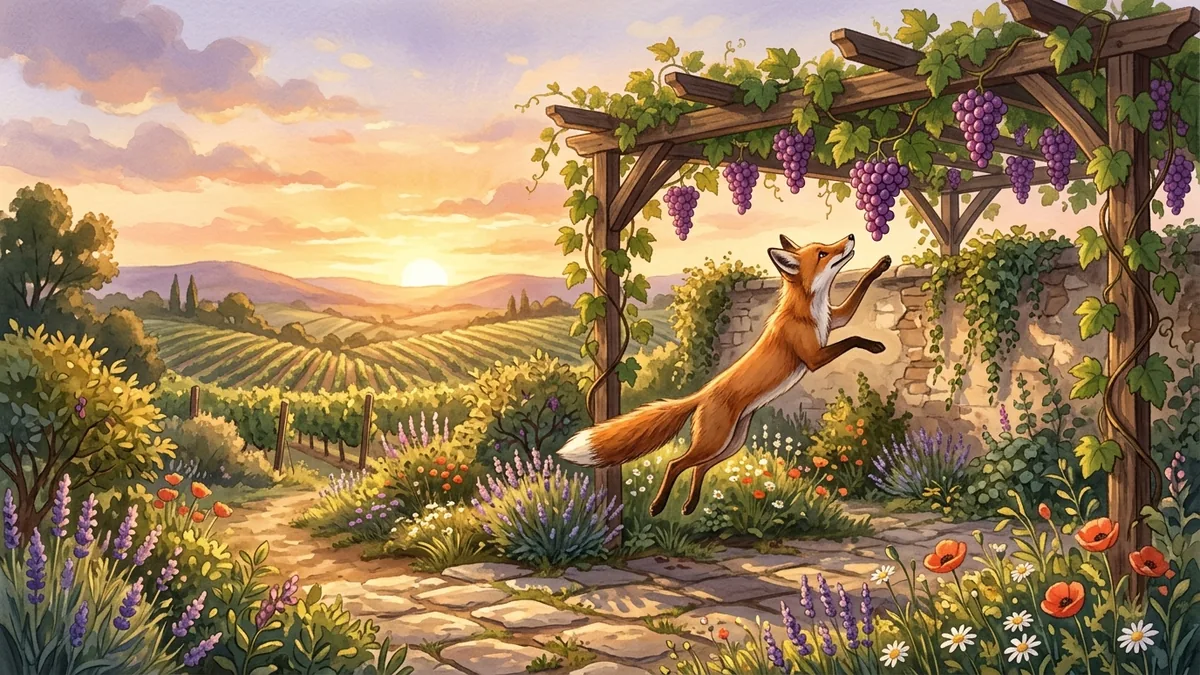
On a scorching autumn afternoon, Lomasha, a proud and cunning fox, wandered through parched orchards starved and dehydrated. After hours of fruitless foraging, she discovered a prosperous farmer's walled vineyard. Hanging from high rustic trellises were magnificent clusters of plump, sun-ripened purple grapes glistening with sweet nectar. At the sight of this luscious fruit, the fox's mouth watered with intense craving. Backing up several paces, she launched herself into the air with all her athletic power, but her paws fell tantalizingly short. She leaped repeatedly until her joints ached and exhaustion overwhelmed her. Realizing that the prize lay entirely beyond her physical reach, she masked her humiliation with haughty disdain, turning up her snout and declaring: 'These grapes are undoubtedly sour and unripe; I would not poison my palate with such worthless trash.' The fable exposes the human tendency to disparage what one cannot attain, proving that true maturity lies in acknowledging limitations rather than slandering the goal.
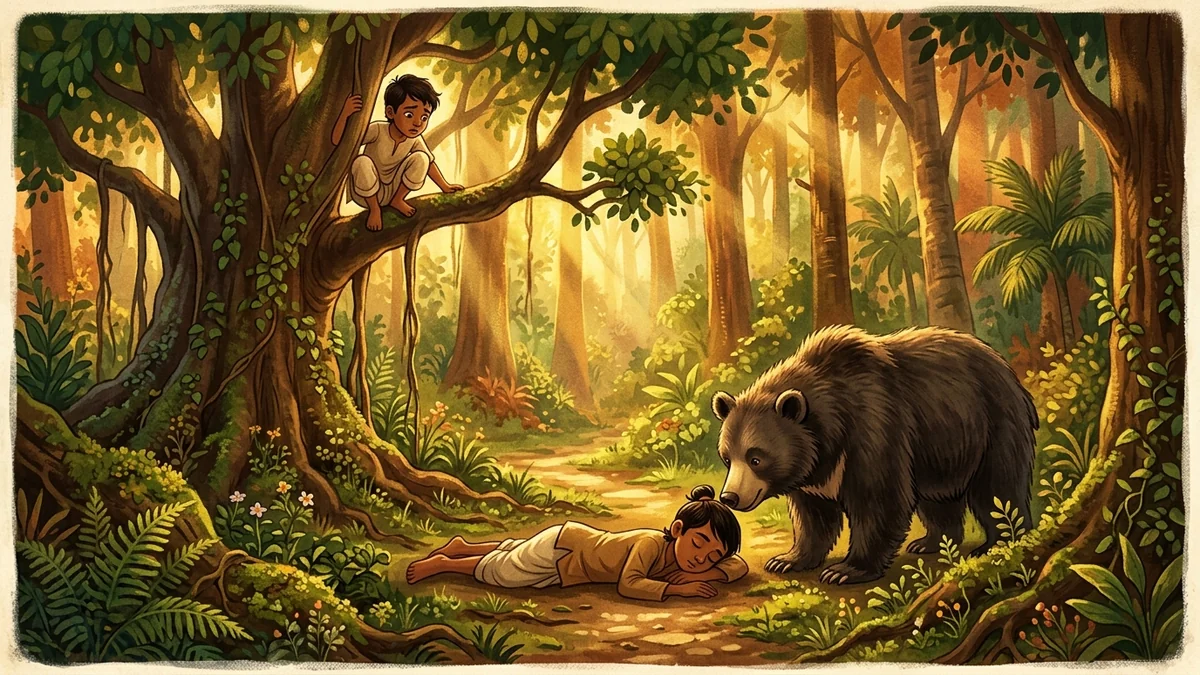
Rohan and Sohan, two lifelong companions, journeyed through an untamed forest to sell wares in a distant market town. Before entering the wild ravines, they solemnly pledged to stand shoulder-to-shoulder against any peril. In the heart of the woods, a monstrous Himalayan bear emerged from the brush, growling menacingly. Rohan, an agile climber, thought only of his own skin, sprinting to an ancient oak and pulling himself up into the canopy without extending a hand to his companion. Sohan, unable to climb, recalled an old lore that bears do not devour dead carrion. Dropping flat onto the moss, he sealed his breath, stiffening like a corpse. The massive beast sniffed his temples, ears, and chest; sensing no breath, it shuffled away into the thickets. When safety returned, Rohan slid down and asked jokingly, 'What did the bear whisper in your ear?' Dusting his tunic, Sohan replied calmly: 'The bear cautioned me never to travel with a friend who deserts you in the hour of peril.' The story demonstrates that adversity is the true crucible of friendship.
Dharmapala, an aging and respected patriarch of Kaushambi, had four robust, hardworking sons. Though blessed with health and fertile lands, the household knew no peace, for the brothers quarrelled endlessly over chores, status, and inheritance. Troubled on his deathbed that greedy rivals would exploit their bitter discord to plunder the ancestral farm, Dharmapala devised a practical object lesson. Summoning his sons, he ordered a bundle of twenty thick hazel staves bound tightly with rawhide cords. He commanded each son, in order of strength, to break the bundle across their knees. Despite straining every sinew, none could snap or bend the united bundle. The father then untied the cords and handed a single stave to each son, which they fractured effortlessly with a snap of their fingers. Dharmapala imparted the timeless moral: united like the bundle, no adversary can break you; divided into solitary sticks, the slightest blow will shatter your lives. The fable illustrates that familial and communal solidarity is an impregnable fortress.
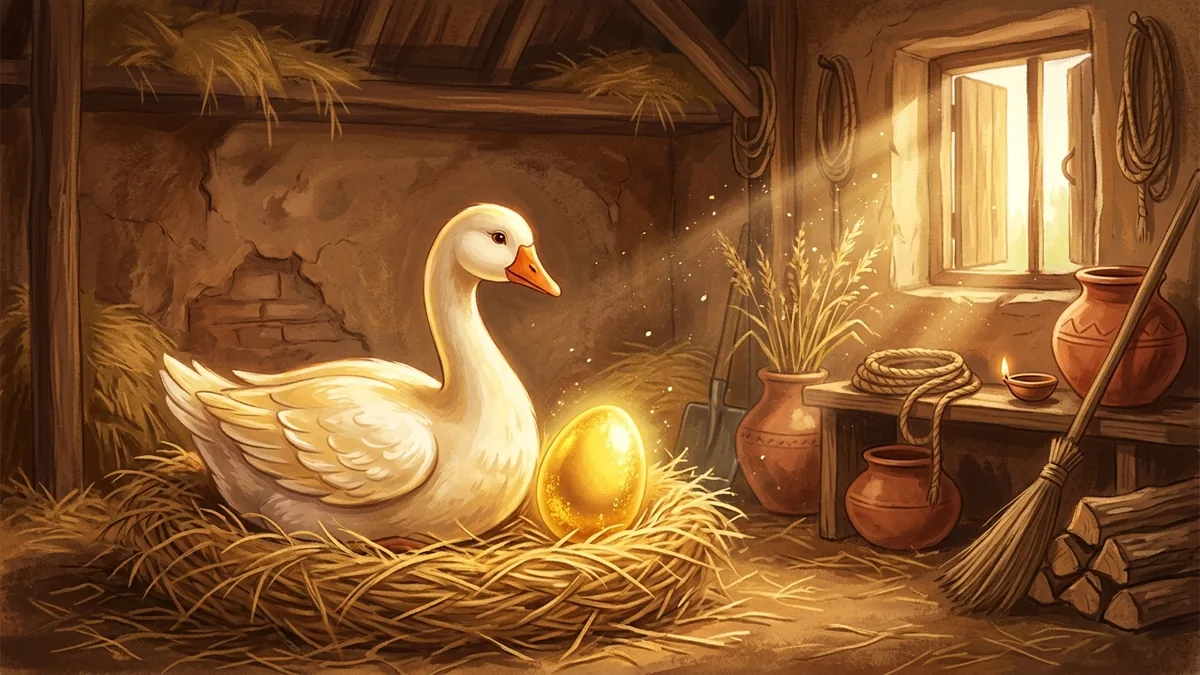
In a quiet valley of Manipur lived Devadatta, an impoverished tenant farmer, and his wife. One evening, he acquired an unassuming goose from a traveling poultry vendor. The following morning, his breath hitched in wonder: resting in the straw was a heavy, lustrous egg of solid, 24-karat gold. Faithfully, each dawn, the wondrous bird deposited a single golden egg in the nest. By selling this daily bounty to the royal goldsmith, Devadatta transformed his thatched hut into a grand manor, rising to immense affluence. Yet with fortune came the fatal infection of unbridled avarice and impatience. Whispering in his ear, his wife argued that if the bird produced golden eggs, its interior must house an inexhaustible mountain of molten gold. Why wait for daily crumbs when they could seize the entire fortune in one stroke? Blinded by rapacity, Devadatta took a butcher's cleaver and slaughtered the goose. To their horror, the bird's anatomy was identical to any ordinary fowl; not a grain of gold existed inside. Deprived forever of their daily miracle, they sank back into penniless obscurity. The fable illustrates that insatiable greed and haste destroy the very wellspring of enduring prosperity.
Upon a lush jambul tree overhanging the sacred Narmada river nested a gentle, compassionate white dove. Beneath the ancient roots dwelled a tiny worker ant. One afternoon, while sipping water at the river's edge, a sudden swell swept the frail ant into the rushing current. Flapping helplessly toward certain drowning, her plight was spotted by the dove above. Stirred by pity, the bird plucked a broad leaf with her beak and dropped it directly beside the drowning insect. The ant scrambled onto the leaf and floated safely ashore. Days later, a cruel fowler stepped softly through the glade. Spotting the tranquil dove resting upon a branch, he notched a poisoned arrow and drew his bowstring to his ear. The dove was unaware of imminent death. Witnessing the peril, the grateful ant crawled up the hunter’s bare ankle and bit his heel with all her might. Howling in agony, the hunter jerked his bow, sending the arrow wide into the bushes. Alerted by the sound, the dove took flight, escaping harm. The fable shows that even the smallest act of kindness reverberates through destiny, returning as salvation in times of peril.
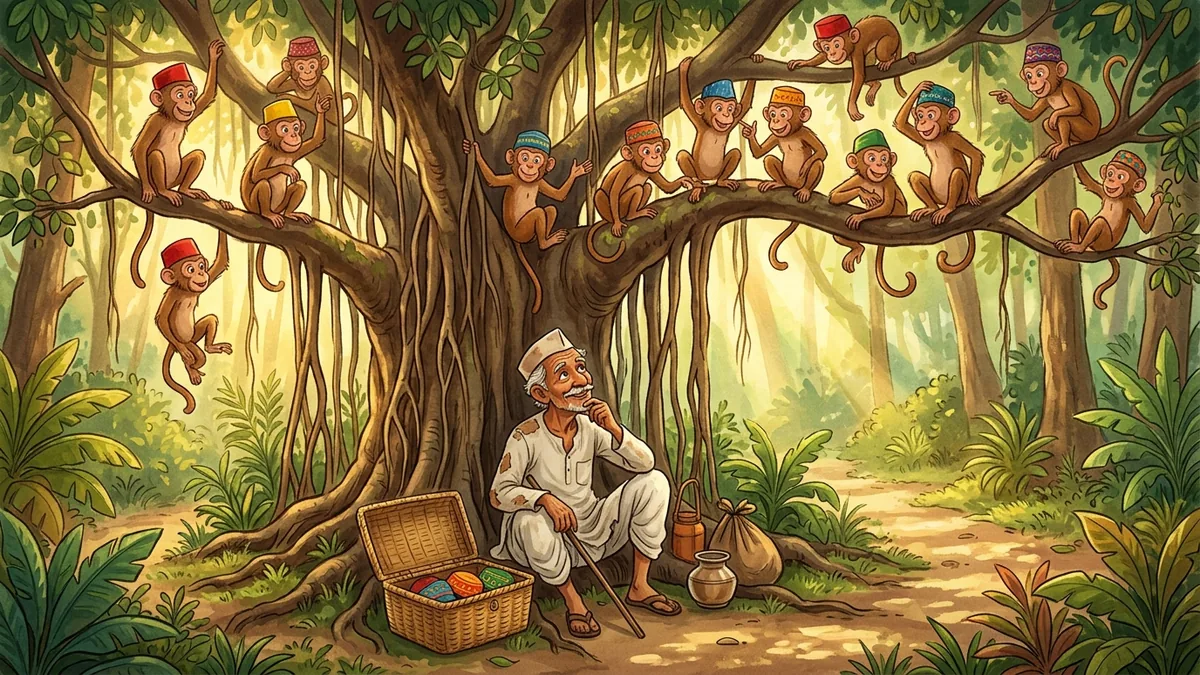
Ramu, a hardworking vendor of vibrant cloth caps, journeyed from village to village earning an honest living. Exhausted by miles of walking under a merciless summer sun, he stopped to rest beneath the sprawling canopy of an ancient banyan tree. Placing his heavy wicker hamper of caps securely beside him, he fell into deep, tranquil slumber. High amidst the branches dwelled a troop of inquisitive, mischievous monkeys. Descending silently, the primates unlatched the hamper, donned the colorful red, green, and yellow caps upon their heads, and scrambled back into the foliage. Upon waking, Ramu was horrified to find his entire inventory vanished, only to look up and see a canopy full of capped monkeys chattering mockingly. He pleaded, shook his fists, and hurled gravel; the monkeys merely mimicked him, pelting him with unripe figs. Realizing that brute anger was futile and remembering that monkeys possess an irresistible instinct for imitation, Ramu devised an ingenious ploy. Removing his own cap, he threw it onto the earth with theatrical fury. Without a moment's hesitation, every monkey ripped off its cap and flung it to the ground. Scooping up his scattered goods, the relieved merchant went on his way. The story teaches that composure, observation of psychology, and wit triumph over despair during acute crises.
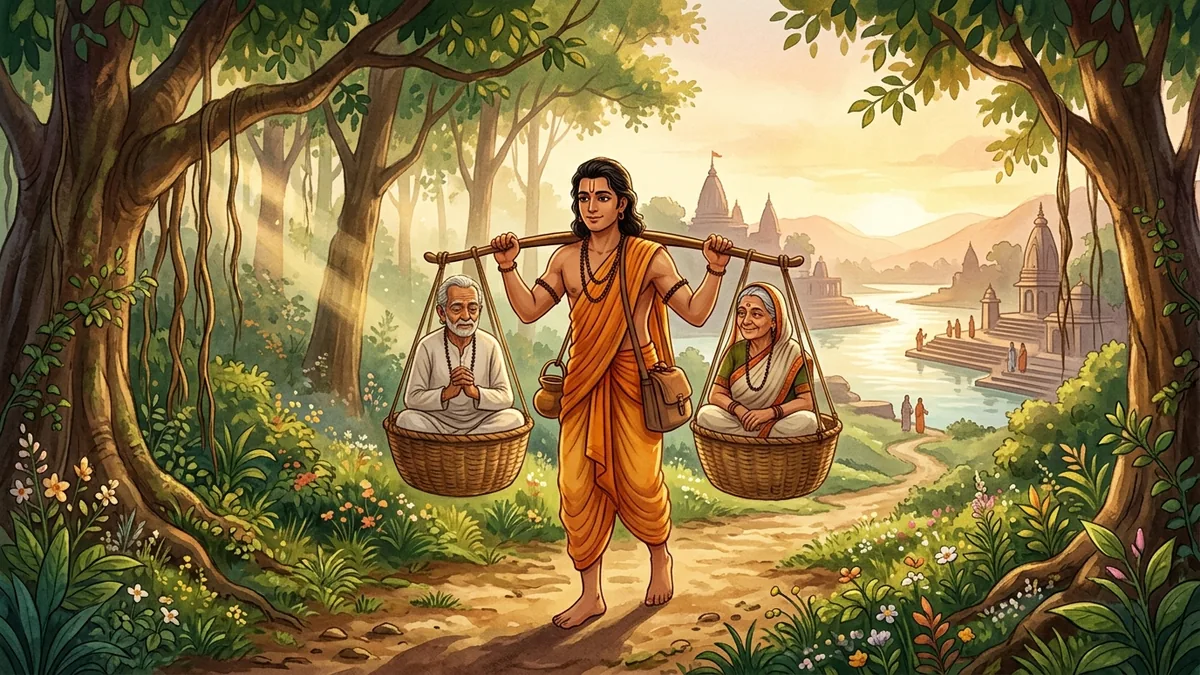
In ancient India lived Shravan Kumar, a noble youth whose entire existence was consecrated to the loving service of his elderly, visually impaired parents. When his parents expressed a dying wish to visit the sacred shrines of the land, Shravan, possessing neither wealth nor beasts of burden, fashioned a sturdy bamboo palanquin (kanwar). Placing his parents in balanced wicker baskets, he bore them upon his youthful shoulders across hundreds of leagues. Reaching the forests of the Sarayu river, his parents grew parched with thirst. As Shravan dipped his brass urn into the dark waters, King Dasharatha of Ayodhya mistook the bubbling sound for a wild elephant and unleashed a sound-seeking arrow (Shabdabhedi Bana). The deadly shaft pierced Shravan’s chest. In his dying breath, the devoted son thought not of his agonizing wound, but implored the grief-stricken king to carry water to his waiting parents. The tragedy remains an eternal monument to filial devotion, unswerving duty, and boundless selflessness.
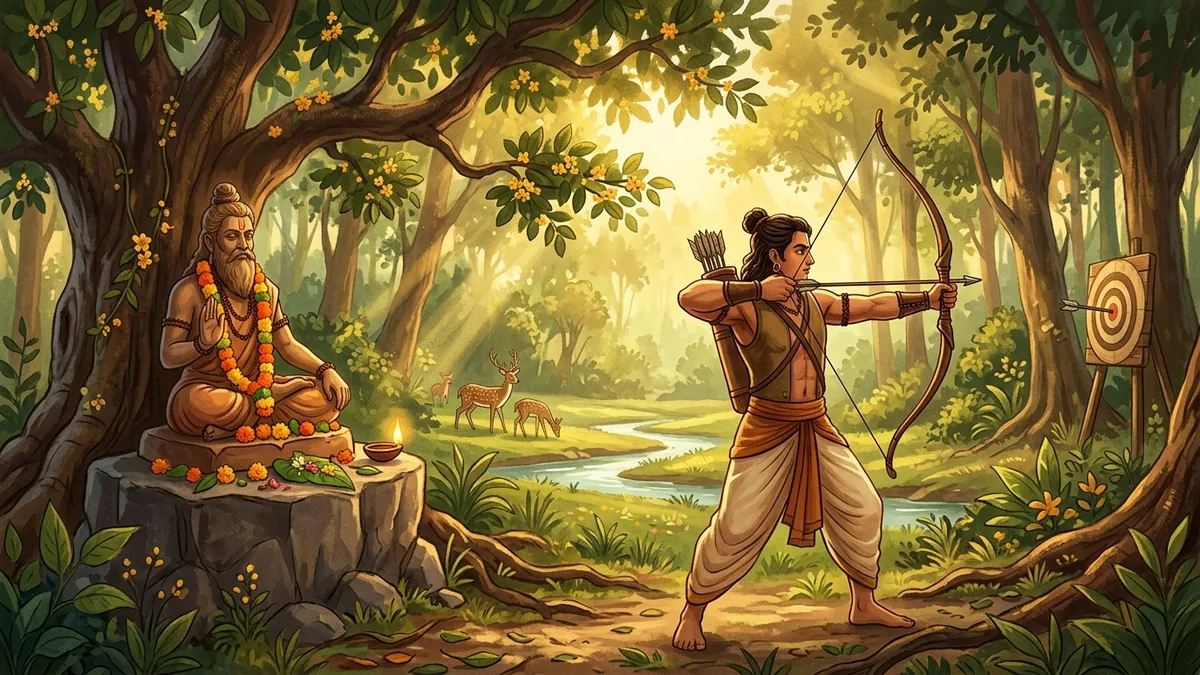
During the epic era of the Mahabharata, Eklavya, son of the Nishada chieftain Hiranyadhanus, burned with an insatiable aspiration to master the divine science of archery. Journeying to the royal academy of Hastinapur, he prostrated before Acharya Dronacharya, seeking initiation. Constrained by royal oaths and aristocratic social conventions, Dronacharya refused to accept the forest-dwelling tribal youth. Undeterred by rejection, Eklavya returned to the wild woods, sculpting a lifelike clay icon of Drona beneath a sacred tree. Consecrating this image as his living preceptor, he practiced with monumental discipline and unbroken concentration day and night. His self-directed mastery soared until his precision surpassed even the royal princes. When he painlessly stitched shut the barking jaws of a hound with seven crisscrossed arrows without spilling a single drop of blood, Dronacharya was awed by his supreme genius. To honor his prior oath to make Arjuna the world's greatest archer, Drona demanded Eklavya's right thumb as Guru Dakshina. Without a tremor of hesitation or malice, Eklavya severed his thumb with his dagger and placed it at his master's feet. The legend stands as an immortal testament to the triumph of autodidactic determination and boundless devotion.
King Harishchandra of Ayodhya, a noble scion of the Solar dynasty, was celebrated across the three realms for his incorruptible truthfulness, justice, and sacred commitment to his word. To test his moral fortitude, the sage Vishwamitra initiated a divine trial. In a vivid dream, Harishchandra bequeathed his entire empire to the sage; upon waking, he treated the dream promise as an inviolable vow, relinquishing his throne, treasury, and royal robes. To pay the customary sacrificial fee (dakshina), the monarch sold his queen Taramati and young son Rohitashva into domestic servitude, and sold himself to a cremation ground keeper (chandala) in Kashi. Working night and day, Harishchandra collected the shroud tax from the grieving. Tragedy deepened when young Rohitashva died from a fatal cobra bite. In the dead of midnight, Queen Taramati bore the child's lifeless body to the cremation grounds in the pouring rain. Recognizing his wife and dead son, Harishchandra wept bitter tears, yet refused to compromise his duty, demanding the mandatory shroud fee. As Taramati prepared to tear her ragged garment to satisfy the tax, the heavens parted; celestial deities and Sage Vishwamitra appeared, restoring the child to life and blessing the king for holding truth higher than mortal life. The legend demonstrates that integrity outshines worldly power and that truthfulness is the ultimate pillar of human nobility.
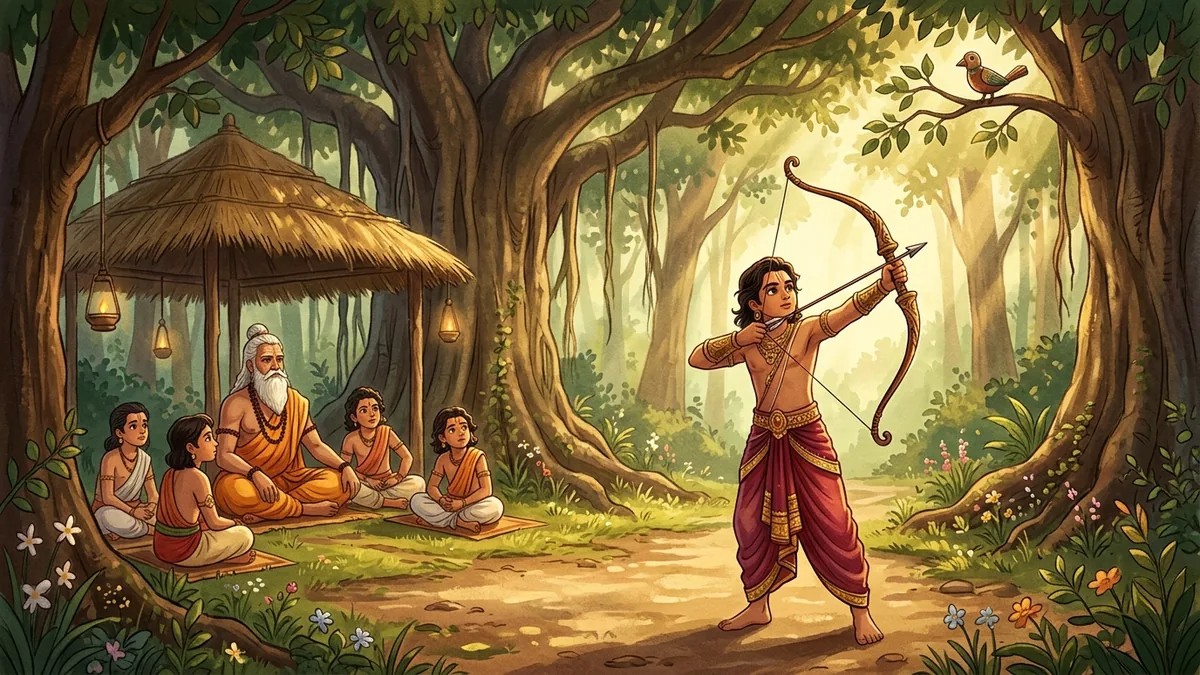
At the royal martial academy of Hastinapur, Acharya Dronacharya convened a pivotal examination to evaluate the focus and mental discipline of the Kuru princes. High upon a remote branch of a sprawling pipal tree, he affixed a painted wooden bird. Lining up the Kaurava and Pandava brothers with their bows strung, Dronacharya tested them individually. First, he summoned Yudhishthira and asked what he observed. Yudhishthira replied that he saw the sky, the foliage, the tree trunk, the bird, and the master himself. Drona ordered him to lower his bow. Duryodhana, Bhima, and the others offered similar comprehensive descriptions and were dismissed. Finally, Arjuna stepped to the mark. Drawing his bowstring to his cheek, Drona asked, 'Arjuna, what do you behold?' Arjuna replied with calm intensity that he saw neither the sky, nor the tree, nor the leaves, nor even the bird’s body—he saw solely the black pupil of the bird's eye. Drona commanded him to loose the shaft, and the arrow struck dead-center through the target. The classic story proves that monumental achievement requires laser-like concentration that eliminates every surrounding distraction.
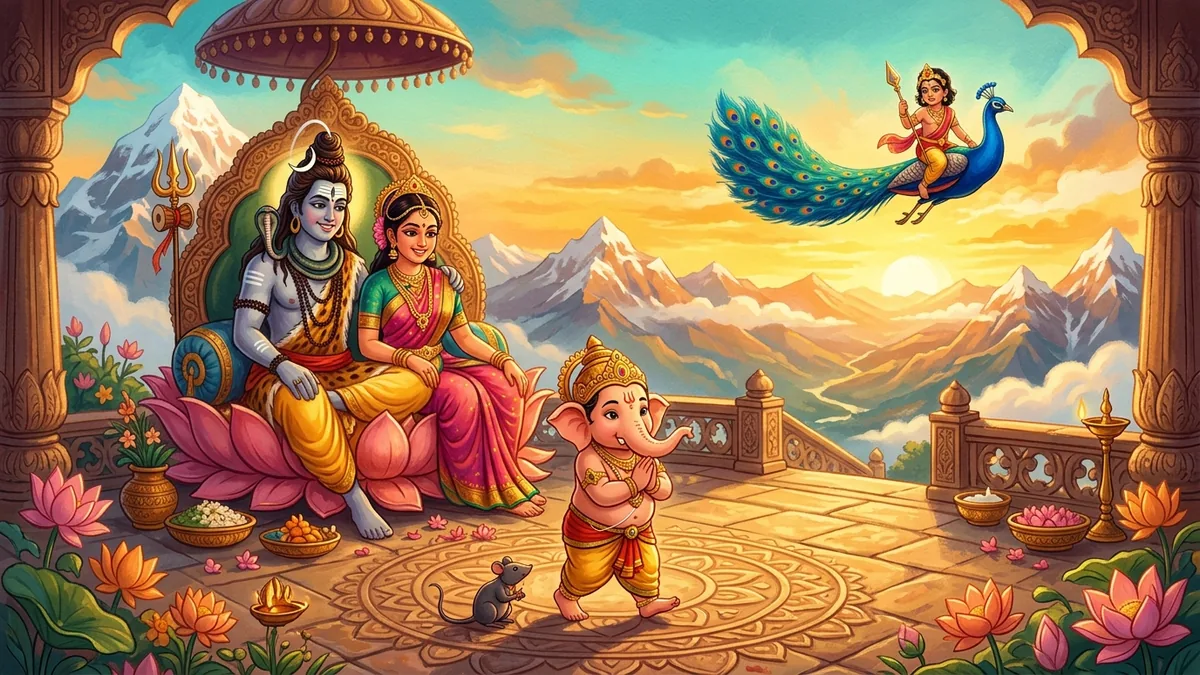
Upon sacred Mount Kailash, the celestial sage Narada arrived bearing an extraordinary divine fruit of supreme wisdom and transcendental enlightenment. Both divine brothers, Kartikeya and Ganesha, expressed an eager desire to receive the sacred prize. To resolve the dispute justly, Lord Shiva and Goddess Parvati decreed a contest: whoever circled the entire cosmos (the universe) three times and returned first to Kailash would be crowned the worthy recipient. The athletic Kartikeya mounted his swift peacock and shot into the celestial spheres like a meteor. In contrast, Ganesha possessed a heavy, gentle frame and rode a humble field mouse. Recognizing that physical velocity was not his path, Ganesha invoked the supreme philosophical truth embedded in the scriptures: within one's parents reside all universes, sacred shrines, and divine wisdom. Folding his hands with profound devotion, Ganesha walked three reverent circumambulations (pradakshina) around Shiva and Parvati. When the divine parents questioned his act, Ganesha answered that honoring parents encompasses the circumambulation of the entire cosmos. Deeply moved by his profound wisdom, Shiva and Parvati bestowed the divine fruit upon him. The immortal legend teaches that spiritual discernment, wisdom, and reverent devotion infinitely transcend mere physical speed and brute force.
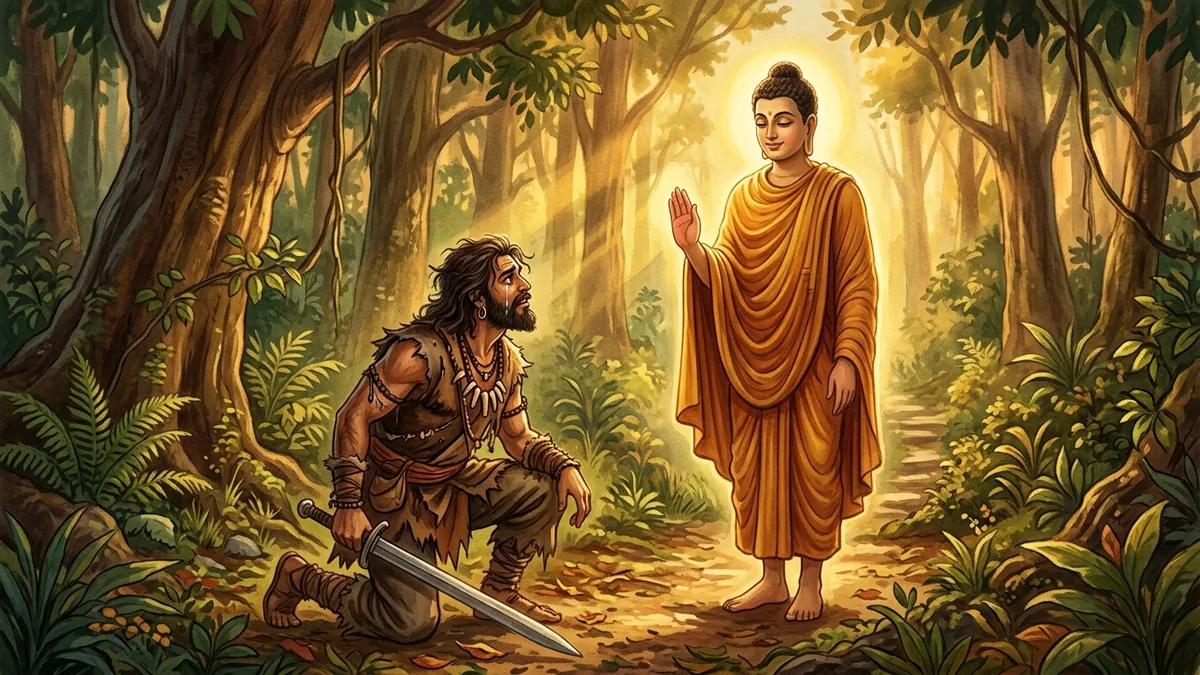
In the untamed, jagged ravines of Kosala dwelled Angulimala, an infamous, bloodthirsty outlaw who murdered travelers and wore a gruesome necklace woven from the severed fingers of his victims. His terror was so absolute that even King Prasenajit’s royal cavalry feared to enter his forest domain. When Gautama Buddha journeyed toward that wilderness alone on foot, terrified villagers begged him to turn back. Moved by boundless compassion, the Tathagata smiled and walked calmly into the outlaw's territory. Brandishing a dripping broadsword, Angulimala charged the solitary monk, bellowing: 'Halt, ascetic!' Continuing his serene stride, Buddha turned and spoke with transcendent gentleness: 'Angulimala, I have halted long ago, having ceased all violence and desire; it is you who have not yet halted your cycle of slaughter.' The fearless majesty of Buddha’s countenance and the profound metaphysical piercing of his words shattered the bandit's hardened soul. Casting down his blade, Angulimala wept and prostrated before the Master, seeking monastic refuge. Buddha initiated him as the monk Ahimsaka. The legend demonstrates that hatred cannot be extinguished by violence, but dissolves forever before the power of unconditional love and fearless truth.
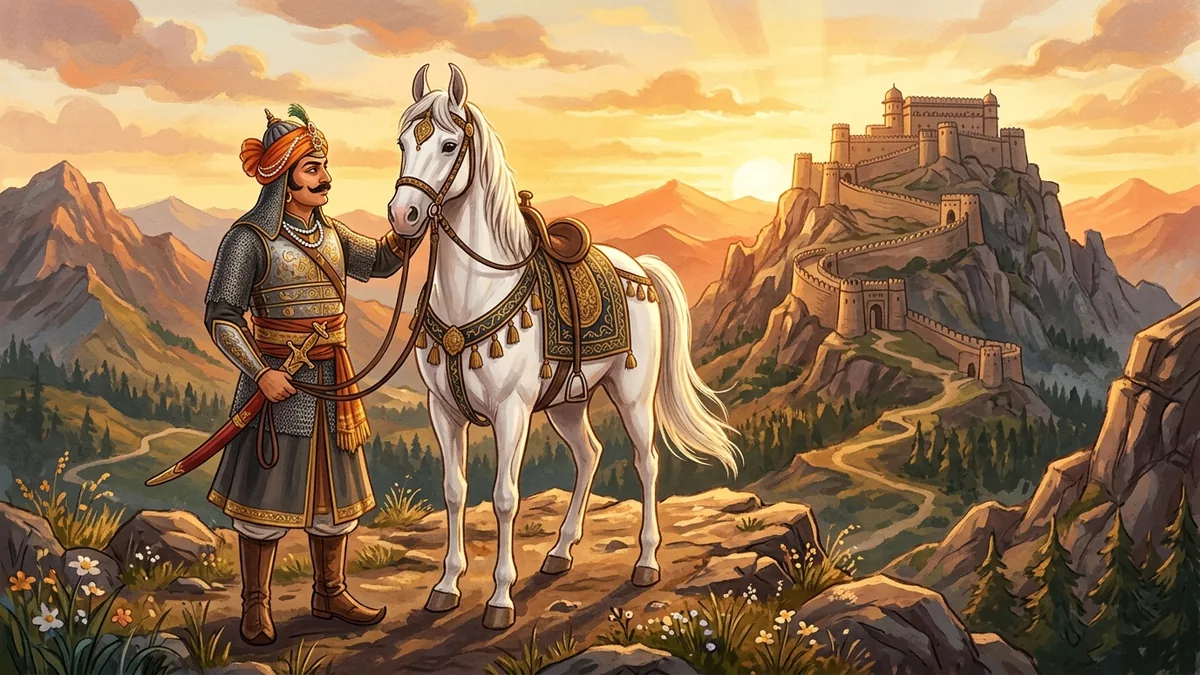
In the historic, bloody battle of Haldighati in 1576, Maharana Pratap, the immortal beacon of Mewar’s independence, and his legendary warhorse Chetak etched an unmatched saga of valour and fidelity into the annals of history. Facing the overwhelming imperial Mughal host led by Raja Man Singh, Pratap and his band of Rajput and Bhil warriors fought desperately to defend their motherland. In the tempest of combat, Chetak performed the legendary feat of rearing high and planting his forelegs directly upon the head of Man Singh’s armored war elephant. Pratap hurled his spear, but a scythe-blade bound to the elephant’s trunk severed Chetak’s rear leg. Despite bleeding profusely and wracked with agony, the loyal steed prioritized his master’s survival above his own breath. Bearing the wounded Maharana out of the encirclement, Chetak cleared a raging 21-foot mountain ravine with a single heroic leap that no imperial pursuer dared attempt. Reaching a safe haven, the divine stallion collapsed, laying his head in Maharana Pratap’s weeping lap as he breathed his last. The legend remains an eternal tribute to unmatched loyalty, valor, and supreme sacrifice in defense of freedom.
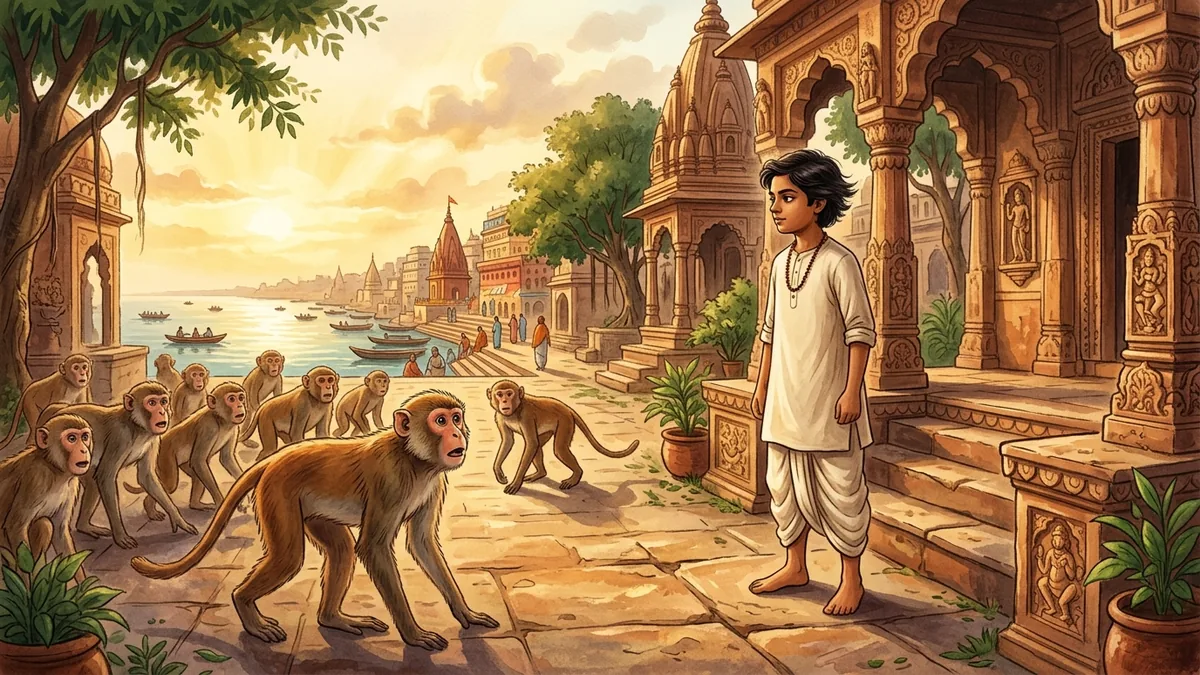
During his youth, when Narendranath Datta (the future Swami Vivekananda) resided in the sacred city of Varanasi seeking spiritual realization, he visited the renowned Durga Temple. Returning through a narrow, walled lane bordered by an ancient reservoir, he was suddenly ambushed by a troop of aggressive, territorial rhesus monkeys. As the large primates snarled, bared their fangs, and snapped at his heels, young Narendra panic-struck turned on his heel and sprinted in the opposite direction. Seeing him flee, the emboldened beasts gave chase with predatory fury, shrieking and clawing at his robes. Observing the chaotic retreat from a gateway, an aged sannyasin bellowed with commanding authority: 'Do not run! Face the brutes!' The thunderous command struck Narendra like an electric shock. Halting instantly, he pivoted, straightened his spine, and stared down the oncoming troop with fearless, blazing eyes. Stunned by his unyielding defiance, the monkeys skidded to a halt, whined in fear, and scrambled up the brick walls. The incident became a foundational cornerstone of Vivekananda’s philosophy. The fable teaches that when we flee from fear and adversity, they multiply their terror; but when we turn and confront them with resolute courage, they dissolve into harmless shadows.
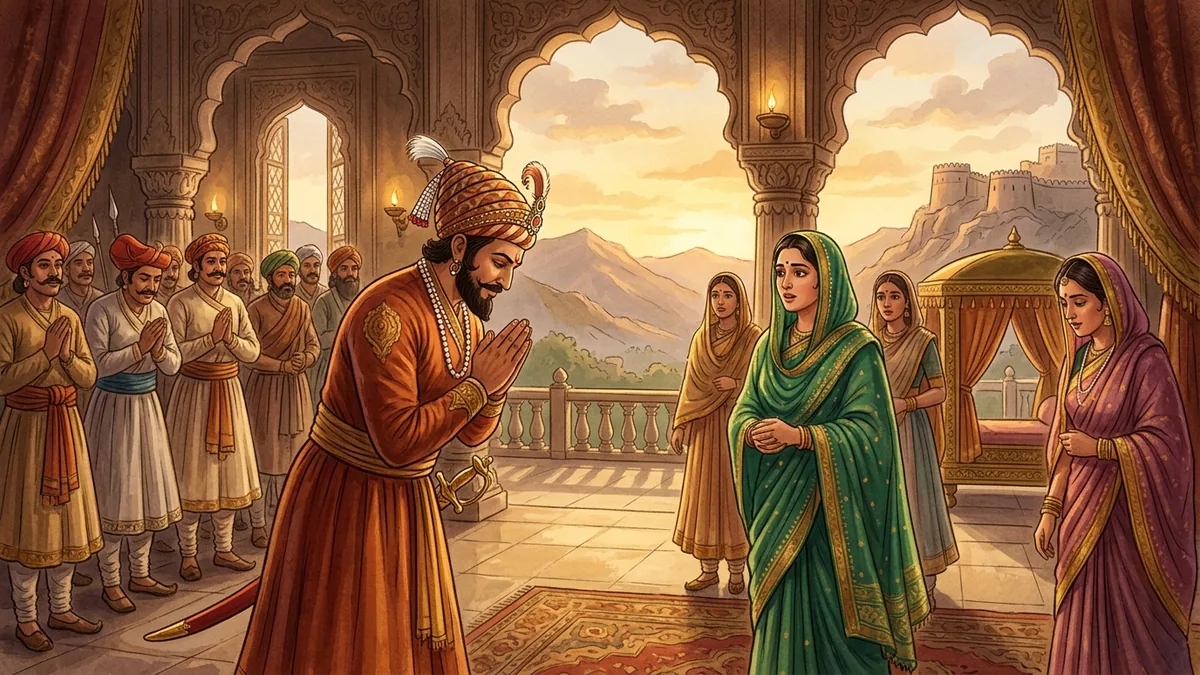
Chhatrapati Shivaji Maharaj, founder of the Maratha Empire, is immortalized in history not merely for his peerless military genius, but for his transcendent moral character and veneration of women. Following the conquest of the Kalyan fortress, his trusted general Abaji Sondev captured the fortress from the Mughal governor Mulla Ahmad. In the spoils, Abaji took captive the exceptionally beautiful daughter-in-law of the defeated governor, bringing her in a closed palanquin to the royal court as a 'gift' for the young Chhatrapati, anticipating lavish praise. When the palanquin opened and the situation became clear, Shivaji’s countenance flushed with righteous wrath and shame. Severely rebuking his general for dishonoring Maratha ethics, Shivaji stepped down from his throne, bowed with folded hands before the trembling Muslim noblewoman, and addressed her with filial reverence: 'O respected Mother! Had my own mother Jijabai possessed beauty such as yours, I too might have been slightly handsome!' Showering her with royal silks and jewelry, Shivaji dispatched an elite guard to escort her home to her family with full sovereign honors. The legendary incident stands as an unperishing beacon: genuine nobility lies in honoring the sanctity and dignity of women, even amidst the bitter heat of war.
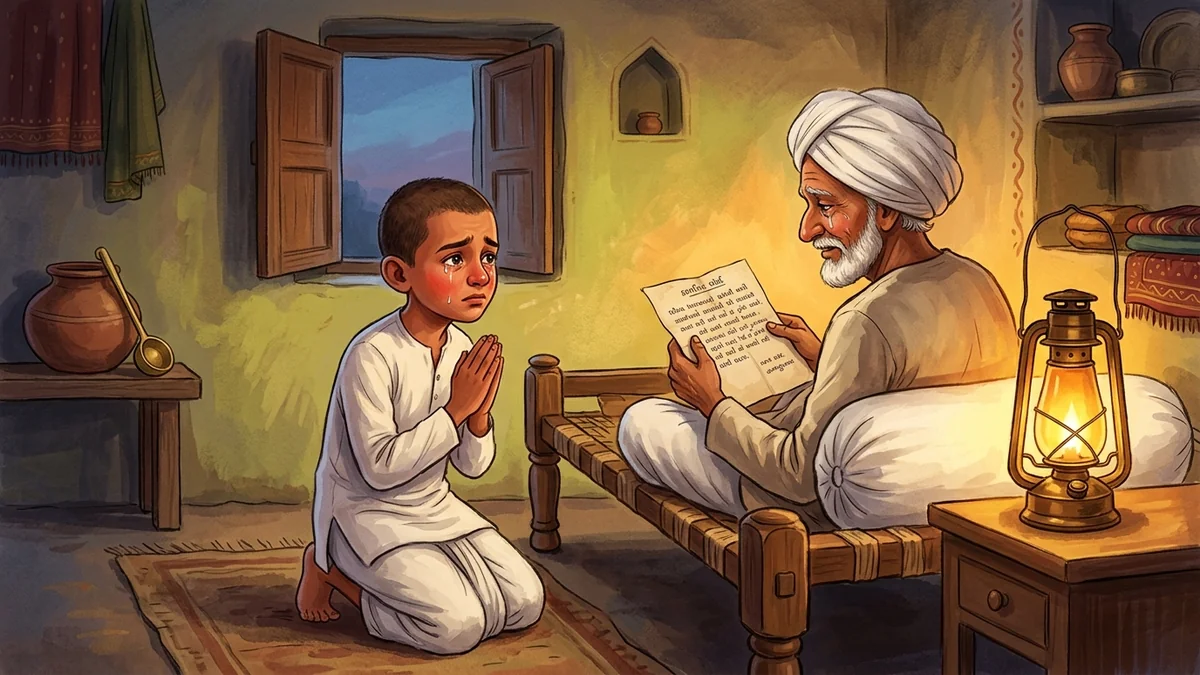
A transformative episode from the adolescence of Mohandas Karamchand Gandhi (the future Mahatma Gandhi) is candidly recorded in his autobiography, 'The Story of My Experiments with Truth.' In his youth, under the influence of poor companionship and a furtive habit of smoking, Mohandas and his brother fell into debt. To clear the balance of twenty-five rupees, Mohandas chipped off a small piece of solid gold from his brother’s armlet and sold it. The debt was settled, but the theft ignited an unbearable fire of guilt within his conscience. Living a lie felt more painful than physical death. Terrified of confronting his ailing, strict father yet refusing to carry the burden of deceit, the fifteen-year-old youth resolved upon a courageous step: he drafted a full written confession. Detailing every sin, he begged for appropriate punishment and solemnly pledged never to steal again. Approaching his father’s sickbed with knocking knees, he handed over the slip of paper. His father read the confession; he did not rage, nor did he strike the boy. Instead, silent pearls of sorrow and unconditional love streamed down the father's cheeks, soaking the paper. Those tears of sublime love purified Mohandas’s soul forever, teaching him his first profound lesson in Ahimsa (non-violence) and Truth, laying the bedrock that would transform an ordinary boy into the Mahatma.
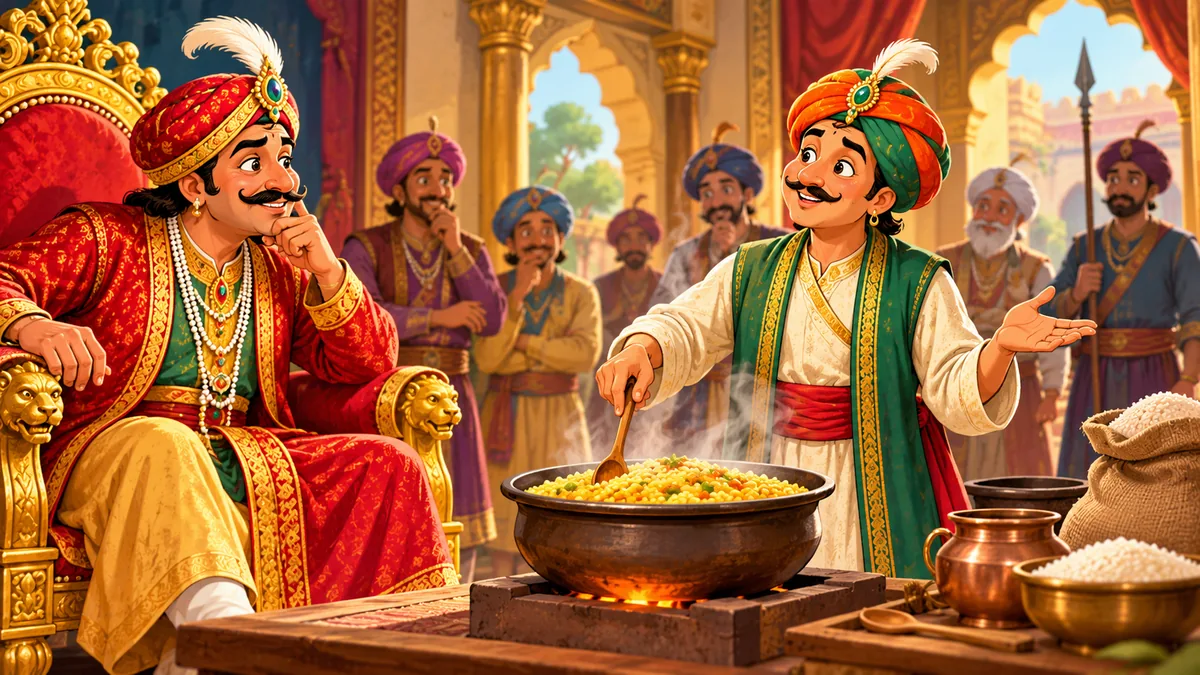
During a bitterly freezing winter in Agra, Emperor Akbar gazed upon the icy waters of the Yamuna and proclaimed that any soul who stood neck-deep in the freezing torrent throughout the night would receive a purse of one thousand gold mohurs. Deenu, an impoverished washerman desperate to purchase medicine for his critically ill daughter, undertook the perilous ordeal and survived the night through sheer willpower. Arriving at court the next dawn, Akbar inquired how he had endured such freezing torture; the simple man innocently replied that he fixed his gaze upon a solitary lamp burning upon the distant royal terrace to anchor his mind. Swayed by jealous courtiers, Akbar unfairly rationalized that the distant lamp had provided warmth to the swimmer and dismissed him without a coin. Heartbroken, Deenu left weeping. Noticing the grave injustice, Birbal stayed away from court. When Akbar visited Birbal’s residence to inquire, he found Birbal sitting beside a small campfire, attempting to cook a pot of khichdi suspended twenty feet above on a bamboo tripod. Akbar laughed, asking how heat from a distant fire could ever cook food hanging high in the sky. Birbal bowed: 'Your Majesty, if the warmth of a palace lamp across a league of freezing wind could warm a man in the icy river, why should this fire fail to cook my stew?' Pierced by this ingenious satire, Akbar realized his callous error, summoned Deenu, and rewarded him with two thousand gold coins. The story demonstrates that true justice requires empathy for human endurance and that clever wit must serve truth.
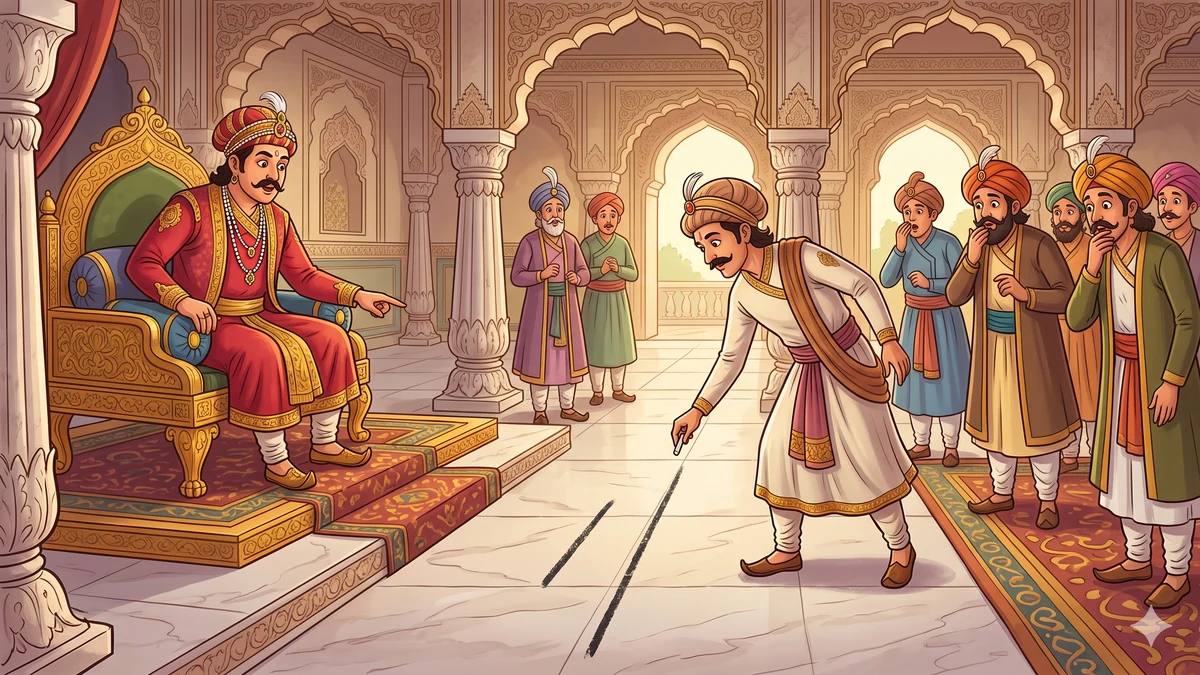
In the opulent court of the Mughal Empire, Emperor Akbar presented an intriguing intellectual riddle to test the wit of his ministers and scholars. Drawing a straight, dark chalk line upon the pristine white marble floor, the Emperor challenged the assembly: 'Make this line shorter without touching it, without erasing any part, and without physically covering it.' Eminent courtiers, generals, and jurists stepped forward in succession; some proposed blowing dust over it, while others debated linguistic sophistry, but none could diminish the line without violating the royal constraints. Smiling serenely, Birbal stepped forward. Taking a stick of black charcoal, he drew a second, significantly longer line directly parallel to the Emperor's line. Turning to the throne with a bow, Birbal remarked: 'Behold, Your Majesty! Without laying a finger upon your royal line, it has now become visibly shorter.' The court erupted in thunderous applause at the simplicity of his genius. The parable imparts an enduring philosophical truth: true greatness does not come from attacking, belittling, or diminishing the achievements of others; rather, it is earned by expanding the scope of one's own character and noble actions.
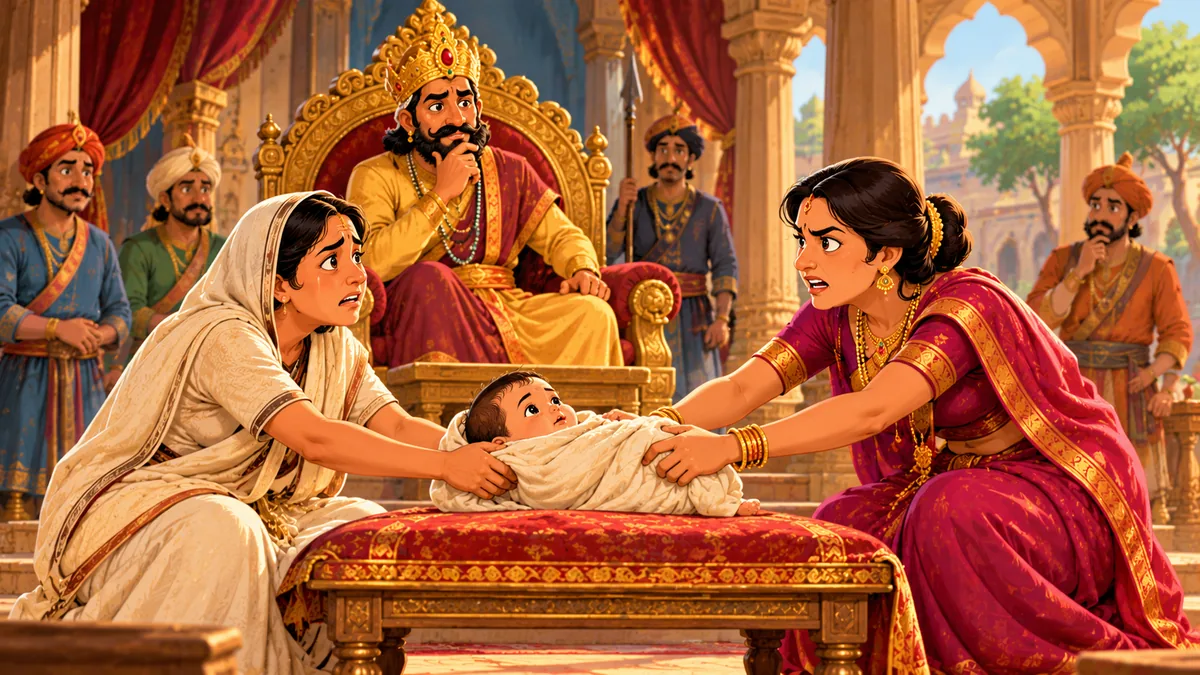
In the legendary court of King Vikramaditya of Ujjain, an agonizing and seemingly insoluble dispute was brought before the royal throne. Two women, Leela and Champa, presented themselves claiming maternal ownership of the same infant child. Each swore upon the gods that the child was her biological son, accusing the other of deceit and abduction. Devoid of witnesses or documentary evidence, the council of elders declared the matter an impossible deadlock. Invoking intuitive discernment, King Vikramaditya devised a psychological trial. Summoning the royal executioner with a bared scimitar, the monarch decreed: 'Since both claim the infant with equal fervor and truth cannot be proven, justice dictates that the child be sliced cleanly into two equal halves, giving one piece to each woman.' Champa nodded in cold satisfaction, agreeing to the division so that neither triumphed. But Leela threw her body over the infant, weeping in horror and begging the King: 'O sovereign Lord, do not butcher my innocent babe! I renounce my claim entirely! Bestow the living child upon Champa; let him grow in her house, so long as his breath is spared!' Vikramaditya immediately commanded the executioner to stand down. Proclaiming that a mother's true heart would sooner surrender her child to a rival than see it harmed, he returned the infant to Leela and banished the deceitful Champa to prison. The legend demonstrates that genuine love is grounded in selfless preservation and sacrifice, never in selfish possession.
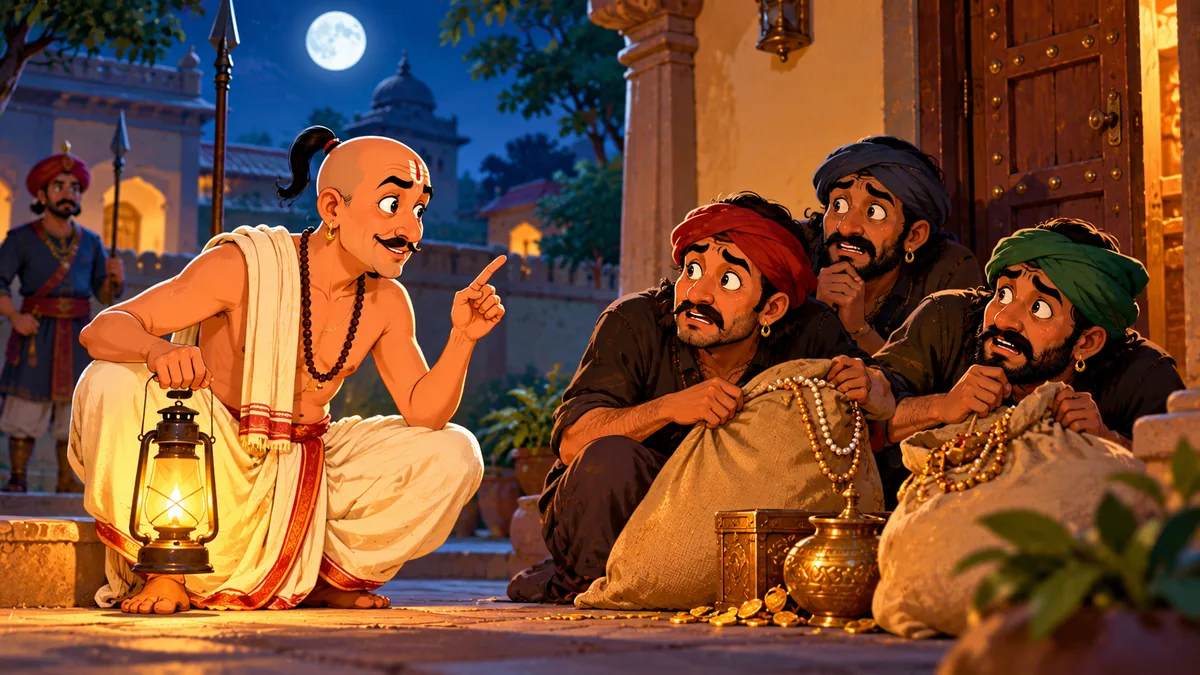
In the golden age of the Vijayanagara Empire, Tenali Rama, the celebrated court jester and advisor to Emperor Krishnadevaraya, was renowned for turning perils into comical triumphs. One sultry night, while strolling in his orchard, Rama noticed a gang of burly burglars concealed in the dense jasmine bushes, waiting for the household to sleep before looting the premises. Rather than raising a panic or summoning royal guards, Rama devised an ingenious trap. Entering his house, he addressed his wife in a voice loud enough to carry through the open windows: 'Dearest wife! Rumors spread that ruthless bandits are active in the city tonight. To protect our ancestral gold and diamond jewelry, we must lock our treasure in the heavy brass trunk and submerge it in the deep garden well!' Filling a heavy iron chest with garden stones and construction bricks, Rama and his wife dragged it outside and heaved it into the well with a resonant splash. Believing the imperial treasure lay submerged, the thieves waited for the lights to extinguish, found buckets, and began furiously bailing water from the well to retrieve the chest. All night long, the exhausted thieves hauled water, unwittingly irrigating Rama's mango trees and vegetable patches. At dawn, having drained the well and dragged up the chest, they pried open the lock only to find gravel. At that moment, Tenali Rama stepped outside with a smile: 'Thank you, kind brothers! My mango grove was parched; your hard labor has saved me days of watering!' Dropping their buckets, the terrified thieves fled for their lives. The story shows that sharp wit disarms danger and turns adversaries into unwitting benefactors.
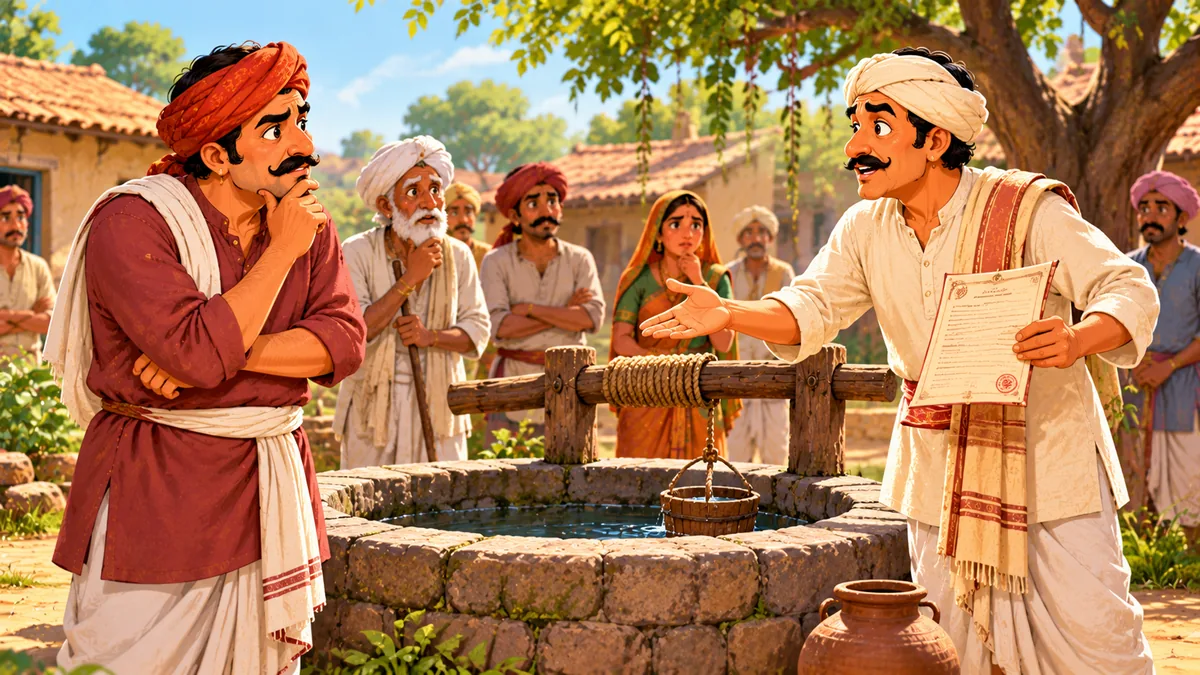
Ramlal, a hardworking and trusting farmer, purchased an irrigation well from his cunning neighbour Banwari for a substantial sum of gold to save his parched wheat fields. A formal sale deed was signed, and Ramlal paid his life’s savings. But the next dawn, when Ramlal arrived with his oxen to draw water, Banwari blocked the path with a sneer: 'Foolish peasant! I sold you the well, the brick cavity, and the stone rim; I never sold you the water inside it! The water remains my private property. If you draw a single droplet, you must pay me a hefty daily toll.' Desolate, Ramlal appealed to the imperial court of Emperor Akbar. Akbar entrusted the dispute to the sharp-witted Birbal. Birbal listened patiently to both sides. Banwari smugly reiterated his legalistic loophole: the cavity was sold, not the liquid. Smiling with calm authority, Birbal pronounced his immortal judgment: 'Banwari, since you admit the well belongs to Ramlal and the water belongs to you, by what right do you trespass upon his property? You have no permission to store your water in Ramlal’s well! Remove every drop of your water from his well before sunset, or pay Ramlal one hundred gold mohurs per day as storage rent for using his property!' Stunned by this devastating counter-logic, the cheat fell to his knees, begging for mercy and surrendering the well and its water unconditionally. The classic fable demonstrates that deceitful technicalities crumble instantly before the light of keen, principled intellect.
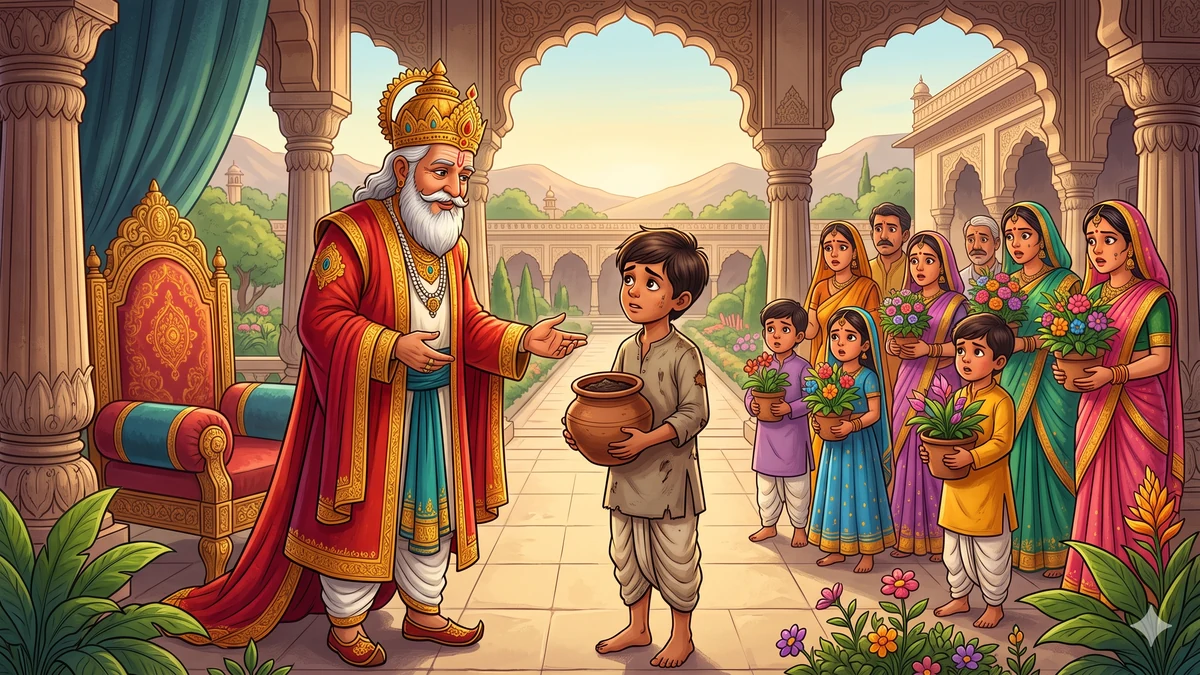
An aging, righteous king who had no heir sought a worthy successor to govern his vast kingdom. He devised a unique moral test, inviting all the youth of the realm to the palace and distributing a solitary seed to each child. He proclaimed that whoever returned six months later with the most flourishing and beautiful plant would be crowned heir to the throne. Pingala, an honest and hardworking boy, received his seed with reverence. Planting it in a clay pot filled with rich soil, he watered it daily and placed it in the morning sun. Yet weeks and months passed, and not a single green shoot sprouted from the loam. Though he repotted the seed in new soil, it remained barren. Six months later, the palace courtyard was filled with hundreds of youths proudly displaying pots overflowing with magnificent blooms. Standing in the corner holding his barren pot, Pingala was mocked by his peers. The king inspected the vibrant floral displays with a grave countenance until he reached Pingala's empty vessel. Weeping, the boy apologized for his failure. To everyone’s astonishment, the king embraced Pingala and proclaimed him the new sovereign: 'I distributed boiled seeds that were incapable of germination! All the others replaced the seed through deceit to claim the crown, but Pingala alone possessed the moral courage to present his honest failure. My empire requires not flowers of deception, but an incorruptible character.' The fable teaches that honest failure is infinitely more noble than deceitful triumph.
In an ancient river valley, a humble water-bearer faithfully carried water every day from the river to his master's hilltop manor. Balanced across his shoulders rested a sturdy wooden yoke holding two large clay pots. One pot was structurally perfect, delivering its full measure of cool water at the end of every long journey without losing a single drop. The other pot, however, possessed an old hairline crack along its side; by the time the carrier reached the estate, half of its water had leaked away along the dusty footpath. For two years, this routine continued. The flawless pot took immense pride in its accomplishments, while the cracked pot was crushed under bitter shame, believing itself an inadequate burden. One afternoon at the riverbank, the cracked pot wept and apologized to the water-bearer, begging to be replaced. Smiling with deep compassion, the carrier replied: 'Did you notice the vibrant wildflowers blooming along your side of the path?' The water-bearer revealed that, knowing of the flaw, he had scattered flower seeds exclusively along that edge. The leaking water had nurtured those seeds into a breathtaking corridor of blossoms that decorated the master's table every evening. The timeless parable illustrates that no creature is without purpose or value; even our perceived flaws and vulnerabilities can nurture unique beauty and grace in the world when held with love.
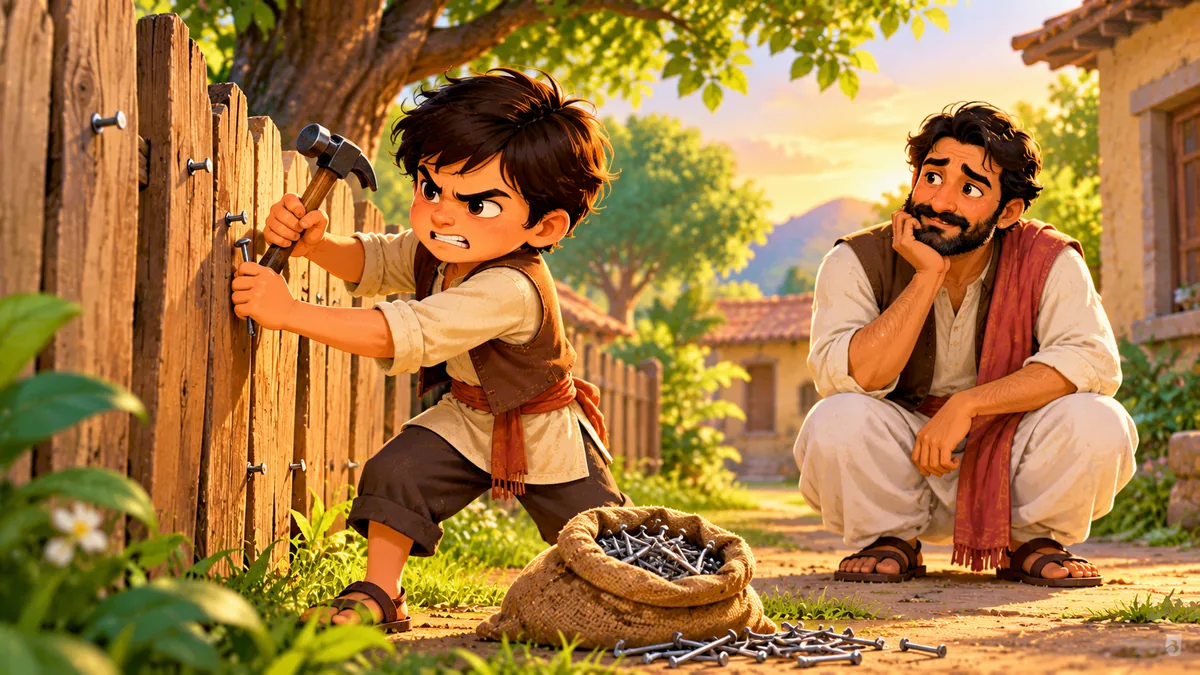
Ajay was an intelligent and capable young boy who suffered from an explosive, volatile temper. Whenever thwarted or contradicted, he erupted into blinding fury, hurling cruel, venomous insults at his parents, siblings, and classmates. His toxic outbursts alienated his companions and plunged his household into distress. Recognizing that lecturing was futile, his wise father devised a tangible object lesson. Handing Ajay a heavy canvas sack filled with iron nails and a carpenter's hammer, the father laid down a rule: 'Whenever you lose your temper, you must walk to the weathered timber fence at the end of the garden and hammer a nail into the wood.' On the very first day, Ajay drove thirty-seven nails into the fence. But the physical exertion of swinging the hammer forced him to pause; gradually, he discovered it was easier to master his temper than to pound iron into seasoned oak. Within weeks, the daily count dwindled until a day arrived when he did not hammer a single nail. The father then issued the second instruction: for every day Ajay maintained unbroken composure, he was permitted to pull out one nail. Months later, the boy triumphantly announced that every nail had been extracted. Leading Ajay to the enclosure, the father pointed to the wood: 'Look at the perforated surface, my son. The nails are gone, but the deep holes remain forever. The timber will never be smooth again. When you utter harsh words in anger, they leave scars upon human hearts identical to these wounds. You may apologize a thousand times, but the scar endures.' Ajay wept in deep realization, pledging lifelong control over his speech. The story warns that wrath inflicts permanent spiritual damage upon relationships that apologies cannot entirely erase.
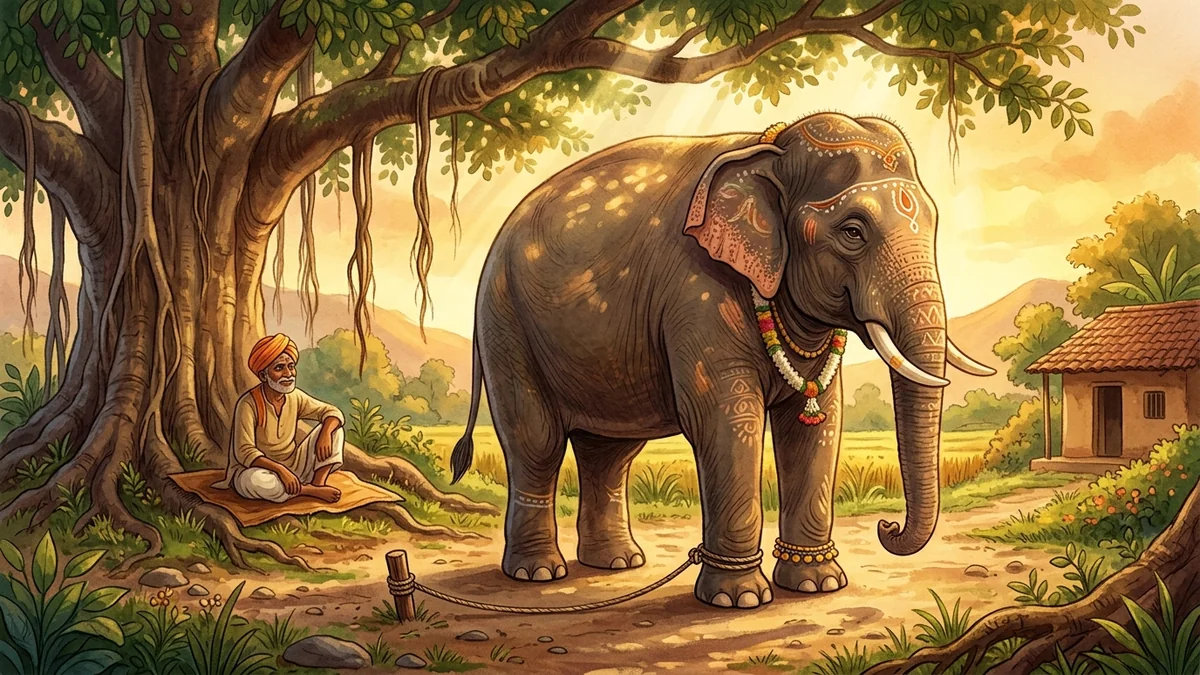
While passing through a sprawling elephant sanctuary in the southern woodlands, a thoughtful traveler observed an astonishing and paradoxical scene. Towering before him were magnificent bull elephants of colossal stature, creatures possessing the raw physical power to uproot ancient banyans and batter down stone fortresses. Yet these titanic beasts were neither confined within reinforced steel stockades nor bound by heavy iron chains. Instead, a single, modest hemp rope was tied around the front ankle of each giant, anchored to a small wooden stake driven into the turf. The elephants stood placidly, making not the slightest attempt to snap the flimsy tether or walk away. Baffled by this strange passivity, the traveler questioned the master trainer (mahout). The trainer smiled, revealing a profound psychological truth: 'When these majestic animals were newborn calves, we bound them with this exact size of rope. At that frail age, their immature muscles could not break the fibers. For weeks they pulled, strained, and thrashed, only to be held fast. Gradually, their developing minds accepted the conditioning as absolute reality: they came to believe that the rope was an unbreakable barrier. Today, though they weigh several tons and possess invincible strength, they never attempt to snap the cord, because their belief remains bound to their childhood conditioning.' The profound parable reveals that the most suffocating prisons on earth are not forged of iron bars, but constructed within human minds by past failures, learned helplessness, and self-limiting beliefs; the moment an individual questions those false mental boundaries, the illusion of impossibility shatters instantly.
Following a violent midnight storm that lashed the coastal headlands, the morning tide receded, stranding hundreds of thousands of living starfish upon the vast, exposed sandbars. As the morning sun climbed into the sky, the blistering heat dried the damp sands, and the helpless marine creatures faced certain death from dehydration before the evening tide. A cynical, scholarly writer strolling along the shoreline spotted a young boy in the distance running back and forth, bending down, scooping objects from the sand, and flinging them with all his youthful might back into the rolling surf. Approaching the child, the intellectual chuckled with worldly condescension: 'Foolish boy, why exhaust yourself in this hopeless enterprise? This coastline stretches for miles, and millions of starfish lie dying under the sun. You cannot possibly save even a fraction of them. What meaningful difference can your tiny efforts make to such an immense catastrophe?' Without a word of argument, the boy knelt, gently lifted another writhing starfish in his palm, and hurled it far beyond the breaking waves into the life-giving deep. Watching it sink safely into the blue waters, the boy looked up into the old man’s cynical eyes and smiled softly: 'It made a difference to that one!' The child’s unblemished moral clarity shattered the scholar's cynical paralysis. Kneeling in the sand, the philosopher began tossing starfish beside the boy. The immortal parable teaches that we must never allow the vastness of the world's suffering to paralyze individual compassion; saving a single life may not alter the entire universe, but for that single soul, the universe is transformed forever.
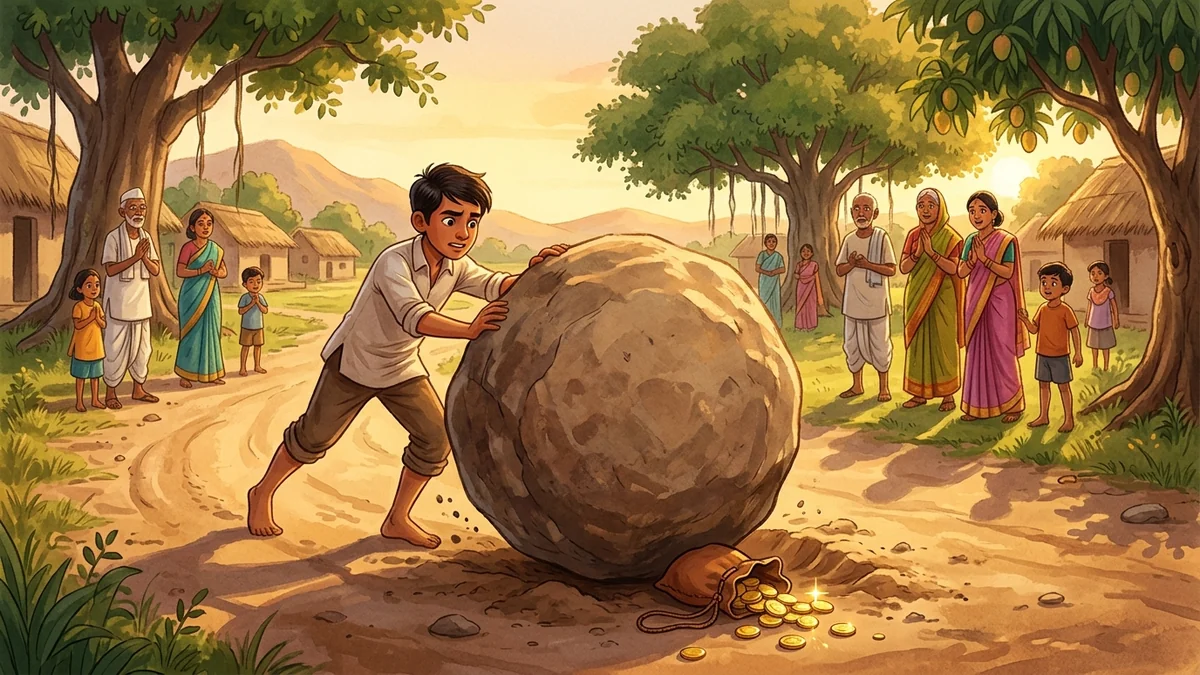
In an ancient kingdom, a benevolent and visionary king sought to evaluate the civic consciousness, initiative, and communal responsibility of his subjects. In the dead of night, the monarch had a massive, heavy boulder placed directly in the center of the kingdom's busiest commercial highway. Concealing himself behind nearby foliage, the king observed the reactions of passing travelers. Throughout the day, wealthy merchants, courtiers, scholars, and peasants skirted around the obstacle. Many stumbled, vehemently cursing the crown for failing to maintain clean roads, yet not a single individual made an effort to move the hazard. At twilight, an impoverished peasant returning from the fields bearing a heavy basket of vegetables approached the stone. Despite exhaustion and aching limbs, he thought of travelers who might be maimed in the dark. Setting down his load, he strained with all his might against the stone. Drenched in sweat, he finally rolled the boulder into the roadside ditch. Returning to retrieve his basket, his eyes fell upon a silk purse resting in the hollow where the stone had lain, containing one hundred gold coins and a royal parchment: 'This gold is the king's bounty for the citizen who removes obstacles from the public path instead of merely complaining.' The story proves that every obstacle in life conceals an opportunity for proactive civic virtue and noble triumph.
High amidst the pine-forested plateaus, an ancient, venerable grandfather sat beside a crackling campfire with his beloved grandson Kabir beneath a canopy of stars. Kabir was burning with volcanic anger, spite, and bitter resentment over a cruel betrayal by a trusted school friend, obsessively plotting revenge. Observing the toxic torment consuming the young heart, the grandfather shared a timeless psychological parable of human nature: 'My beloved child, an unceasing, epic war rages every hour within the breast of every human soul. It is a fierce battle between two mighty wolves. The first wolf is of the abyss—he is dark, ferocious, and venomous; he represents fury, envy, bitter resentment, arrogance, self-pity, greed, deceit, and ruthless ego. The second wolf is radiant, noble, and serene—he is light, kindness, empathy, boundless compassion, forgiveness, unvarnished truth, humility, and peaceful joy. These two adversaries fight continuously for dominion over our destiny.' Kabir sat in stunned silence, staring deep into the amber flames. After several moments of intense contemplation, he looked up into his grandfather's weathered face and asked with hushed urgency: 'Grandfather... which wolf wins the battle?' A gentle, profound smile touched the old man’s eyes: 'The one you feed.' The timeless parable reveals that human consciousness is a cultivated garden; whether virtue or malice governs our life depends entirely upon which instincts we nurture through daily choices, thoughts, and actions.
A young boy named Aarav was hiking through a majestic Himalayan valley with his father. While navigating a rocky ridge, Aarav stumbled against a jagged stone, badly scraping his knee. In an instinctive spasm of pain and frustration, the child screamed across the canyon: 'I hate you!' Instantly, from the towering granite cliffs opposite the chasm, the words reverberated with thunderous clarity: 'I hate you... hate you... hate you!' Shivering in confusion, the boy assumed an unseen enemy was mocking his pain. Bristling with indignation, he shouted back: 'Coward! Show yourself! Who are you?' The mountains faithfully returned the aggressive cry: 'Coward! Show yourself! Who are you?' Terrified by the menacing voices, Aarav buried his face in his father’s tunic, weeping that a hidden demon was threatening his life. The father smiled gently, patted his son’s shoulder, and said: 'Pay close attention, my child.' Facing the majestic canyon, the father projected his deep, melodious voice: 'You are wonderful! I love you with all my heart!' Within seconds, the peaks resonated with an exquisite, harmonious echo: 'You are wonderful... love you... love you!' Astonished, Aarav looked up. The father imparted the immortal law of existence: 'People call this acoustic phenomenon an echo, but in truth, it is the living mirror of life itself. The universe returns to you precisely what you project into it. If you broadcast hatred, suspicion, and anger, life reflects hostility from every quarter; but if you radiate love, kindness, and reverence, the entire cosmos showers blessings upon your path.' The parable demonstrates that our world is a direct reflection of the vibrations of our own heart.
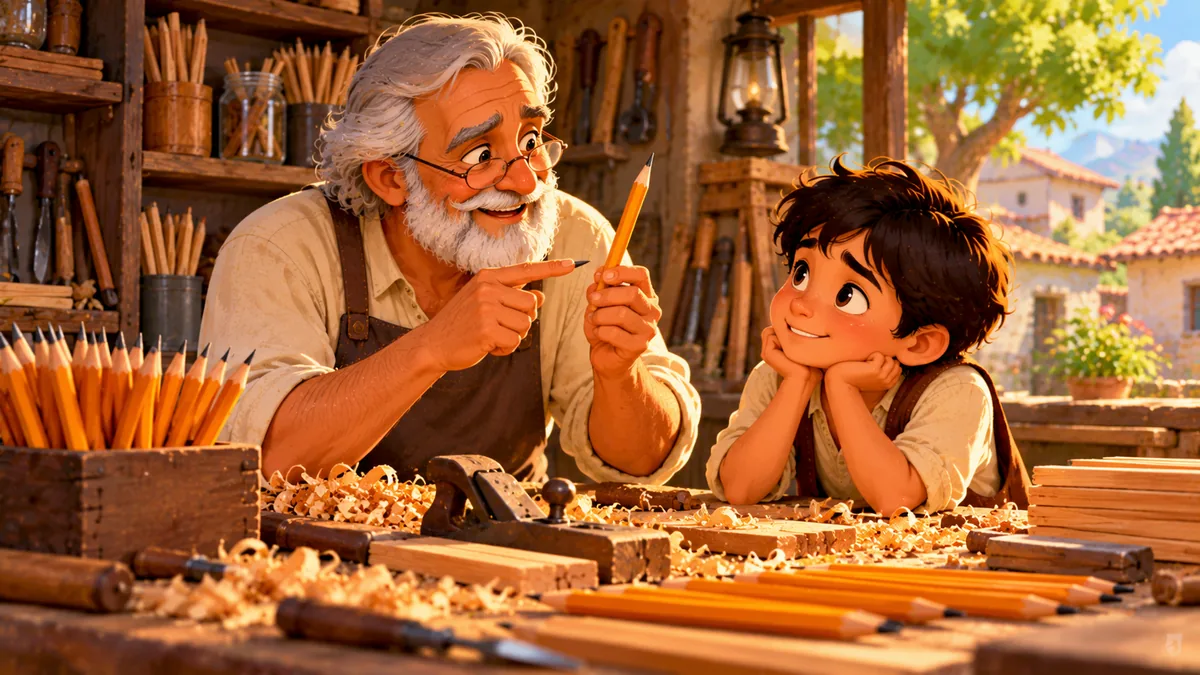
In an idyllic alpine workshop, an elderly master pencil-maker crafted exquisite cedar-and-graphite pencils with meticulous artistry. Before packing a newly finished, polished golden pencil into its presentation box for shipment into the bustling world, the artisan set the delicate instrument upon his workbench and imparted five fundamental tenets for a meaningful existence. The craftsman spoke: 'Little pencil, if you aspire to realize your highest destiny in the wide world, inscribe these five principles upon your soul. First: you have the potential to compose magnificent poetry and map architectural wonders, but only if you allow yourself to be held in the guiding hand of a master. Second: from time to time, you will endure the painful scraping of a razor-sharp sharpener; the process will feel agonizing, but it is indispensable if you wish to remain sharp, precise, and useful. Third: you are equipped with an eraser upon your crown; never allow pride to prevent you from correcting your errors, for an acknowledged mistake is the birthplace of wisdom. Fourth: no matter how lustrous your golden lacquer or polished cedar casing appears, your true essence lies entirely in what is inside you—the quality of your core graphite. And fifth: upon every surface you traverse, leave an indelible, noble mark; never cease writing, regardless of the hardness of the paper.' The timeless parable illustrates that human life resembles a pencil: when we surrender our ego to higher ideals, welcome the sharpening of adversity, rectify our mistakes, and preserve the integrity of our inner spirit, our journey becomes an immortal masterpiece.
At the renowned university of Takshashila, Master Vishwanatha entered the lecture hall holding a transparent crystal tumbler filled precisely halfway with pristine water. Placing the tumbler upon the central dais, the preceptor inquired of the gathered scholars what they observed. Predictably, the majority announced that they observed a glass half-empty, while a few optimists noted that it was half-full. Lifting the glass high in his outstretched hand, the master posed an unexpected query: 'What is the absolute weight of this glass?' Students shouted estimates ranging from a few ounces to half a pound. Smiling gently, Vishwanatha imparted a profound philosophical revelation: 'The physical weight of the glass is of no consequence; its true burden depends entirely upon how long I hold it. If I hold it for a minute, it feels light as a feather. If I hold it motionless for an hour, my shoulder will throb with agonizing pain. And if I hold it aloft for an entire day without setting it down, my arm will become paralyzed and I will collapse in convulsions. In each case, the physical weight of the water remains unchanged, yet the longer I cling to it, the heavier and more paralyzing it becomes.' The master revealed that our anxieties, resentments, and pessimistic habits are identical to this glass. Clinging perpetually to what is missing ('half-empty') and holding onto stress day and night paralyzes human potential. But when we train our vision to celebrate what is present ('half-full') with gratitude and master the art of putting down our burdens, the soul remains eternally unburdened and vibrant. The story teaches that happiness is not determined by external circumstances, but by our perceptual perspective and our wisdom to let go of anxiety.
Drawn from the immortal verses of the Katha Upanishad, this sacred dialogue unfolds between the fearless young seeker Nachiketa and Yama, the Lord of Death. Observing his father, Sage Vashishrava, offering emaciated, barren cows in a solemn sacrifice, the pious boy questioned the authenticity of such hollow charity and asked to whom his father would donate his son. Angered by the persistence, the father retorted: 'I give thee unto Death!' Honoring his father’s spoken word, Nachiketa journeyed to the realm of Yamaloka. Finding Yama away, the boy waited steadfastly outside the gates for three days and nights without food or water. Stricken by the failure of hospitality, Yama offered the noble guest three boons. For his first boon, Nachiketa requested his father's peace of mind; for his second, the divine science of the sacred fire. But for his third boon, the boy asked the ultimate cosmic secret: 'What is the mystery of death? Does the soul survive beyond the mortal frame?' To test his resolve, Yama offered boundless gold, heavenly celestial maidens, long life, and earthly empires if only he would abandon the question. Nachiketa rejected the glittering illusions: 'All these wither tomorrow; teach me only the eternal Truth of the Self (Atman).' Awed by such uncompromising spiritual maturity, Yama revealed the supreme doctrine of the immortal Soul. The Upanishadic legend teaches that discerning lasting spiritual truth (Shreyas) above fleeting sensory pleasure (Preyas) is the highest glory of human existence.
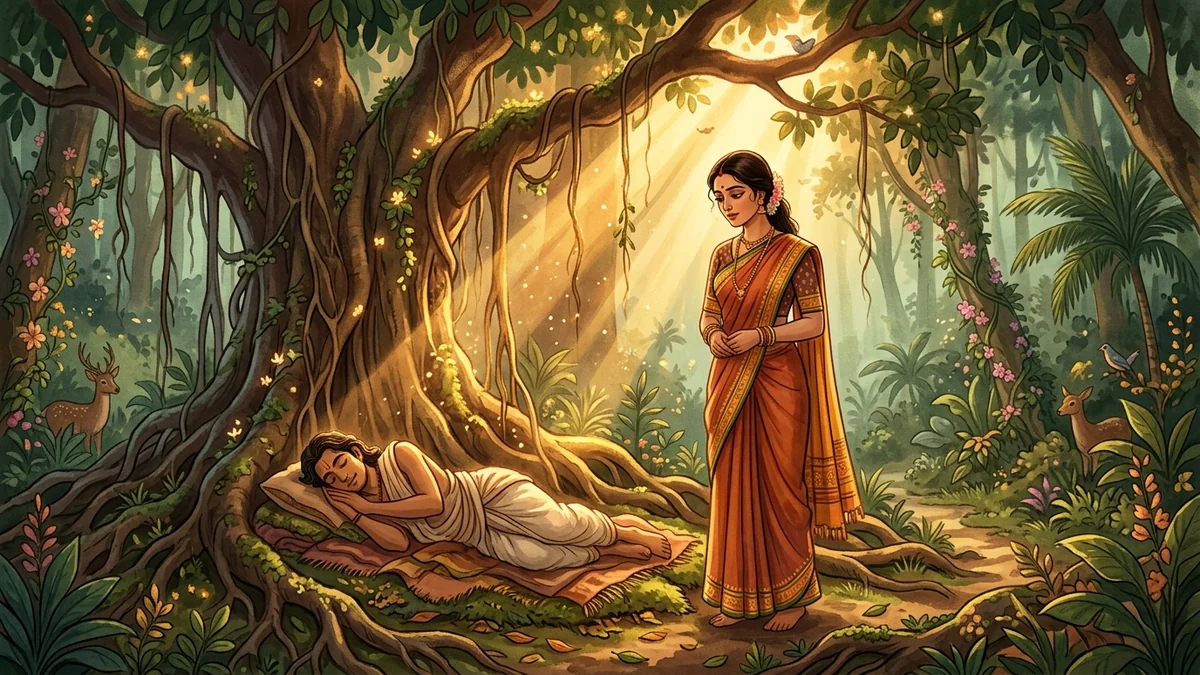
Princess Savitri, the learned, virtuous daughter of King Ashwapati of Madra, chose as her husband Satyavan, the noble son of the blind, exiled king Dyumatsena dwelling in a forest hermitage. When the celestial sage Narada revealed that Satyavan, despite possessing every heroic virtue, was fated to die in exactly one year, Savitri remained resolute, affirming that the soul commits itself but once in truth. Renouncing palace luxuries, she dwelled in the forest, serving her husband and blind in-laws with deep humility. On the fated day of doom, as Satyavan fell unconscious while chopping firewood, Yama, the Lord of Death, appeared in majestic darkness, drawing Satyavan’s soul in his noose. Leaving her husband’s body beneath a banyan tree, Savitri followed the footsteps of Death across trackless, thorny wildernesses. Repeatedly commanded by Yama to turn back, Savitri responded with discourses of such sublime philosophical eloquence concerning righteousness, companionship, and cosmic duty that Yama was awed by her intellect. Granting her multiple boons excluding her husband’s life, Savitri brilliantly secured the restoration of her father-in-law's sight and kingdom, male heirs for her father, and finally the boon of bearing a hundred righteous sons through Satyavan. Realizing that his own decree bound him to restore Satyavan's breath, Yama surrendered before her pure devotion and released the prince’s soul. The timeless epic demonstrates that unwavering love, moral purity, and razor-sharp intellect can triumph over destiny itself.
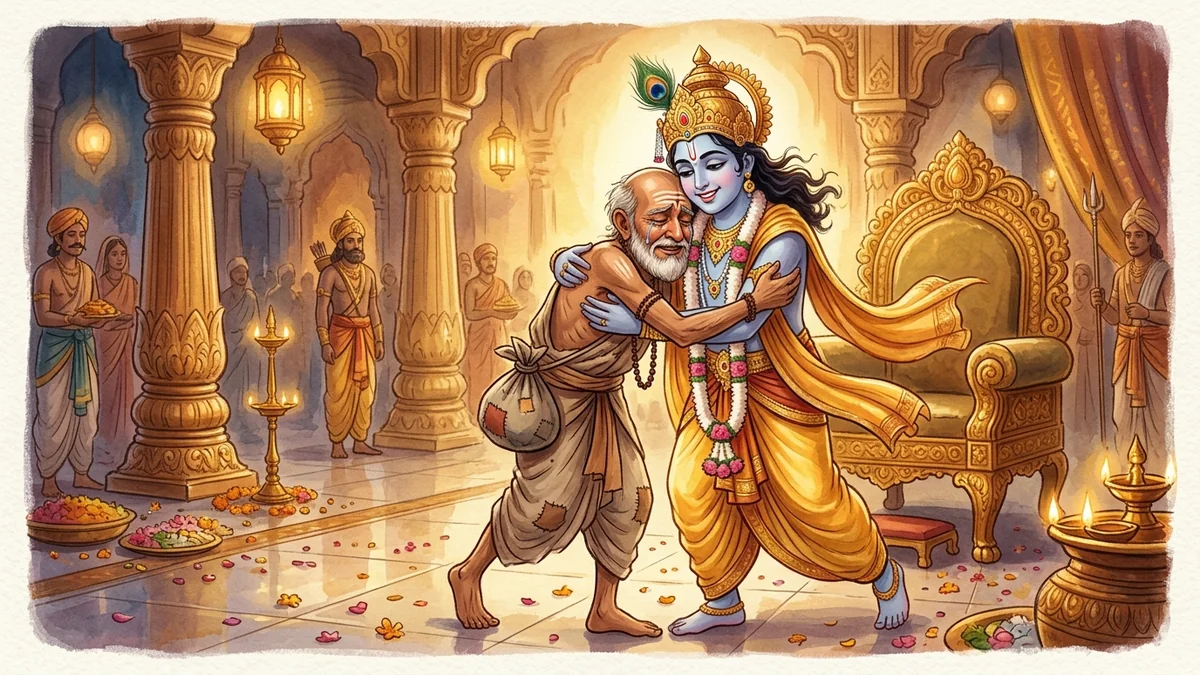
Recorded in the sacred verses of the Srimad Bhagavatam, this divine episode illustrates the ultimate summit of pure, selfless friendship between Lord Krishna, the sovereign of Dwaraka, and his impoverished gurukul classmate, Sudama. Sudama was a deeply ascetic, self-contained scholar living in extreme penury with his wife Susheela. When chronic starvation threatened the lives of their children, Susheela gently persuaded Sudama to visit his childhood friend in Dwaraka. Having no royal gift to present, his wife borrowed three handfuls of chipped, broken rice from neighboring cottages, tying them in a torn rag. Arriving at the dazzling golden citadel of Dwaraka in tattered robes and blistered feet, the palace guards mistook Sudama for a beggar. But the moment the name 'Sudama' reached Krishna’s ears, the Lord of the Universe cast aside his crown, leaped from his throne, and ran barefoot through the corridors to embrace his destitute brother. Seating Sudama upon his velvet throne, Krishna prepared to wash his feet, but his own flood of tears washed the dust from the traveler’s soles before the brass basin could be touched. Spotting the humble parcel of beaten rice tucked beneath Sudama’s arm, Krishna relished two handfuls with ecstatic joy, surrendering the riches of two worlds in return. Too humble to articulate his poverty, Sudama departed empty-handed; but upon reaching his native hamlet, he found his dilapidated mud hut transformed into an imperial palace of gold and gems. The immortal legend demonstrates that genuine friendship knows no disparity of wealth or status, flourishing solely in unconditional reverence and selfless love.
During the twelfth year of their forest exile in the Dwaitavana wilderness, the five Pandava brothers collapsed under overwhelming exhaustion and parching thirst while pursuing a mysterious stag. Nakula, the youngest, was dispatched to search for water. Discovering a pristine, lotus-strewn lake, Nakula knelt to drink; suddenly, an ethereal, disembodied voice belonging to a Yaksha (celestial guardian) boomed from the air: 'Hold, son of Madri! This pool belongs to me. If you drink before answering my questions, you shall perish!' Maddened by thirst, Nakula ignored the warning, swallowed the water, and collapsed lifeless onto the moss. Subsequently, Sahadeva, the peerless archer Arjuna, and the mighty Bhima arrived in turn; each defied the Yaksha’s command and suffered the identical fatal fate. Finally, King Yudhishthira arrived at the waters. Beholding his invincible brothers lying dead upon the grass, the King was plunged into boundless grief, yet refused to abandon composure. When the Yaksha repeated his challenge, Yudhishthira folded his hands with serene humility, agreeing to answer every query. The Yaksha interrogated him with profound philosophical riddles on destiny, wisdom, grief, and human nature. Yudhishthira answered each with flawless philosophical brilliance. Deeply impressed, the Yaksha offered to revive one brother; Yudhishthira chose Nakula, the son of his stepmother Madri, so that both maternal lines of their father Pandu might survive. Overwhelmed by such divine justice, the Yaksha—who was none other than Dharma, the Lord of Righteousness—revived all four brothers and blessed them. The legend teaches that equanimity, patience, and unyielding virtue in the face of calamity turn impossible defeat into ultimate spiritual victory.
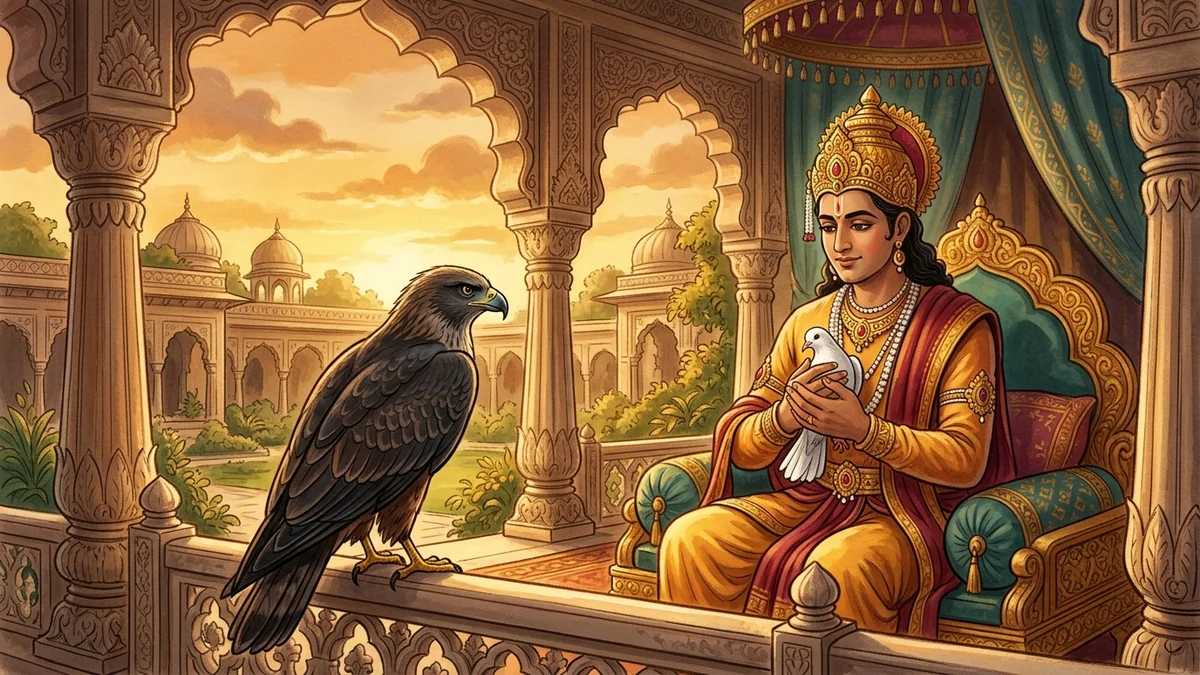
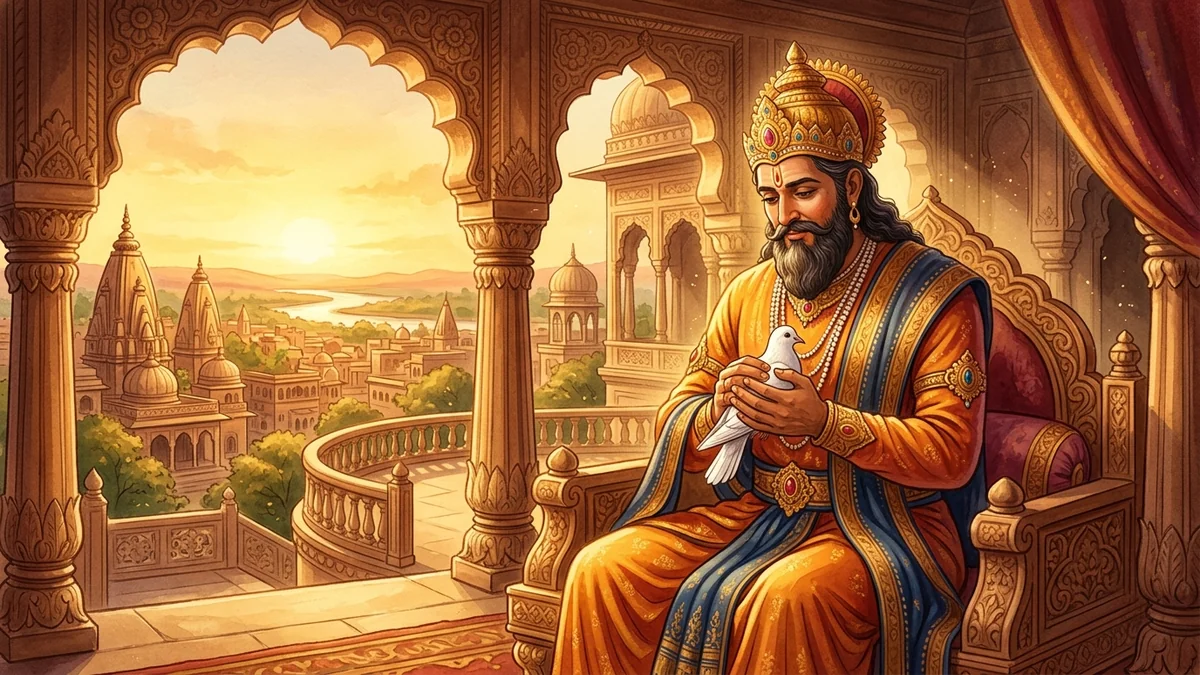
King Shibi of the ancient kingdom of Ushinara was celebrated across the celestial realms for his boundless compassion, righteousness, and absolute protection of those seeking refuge. To test the depth of his virtue, King Indra assumed the form of a famished, predatory falcon, while Agni, the Fire God, took the form of a trembling white dove. Pursued by the raptor, the terrified dove flew into the royal court, collapsing into King Shibi’s lap and imploring sanctuary. The King pledged absolute protection. Immediately, the falcon alighted before the throne, presenting a formidable legal argument: the dove was his natural, God-given prey; depriving a predator of food would cause him to starve, rendering the King guilty of killing the falcon. Placed in an acute moral dilemma, Shibi resolved to preserve the dove's life without starving the falcon: he offered an equivalent weight of his own flesh carved from his living limbs. A balance was brought; the dove was placed upon one scale, while Shibi sliced flesh from his thighs and arms to place upon the other. Yet by divine mystery, no matter how much royal flesh was severed, the dove grew heavier. Finally, drenched in blood, King Shibi climbed bodily onto the scale, offering his entire life. Stunned by such transcendent self-sacrifice, Indra and Agni revealed their radiant divine forms, healing the King's wounds and showering him with immortal glory. The legend demonstrates that honoring sanctuary (Sharanagata-Raksha) and protecting the defenseless—even at the cost of one's own life—is the highest pinnacle of human nobility.
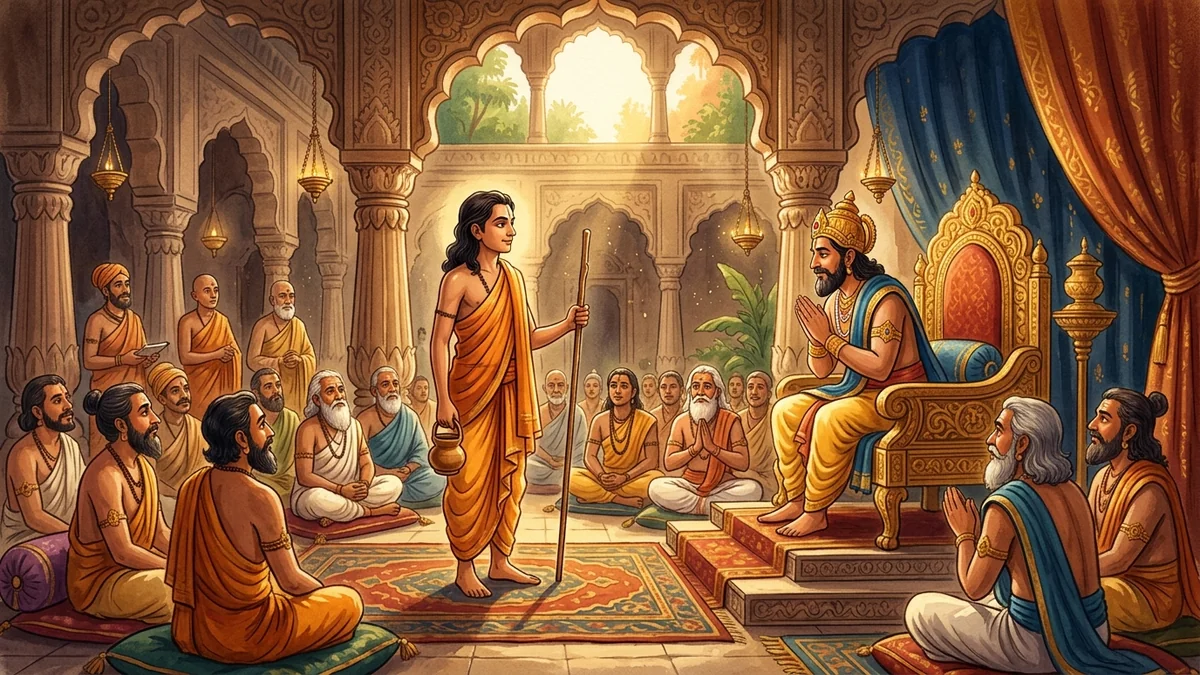
In the illustrious court of King Janaka of Mithila, eminent scholars, ascetics, and philosophers assembled from across the continents for a momentous theological debate. Into this august hall walked twelve-year-old Ashtavakra, whose physical frame was contorted from birth with eight severe deformities, causing him to limp heavily with a wooden staff. Beholding his twisted limbs and awkward gait, the assembled pandits, ministers, and even King Janaka burst into derisive, thunderous laughter. When the mockery subsided, young Ashtavakra threw back his head and laughed even louder, his joyful roar echoing through the palace. Perplexed, King Janaka asked: 'Boy, the assembly laughs at your physical deformity; why do you mock our court with laughter?' Ashtavakra replied fearlessly: 'O King! I arrived believing your court was an assembly of enlightened souls seeking divine Truth. But seeing that your ministers judge me solely by the curvature of my skin and bone rather than the light of my consciousness, I laugh because King Janaka has assembled not a council of sages, but a congress of leather-tanners (chamar)! Does the sweetness of milk diminish because the clay pot is crooked?' The piercing truth shattered the vanity of the royal court. King Janaka stepped down from his throne, falling prostrate before the young sage, begging for instruction and receiving the immortal teachings of the Ashtavakra Gita. The legend teaches that true worth lies not in mortal physical appearances, but in the indestructible depth of inner wisdom and character.
High in the celestial expanse, a spirited dispute arose between the fierce North Wind and the radiant Sun concerning who possessed superior strength. The North Wind, intoxicated by arrogance and destructive potential, boasted that his howling tempests could uproot ancient forests, shatter shipping vessels, and flatten mountain ridges, declaring brute force the true master of the cosmos. The Sun smiled with serene composure, observing that genuine power manifests not through violent coercion, but through gentle warmth and illumination. Spotting a solitary traveler walking along a mountain road wrapped securely in a thick woolen winter cloak, they agreed upon a test: whoever could compel the traveler to remove his cloak would be acclaimed the mightier power. The North Wind demanded the first turn. Gathering freezing arctic gales, he blew with catastrophic fury. Frost glazed the rocks and boughs cracked; but the more violently the tempest assaulted the traveler, the tighter the shivering man clutched his cloak around his chest. Exhausted and frustrated, the Wind surrendered. Then the Sun emerged smoothly from behind the slate clouds. Rather than roaring, the Sun gently poured down golden, radiant warmth upon the earth. The biting chill dissolved, birds began to sing, and as the pleasant warmth deepened, the traveler began to perspire with comfort. Smiling with relief, the man voluntarily unbuttoned his heavy cloak, folded it over his arm, and strolled cheerfully onward. Awed and humbled, the North Wind conceded defeat. The timeless fable proves that gentle persuasion, warmth, and patience achieve what wrath and aggressive force can never conquer.
In an opulent empire ruled a vain monarch whose obsessive passion for extravagant apparel eclipsed all state affairs, public justice, and imperial defense. He spent the royal treasury commissioning new robes for every hour of the day. One morning, two cunning swindlers arrived at court masquerading as master weavers from a distant land. They claimed they could weave a fabric of peerless splendor that possessed a magical property: the cloth was completely invisible to anyone who was hopelessly stupid or unfit for their office. Delighted by the prospect of unmasking fools in his administration, the Emperor supplied the impostors with immense sacks of raw gold, silk, and gems. The swindlers set up empty looms, pretending to weave air. When trusted ministers were dispatched to inspect progress, they saw empty frames; terrified of being branded incompetent fools, each official enthusiastically praised the nonexistent colors and patterns. When the Emperor himself inspected the looms, seeing nothing, he too feigned rapturous admiration to protect his crown. On the day of the imperial procession, the swindlers pantomimed dressing the monarch in his 'invisible' finery, and the Emperor marched through the capital completely naked beneath an embroidered silk canopy. Courtiers, nobles, and citizens loudly applauded to conceal their fear of appearing foolish. Suddenly, an innocent child in the crowd pointed and cried out: 'Look! The Emperor has no clothes on at all! He is completely naked!' The child's pure truth shattered the collective delusion. The whispers turned into a roar of laughter, leaving the Emperor shivering in humiliation. The classic satire demonstrates that true moral courage lies in speaking unvarnished truth against the collective hypocrisy of society.
In the wake of war and crop failure, an exhausted, hungry wandering mendicant walked into a remote mountain village. Paralyzed by fear, suspicion, and scarcity, the villagers had locked their heavy oak gates and hoarded their remaining grain beneath floorboards, refusing to share a single crust of bread with the stranger. Rather than complaining or pleading, the wanderer smiled and set up a large iron kettle in the village square, filled it with well water, and lit a crackling campfire. Reaching into his knapsack, he drew forth a smooth, oval river stone and lowered it ceremoniously into the boiling water, stirring it with a wooden ladle. Overcome by curiosity, villagers crept to their windows. The traveler announced that he was preparing the legendary 'Stone Soup'—a dish of royal delicacy. Tasting a spoonful, he mused aloud that while the soup was exquisite, a few carrots and cabbage leaves would make it fit for an emperor's banquet. Enticed by the aroma and curiosity, a farmer ran to his pantry and brought vegetables. Next, onions, potatoes, barley, salt, and butter were contributed by other neighbors who were drawn out of their isolation. Within hours, the communal kettle overflowed with a rich, nourishing, savory feast that fed the entire village to their hearts' content. The villagers marvelled at the 'magic stone', but the true miracle was the alchemy of collective cooperation and generous sharing that transformed a famine into a celebration. The timeless fable proves that when individuals release hoarding and contribute their small portions to the shared common good, poverty dissolves into universal abundance.
On the sun-dappled edge of an ancient forest lived Lomasha, a sly, arrogant fox who delighted in playing malicious practical jokes on his woodland neighbors. To humiliate a gentle, dignified stork named Dirghachanchu, the fox invited him to an evening dinner at his den under the guise of hospitality. The stork graciously accepted. When mealtime arrived, the fox maliciously served a thin, savory vegetable broth in two shallow, flat ceramic platters. With his broad tongue, the fox lapped up his portion in seconds, while the poor stork, possessing a long, slender beak, could only peck uselessly against the porcelain, unable to ingest a solitary drop. Pretending innocence, the fox mocked his guest's appetite. The stork masked his hunger and maintained absolute composure. A week later, the stork returned the invitation, welcoming the ravenous fox to his riverside retreat. The stork served an aromatic, delicious stew inside tall, narrow-necked ceramic amphorae with slender spouts. The stork dipped his long beak into the flagon with effortless grace, relishing the meal. But the fox’s broad muzzle could not penetrate the slender neck; he was reduced to licking the exterior glaze in starved humiliation. Turning to the fox with dignified irony, the stork remarked: 'I trust the meal satisfies your palate, brother, for I have merely mirrored the hospitality you bestowed upon me.' Shamed and hungry, the fox slunk away with his tail between his legs. The timeless fable proves that what goes around comes around: treat others with the dignity and empathy you desire for yourself, for those who mock the vulnerable invariably reap the bitter harvest of their own cruelty.
In the art studio of Model Academy, Rohan spent two grueling weeks painstakingly crafting a vibrant watercolor masterpiece of the Himalayan sunrise for the inter-school championship. During recess, as the painting lay drying upon his desk, his classmate Aman, chasing an errant basketball, tripped and collided violently with the table. A tumbler of dark cobalt ink overturned directly across the canvas, dissolving the delicate washes into a ruinous blue smear. Witnessing his fortnight of passionate labor obliterated in a single second, Rohan's vision flashed crimson; clenching his fists, he raised his arm to strike Aman. But in that split second, a life-lesson imparted by his grandfather echoed in his memory: 'When fury blinds your intellect, pause and breathe for ten full heartbeats before you speak or strike.' Rohan froze. Shutting his eyes, he inhaled deeply, counting silently from one to ten. That brief pause cleared the fog of animal rage. Opening his eyes, he saw that Aman had not acted maliciously; the trembling boy stood pale as ash, weeping in genuine remorse. Lowering his fists, Rohan spoke with calm dignity: 'It breaks my heart, Aman, but I know it was an accident.' Dissolving in gratitude, Aman offered his full assistance, helping Rohan paint a new and even more magnificent piece that clinched the gold medal. The story demonstrates that an intentional pause before reacting in moments of anger averts irreversible violence and preserves human bonds.
Kabir, a boisterous seventh-grader, had developed a toxic habit of causing disruptions and brushing off responsibility with a hollow, careless 'Sorry!' before walking away. One afternoon during lunch recess, while chasing a classmate across the veranda, he recklessly shoved past Tanmay, knocking a stainless-steel lunchbox from the quiet boy’s hands. The container crashed onto the dirty concrete, scattering hot vegetable curry and fresh puris into the grit. Tanmay was devastated, having no money for the cafeteria and relying on that meal after missing breakfast. As usual, Kabir shrugged flippantly: 'Hey, sorry, dude! Just an accident!' and turned back to his game. Observing the scene, their class teacher, Mrs. Sharma, intervened with a firm moral intervention: 'Kabir, an apology is not an automatic eraser that excuses reckless behavior! Unless your remorse includes taking responsibility, repairing the damage you caused, and changing your conduct, the word 'sorry' is a cowardly mockery.' The reprimand struck Kabir’s conscience like an arrow. Stepping out of his defensive posture, Kabir surrendered his own wholesome lunch to Tanmay, spent his personal pocket money to buy fresh juice for his classmate, and knelt with a rag to scrub the stained veranda floor with his own hands. Witnessing this sincere, action-backed restitution, Tanmay’s hurt dissolved into genuine respect, laying the foundation for a lasting brotherhood. The story demonstrates that a genuine apology is not a cosmetic utterance, but an active commitment to repair harm, bear responsibility, and transform one's behavior.
On the eve of the crucial Class 10 board examinations, a profound moral crisis confronted two inseparable friends, Aryan and Vicky. Aryan was a disciplined, hardworking student who spent months burning the midnight oil to master the sciences. Vicky, conversely, had squandered the academic year in sports, online gaming, and procrastination. Confronting imminent failure, a panicked Vicky visited Aryan’s home, applying heavy emotional blackmail: 'Aryan, you claim to be my best friend! Tomorrow during the physics exam, tilt your answer sheet so I can copy, and flash objective answers with your fingers. If you refuse, I will fail, and our brotherhood is severed forever!' Aryan was plunged into agonizing turmoil: should he compromise his integrity to appease a friend, or endure the sorrow of rejection to uphold truth? After a night of soul-searching, Aryan resolved that authentic loyalty never participates in corruption. The next morning outside the examination hall, Aryan held Vicky’s hands, speaking with gentle yet unshakeable firmness: 'Vicky, you are dearer to me than a brother; but I will not assist you in cheating. Cheating will poison your character and murder my conscience. If saying 'no' shatters our friendship, I must bear that sorrow, but I will not dishonor truth.' Enraged, Vicky stormed away, severing all contact. Vicky performed poorly, while Aryan topped the district. Weeks later, finding Vicky weeping over his academic probation, Aryan arrived at his doorstep with textbooks: 'I refused to facilitate your deceit, brother; but I never refused to teach you.' For six months, Aryan tutored Vicky daily, helping him master every complex theorem. When Vicky cleared his supplementary exams with distinction, he wept upon Aryan’s breast: 'Had you indulged my cheating that morning, I would have remained a fraudulent coward forever; your courageous 'No' saved my soul.' The story proves that standing firm against unethical peer pressure and having the courage to utter a principled 'No' is the highest hallmark of genuine love and moral maturity.
At Arya Public School, eighth-grader Riya was the charismatic leader of an exclusive, popular social circle of four girls. A rigid, unwritten code governed their group: during lunch recess, they occupied the prime circular table in the school cafeteria, fiercely guarding their perimeter against any outsider. In the middle of the winter term, a shy, introverted boy named Dev transferred to the class. Coming from an impoverished rural background, wearing faded hand-me-down uniforms, and speaking with a mild stammer, Dev felt utterly alienated in the elite city academy. While the cafeteria buzzed with laughter, camaraderie, and sharing, Dev sat entirely isolated in a damp corner behind the recycling bins, eating dry flatbread with his face turned toward the wall. Thoughtless bullies frequently targeted his solitude with cruel snickers. One afternoon, Riya observed Dev weeping silently beside the water fountain after an unkind jibe about his patched sneakers. The sight pierced through Riya’s superficial social bubble, awakening a profound moral conscience: 'We boast of our popularity and abundance, yet permit a brother to drown in loneliness before our very eyes.' The following noon, as her clique took their customary seats, Riya deliberately pulled out the prominent fifth chair at the center of their table. Overcoming the initial snobbish resistance of her friends, Riya strode across the crowded cafeteria directly to the shadowed corner where Dev sat alone. Extending her hand with warm sincerity, she smiled: 'Hi, Dev! We have an empty seat at our table today; would you join us for lunch?' The cafeteria fell into stunned silence. Tears of disbelieving relief welled in Dev’s eyes as he walked to the sunlight. Riya shared her meal, included him in discussions, and dissolved the barriers of social segregation across the entire grade. The story demonstrates that looking beyond exclusive social cliques to invite the lonely and vulnerable into our circle is the highest hallmark of authentic empathy and moral nobility.
Ninth-grader Meena had always been celebrated as the apex academic achiever of her institution—a fiercely independent, brilliant, and proud young woman who consistently secured top honors without tutoring. Unfortunately, this unblemished track record cultivated in her a dangerous psychological blind spot: the deep-seated pride of believing that soliciting assistance was a shameful admission of intellectual inferiority. When the academic curriculum advanced into complex trigonometry and quadratic proofs, Meena encountered an impassable cognitive wall. The theorems appeared utterly incomprehensible. Day after day, as the instructor demonstrated intricate proofs, Meena’s mind blanked out in panic. Burning the midnight oil, she wept over her desk in solitary exhaustion, yet refused to open her mouth. Terror gripped her soul: she feared that asking for help would expose her vulnerability, inviting ridicule and destroying her reputation as a genius. The chronic stress manifested in insomnia, migraines, and severe anxiety. With the mid-term examinations a mere seventy-two hours away, she stood on the verge of emotional collapse. Sensing her internal agony, her retired grandfather held her hands and imparted an immortal truth: 'My child, asking for help in the hour of difficulty is not a confession of weakness; it is the ultimate declaration of courage! It demonstrates the humility to acknowledge boundaries and the strength to seek growth.' The revelation shattered Meena’s prideful cage. Stepping into the staffroom the next morning, she approached her mathematics instructor, Mr. Verma, stating with naked honesty: 'Sir, I am completely lost in trigonometry; please help me.' Touched by her sincerity, the teacher guided her through the foundational proofs, while an advanced peer, Aarav, shared intuitive problem-solving methods. Within days, the conceptual fog dissolved, and Meena scored ninety-five percent on the examination. The story proves that breaking the shackles of false ego to ask for guidance is not an act of surrender, but the highest wisdom of authentic strength and lifelong learning.
For the State Science & Innovation Exposition, Model School's robotics squad was designing an automated waste-segregation conveyor. The team's vocal and assertive members, Sameer and Kunal, dominated every strategic meeting, dismissing their quiet, introverted classmate Arnav as dull and uninspired because he preferred silent observation and technical sketches over loud debates. Just twenty-four hours before the grand presentation, disaster struck: the complex electric sorting arms repeatedly jammed under heavy loads, overheating the circuits. As Sameer and Kunal descended into panic and mutual recriminations, Arnav stepped forward with gentle authority. Opening his notebook, he unveiled an ingenious gravity-fed escapement mechanism constructed from recycled bicycle gears and counterweights, completely eliminating the failure-prone motors. When implemented, the design functioned with flawless precision, earning the team the prestigious State Innovation Trophy. On the podium, Kunal and Sameer publicly acknowledged their error and credited Arnav for the triumph. The story demonstrates that profound wisdom is often veiled in quiet contemplation, and true genius listens, observes, and delivers when empty vanity fails.
In the thrilling grand finale of the District Inter-School Football Championship, Navodaya Vidyalaya's star striker Vivaan was obsessed with personal stardom and the scouts watching from the grandstands. Refusing to pass to unmarked teammates, he repeatedly attempted individual dribbling runs, desperate to top the tournament's scoring charts. The opposing team, the tactical Eagle FC, exploited his predictable selfishness by setting a three-man defensive trap that stripped him of possession, counter-attacking to score two swift goals. Down 0-2 at halftime, the locker room was thick with resentment, and the players stood on the verge of mutiny. The veteran coach placed a hand on Vivaan’s shoulder and held up a mirror of unvarnished truth: 'An orchestra cannot produce a symphony if the lead violinist demands to play every instrument. A selfish prodigy will always be obliterated by a united brotherhood.' Shattered by the truth, Vivaan shed his vanity. Returning to the pitch for the second half, he played as a self-effacing playmaker, drawing the defenders away and delivering exquisite pinpoint crosses to his teammates Aditya and Sameer. Navodaya mounted a breathtaking comeback, netting three collaborative goals to clinch the championship 3-2. Handing the trophy to his teammates, Vivaan learned that individual glory divides and falls, while humble teamwork creates eternal triumph.
Minutes before the noon recess at Government Higher Secondary School, Priya, an impoverished yet brilliant scholarship student, was seen emerging from the principal's office wiping away streaming tears. Riya, a reckless and gossip-hungry classmate, instantly jumped to malicious conclusions, fabricating a sensational rumor that Priya had been caught stealing the midterm mathematics question paper and was facing immediate expulsion. Within forty-five minutes, the toxic whisper spread like wildfire across school WhatsApp chats and lunch verandas. When Priya returned to her desk, she was greeted with icy sneers, cruel ostracism, and whispered taunts of 'cheat' and 'thief.' Crushed by the merciless destruction of her pristine integrity, Priya locked herself in the washroom, sobbing in total despair. Refusing to succumb to mob hysteria, the thoughtful class monitor Dev intervened, invoking Socrates’s legendary 'Triple Filter Test'—is it true, is it kind, and is it necessary? Dev marched straight to the principal’s chamber to demand the objective facts. The truth stunned the entire school: Priya’s widowed mother had suffered a massive cardiac arrest that morning, and the principal had granted an emergency fifty-thousand-rupee medical grant from the school trust to fund the surgery; Priya’s tears were tears of overwhelming gratitude and anxiety for her dying mother! Consumed by agonizing guilt, Riya broke down in public repentance, begging Priya’s forgiveness before the entire assembly. The story illustrates that an unverified rumor is a lethal dagger that murders innocent reputations in seconds; verifying truth before spreading gossip is the sacred moral duty of every conscious soul.
During the editorial board meeting for Vivekananda Academy's prestigious annual magazine, lifelong best friends Siddharth and Nikhil clashed violently over the philosophical theme of the lead editorial. Siddharth passionately argued that the focus should highlight rigorous academic discipline, competitive examinations, and scholastic excellence; Nikhil countered with equal ferocity that the contemporary crisis demanded addressing student mental health, artistic expression, and emotional well-being. As the debate spiraled out of control, intellectual arguments deteriorated into stinging personal insults, bringing their decade-long brotherhood to the brink of collapse. They parted in bitter silence, refusing to acknowledge one another. That evening, sitting alone in his study, Siddharth re-read Nikhil’s draft with an open heart, realizing the profound humanitarian validity of his friend’s perspective. Conquering his defensive pride, Siddharth walked across town in the twilight carrying two clay cups of hot tea to Nikhil’s doorstep. Embracing in tears, the two boys acknowledged that diversity of thought does not require division of souls. Merging their arguments, they co-authored a brilliant manifesto on 'Holistic Education and Inner Balance' that clinched the State Literary Trophy. The story proves that authentic friendship transcends ideological differences; mature souls allow disagreements to refine their intellect without ever poisoning their love.
During the high-stakes auditions for the annual historical play 'The Transformation of Emperor Ashoka,' Ananya, the influential and headstrong president of the drama society, was determined to cast her privileged close friend Rohan in the lead role. When Tenzin, a quiet transfer student from a remote Ladakhi village, auditioned for the part, Ananya dismissed him with condescending prejudice, publicly declaring that a boy with a Himalayan accent could never master the intricate classical Hindi and Sanskrit monologues required for an emperor. She actively lobbied the selection committee to disqualify him. However, seventy-two hours before opening night, Rohan contracted acute jaundice and was hospitalized, throwing the entire production into jeopardy. With no alternative, the drama director summoned Tenzin to step in for an emergency run-through. Taking center stage under the spotlight, Tenzin delivered Ashoka’s climactic soliloquy of post-war remorse with such volcanic intensity, resonant diction, and soul-stirring vulnerability that the entire auditorium fell into spellbound silence before erupting into a thunderous standing ovation. Shattered by the undeniable truth, Ananya faced a defining moral crossroad: cling to her arrogant dogma or humble her pride before excellence. Demonstrating supreme moral courage, she took the stage, publicly confessed her narrow prejudice, apologized to Tenzin before the assembly, and handed him the imperial crown. Tenzin's performance won the State Drama Championship. The story demonstrates that changing one's mind in the presence of truth is not an act of weakness, but the supreme triumph of wisdom over arrogant prejudice.
Rohit, an impulsive ninth-grader, lived by the chaotic habit of academic procrastination, relying on exhausting all-night cramming sessions before exams to barely scrape through. This vicious cycle left him chronically stressed, anxious, and plagued by migraines while his artistic and scholastic potentials decayed. Observing his grandson's downward spiral, his retired mathematician grandfather introduced him to the profound philosophy of Kaizen and disciplined Abhyasa: 'Commit exactly ten uninterrupted, sacred minutes every single day to one craft or subject, without permitting a single break in the chain.' Skeptical yet desperate, Rohit pledged ten daily minutes to advanced calculus problems and ten minutes to his neglected bamboo flute. His peers ridiculed the tiny timeframe, laughing that ten minutes was a meaningless drop in the ocean. However, over six months of unbroken daily devotion, the law of compounding generated miraculous transformations. His neural pathways crystallized mathematical proofs into second nature, while his fingers mastered the breathwork of classical ragas with effortless grace. When the state talent Olympiad arrived, the exhausted crammers collapsed under panic, whereas Rohit sailed through with serene mastery, securing a perfect centum in mathematics and the gold medal in classical woodwinds. The story demonstrates that sporadic, exhausting bursts of effort are powerless against the quiet, unyielding compound interest of daily disciplined consistency.
At the Grand Finale of the National Children’s Science Congress, fifteen-year-old Kavya presented a revolutionary solar-powered multi-stage water distillation prototype engineered to provide sterile drinking water to fluoride-affected villages. Following months of grueling empirical trials, she commenced her final live demonstration before a panel of eminent aerospace and chemical scientists. Suddenly, an unforeseen micro-fracture and a jammed pressure relief valve triggered a thermal shock explosion; the main borosilicate condenser shattered with a loud crack, spraying scalding muddy brine across her presentation charts and the judges' table. While most students would have collapsed in hysterical tears or abandoned the podium in shame, Kavya demonstrated extraordinary poise and stoic grace. Refusing to succumb to panic, she donned safety gloves, calmly cleared the shattered glass, and opened her meticulous laboratory logbook. Facing the distinguished panel, she delivered an unflinching, masterly post-mortem failure analysis—pinpointing the precise thermodynamic threshold where the material fatigued and presenting a calculated redesign utilizing titanium check-valves. Spellbound by her exceptional scientific temperament, emotional resilience, and refusal to fabricate excuses, the jury awarded her the prestigious 'Scientific Integrity and Resilience Trophy' along with a national research fellowship. The story proves that failure is not the defeat of science, but the very engine of discovery; true greatness lies not in unblemished luck, but in dissecting disaster with courage and wisdom.
In an oppressive and hyper-competitive coaching institute in Kota, the tyrannical physics instructor Mr. Shastri enforced a reign of mechanical rote-memorization: students were strictly forbidden from asking 'Why?' or 'How?', commanded only to memorize formulas and regurgitate derivations for entrance exams. Suffocated by this soulless academic factory, two intellectually rebellious students, Aarav and Meera, founded a clandestine weekend study circle named 'The Question Mark Club.' Gathering in dorm rooms, they dismantled physical laws to first principles, challenging dogma and conducting hands-on empirical tests. When Mr. Shastri uncovered their underground collective, he denounced them as mutinous troublemakers and threatened immediate expulsion. However, fate intervened when a renowned astrophysics professor from the Indian Institute of Science visited the campus for a keynote symposium. The visiting professor scrawled an intractable quantum-optics paradox upon the blackboard that completely derailed Mr. Shastri's standard rote algorithms, leaving the senior faculty humiliated in silence. Rising calmly, Aarav and Meera applied first-principles reasoning honed in their club to resolve the paradox with breathtaking elegance. The visiting luminary embraced them, rebuking the faculty: 'To stifle inquiry is intellectual murder; the question mark is the holy lamp of all progress!' Humbled to the dust, Mr. Shastri acknowledged his tragic dogma and officially institutionalized the Question Mark Club across the curriculum. The story demonstrates that blind memorization breeds intellectual slavery, while fearless, respectful questioning is the mother of all true knowledge.
Three days prior to the high-stakes twelfth-grade chemistry semester examination, Samar’s father suffered an acute myocardial infarction and was placed on life support. Consumed by hospital vigils, Samar was unable to open a single textbook. Seated in the examination hall, confronted by complex organic reaction mechanisms, panic seized his soul; terrified of failing and destroying his academic future, Samar desperately tapped the shoulder of his lifelong best friend, Harsh, begging him to slant his answer sheet so he could copy the answers. Harsh faced an agonizing moral crucible: succumbing to sentimentality would violate academic integrity, degrade their character, and risk disciplinary expulsion for both; yet refusing would risk destroying an unbreakable childhood brotherhood. Choosing the painful path of righteous courage, Harsh shielded his script with his arms, whispering a firm 'No.' Samar scored a humiliating zero, and blinded by bitter betrayal, denounced Harsh as a hypocritical traitor, severing all ties. Harsh bore the agonizing vitriol in silence. Beginning the very next afternoon, Harsh arrived at Samar’s doorstep every single day, sacrificing his own leisure to tutor Samar through every organic derivation, stoichiometry problem, and laboratory proof for two solid weeks. When the final Board Examinations arrived, Samar tackled the paper on his own merit, securing a stunning ninety-five percent! Holding his unblemished marksheet, Samar collapsed into Harsh’s arms in blinding tears, recognizing that enabling cheating is a toxic poison that cripples the soul, whereas true brotherhood demands upholding a friend’s integrity and empowering him to conquer destiny with his own strength. The story proves that a false friend abets dishonorable shortcuts, but a true friend stands upon righteousness and teaches you how to conquer life yourself.
From the heritage archives of the Government Model School Library, ninth-grader Raghav borrowed an extraordinarily rare, out-of-print historical treatise documenting the unsung tribal martyrs of India’s freedom struggle for an inter-school essay contest. Once the competition concluded, Raghav carelessly tossed the priceless volume beneath a heap of discarded magazines in his attic bedroom, utterly forgetting its existence. Three months elapsed. During spring cleaning, uncovering the dust-caked heirloom, terror gripped his heart: not only was the volume ninety days overdue with mounting penalties, but a notice upon the central bulletin board revealed that a visually impaired scholar, preparing for the State Oratorical Championship, had searched frantically for that exact book for eight weeks, missing his qualification deadline because the treatise was missing! Raghav faced a cowardly temptation: slip the book into the midnight returns slot anonymously or claim it had been lost to escape disciplinary disgrace. Conquering his fear, Raghav chose the noble path of absolute moral restitution. Walking directly into the office of the formidable head librarian, Mrs. D’Souza, he confessed his prolonged negligence without offering a single excuse, liquidated six months of personal pocket money to clear the institutional fine, and visited the blind student’s home to beg his forgiveness. As sacred restitution, Raghav spent sixty hours recording the entire three-hundred-page volume in his own voice onto an SD card, presenting it as an audio-book. Moved to tears by his genuine repentance, the librarian tore up the misconduct citation and commended him before the school assembly. The story illustrates that concealing negligence is the mark of a coward; owning one’s errors with unflinching transparency and laboring to repair the harm is the ultimate hallmark of noble character.
For the Inter-State Youth Environmental Festival, eleventh-grader Tanvi served as the indispensable backbone of the executive committee. For two grueling months, she designed the promotional graphics, coordinated audio-visual logistics, and drafted the operational blueprint for a ten-thousand-sapling afforestation drive, regularly laboring sixteen hours a day. When the glossy festival posters and souvenir brochures arrived from the printing press, Tanvi suffered a crushing blow: due to an administrative oversight, her name was completely omitted from the credits, while superficial peers who had contributed virtually nothing had their names prominently emblazoned. Enraged on her behalf, Tanvi’s friends urged her to stage a walkout, withhold the technical passwords, and sabotage opening day to force a reprint. Stung by the bitter injustice, Tanvi paused to consult her conscience, invoking the timeless principle of Nishkama Karma: 'You have the right to sacred work, never to the entitlement of praise.' She realized that the ecological mission—restoring the wounded planet—transcended her fragile ego. Rising above resentment, Tanvi managed the three-day festival with flawless precision, ensuring every dignitary, workshop, and tree-planting brigade operated seamlessly. During the grand valedictory assembly, the Chief Guest—the State Forest Minister—demanded to know the mastermind operating backstage who had executed such an immaculate miracle. The principal summoned Tanvi to center stage, publicly confessing the printing error with tearful apologies and conferring upon her the festival's highest Gold Medallion for selfless leadership. The story demonstrates that noble work requires no billboard; authentic greatness is forged in quiet, selfless duty, and true virtue shines brighter than any printed acclaim.
For the Golden Jubilee celebrations of the historic Pinewood Academy in Darjeeling, student council president Kabir was appointed convener of the grand cultural evening. His flamboyant peers insisted on staging the lavish multi-million-rupee musical exclusively inside the open-air mountain amphitheater, dismissing any talk of contingency. Understanding the treacherous unpredictability of Himalayan autumn depressions, Kabir warned that a sudden cloudburst could destroy the celebration, arguing passionately for a robust indoor 'Plan B' inside the multipurpose gymnasium. His peers ridiculed his caution, branding him a pessimistic wet blanket who sabotaged grand visions. Undeterred by their insults, Kabir worked quietly through the nights: he cleaned the indoor sports complex, secured waterproof tarpaulins, laid redundant electrical trunking, and mapped out emergency indoor seating. Two hours before curtain rise, catastrophe struck: an unprecedented cyclonic thunderstorm erupted over the ridge. Hurricane-force winds ripped the outdoor canopy to ribbons, drenching delicate lighting rigs and turning the amphitheater into a muddy lake. With three thousand distinguished global alumni stranded in chaos, the principal prepared to announce a humiliating cancellation. Stepping forward with absolute composure, Kabir mobilized his Plan B. Within forty-five minutes, his pre-briefed crew transitioned the entire festival into the illuminated, warm gymnasium. The concert proved to be the most intimate and legendary triumph in school annals. The story demonstrates that true leadership lies in prudent foresight and patient preparation; the wise soul does not rely on fair weather, but builds an unshakeable shelter before the storm arrives.
On the eve of the District Inter-School Cricket Championship Final, Navodaya Vidyalaya's captain, Arjun, faced the ultimate moral crucible during the team selection committee meeting. There was exactly one vacant spot remaining in the playing eleven, contested between two players: Nakul, Arjun’s beloved first cousin and lifelong companion, who was enduring a catastrophic slump with four consecutive ducks and multiple dropped catches; and Vikas, an impoverished, timid scholarship boy from a rural hamlet who had terrorized the senior batsmen in the nets with unplayable 140 km/h reverse-swinging yorkers. Arjun’s extended family unleashed ruthless emotional blackmail, with his uncle threatening to sever all familial ties if Arjun disgraced his own blood by dropping Nakul for an outsider. Tormented through a sleepless night, Arjun consulted his moral compass: capitulating to nepotism would murder a poor boy's merit and desecrate the sacred spirit of the game. Choosing unyielding justice over toxic favoritism, Arjun officially benched Nakul and selected Vikas. Nakul denounced Arjun as a ruthless traitor and refused to speak to him. However, in the nail-biting final over of the championship, Vikas delivered a lethal over of reverse swing, shattering three stumps to seal an immortal victory for Navodaya! Standing on the pitch, Arjun embraced the tearful Vikas, before walking to Nakul on the boundary line: 'Brother, had I indulged family bias, we would be mourning defeat today; impartial justice crowned us all as champions.' Nakul wept in repentance, embracing Arjun with renewed reverence. The story proves that leadership without absolute impartiality is mere tyranny; true greatness lies in holding the scales of justice uncorrupted by blood or affection.
Sahil, an outgoing and charming ninth-grader, had developed a chronic and socially corrosive habit of tossing out casual promises: 'I’ll definitely return your book tomorrow!', 'I’ll help you paint your science chart on Sunday!', 'I’ll call you at five sharp!' Yet he treated these verbal commitments as trivial trifles, perpetually forgetting or breaking them with a flippant shrug: 'It was just a small thing, why are you making a fuss?' Consequently, his classmates, sister, and parents stopped trusting a single word he uttered. Observing his moral decay, his wise grandmother gifted him an antique leather-bound journal titled 'The Diary of Small Promises.' She issued a life-altering spiritual challenge: 'Sahil, record every single promise you utter each day, no matter how tiny. When fulfilled, mark it with a green checkmark; when broken or delayed, stamp it with a bold crimson 'X'.' Accepting the game casually, Sahil opened the ledger at the end of the first week and was horrified to his core: the parchment bled with twenty-four scarlet crosses! Confronted by the undeniable mathematical reality of his own deceit, his conscience shattered. Vowing absolute redemption, Sahil ceased making flippant commitments. Every promise inked into the journal became an inviolable sacred oath. When a catastrophic monsoon cloudburst flooded the city streets during his little sister’s birthday, Sahil abandoned his submerged bicycle and waded two miles through waist-deep waters to deliver the specialized art parchment he had promised her. Inscribing the emerald checkmark that night, he reclaimed his soul. The story demonstrates that character is not forged in grandiose theatrical declarations, but in the sacred fidelity with which we guard our smallest daily promises; a person whose word is unshakeable commands the reverence of the universe.
Ananya, an extraordinarily gifted and ambitious tenth-grader, was trapped in a destructive whirlwind of toxic multi-tasking. She was the president of the school robotics society, captain of the debate team, an advanced student of classical Kathak dance, and determined to secure the state rank in the upcoming board examinations. Lacking disciplined time-management and priority discernment, her life spiraled into a chaotic nightmare: surviving on midnight caffeine, skipping meals, perpetually procrastinating until deadlines detonated, and suffering from debilitating migraines and chronic anxiety. Observing her daughter on the precipice of clinical burnout, her mother—a veteran trauma surgeon at the civil hospital—brought Ananya into the hospital emergency command center to demonstrate the profound 'Eisenhower Matrix and the Big Rocks Principle': 'Ananya! If you fill your jar with trivial sand and pebbles first, the monumental foundation stones will never fit; you must allocate sacred space for health, sleep, and core scholastic duties first, ruthlessly discarding the superficial noise.' The revelation transformed Ananya’s psychological architecture. She learned the superpower of uttering a firm 'No' to non-essential commitments, eliminated mindless social media scrolling, implemented disciplined time-blocking, and established eight hours of restorative sleep as an inviolable sanctuary. Within a month, chaotic frenzy gave way to serene, crystalline efficiency. Ananya clinched the state board academic rank while delivering an award-winning Kathak performance. The story demonstrates that time cannot be expanded; only our desires and priorities can be disciplined; master the art of prioritizing the essential, and harmony will crown your life.
During the auspicious festive week of Diwali, an incendiary and fabricated video began circulating across local WhatsApp channels, falsely alleging that a revered, fifty-year-old family sweet shop was adulterating festive confections with industrial toxic dyes and animal tallow. Aryan, a reckless tenth-grader hungry for viral social clout and attention, received the clip. Without verifying a single factual syllable, he forwarded the defamatory video into five massive residential society groups alongside a sensational caption: 'Boycott these poisoners immediately! Forward to save your families!' That solitary, careless click unleashed a catastrophic chain reaction. Within hours, an enraged vigilante mob descended upon the innocent merchant's storefront, vandalizing the glass counters, dumping thousands of kilograms of sweets into gutters, and brutally beating the merchant’s elderly seventy-year-old father into a coma. When the state forensic food laboratory published its emergency analysis, the truth detonated: the confectionery was pure, and the clip was a malicious, deepfake smear campaign fabricated by an envious competitor. Summoned to the police cyber-crime division and brought face-to-face with the shattered, sobbing merchant beside his father's hospital bed, Aryan’s conscience was torn to shreds. He realized that an unverified forward is not harmless gossip, but a lethal weapon of mass destruction. Liquidating his college savings and selling his motorcycle, Aryan paid for the medical bills and led a youth rehabilitation campaign. The story demonstrates that forwarding unverified rumors is an act of criminal negligence; in the digital era, verifying facts before sharing is the sacred moral duty of every conscious citizen.
During an opulent family wedding reception, ninth-grader Riya, obsessed with cultivating her social media following, candidly snapped an embarrassing and unflattering photograph of her introverted cousin, Megha. The picture captured Megha accidentally tripping into the dessert table, her silk lehenga and face smeared with dark chocolate cake. Blinded by the lust for viral likes and algorithmic engagement, Riya published the photograph onto her public Instagram feed alongside a mocking hashtag, without asking for Megha’s consent. What Riya dismissed as 'just harmless banter' metastasized into a living nightmare: regional high-school meme pages scraped the image, superimposing cruel text that went viral across hundreds of thousands of screens. Subjected to ruthless nationwide cyberbullying and locker-room mockery, Megha suffered severe panic attacks, locked herself within a darkened room, and refused to sit for her final board trials. Visiting her cousin’s home and finding Megha shivering in clinical depression on the verge of self-harm, Riya’s shallow world collapsed. Confronted by the catastrophic human cost of her vanity, Riya deleted the post, mobilized cyber-complaints to take down the abusive memes, and uploaded an unvarnished public video confessing her callousness and championing the inviolable sanctity of digital consent. The story demonstrates that another person's dignity is never content for your social media amusement; sharing someone's image without explicit consent is an unforgivable violation of personal boundaries.
Thirteen-year-old Dev was an avid enthusiast of competitive online multiplayer battle-royale games, desperate to climb the regional leaderboards. During an intense match, he was befriended by a prodigiously skilled and exceptionally generous player operating under the handle 'ShadowDominator.' To cultivate Dev’s uncritical trust, the stranger gifted him hundreds of dollars worth of rare weapon skins and elite battle passes. Over several weeks, the virtual camaraderie turned intimate; the stranger gradually probed into Dev’s personal life: 'Which school do you attend?', 'Where do your parents work?', 'Can you take a video tour of your house when you are alone?' Finally, the predator set the trap: promising Dev the game’s ultimate mythical dragon rifle, he instructed Dev to sneakily relay a six-digit bank OTP sent to his father's smartphone. Blinded by gaming lust, Dev was entering the secret digits when his observant older sister, Shreya, intervened. Intercepting the chat logs, Shreya alerted their parents and the cyber-crime unit immediately. Forensic digital tracking unmasked a horrifying reality: 'ShadowDominator' was not a teenage gamer, but an operative of an international cyber-extortion cartel that groomed children through gaming incentives to siphon bank accounts and orchestrate ransom schemes! Police apprehended the predator before irreparable harm occurred. Dev wept in terrifying realization, learning never to bridge virtual play with real-world personal exposure. The story demonstrates that predatory wolves frequently wear sheep's clothing behind digital avatars; absolute vigilance and strict boundaries with online strangers are non-negotiable for personal safety.
Twelfth-graders Kunal and Tarun were elite computer science prodigies, inseparable childhood companions, and co-developers of an award-winning assistive navigation application for the blind titled 'SmartVision.' In a moment of naive sentimentality and misplaced idealism, Kunal shared his master credentials—his institutional portal, cloud storage, and repository root passwords—with Tarun, declaring that true brotherhood harbored zero secrets. Forty-eight hours prior to the National Software Hackathon Grand Finale, a petty ego clash erupted between the two over who would deliver the keynote demonstration to venture capitalists. Blinded by sudden venomous jealousy and wounded vanity, Tarun logged into Kunal's cloud drive at midnight utilizing the confidential password, permanently wiping out Kunal’s primary code modules and presentation decks. Discovering his empty directory at dawn, Kunal’s world collapsed in grief. However, an emergency forensic audit conducted by the school IT department traced the deletion timestamps directly to Tarun’s home IP address. Shattered by his brother's unforgivable betrayal, Kunal wept bitter tears, while Tarun faced immediate disciplinary suspension and digital expulsion. Fortunately, Kunal’s disciplined practice of maintaining an encrypted offline hardware backup salvaged the project, earning him the national trophy. The harrowing ordeal imparted a permanent, life-saving axiom: passwords are like personal keys—sacred, non-negotiable boundaries that must never be surrendered to anyone, regardless of emotional intimacy. The story illustrates that human passions are volatile, but digital security must remain absolute; guarding your credentials is the fundamental discipline of the modern digital soul.
Neha, an impoverished and exceptionally talented tenth-grader at Government Girls School, brought regional glory to her institution by clinching the State Classical Vocal Championship. When a video recording of her sublime performance was featured on the school’s official digital portal, it received widespread acclaim. Consumed by bitter jealousy, her classmate Harsh could not stomach her ascension. Convinced that the internet afforded impenetrable anonymity, Harsh fabricated a burner account titled 'DarkKnight_Trolls99,' unleashing an unrelenting barrage of vile, abusive, and defamatory comments across Neha's performance thread and student confession pages—cruelly ridiculing her modest background, physical appearance, and artistic voice. The vicious cyber-assault shattered Neha’s sensitive spirit; traumatized by the faceless hostility, she smashed her musical instruments, fell into clinical depression, and vowed never to sing again. Recognizing the criminal severity of the digital bullying, the administration alerted the State Cyber Crime Task Force. Employing advanced packet inspection, device fingerprinting, and ISP routing telemetry, forensic investigators unmasked the 'anonymous' troll within twenty-four hours: tracing the hardware signature directly to Harsh's smartphone! When uniformed cyber officers arrived at his home, confronting his horrified parents with the forensic evidence, Harsh’s illusion of digital invisibility shattered into pathetic terror. Dragged before the school assembly, Harsh wept in profound disgrace, falling at Neha's feet to beg for mercy. The story demonstrates that digital anonymity is a coward's myth; every keystroke leaves an indelible footprint, and weaponizing anonymous cruelty leaves permanent, bleeding scars upon living human hearts.
For the prestigious State Science Symposium, twelfth-grader Vivaan undertook an ambitious botanical research paper exploring the medicinal pharmacology of rare endemic flora within the Western Ghats. Seduced by the illusion of effortless speed, Vivaan bypassed traditional peer-reviewed botanical treatises, laboratory assays, and field validations, outsourcing his intellectual labor entirely to an advanced Generative AI neural model. Blindly trusting the synthetic output, he copy-pasted complex chemical pathways, taxonomic classifications, and pharmacological applications directly into his thesis without verifying a single citation. During his keynote presentation, Vivaan theatrically championed a revolutionary herbal decoction extracted from an alleged miracle shrub that the AI claimed permanently eradicated inflammatory rheumatoid arthritis. A classmate’s grandfather, crippled by agonizing joint pain, placed tragic faith in Vivaan’s credentials, foraging the wild shrub matching the AI's fabricated botanical description and brewing a concentrated tea. In terrifying reality, the plant was an AI hallucination—a toxic, neuro-paralytic datura variant that induced violent convulsions and cardiac arrest, plunging the elder into a critical ICU coma! Summoned to the emergency toxicology ward, Vivaan confronted the catastrophic reality of his intellectual arrogance. Dissecting the algorithmic generation logs, he discovered that the AI had manufactured the entire chemical pathway out of statistical probability. Vivaan swiftly produced the physical botanical specimen, enabling physicians to administer the targeted physostigmine antidote to save the patriarch’s life. Withdrawing his thesis in tearful public disgrace, Vivaan addressed the national academy: 'AI can mimic speech, but it possesses neither a soul nor moral accountability; to surrender human discernment to algorithms is suicidal folly.' The story demonstrates that blind delegation of human critical thinking to artificial intelligence is lethal; no algorithm can substitute for rigorous human verification and ethical conscience.
Pranav, a superficial and impressionable tenth-grader desperate to flaunt an elite smartphone before his affluent classmates, received an alluring SMS notification: 'CONGRATULATIONS! You are the grand winner of the Diwali Mega Raffle! You have won an iPhone 15 Pro and Rs. 50,000 in cash! Click the portal link below to claim your prize instantly; only a nominal courier dispatch fee of Rs. 199 applies!' Blighted by naive greed and adrenaline, Pranav bypassed critical reflection and clicked the link. The forged phishing portal mimicked a premier national banking portal with terrifying fidelity. Frantic to secure the gadget, Pranav retrieved his widowed mother’s debit card from her purse, entering the sixteen-digit account number, expiration dates, and the confidential CVV security digits. When a six-digit bank authorization code arrived on his mother’s phone, Pranav entered the OTP without reading the text. Within ninety seconds, a catastrophic notification pinged: the entire forty-five-thousand-rupee monthly salary of his mother—intended for domestic rent and his younger sister’s medical fees—had been siphoned by a cyber-phishing cartel! The household collapsed into hysteria; his mother fainted in anguish. Consumed by searing remorse, Pranav dialed the National Cyber Crime Emergency Helpline (1930) and ran across town to freeze the beneficiary gateway, successfully interdicting thirty thousand rupees before it cleared. To repay the remaining balance, Pranav spent six months delivering dawn newspapers and tutoring primary students, returning every rupee to his mother's hands. He established a school cyber-vigilance cell titled 'The Myth of Free Cheese.' The story illustrates that the lure of unearned luxury is the deadly bait of digital predators; in cyberspace, if something appears too good to be true, it is an engineered trap; guard your financial keys with unyielding vigilance.
During the high-stakes annual student council presidential elections at Government Model School, eleventh-grader Divya was the undisputed favorite. Known across the province for unblemished scholastic integrity, humble service, and advocacy for disadvantaged students, her victory seemed assured. Her political opponent, Yash, an arrogant and entitled boy, could not stomach imminent defeat. Determined to annihilate her campaign at any cost, Yash engineered a sinister and criminal cyber-conspiracy: utilizing open-source Generative AI deepfake neural architectures, he cloned Divya’s facial likeness and synthesized her vocal timbre, manufacturing a hyper-realistic, defamatory video. The fabricated recording depicted Divya covertly accepting bundles of cash from a predatory private coaching cartel while using foul profanities to mock underprivileged students. Twelve hours before polling commenced, Yash weaponized the deepfake across student WhatsApp networks. The campus detonated in mob hysteria: former loyalists branded Divya a corrupt hypocrite, and the election tribunal served an emergency disqualification citation. Paralyzed by the assassination of her pristine character, Divya collapsed in traumatic despair. However, the school’s computer science luminary, Kabir, refused to succumb to viral hysteria. Deploying digital forensics, Kabir dissected the video frame-by-frame—identifying telltale neural artifacts, abnormal corneal specular reflections, and synthetic acoustic frequency anomalies. Partnering with the state cyber-crime unit, they extracted the rendering hash signatures directly from Yash’s personal hard drive! Law enforcement apprehended Yash under cyber-defamation provisions, resulting in his immediate expulsion. Vindicated before the assembly, Divya won the presidency in a historic landslide. The story demonstrates that in an era of synthetic media, sensory perception is no longer the arbiter of reality; truth requires forensic skepticism, and judging character without verifiable proof is a monstrous moral crime.
Since early childhood, five boys—Rohan, Kabir, Sahil, Varun, and Sameer—shared an inseparable brotherhood, unified by their primary group chat titled 'The Five Stars.' However, entering ninth grade, Sameer’s family was plunged into severe financial distress following his father's medical bankruptcy. Sameer could not afford designer apparel, expensive weekend café brunches, or gaming consoles. Viewing his frugal simplicity as an embarrassing blemish on their trendy social image, the other four secretly spawned a secondary, exclusive WhatsApp group titled 'The Core Four.' Inside this covert digital circle, they coordinated cinema outings, weekend parties, and private inside jokes, while leaving their main group dormant. On Monday mornings, the four huddled together laughing over shared weekend memories, while Sameer sat beside them isolated, bewildered, and heartbroken by the sudden wall of emotional frost. The agonizing betrayal was exposed when Varun accidentally posted a screenshot into the main chat containing a cruel meme: 'Don't invite Sameer, the pauper will ruin our vibe!' The visceral shock of deliberate digital ostracism crushed Sameer’s spirit; weeping in profound humiliation, he fled the campus and fell into dark reclusion. That midnight, Rohan’s conscience mutinied against his shallow vanity: 'We fancied ourselves gentlemen, yet we weaponized digital exclusion to lynch our brother's self-respect!' Confronting the others, Rohan dissolved the toxic splinter group. Marching to Sameer’s modest home, the four boys fell to their knees before Sameer and his parents, begging forgiveness through bitter tears of repentance. They pledged that true brotherhood is measured by the loyalty of souls, not the currency of wallets or exclusive digital channels. The story proves that excluding someone from a digital circle is a silent psychological dagger; true empathy leaves no brother behind.
The affluent residence of the Sharma family appeared idyllic from the outside, yet inside, it felt like an emotionally sterile digital morgue. All four family members—the tech-executive father Alok, corporate manager mother Vandana, seventeen-year-old son Aditya, and fourteen-year-old daughter Shruti—were hopelessly addicted to the intoxicating glow of their respective smartphone screens. Whether at the dinner table, morning tea, or weekend living rooms, their heads remained bowed in catatonic silence, their thumbs incessantly scrolling through short-form video feeds and social notifications. They lived as four isolated phantoms sharing a roof without exchanging a single soulful word. When their eighty-year-old grandfather, Pandit Deenanath, arrived from the ancestral village for an extended visit, he was appalled by the living spiritual death around him. Summoning the family, the patriarch instituted an unyielding decree: 'Every evening at sunset, from seven to eight sharp, all digital devices shall be locked inside a wooden chest; this 'Golden Hour Without Screens' shall be dedicated exclusively to eye-to-eye human presence!' Initially, severe digital withdrawal triggered restlessness, irritability, and awkward silence. Yet by the third evening, the miracle of authentic human communion unfolded: devoid of synthetic distractions, conversation erupted; the father retrieved his neglected acoustic guitar, the mother shared poignant poetry from her youth, the grandfather narrated heroic sagas of ancestral sacrifice, and the children wept openly, confiding academic anxieties and loneliness long suppressed beneath screen addictions. That solitary unplugged hour breathed life back into their dying relationships, filling the home with genuine laughter, psychological peace, and unbreakable intimacy. The story demonstrates that smartphones connect us to an illusionary distant world while alienating us from the living souls sitting right beside us; disconnecting from virtual noise is the only path to reclaiming real human love and emotional harmony.
Fifteen-year-old Rohit, residing in a luxurious metropolitan penthouse where high-pressure municipal water flowed uninterrupted, took the sacred resource entirely for granted. One evening, after hosing down the terrace garden, he rushed inside to join an online gaming marathon, leaving the high-capacity brass tap fully open all night. Thousands of liters of pure, treated drinking water flooded the paved courtyard and gushed into open stormwater drains. When his father confronted him at dawn over the catastrophic waste, Rohit shrugged with calloused adolescent entitlement: 'Dad, it was just water! We pay the utility bills on time, why are you making such a dramatic scene?' Shattered by his son's arrogant blindness, the father packed their bags that very weekend and drove Rohit without explanation into the scorched, drought-ravaged heartland of Bundelkhand. There, under a blistering 47°C sun, Rohit beheld barefoot mothers and eight-year-old girls trudging four miles across blistering gravel to dredge muddy, contaminated sludge from an evaporating crater, weeping over half a bucket of water. An impoverished farmer collapsed before them, his livestock dying of thirst. The harrowing reality cleaved Rohit’s soul in two: the precious liquid he had carelessly drowned into the sewer overnight could have sustained that entire village for a week! Weeping in gut-wrenching repentance, Rohit surrendered his summer vacation to dig rainwater percolation trenches with the villagers. Returning home, he installed aerators across his residential enclave, leading a youth crusade for water stewardship. The story demonstrates that water is not a commercial commodity purchased with money, but the sacred bloodline of planetary life; squandering water in privilege is a moral crime against those who weep for a single drop.
In a rapidly urbanizing, dust-choked satellite city bordering Delhi, an abandoned vacant plot had degenerated over years into a toxic municipal wasteland—choked with construction rubble, decaying garbage, plastic debris, and stagnant mosquito-infested sludge. While the surrounding residents endlessly cursed the municipal corporation from behind closed air-conditioned windows, zero citizens lifted a finger to remedy the rot. Eleven-year-old Meera, walking to school one morning, spotted a fragile, solitary Neem sapling miraculously sprouting through a hairline crack in a discarded slab of toxic concrete. Moved by the indefatigable will of the fragile green life, Meera vowed to preserve it. When she began clearing the broken glass and sharp rubble with her bare hands, cynical neighbors sneered from their balconies: 'Look at the foolish child playing municipal sweeper! That weed will wither in forty-eight hours in this poison!' Undeterred by ridicule, Meera persevered with monastic devotion: weaving a protective bamboo palisade to shield it from feral dogs, hauling heavy buckets of water twice daily, and engineering an ingenious gravity drip-irrigation device from discarded beverage bottles during a 46°C heatwave. Witnessing a fragile child's unyielding devotion to life, a retired military colonel, local mothers, and youth were seized by profound collective conscience. What began as a solitary girl shielding a fragile shoot metastasized into a neighborhood ecological revolution: clearing thirty tons of industrial rubble, planting one hundred and fifty indigenous shade trees, and transforming the toxic blight into a lush, birdsong-filled community sanctuary. Years later, sitting beneath the whispering canopy of the towering Neem, the township honored Meera as their 'Guardian of the Earth.' The story demonstrates that cursing the darkness of ecological ruin achieves nothing; a single soul cultivating life with sacred perseverance possesses the power to resurrect a forest from the ashes of desolation.
On a catastrophic mid-winter night in Shimla, torrential sleet and freezing blizzards paralyzed the mountain city. Beneath the wrought-iron security gate of tenth-grader Karan’s heated estate, a starving, abandoned stray puppy sought shelter, shivering violently against the freezing stone. The pup’s hind leg was badly lacerated from an automobile collision, leaving a crimson trail in the snow. Karan’s older brother, Rohan—obsessed with pristine aesthetics and pedigree pets—snarled at the 'filthy mongrel,' violently kicking the whimpering creature into the freezing mud and barring the gate. Sitting inside his heated bedroom beneath plush quilts, Karan heard the agonizing, high-pitched cries of the dying animal piercing the storm. His conscience revolted against the inhuman cruelty: 'To leave this defenseless life to freeze to death while I bask in luxury is an unforgivable betrayal of my humanity!' Defying his brother's rage, Karan slipped into the midnight blizzard with a flashlight. Finding the pup unconscious in a freezing puddle, he cradled the muddy creature against his chest, swaddled it in a woolen fleece, and smuggled it into the heated tool shed. Through the dawn, Karan disinfected the wound, dressed the fractured limb, and administered warm milk. When Rohan attempted to throw the dog into the snow the following morning, their grandfather intervened, invoking the climactic chapter of the Mahabharata where King Yudhishthira refused entry to heaven unless accompanied by his loyal stray canine: 'The supreme measure of a civilization is how it treats the voiceless creatures who can offer zero transactional return!' The family adopted the pup, naming him 'Sheru.' Four months later, when an electrical short-circuit ignited an inferno that flooded the villa with toxic carbon monoxide at three a.m., Sheru’s frantic barking and desperate clawing awakened the family, saving all four lives from incineration! The story proves that compassion toward voiceless animals is the highest spiritual test of humanity; kindness rendered to the defenseless returns as a divine shield in the hour of darkest peril.
In an ancient, cobblestone residential alley of Varanasi known as 'Gopal Gali,' the civic reality was an unmitigated environmental nightmare. Open stone drainage conduits overflowed with single-use plastics, historic lime-plastered walls were defaced by foul scarlet betel-spit stains, and mounds of decomposing domestic refuse festered before every doorway. Every evening, residents congregated upon stone verandas bitterly cursing the municipal corporation and sanitation sweepers; yet every sunrise, those very households hurled plastic garbage bags directly from their second-floor balconies into the street below. Eleventh-grader Deepa, studying environmental science, resolved to shatter this hypocritical paralysis. Refusing to indulge in idle rhetoric or self-righteous slogans, Deepa invested her personal savings to purchase industrial rubber gloves, a stiff coir broom, and heavy-duty biodegradable bins. At five o’clock the following dawn, while the neighborhood slept, Deepa descended into the filthy lane solitary and unannounced, sweeping away the decaying sludge with rhythmic grace. Cynical neighbors sneered from their verandas: 'Look at the schoolmaster’s daughter playing municipal scavenger!' Deepa absorbed the mockery in absolute, serene silence. By day four, overcome with profound psychological guilt, an elderly retired teacher and the corner grocer picked up brooms and joined her. The solitary spark detonated an unstoppable civic wildfire: within a fortnight, every youth and household rallied into action—installing drainage filters, painting ancient walls with vibrant Madhubani folk murals, and instituting strict zero-litter neighborhood compacts. Within a month, the once-notorious slum lane was officially designated the 'Model Clean Heritage Lane of the State.' The story illustrates that civic transformation is never achieved through comfortable armchair complaints; pick up the broom yourself, for humble, courageous action awakens the sleeping conscience of humanity far louder than a thousand hollow speeches.
On a suffocatingly hot mid-May afternoon, an overcrowded, ramshackle state transport bus rattled violently along the potholed mountain highway. Eighteen-year-old college football athlete Siddharth, returning exhausted from a grueling inter-district tournament with bruised shins and aching muscles, occupied a coveted window seat with noise-canceling earphones plugged into his ears. Sinking into the faux-leather cushions, he closed his eyes, relishing the mountain breeze. At a dusty rural junction, an eighty-year-old impoverished farmer, Baba Sukhram, boarded the bus. Laden with a heavy gunny sack of harvested bitter gourds, his frail limbs trembled with advanced senility, and he gasped for breath in the dense, humid crush of the aisle. The bus swerved violently along mountain hairpins, repeatedly hurling the frail elder against the iron handrails. Multiple young passengers seated nearby deliberately lowered their visages, feigning deep sleep or burying their faces inside smartphone screens to evade moral responsibility. Siddharth felt the seductive whisper of adolescent selfishness: 'I paid full fare for this seat; my legs are throbbing; why should I endure two hours of standing in this heat?' But opening his eyes, he beheld the elder's calloused, shaking hands clinging desperately to a rusted stanchion, his knees buckling with every brake. Siddharth saw the sacred reflection of his own grandfather. His conscience revolted against the petty comfort. Unplugging his earphones, Siddharth rose with profound humility, gently supporting the elder’s trembling elbow: 'Baba, take this seat. My youth was given to me to stand so you may rest!' Tears cascaded down the patriarch’s weathered wrinkles as he laid his trembling palm upon Siddharth’s brow, conferring blessings of infinite love. Instantly, Siddharth's physical exhaustion evaporated into sublime spiritual ecstasy. Witnessing his noble example, a wave of chivalry rippled through the vehicle as other youths surrendered seats to expectant mothers. The story demonstrates that veneration for the aged and vulnerable is the living heart of human civilization; sacrificing personal comfort to uphold another’s dignity is the supreme nobility of the soul.
In an opulent high-rise residential cooperative in Pune, the annual Ganesh Utsav was celebrated with ostentatious spectacle. Yet each autumn, once the revelry subsided, the society premises and the adjoining sacred Mutha River were left choked beneath mountains of toxic non-biodegradable Plaster of Paris (PoP) idols, styrofoam cutouts, and single-use plastic banquet waste, poisoning the aquatic ecosystem and killing thousands of fish. Twelfth-grader Aniruddh, an ardent naturalist, was horrified by this seasonal desecration masquerading as piety. He posed a searing philosophical inquiry to his conscience: 'Can Lord Ganesha, the primordial deity of nature and cosmic harmony, truly be pleased by the toxic murder of Mother Earth?' Aniruddh drafted an ambitious blueprint for a 'Zero-Waste Eco-Festival': replacing chemical PoP with indigenous river clay embedded with marigold and holy basil seeds; mandating biodegradable areca palm leaf plates (patravali); and converting truckloads of floral offerings into microbial organic compost. Conservative committee elders initially ridiculed his vision as 'austere, troublesome, and disruptive.' Undeterred, Aniruddh sculpted a seed-clay prototype with his own hands, proving that sacred traditions and ecological stewardship were harmonious. Conceding to his passionate plea, the community executed the green blueprint. The immersion ceremony took place within an artificial rainwater tank; the dissolved holy silt was transferred to the residential arboretum, where three months later, hundreds of fragrant golden blossoms emerged. The municipality awarded the enclave the Chief Minister’s 'Green Heritage Trophy.' The story proves that authentic spirituality honors the Divine by fiercely protecting creation; a festival is holy only when it leaves behind blooming life rather than a toxic desert of waste.
Inside the historic Freedom Fighters Memorial Park, the municipality had installed solid teakwood and cast-iron heritage benches beneath shaded banyan trees for the convalescence of senior citizens and mothers. A reckless quartet of eleventh-graders—Mayank, Vicky, Harsh, and Rohan—routinely lounged in the park, treating the public installations with aggressive adolescent vandalization: stomping across the wooden slats with muddy soccer cleats, prying open retaining bolts with screwdrivers, and slamming heavy boulders against the frames to showcase their athletic bravado. When Mayank voiced hesitant misgivings, Vicky sneered with cynical flippancy: 'Relax, coward! It’s government property—it belongs to nobody! If it snaps, the municipality will dump tax money for a new one; why are you losing sleep?' Compromised by their sabotage, the central deodar bench suffered deep structural fractures. The following dawn, eighty-two-year-old retired schoolmaster Pandit Deenanath—a fragile cardiac patient who walked daily with a cane—sank gratefully onto the bench to catch his breath. The fractured timbers gave way with a violent crack; the heavy iron arm collapsed, casting the frail elder headfirst onto the jagged stone curb! His femoral hip fractured, and blood pooled upon the gravel. Passing by the gates, Mayank witnessed the sirens wailing and the screaming elder being wheeled into the trauma ambulance. A searing bolt of moral agony cleaved his soul: 'Public property is not 'nobody's' property; it is the sacred shared sanctuary of our own grandmothers and children! Our vandalism nearly murdered an innocent elder!' Refusing to run, Mayank confessed the crime to his father, confronting his three accomplices with relentless moral fury. Pooling their collective savings, the boys purchased seasoned teak planks, industrial fasteners, and rust-proof enamel. Laboring through the week, they restored and reinforced every bench across the park, stenciling an indelible message: 'Public Property is Our Collective Home: Guard It with Your Life.' When Pandit Deenanath returned on crutches, he embraced the tearful boys in forgiveness. The story demonstrates that public property is not state-owned debris, but the shared sanctuary of a civilized society; defacing public assets is a treason against our own community.
Fourteen-year-old Tanya, the pampered only child of corporate executives, received a lavish monthly pocket allowance of three thousand rupees. Yet she possessed zero financial discernment: within the first ninety-six hours of each month, her entire allowance vanished into delivered fast food, fast-fashion accessories, and frivolous mobile game microtransactions, leaving her penniless, anxious, and petulantly demanding advances for the remaining twenty-six days. Observing her granddaughter drifting into chronic consumerist entitlement, her wise maternal grandmother—who had weathered severe post-independence austerity through disciplined budgeting—intervened. Gifting Tanya an antique, hand-carved deodar wooden chest featuring three locked brass compartments, she introduced the legendary '50-30-20 Rule of Conscious Stewardship': 'Needs' (50%), 'Future Dreams' (30%), and 'Sacred Giving' (20%). The grandmother imparted a life-altering axiom: 'Tanya, money is an exceptional servant, but if you do not master its discipline, it will become the most tyrannical master of your soul!' Committing to the covenant, Tanya recorded every expenditure in a ledger, learning the superpower of resisting impulse dopamine purchases. Over six months, the compounding mathematics produced miracles: her 'Dream' compartment accumulated sufficient capital to purchase a high-powered astronomical telescope she had coveted for years; concurrently, her 'Giving' vault funded the annual tuition, braille literature, and uniform for the blind daughter of her building's night watchman. When the child wrapped her arms around Tanya in tearful gratitude, Tanya experienced a transcendent joy that commercial luxuries could never purchase. The story demonstrates that financial independence is not dictated by how much wealth flows into your hands, but by the conscious discipline with which you allocate your resources; disciplined budgeting and compassionate sharing elevate wealth from a selfish vice into a vehicle of human virtue.
Fifteen-year-old Aditya, preparing for his high-stakes secondary board trials, visited an ancient, congested bookstore in the old city bazaar to purchase reference compendiums. It was the peak evening rush; the narrow shop was packed with frantic students and parents. The seventy-year-old shopkeeper, Pandit Sitaram, battling severe exhaustion and cataract-blurred vision, labored alone behind the wooden counter under flickering fluorescent tubes. Aditya handed over a one-thousand-rupee note to settle his five-hundred-and-fifty-rupee invoice. Disoriented by the deafening clamor and frantic fatigue, the elderly merchant mistakenly handed Aditya nine hundred rupees in change—inadvertently handing over a crisp five-hundred-rupee bill instead of a fifty-rupee note, yielding an accidental surplus of four hundred and fifty rupees! Stepping beneath a streetlamp outside, Aditya counted the currency and discovered the windfall. His pulse raced; a seductive, venomous thought whispered in the shadows of his mind: 'The merchant has zero clue! With four hundred and fifty free rupees, I can treat my friends to a feast or purchase an online gaming skin!' He took twenty eager paces down the bazaar. Suddenly, his mother's sacred moral teachings echoed through the corridors of his conscience: 'Aditya, an unearned rupee acquired through another’s mistake is not wealth—it is molten arsenic that incinerates the integrity of your soul! What value is a treasure that brands you a thief before God?' Halting dead in his tracks, Aditya turned back. Pushing through the crush, he waited ten patient minutes until the counter cleared. Placing the surplus note back into the old man's hands, he explained the error. Sitaram collapsed against his ledger in blinding tears, confessing that his cancer-stricken wife was hospitalized and a deficit in the register would have defaulted on her evening chemotherapy! Clasping Aditya’s hands in celestial gratitude, the elder wept blessings upon his brow. Aditya walked home with an empty wallet, but his spirit soared in divine peace. The story illustrates that true integrity is what you do when no one is watching; exploiting another’s mistake is the hallmark of a thief, but returning unearned gain crowns the human character with divine nobility.
Ten-year-old Kabir, nurtured within the disposable, hyper-consumerist culture of the modern metropolis, possessed zero reverence for material possessions or human effort. Surrounded by mountains of electronic gadgets, plastic toys, and designer apparel, his reflexive habit upon encountering the slightest defect was to discard the item into the trash and petulantly demand an immediate replacement. On his birthday, his prized high-speed remote-controlled monster truck collided with a hardwood cabinet, fracturing the primary wheel axle and dislodging the internal drive gears. True to his spoiled instincts, Kabir hurled the expensive machine into the waste bin with a violent kick, screaming for an imported successor. His grandfather, an eighty-year-old retired Chief Mechanical Engineer of the Indian Railways, retrieved the broken artifact from the garbage. Guiding Kabir into his sunlit garage workshop, the patriarch imparted an immortal philosophy: 'Kabir, in our generation, when an instrument fractured, we did not throw it away into the dustbin; we sat together with patience and repaired it—whether it was a machine, a tool, or a human relationship!' Over three dedicated evenings, the grandfather and grandson dismantled the chassis, machined a new brass axle upon a miniature lathe, lubricated the nylon gears, and resoldered the motor connections. When the vehicle was deployed across the rug, it operated with far greater speed, durability, and mechanical elegance than its factory form! Experiencing the transcendent joy of patient craftsmanship, Kabir underwent a profound spiritual rebirth. When his mother’s vintage brass reading lamp failed a week later, instead of discarding it, Kabir dismantled the socket, repaired the wiring, and restored its light. The story demonstrates that a disposable mindset destroys both planetary ecology and human relationships; the noble art of patient repair fosters mindfulness, creative mastery, and the enduring resilience of the human soul.

The inspiring legacy of student Aruni, who braved a torrential storm and plugged a collapsing farm embankment with his own body.
Young Nachiketa questions hollow charity, confronts the Lord of Wisdom without fear, spurns gold, and chooses righteous truth above all.
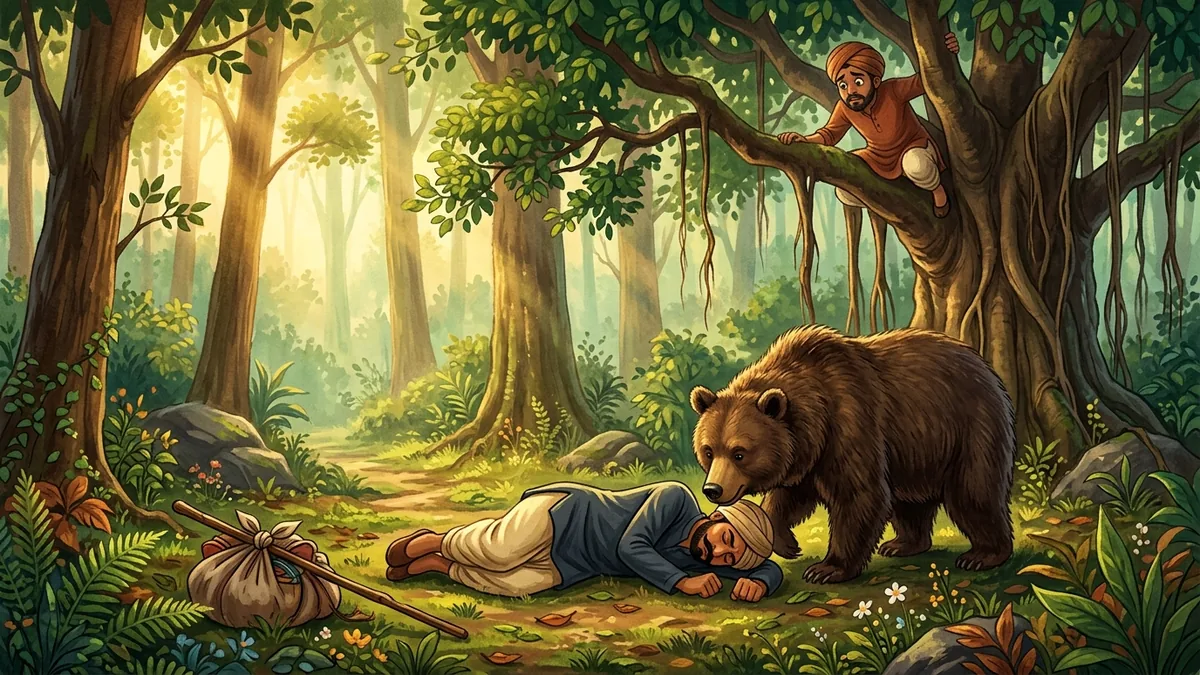
A boastful crow challenges a royal swan to an aerial race across the ocean, discovering that vanity fails when tested by life's vast depths.
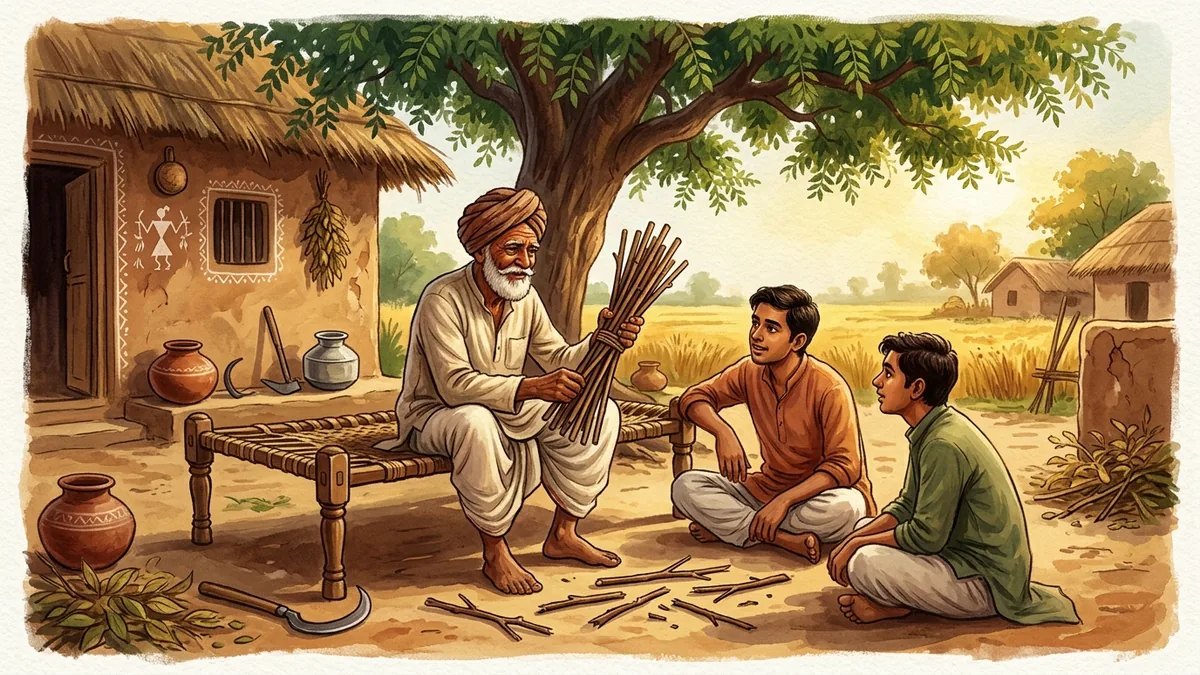
The timeless chronicle of King Shibi, who placed his own flesh on the golden balance to shield a terrified dove from a predatory hawk.
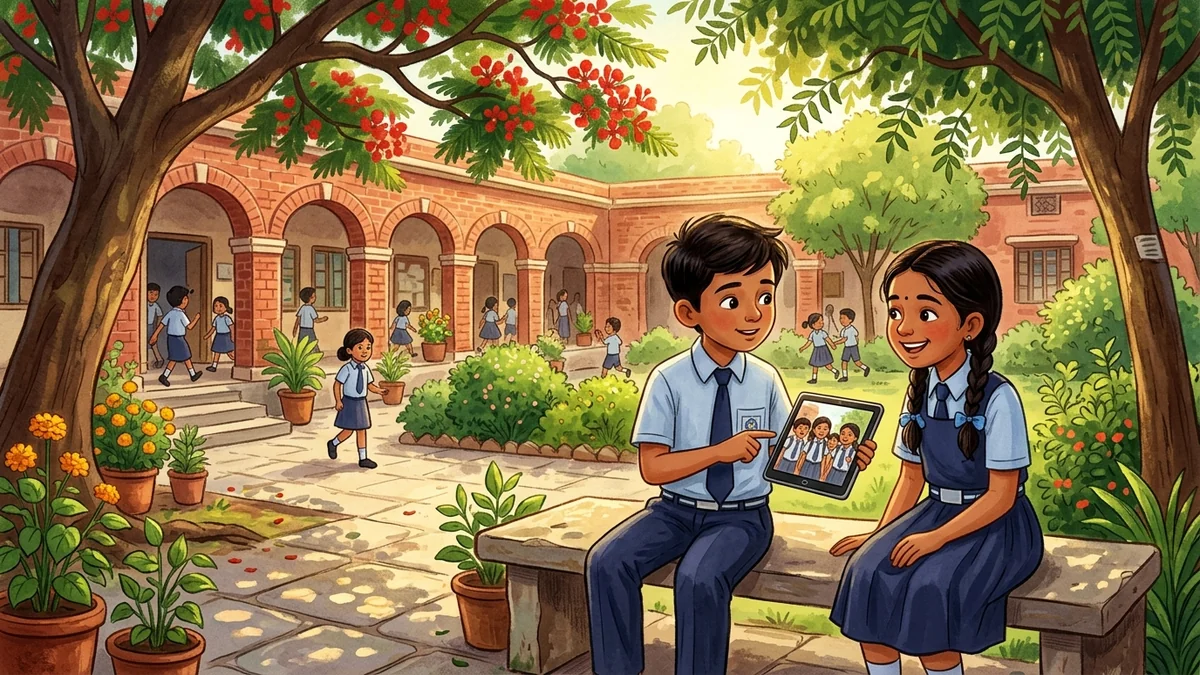
In the heart of the Vindhya mountains stood an ancient banyan whose majestic boughs had sheltered generations of creatures through storms and droughts. When a ferocious wildfire encircled the forest, mighty beasts and feathered flocks fled in terror, abandoning the sacred tree. But a tiny sparrow named Chanchala flew relentlessly between the river and the inferno, dropping minuscule beads of water from her beak upon the flames. When the divine Garuda questioned her futile toil, she declared: 'When history judges this day, my name shall stand not among those who caused the fire or fled in cowardice, but among those who fought to extinguish it.' The parable immortalizes the truth that devotion and duty outweigh the scale of one's resources.
The tale of two friends, Rohan and Sohan, who encounter a bear in the deep woods and discover that true friendship shines only in adversity.
Upon receiving his first smartphone for his twelfth birthday, seventh-grader Aarav was dazzled by the intoxicating allure of social media likes and notifications. In a classroom group chat, a classmate named Mayank was mocked for wearing torn canvas shoes; swept up in digital peer pressure, Aarav posted a laughing reaction. Witnessing Mayank’s silent humiliation and academic withdrawal, Aarav’s conscience stirred. Through a profound dialogue on character and empathy with his grandfather, Aarav recognized that typed words carry the same karmic weight as spoken speech. Apologizing with sincere humility, he transformed his digital habits, becoming a champion for online kindness.
Deenabandhu, an impoverished woodcutter, earned an honest living gathering dry twigs to feed his family. One fateful dawn, his sole livelihood—a rusted iron axe—slipped from his grasp and sank into the churning river. Weeping in grief, his pure distress invoked the River Deity. The divine spirit tested him by presenting a radiant axe of pure gold, then one of flawless silver, yet the humble laborer refused both, declaring they were not his. When his battered iron tool emerged, his face shone with genuine joy. Rewarding his incorruptible integrity, the Deity bestowed all three axes upon him.