The Extra Change at the Shop
दुकानदार के अतिरिक्त खुले पैसे
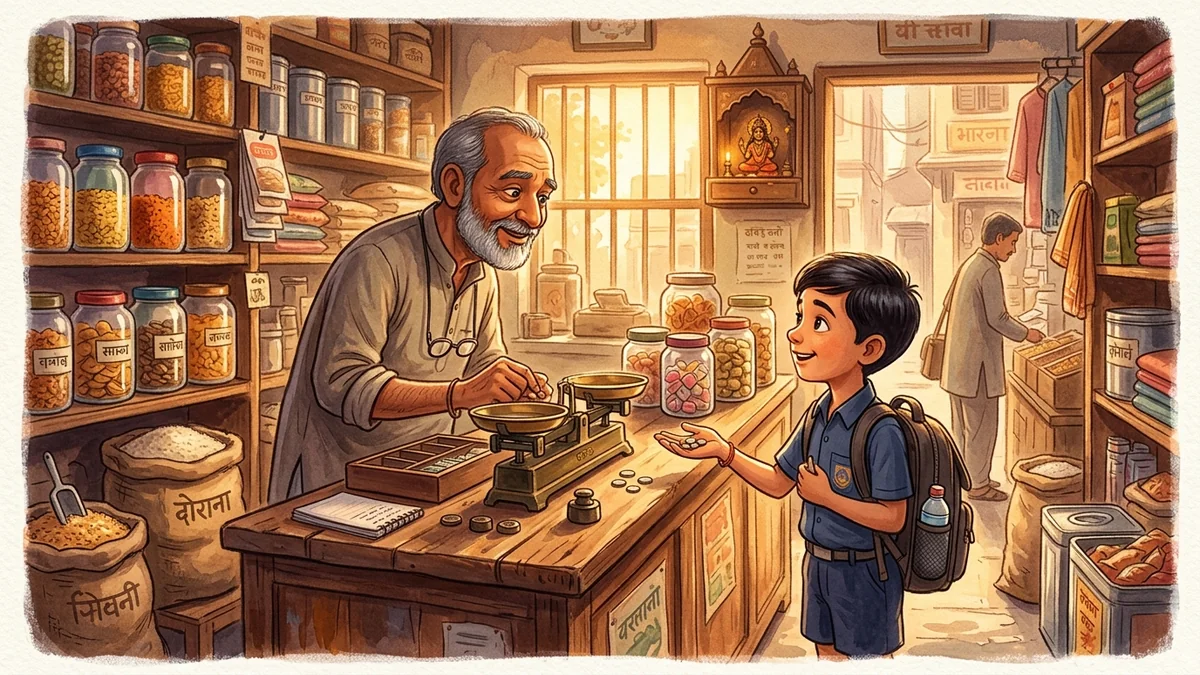
कानपुर के चौक बाजार की तंग, पुरानी और ऐतिहासिक गलियों में 'विद्या भवन पुस्तक भंडार' पिछले साठ वर्षों से स्कूली विद्यार्थियों की सबसे भरोसेमंद दुकान मानी जाती थी। दुकान के संचालक, बहत्तर वर्षीय पंडित सीताराम जी, सादगी और कर्तव्यनिष्ठा की प्रतिमूर्ति थे। वे अपनी मोटी कांच के चश्मे के पीछे से हर छात्र को अपने बच्चे की तरह स्नेह देते थे। परंतु हाल ही में उन पर दुखों का पहाड़ टूट पड़ा था—उनकी धर्मपत्नी गंभीर रूप से बीमार थीं और शहर के कैंसर अस्पताल में भर्ती थीं जहाँ रोज शाम को उन्हें दवाओं के लिए हजारों रुपये नकद चुकाने पड़ते थे।
Deep within the labyrinthine heritage lanes of Chowk Bazaar in Kanpur, 'Vidya Bhavan Book Depot' had stood for sixty years as an unshakeable citadel of student learning. The seventy-two-year-old proprietor, Pandit Sitaram, was an icon of austere Gandhian humility. Peering through thick bifocals, he treated every impoverished scholar who crossed his threshold with grandfatherly benevolence. Yet tragedy had recently besieged his autumn years: his wife lay critically ill in the oncology ward of the civil hospital, requiring substantial daily cash outlays for life-saving chemotherapy.
फरवरी की एक व्यस्त और ठंडी शाम को बोर्ड परीक्षाओं की तैयारी कर रहा दसवीं कक्षा का छात्र आदित्य गणित और भौतिकी के संदर्भ ग्रंथ खरीदने सीताराम जी की दुकान पर पहुँचा। शाम के सात बज रहे थे और दुकान पर विद्यार्थियों और अभिभावकों की भारी भीड़ टूट पड़ी थी। हर कोई चिल्लाकर अपनी किताबें मांग रहा था। वृद्ध सीताराम जी अकेले थे; उनका नौकर छुट्टी पर था। वे कांपते हाथों से भारी सीढ़ियों पर चढ़कर किताबें उतार रहे थे, रसीदें काट रहे थे और पसीने से तर-बतर होकर हिसाब लगा रहे थे। उनकी आँखें थकान और चिंता से सूजी हुई थीं।
On a frantic, chilly February evening, tenth-grader Aditya arrived at Sitaram’s shop to purchase advanced mathematics and physics compendiums for his upcoming board trials. It was seven o’clock—the peak commercial rush. The narrow storefront was besieged by dozens of shouting customers demanding textbooks. The elderly proprietor labored completely alone; his assistant had fallen ill. Shivering with exhaustion, climbing heavy teak ladders to fetch dusty manuals and hand-scribbling receipts under dim yellow bulbs, the old man’s mind was fragmented with agonizing worry for his dying wife.
आदित्य ने अपनी चुनी हुई किताबों का ढेर काउंटर पर रखा। सीताराम जी ने रसीद बनाई—'कुल योग 550 रुपये हुआ बेटा।' आदित्य ने अपने पिताजी द्वारा दिए गए एक हजार रुपये का नया नोट सीताराम जी की कांपती हथेली पर रख दिया। वृद्ध दुकानदार को 450 रुपये लौटाने थे। परंतु ग्राहकों के भारी शोरगुल, थकान और मानसिक व्याकुलता के कारण सीताराम जी ने गल्ले की दराज से सौ-सौ रुपये के चार नोट निकाले, और पचास के नोट के भ्रम में उसके साथ एक नया चमचमाता हुआ 500 रुपये का नोट भी जोड़ दिया! उन्होंने कुल 900 रुपये आदित्य के हाथों में थमा दिए और अगले ग्राहक की ओर मुड़ गए।
Aditya stacked his chosen volumes upon the wooden counter. Sitaram tallied the invoice: 'That will be precisely five hundred and fifty rupees, son.' Aditya extracted a crisp one-thousand-rupee note given by his father, placing it into the elder's weathered palm. The merchant owed four hundred and fifty rupees in change. But overwhelmed by the deafening clamor and dizzy with fatigue, Sitaram pulled four hundred-rupee notes from the cash drawer, and mistaking a crisp new five-hundred-rupee bill for a fifty-rupee note, handed Aditya nine hundred rupees before turning frantically to the next customer!
आदित्य ने पैसे अपनी मुट्ठी में भींचे और दुकान से बाहर निकल आया। जब वह सड़क के किनारे लगी नगरपालिका की पीली लाइट के नीचे पहुँचा, तो उसने अपनी जेब में रखने से पहले नोटों को गिना। जैसे ही उसकी नजर उस 500 के नोट पर पड़ी, उसकी साँसें थम गईं। उसने दोबारा गिना—ग्यारह सौ नहीं, कुल नौ सौ रुपये थे! यानी दुकानदार ने भूलवश उसे पूरे 450 रुपये अतिरिक्त लौटा दिए थे! आदित्य का दिल सीने में हथौड़े की तरह धड़कने लगा। उसके मन में एक अत्यंत मोहक और जहरीला विचार कौंधा—'अरे वाह! 450 रुपये मुफ्त के! उस बूढ़े दुकानदार को तो भनक भी नहीं लगी। इन पैसों से मैं अपने दोस्तों को मैकडॉनल्ड्स में पार्टी दे सकता हूँ या अपना पसंदीदा गेम डाउनलोड कर सकता हूँ!'
Clutching the wad of currency in his fist, Aditya squeezed out through the bazaar crowd. Halting beneath the yellow glow of a municipal streetlamp to stow the money into his wallet, he flattened the bills. His breath caught in his throat. He counted once, twice, thrice: instead of four hundred and fifty rupees, he was holding nine hundred rupees! The distracted old man had handed him an extra four hundred and fifty rupees! Aditya’s heart hammered against his ribs like a trapped bird. An intoxicating, seductive serpent hissed within his adolescent mind: 'A four-hundred-and-fifty-rupee windfall! The old man hasn't the faintest clue! With this free treasure, I can host a grand feast at the burger cafe or purchase the multiplayer game skin I’ve dreamed of!'
आदित्य ने तेजी से कदम बढ़ाए और वह बाजार के मोड़ की ओर बीस कदम चल भी पड़ा। परंतु जैसे-जैसे वह आगे बढ़ता गया, उसके कदम भारी होते गए। अचानक उसके अंतर्मन में उसकी माँ की वह शांत और दिव्य वाणी बिजली की तरह कौंधी जिसे वे रोज पूजा के समय कहती थीं—'आदित्य! किसी की भूल या मजबूरी का फायदा उठाकर कमाया गया एक पैसा भी इंसान की आत्मा पर कालिख पोत देता है। बेईमानी की रोटी चाहे कितनी भी मीठी लगे, वह अंततः पेट में जाकर जहर बन जाती है। सच्चा पुरुष वह नहीं है जो दुनिया के डर से ईमानदार रहे; सच्चा वीर वह है जो तब भी ईमानदार रहे जब उसे कोई देखने वाला न हो!' इस एक विचार ने आदित्य की रीढ़ में कंपकंपी पैदा कर दी। उसने अपनी हथेली में बंद उस नोट को देखा। उसे लगा कि वह कागज का टुकड़ा नहीं, बल्कि उस वृद्ध की लाचारी और आंसुओं का निचोड़ था।
Shoving the money into his pocket, he took twenty rapid paces toward the fast-food strip. But with every step, his boots felt weighted with lead. Suddenly, piercing the cacophony of the bazaar, his mother’s voice resonated through his soul like a temple bell: 'Aditya, a single penny acquired through another’s misfortune or oversight is not wealth—it is molten arsenic that blackens the ancestral honor of our line! Dishonest bread may taste sweet upon the tongue today, but it turns into venom that rots the spirit tomorrow. True moral nobility is not what you perform under the watchful eyes of society; the supreme test of a man is what he does in the dark when no mortal eye can ever witness his choice!' A violent shudder ran down Aditya’s spine. Looking down at the green banknote, it no longer looked like currency; it looked like the stolen life-blood of a struggling human being.
आदित्य एक क्षण भी नहीं रुका। उसने तुरंत अपने कदम पीछे मोड़ लिए। वह दौड़ता हुआ वापस उस संकरी दुकान में घुसा। दुकान में अब भी भीड़ थी। आदित्य ने किसी से कुछ नहीं कहा; वह चुपचाप काउंटर के एक कोने में खड़ा रहा और पूरे पंद्रह मिनट तक उस वृद्ध के खाली होने की प्रतीक्षा की। जब अंतिम ग्राहक चला गया और सीताराम जी थककर अपनी कुर्सी पर बैठकर अपनी दुखती कमर सहलाने लगे, तो आदित्य आगे बढ़ा। उसने अपनी जेब से वह 500 का नोट निकाला और सीताराम जी की कांपती हथेलियों में रखते हुए अत्यंत विनम्र वाणी में कहा—'बाबा! आपने मुझे गलती से पचास के नोट की जगह पाँच सौ का नोट दे दिया था। यह आपके 450 रुपये अतिरिक्त हैं, इन्हें संभाल लीजिए।' सीताराम जी ने चश्मे के ऊपर से उस नोट को देखा, फिर आदित्य के निर्दोष और दीप्तिमान चेहरे को देखा। उस वृद्ध की आँखों से आंसुओं का बांध टूट पड़ा। वे अपनी कुर्सी से उठे और उन्होंने आदित्य को अपनी छाती से चिपका लिया। वे फफक-फफक कर रोने लगे—'बेटा! तू इंसान नहीं, साक्षात नारायण का रूप बनकर आया है! मेरी पत्नी अस्पताल में है और रात नौ बजे की कीमोथेरेपी की दवाइयों के लिए मुझे ठीक साढ़े चार सौ रुपयों की ही कमी पड़ रही थी! यदि आज गल्ले में यह पैसे कम हो जाते, तो मैं अपनी पत्नी की सांसों का सौदा कर बैठता!' सीताराम जी ने रोते हुए अपनी दोनों कांपती हथेलियाँ आदित्य के सिर पर रख दीं और उसे अखंड सौभाग्य और अमर यश का आशीर्वाद दिया। आदित्य खाली जेब घर लौटा, परंतु उस रात जब वह सोया, तो उसके अंतर्मन में ऐसा अलौकिक आनंद और शांति थी जिसे दुनिया की कोई दौलत नहीं खरीद सकती थी। यह अमर कथा प्रत्येक मनुष्य को यह शाश्वत सीख देती है कि ईमानदारी कोई मजबूरी नहीं, बल्कि आत्मा का सर्वोच्च स्वाभिमान है; जब आप किसी की भूल का फायदा उठाने से इनकार कर देते हैं, तो आप केवल एक नोट नहीं लौटाते, बल्कि आप संपूर्ण मानवता के प्रति ईश्वर के विश्वास को जीवित रखते हैं।
Aditya wheeled around on his heels without looking back. Sprinting through the jostling crowd, he pushed his way back into the suffocating bookstore. Refusing to cause a public scene, he stood quietly in the corner for fifteen patient minutes until the final customer departed. When Pandit Sitaram sank into his creaking cane chair to massage his throbbing lower back, Aditya stepped forward. Unfolding the crisp banknote, he laid it gently upon the brass-bound ledger, speaking with crystalline humility: 'Baba, in the rush, your tired hands mistook this five-hundred-rupee bill for a fifty. You gave me four hundred and fifty rupees in excess. Here is your sacred trust; please balance your accounts.' The old man lifted his bifocals, staring at the green currency note, and then looked deep into Aditya’s radiant, unblemished eyes. A dam burst inside the patriarch’s soul. Rising from his chair with trembling limbs, Sitaram pulled the teenage boy against his chest, weeping in uncontrollable, convulsive sobs: 'My child! You are not a customer; you are an angel of the Divine sent to save my home! My wife is fighting for breath in the oncology clinic, and I was short exactly four hundred and fifty rupees to clear her nightly chemotherapy vials! Had my register fallen short tonight, I would have signed her death warrant in the dark!' Weeping tears of celestial gratitude, the old scholar pressed his trembling palms upon Aditya’s head, showering him with blessings of eternal victory and divine grace. Aditya walked home through the winter night with an empty wallet; yet beneath the cold stars, his spirit soared in transcendent peace and ecstasy that all the gold in the cosmos could never purchase. The eternal moral illuminates the human condition across all ages: integrity is the sacred fortress of the soul; when you refuse to exploit another’s human error, you do not merely return paper currency—you preserve the sacred faith of the Divine in the nobility of human character.