मतभेद के बाद भी प्रगाढ़ मित्रता
Friends After a Disagreement
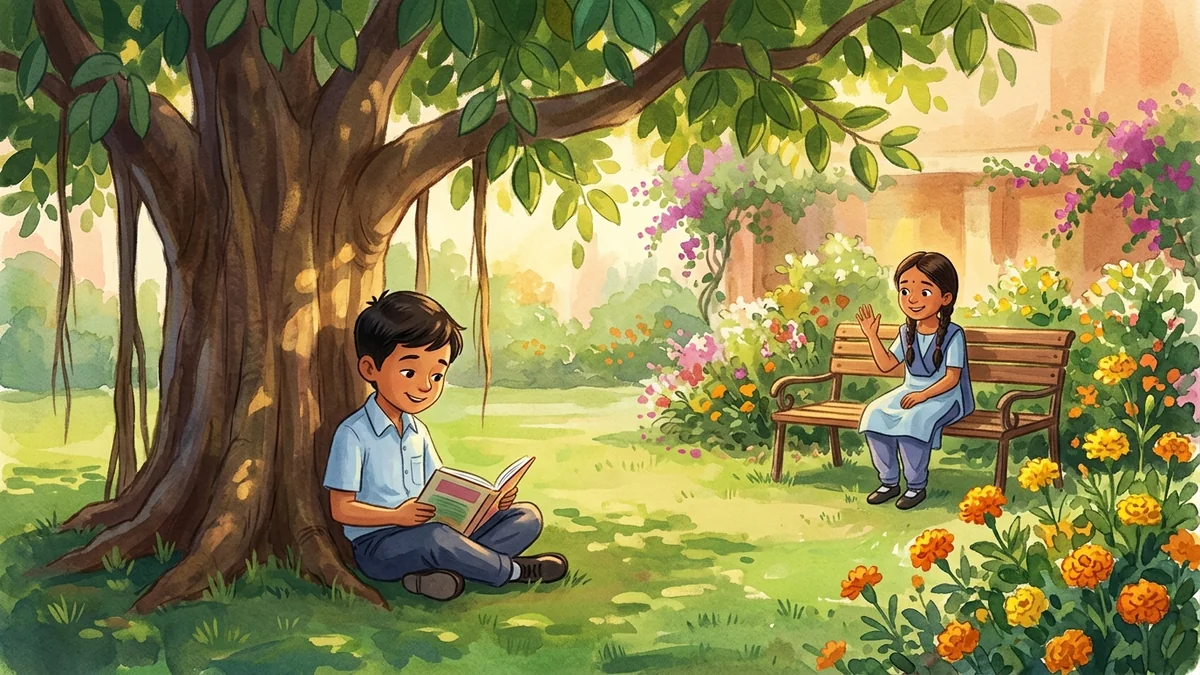
देहरादून के प्रतिष्ठित विवेकानंद विद्यालय में ग्यारहवीं कक्षा के दो छात्र, सिद्धार्थ और निखिल, पूरे विद्यालय में अपनी अटूट और अनुकरणीय मित्रता के लिए प्रसिद्ध थे। वे पहली कक्षा से ही एक ही बेंच पर बैठते थे, साथ भोजन करते थे और प्रत्येक वाद-विवाद तथा शैक्षणिक प्रतियोगिता में एक-दूसरे की ढाल बनकर खड़े रहते थे। शिक्षक प्रायः अन्य विद्यार्थियों को उनकी मित्रता का उदाहरण दिया करते थे। परंतु उस वर्ष विद्यालय की प्रतिष्ठित वार्षिक पत्रिका 'तरंग' के मुख्य संपादकीय आलेख के चयन को लेकर दोनों के बीच एक ऐसा वैचारिक तूफान उठा जिसने उनकी दस वर्षों की मित्रता की नींव को हिलाकर रख दिया।
At Vivekananda Senior Academy in Dehradun, eleventh-graders Siddharth and Nikhil were celebrated as the epitome of unbroken brotherhood. Having shared the same wooden desk since kindergarten, they walked to school together, split their tiffin boxes, and stood shoulder-to-shoulder in every academic symposium. Faculty members routinely invoked their bond as a golden model of youth companionship. However, during the autumn semester, the editorial board convened to formulate the keynote manifesto for the school’s golden jubilee magazine, 'Tarang.' An ideological tempest erupted between the two inseparable companions that threatened to tear their decade-long camaraderie to shreds.
सिद्धार्थ एक अत्यंत गंभीर, लक्ष्य-केंद्रित और अनुशासित विद्यार्थी था जिसका मानना था कि भारत जैसे प्रतिस्पर्धी देश में विद्यार्थियों के लिए सर्वोच्च प्राथमिकता केवल कठोर अकादमिक अध्ययन, बोर्ड परीक्षाओं में शीर्ष अंक और प्रतियोगी परीक्षाओं में विजय प्राप्त करना ही होना चाहिए। इसके विपरीत, निखिल संवेदनशील, कलात्मक और दार्शनिक स्वभाव का था; उसका दृढ़ मत था कि केवल रटंत विद्या और अंकों की अंधी दौड़ विद्यार्थियों के कोमल मन को कुचल रही है, इसलिए पत्रिका का मुख्य स्वर छात्रों के मानसिक स्वास्थ्य, खेलकूद, कला और भावनात्मक संतुलन पर केंद्रित होना चाहिए।
Siddharth was a relentlessly driven, analytically rigorous scholar who maintained that in a fiercely competitive developing society, a school magazine’s moral duty was to champion unyielding academic discipline, rigorous testing standards, and supreme competitive excellence. Nikhil, conversely, was an empathetic, creatively gifted soul who passionately argued that relentless academic pressure was suffocating the emotional vitality of the youth; he insisted the lead manifesto must confront student anxiety, suicide prevention, creative liberties, and holistic psychological wellness.
संपादकीय मंडल की निर्णायक बैठक में जब दोनों ने अपने-अपने प्रस्ताव रखे, तो चर्चा ने धीरे-धीरे उग्र रूप धारण कर लिया। सिद्धार्थ ने निखिल के विचारों को 'अव्यवहारिक भावुकता और अनुशासनहीनता को बढ़ावा देने वाला' करार दे दिया। इस पर निखिल भी भड़क उठा और उसने भरी सभा में सिद्धार्थ पर कटाक्ष करते हुए कहा—'तुम इंसान नहीं, अंकों के पीछे भागने वाली एक संवेदनहीन मशीन बन चुके हो!' दोनों के स्वर ऊँचे होते गए, तर्कों की जगह व्यक्तिगत आक्षेपों ने ले ली और अंत में सिद्धार्थ गुस्से से अपनी फाइल पटकते हुए कमरे से बाहर निकल गया, जबकि निखिल ने भी घोषणा कर दी कि वह ऐसे संकीर्ण व्यक्ति के साथ कभी काम नहीं करेगा।
During the decisive editorial board hearing, what began as a civilized intellectual exchange swiftly degenerated into an acrimonious clash of egos. Siddharth dismissively branded Nikhil’s proposal as 'sentimental romanticism that coddles indiscipline and encourages academic mediocrity.' Wounded to the quick, Nikhil retaliated before the assembled faculty and peers with a blistering personal cut: 'You have traded your humanity to become a soulless automaton obsessed with percentage points!' Voices rose to a crescendo, philosophical debate dissolved into venomous personal insults, and Siddharth slammed his leather binder onto the oak table, storming out of the hall as Nikhil vowed never to collaborate with such a dogmatic tyrant again.
अगले तीन दिनों तक विद्यालय का वातावरण दोनों के लिए नर्क के समान हो गया। वे एक ही कक्षा में बैठते थे, परंतु एक-दूसरे की ओर देखते तक नहीं थे। गलियारे में जब वे आमने-सामने आते, तो अपनी नजरें फेर लेते थे। अन्य छात्र जो उनकी मित्रता से ईर्ष्या करते थे, अब चटखारे लेकर उनके झगड़े की बातें करने लगे थे। तीसरे दिन शाम को सिद्धार्थ अपने अध्ययन कक्ष में बैठा था। उसकी मेज पर निखिल द्वारा लिखा गया निबंध का मसौदा पड़ा था। सिद्धार्थ ने एक गहरी साँस ली और बिना किसी पूर्वग्रह के, शांत मन से उस मसौदे को एक-एक शब्द करके पढ़ा। जैसे-जैसे वह पढ़ता गया, उसकी आँखों के आगे से अहंकार का परदा हटने लगा। उसने देखा कि निखिल ने उन छात्रों के दर्द को कितनी गहराई से महसूस किया था जो परीक्षा के तनाव में आत्महत्या तक का विचार करने लगते हैं।
For the next seventy-two hours, school became an agonizing purgatory for both boys. Though forced to sit side by side in chemistry lectures, they stared rigidly ahead in icy silence, refusing to exchange a glance or a word. In the corridors, they averted their eyes, while malicious peers who had long envied their unbreakable union whispered gloating gossip. On Sunday evening, sitting alone beneath his study lamp, Siddharth found Nikhil’s rejected manuscript among his notes. Exhaling a long, weary sigh, Siddharth forced himself to read the pages objectively, shorn of personal animosity. As his eyes traced the fluid, poignant sentences, the scales of intellectual vanity fell from his sight. He realized the profound moral urgency of Nikhil’s arguments—the hidden epidemics of clinical depression, the crushing despair of teenage burnout, and the desperate yearning for artistic affirmation.
सिद्धार्थ का हृदय आत्मग्लानि से भर उठा। उसने सोचा—'क्या मेरी बौद्धिक जिद मेरे दस वर्ष के भाई समान मित्र से बड़ी हो सकती है? हम दोनों अलग-अलग दिशाओं से केवल एक ही सत्य को देख रहे थे।' सिद्धार्थ ने बिना एक पल गंवाए अपनी साइकिल निकाली। रात के आठ बज रहे थे और हल्की वर्षा हो रही थी। उसने रास्ते से दो कुल्हड़ गरम अदरक वाली चाय ली और सीधे निखिल के घर का दरवाजा खटखटाया। जब निखिल ने दरवाजा खोला और सिद्धार्थ को भीगे हुए, हाथ में चाय लिए सामने खड़े देखा, तो वह स्तब्ध रह गया। सिद्धार्थ ने चाय का कुल्हड़ आगे बढ़ाते हुए अत्यंत कोमल वाणी में कहा—'निखिल, चाय ठंडी हो रही है। क्या हम दोनों मूर्ख अपने अहंकार को बाहर छोड़कर एक बार फिर बात कर सकते हैं?'
A wave of profound self-reproach swept over Siddharth. He asked his conscience: 'Is my intellectual pride more sacred than ten years of unconditional brotherhood? Were we not merely observing two complementary faces of the exact same truth?' Refusing to let pride govern another sunrise, Siddharth grabbed his jacket. It was eight o’clock on a drizzly October night. Halting at a roadside tea stall, he purchased two steaming clay cups of spiced ginger tea and pedaled furiously across town to Nikhil’s bungalow. When Nikhil opened the front door and beheld his friend standing soaked on the threshold holding two clay cups, his defensive posture froze. Siddharth extended a steaming cup, whispering with disarming humility: 'Nikhil, the tea is getting cold. Can two stubborn fools leave their bloated egos in the rain and speak like brothers once more?'
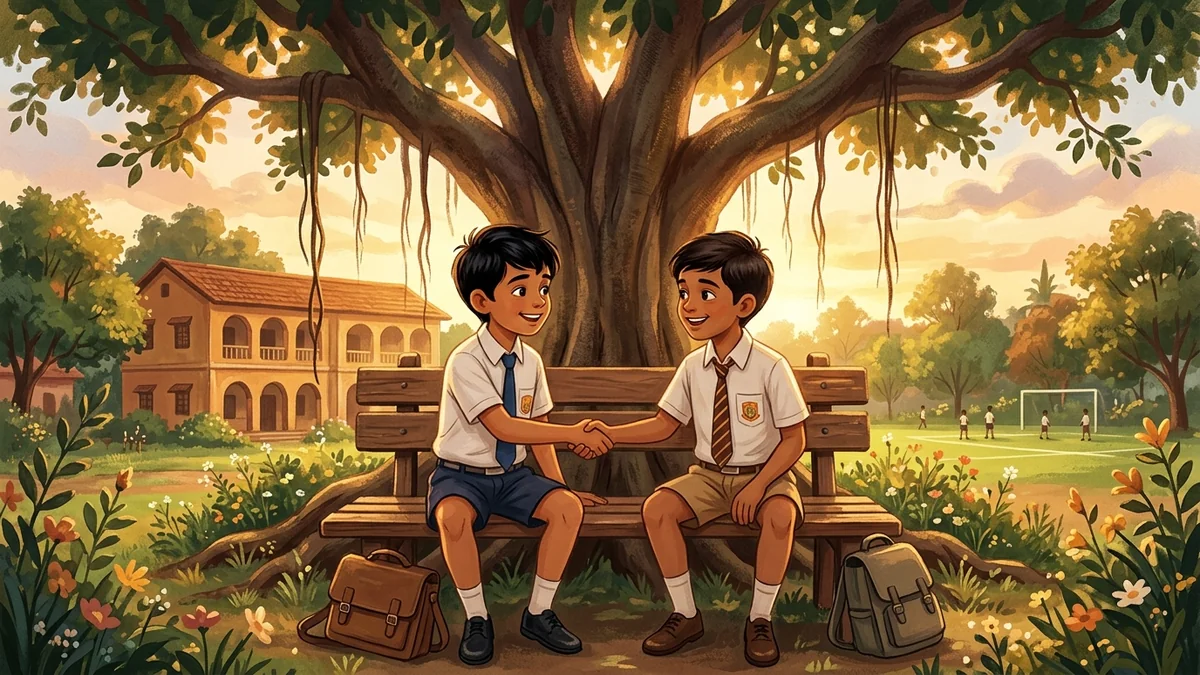
निखिल के गले में रुंधे हुए आँसू फूट पड़े। उसने चाय को किनारे रखा और सिद्धार्थ को अपनी बाहों में भींच लिया। दोनों मित्र देर तक गले लगकर रोते रहे। उस रात दोनों ने निखिल के कमरे में बैठकर दोनों आलेखों को सामने रखा। उन्होंने समझा कि शिक्षा में उत्कृष्टता और मानसिक स्वास्थ्य दोनों एक ही सिक्के के दो पहलू हैं—अंक शरीर हैं, तो संस्कार और आनंद उसकी आत्मा हैं! दोनों ने मिलकर पूरी रात काम किया और 'सर्वांगीण विकास: ज्ञान और मानसिक संतुलन का समन्वय' शीर्षक से एक ऐसा अद्भुत संयुक्त आलेख तैयार किया जिसने न केवल विद्यालय पत्रिका में मुख्य स्थान पाया, बल्कि राज्य स्तर पर शिक्षा विभाग द्वारा सर्वश्रेष्ठ युवा विमर्श का प्रथम पुरस्कार जीता। मंच पर जब दोनों मित्रों को एक साथ सम्मानित किया गया, तो प्रधानाचार्य ने कहा—'सच्चे मित्र वे नहीं होते जो कभी असहमत नहीं होते; सच्चे मित्र वे होते हैं जिनकी मित्रता किसी भी असहमति से कहीं अधिक महान और अमर होती है।' यह कथा संसार को यह शाश्वत संदेश देती है कि विचारों का मतभेद बुद्धि का स्वाभाविक लक्षण है, परंतु उस मतभेद को मनभेद में बदल देना अहंकार की पराजय है; जो मनुष्य संबंध को विचार से ऊपर रखता है, वह जीवन में कभी अकेला नहीं होता।
A choked sob tore from Nikhil’s throat. Setting the tea upon the porch, he pulled Siddharth into a fierce, tearful embrace. For ten minutes, the two boys wept out their suppressed grief, washing away days of bitter poison. Sitting across Nikhil’s study rug until the early hours of dawn, they laid their drafts side by side. With enlightened clarity, they recognized that academic rigor and psychological wellness were the twin lungs of true education—intellectual mastery is the vessel, but emotional harmony is the living breath within! Merging their perspectives, they co-authored a magnificent joint thesis titled 'The Synthesis of Rigor and Soul: Reimagining Education for the Modern Mind.' The manifesto not only formed the centerpiece of the jubilee magazine but was subsequently republished by the State Board of Education as an exemplary model for school reform. Presenting them with joint gold medals, the principal proclaimed to the assembly: 'True companions are not those who harbor identical opinions; true companions are those whose mutual love is grand enough to honor opposing viewpoints and weave them into a higher truth!' The timeless moral endures across all human relationships: intellectual difference is the natural blossoming of an inquiring mind, but allowing ideological debate to poison fraternal love is the supreme folly of pride; those who place love above dogma will forever stand unconquerable.