The Experiment That Needed a Pause
वह प्रयोग जिसे रोकना ज़रूरी था
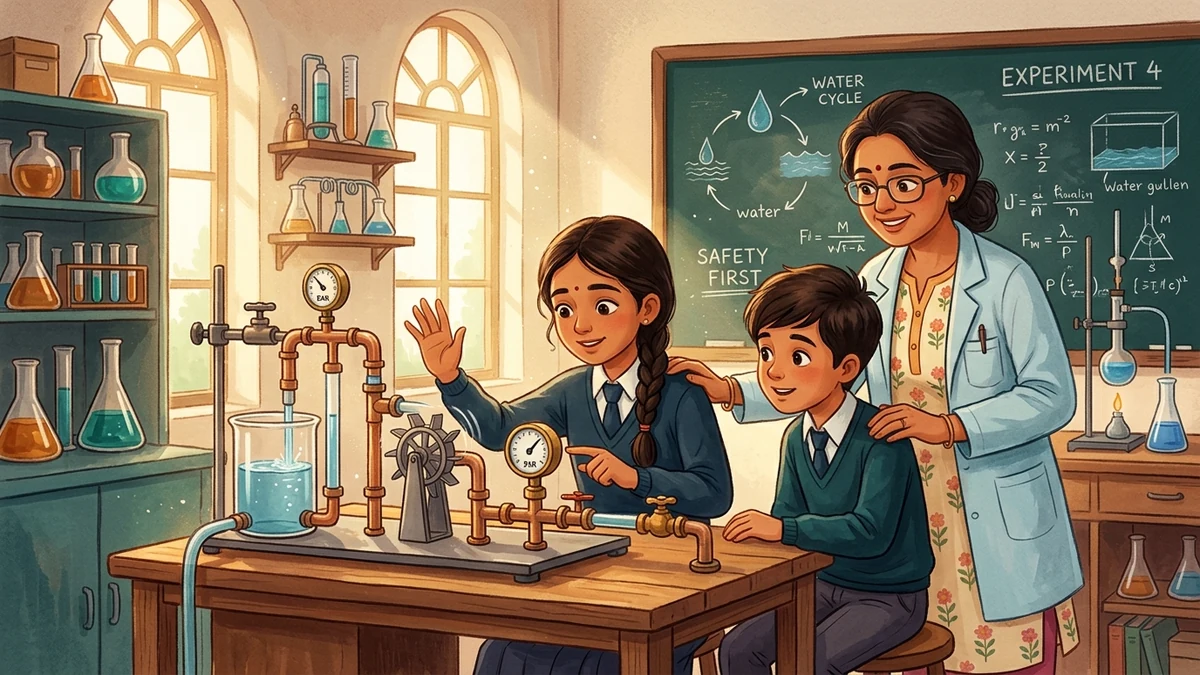
विज्ञान क्लब के पाँच बच्चे — नेहा, आदित्य, रिया, समर और तान्या — कई हफ्तों से अपने प्रयोग की तैयारी कर रहे थे। उनका प्रोजेक्ट था: 'विभिन्न तापमानों पर पानी में ध्वनि का वेग मापना।' अंतर-विद्यालय प्रतियोगिता में इसे प्रस्तुत करना था। प्रयोग के दिन सब उत्साहित थे। नेहा ने सभी उपकरण जाँचे, आदित्य ने डेटा-शीट तैयार की। पर शुरुआत के एक घंटे बाद ही समर ने कहा, 'मुझे ठंड लग रही है।' रिया ने उसके माथे पर हाथ रखा — 'तुम्हें बुखार है!' समर ने ज़िद की, 'नहीं, मैं ठीक हूँ। प्रयोग रुकना नहीं चाहिए।' पर उसकी आवाज़ काँप रही थी।
Five science club members — Neha, Aditya, Riya, Samar, and Tanya — had spent weeks preparing their project: measuring the velocity of sound in water at different temperatures. The inter-school competition was their goal. On experiment day, everyone buzzed with excitement. Neha had checked every piece of equipment; Aditya had prepared the data sheets. But barely an hour into the experiment, Samar said, 'I feel cold.' Riya placed a hand on his forehead — 'You have a fever!' Samar insisted, 'No, I am fine. The experiment cannot stop.' But his voice was trembling.
इसी बीच नेहा को एक और परेशानी दिख रही थी — उनका ध्वनि-संवेदक (सोनिक सेंसर) गलत रीडिंग दे रहा था। 30°C पर पानी में ध्वनि का वेग 1500 m/s के आसपास होना चाहिए, पर उनका सेंसर 1820 m/s दिखा रहा था। यह डेटा सही नहीं लग रहा था। आदित्य ने कहा, 'शायद सेंसर ठीक है, शायद हमारा सेटअप थोड़ा अलग है।' रिया बोली, 'यह डेटा जमा कर लो, बाद में देखेंगे।' नेहा चिंतित थी — वे एक ग़लत नींव पर एक बड़ी इमारत बना रहे थे। प्रतियोगिता में इस डेटा को सही बताना झूठ होगा।
At the same time, Neha was troubled by another problem. Their sonic sensor was giving wrong readings. At 30°C, sound velocity in water should be approximately 1500 m/s, but their sensor was displaying 1820 m/s. The data did not look right. Aditya suggested, 'Maybe the sensor is calibrated differently, maybe our setup is slightly different.' Riya said, 'Just record the data — we will review it later.' Neha felt deeply uneasy — they were building a large structure on a faulty foundation. Presenting this data at the competition as accurate would be dishonest.
नेहा ने गहरी साँस ली और कहा, 'दोस्तों, हमें रुकना होगा।' कमरे में खामोशी छा गई। आदित्य ने चिंतित होकर कहा, 'पर प्रतियोगिता कल है! अगर हम अभी रुके, तो भाग नहीं ले पाएँगे।' नेहा ने शांति से कहा, 'समर को बुखार है — वह पहली वजह है। दूसरी वजह: हमारा डेटा ग़लत है। अगर हम इस डेटा को लेकर प्रतियोगिता में जाएँ, तो हम एक असत्य प्रयोग प्रस्तुत कर रहे होंगे। विज्ञान में ग़लत डेटा को सही बताना — यही असली हार है, ट्रॉफी न मिलना नहीं।'
Neha took a deep breath and said, 'Everyone, we need to stop.' The room fell silent. Aditya said anxiously, 'But the competition is tomorrow! If we stop now, we cannot participate.' Neha answered calmly, 'Samar has a fever — that is reason one. Reason two: our data is wrong. If we take this data to the competition, we will be presenting a dishonest experiment. In science, presenting incorrect data as valid — that is the real defeat. Not failing to win a trophy.'
रिया ने पहले विरोध किया: 'पर इतनी मेहनत...' नेहा ने कहा, 'हाँ, मेहनत हुई है। और वह मेहनत बेकार नहीं गई — हमें पता चला कि हमारा सेंसर कैलिब्रेटेड नहीं था। यह भी एक सीख है।' विज्ञान-शिक्षक श्री कपूर को बुलाया गया। उन्होंने समर को घर भेजा और नेहा की बात सुनी। उन्होंने सेंसर की जाँच की — हाँ, उसे कैलिब्रेशन की ज़रूरत थी। 'नेहा ने सही किया,' श्री कपूर ने कहा। 'यह साहस लगता है — रुकने का साहस। बहुत कम लोगों में यह होता है।' टीम ने अगले महीने की प्रतियोगिता में भाग लेने का फैसला किया — सही डेटा के साथ।
Riya initially resisted: 'But all that effort...' Neha replied, 'Yes, the effort was real. And it was not wasted — we discovered our sensor was not properly calibrated. That itself is a finding.' They called their science teacher Mr. Kapoor. He sent Samar home to rest, then listened carefully to Neha\'s account. He examined the sensor — yes, it required recalibration. 'Neha did the right thing,' Mr. Kapoor said. 'This takes courage — the courage to pause. Very few people possess it.' The team registered for the next month\'s competition — with correct data.
अगले महीने उन्होंने प्रतियोगिता में भाग लिया। उनका डेटा सटीक था। प्रस्तुति के दौरान निर्णायकों ने उनसे पूछा — 'आपने अंतिम प्रतियोगिता में भाग क्यों नहीं लिया?' नेहा ने सीधे जवाब दिया, 'हमारा सेंसर कैलिब्रेटेड नहीं था और एक सदस्य बीमार था। ग़लत डेटा प्रस्तुत करना हमें उचित नहीं लगा।' निर्णायकों ने एक-दूसरे की ओर देखा। एक ने कहा, 'यह उत्तर किसी भी पुरस्कार से अधिक मूल्यवान है।' उस दिन टीम को दूसरा स्थान मिला — और 'वैज्ञानिक ईमानदारी पुरस्कार' भी, जो बहुत कम टीमों को मिलता था।
The following month they entered the competition with accurate data. During the presentation, a judge asked, 'Why did your team not participate in the previous competition?' Neha answered directly, 'Our sensor was not calibrated and one member was ill. Presenting incorrect data did not seem right to us.' The judges exchanged a glance. One said, 'That answer is worth more than any trophy.' That day, the team placed second — and also received the rare 'Scientific Integrity Award,' given only to teams who demonstrated exceptional research honesty.
उस अनुभव के बाद नेहा ने अपनी विज्ञान-डायरी में लिखा: 'रुकना हमेशा हार नहीं होती। कभी-कभी रुकना ही सबसे सही दिशा होती है।' उसने जाना कि असली साहस वह नहीं जो आगे बढ़ता रहे, बल्कि वह जो ज़रूरत पड़ने पर रुकने की हिम्मत रखे — और ज़िम्मेदारी से आगे का रास्ता खोजे। यह पाठ न केवल विज्ञान में, बल्कि ज़िंदगी के हर उस पल में काम आता है जब हम जानते हैं कि हम ग़लत दिशा में जा रहे हैं, पर रुकने की हिम्मत नहीं जुटा पाते।
After that experience, Neha wrote in her science diary: 'Stopping is not always defeat. Sometimes stopping is the most correct direction of all.' She had learned that real courage is not what keeps pushing blindly forward — it is what has the honesty to pause when necessary, and the responsibility to then find the right path forward. This lesson applies not only in science, but in every moment of life when we know we are moving in the wrong direction yet cannot find the courage to stop.
📚 Moral Vocabulary & Key Terms
Enrich your language and character with these inspiring words from the story:
The process of checking and adjusting the accuracy of an instrument against a known standard.
The ethical principle of using only truthful and accurate data in experiments, and never concealing or misrepresenting information.
Wisely stopping a task going in the wrong direction to reconsider — this is not weakness, it is maturity and responsibility.
🧠 Ethical Reflection & Quiz
What have you learned from this story? Choose the most honorable choice below: