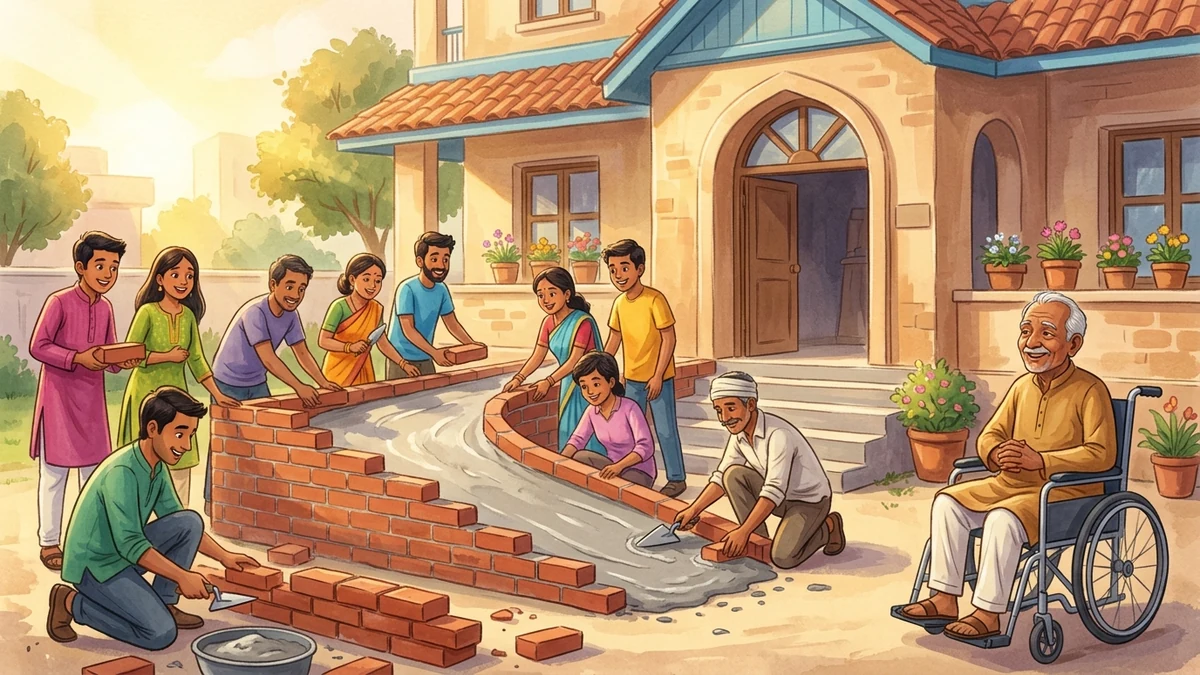
The Neighbourhood’s Missing Ramp
मोहल्ले का गायब रैंप
शनिवार की सुबह अनिका व्हीलचेयर पर सामुदायिक पुस्तकालय में पहुँचीं। वे हर हफ्ते पढ़ने वाले समूह में आती थीं। पर आज पुस्तकालय का मुख्य दरवाज़ा जहाँ रैंप था, वहाँ सामान पहुँचाने वाले की बड़ी-बड़ी डिब्बे रखी थीं। रैंप पूरी तरह बंद था। पुस्तकालय का एक कर्मचारी बाहर आया और बोला, "दूसरे दरवाज़े से आ जाइए।" अनिका ने शांत आवाज़ में कहा, "वह रास्ता मेरी व्हीलचेयर के लिए बहुत सँकरा है।"
On Saturday morning, Anika arrived at the community library in her wheelchair. She came to the reading group every week. But today, the main entrance where the ramp was had large delivery boxes stacked right across it. The ramp was completely blocked. A library staff member came outside and said, "Please come through the side door." Anika said calmly, "That passage is too narrow for my wheelchair."
अनिका ने समझाया कि साइड का दरवाज़ा इतना सँकरा था कि व्हीलचेयर अंदर नहीं जा सकती थी। और उन्हें किसी के द्वारा उठाया जाना न तो सुरक्षित था, न सम्मानजनक। पड़ोसी रोहन, जो उनके साथ आया था, ने ध्यान से सुना। उसे पहले कभी यह नहीं सोचना पड़ा था कि किसी इमारत में कैसे घुसा जाए — उसके लिए दरवाज़े हमेशा खुले रहे थे। "आप सही हैं," उसने कहा, "यह बाधा ठीक करनी होगी।"
Anika explained that the side entrance was so narrow that her wheelchair could not pass through. And having someone lift her was neither safe nor dignified. Her neighbour Rohan, who had come with her, listened carefully. He had never before had to think about how to enter a building — doors had always simply been open for him. "You are right," he said, "this barrier needs to be fixed."
दोनों ने पुस्तकालय प्रबंधक से बात की। प्रबंधक ने तुरंत कर्मचारियों को बुलाया और सामान के डिब्बे हटवाए। रैंप साफ हुई और अनिका अंदर जा सकीं। पर सिर्फ इतने से रोहन संतुष्ट नहीं था। उसने पूछा, "यह फिर होगा? सामान हर हफ्ते आता है, हर बार रैंप बंद हो जाए?" प्रबंधक ने सोचा और कहा, "आप सही सवाल पूछ रहे हैं। इसका स्थायी हल ढूँढना ज़रूरी है।"
They both spoke with the library manager. The manager immediately called the staff and had the boxes removed. The ramp was cleared and Anika was able to go inside. But Rohan wasn't satisfied with just that. He asked, "Will this happen again? Deliveries come every week — will the ramp be blocked each time?" The manager thought for a moment and said, "You're asking the right question. We need a permanent fix."
अगले हफ्ते पुस्तकालय ने रैंप के पास एक संकेत लगाया: "सामान पहुँचाने वाले रैंप को खाली रखें।" साथ ही, सामान उतारने की जगह पुस्तकालय की पिछली तरफ तय की गई जहाँ रैंप नहीं था। अनिका ने अगली बार आकर देखा कि रैंप खाली था — और संकेत भी था। उन्होंने रोहन से कहा, "जब तुमने वह सवाल पूछा, तब मुझे लगा कि सिर्फ मेरी समस्या नहीं, सबकी है।" रोहन ने जवाब दिया, "यही तो होना चाहिए।"
The following week the library put up a sign near the ramp: "Please keep the ramp clear for deliveries." At the same time, a separate unloading area was designated at the back of the building where there was no ramp. When Anika came the next time, the ramp was clear — and the sign was there. She told Rohan, "When you asked that question, I realised it wasn't just my problem — it was everyone's." Rohan replied, "That's exactly how it should be."
उस अनुभव के बाद पड़ोसियों में एक नई समझ आई — समावेश किसी एक व्यक्ति पर किया गया उपकार नहीं है। इसका मतलब है कि सार्वजनिक स्थान सबके लिए काम करे — हमेशा, न कि तब जब किसी को याद दिलाना पड़े। रोहन ने एक बात और सोची: "मुझे शायद अपने मोहल्ले में भी देखना चाहिए कि ऐसी और कौन सी जगहें हैं जो कुछ लोगों के लिए बंद हो जाती हैं।"
After that experience, the neighbours came to a new understanding — inclusion is not a favour given to one person. It means that public spaces work for everyone, always — not only when someone has to be reminded. Rohan thought of something more: "Perhaps I should also look around my neighbourhood for other places that become inaccessible to some people."
अगली बैठक में रोहन ने मोहल्ला समिति को तीन और जगहें बताईं जहाँ रैंप की ज़रूरत थी या मौजूदा रास्ता अपर्याप्त था। समिति ने नोट किया और नगर पालिका को लिखित शिकायत दर्ज करवाई। बदलाव रातोरात नहीं हुआ — पर प्रक्रिया शुरू हुई। अनिका ने उस दिन कहा, "बाधा देखकर आँखें मूँदना आसान है। उसे दर्ज करना और उसके बारे में बात करना — यही नागरिक की ज़िम्मेदारी है।"
At the next meeting, Rohan pointed out three more places in the neighbourhood where ramps were needed or where the existing access was inadequate. The committee noted them down and filed a written complaint with the municipal authority. Change did not happen overnight — but the process had begun. Anika said that day, "It is easy to look away when you see a barrier. To report it and speak about it — that is a citizen's responsibility."
📚 Moral Vocabulary & Key Terms
Enrich your language and character with these inspiring words from the story:
The quality of a place or service being usable by everyone, especially persons with disabilities
Ensuring all people are equally included regardless of physical, social or any other difference
Taking care of your community and public spaces and raising problems through appropriate channels
🧠 Ethical Reflection & Quiz
What have you learned from this story? Choose the most honorable choice below: