The Puzzle with Two Answers
दो उत्तरों वाली पहेली
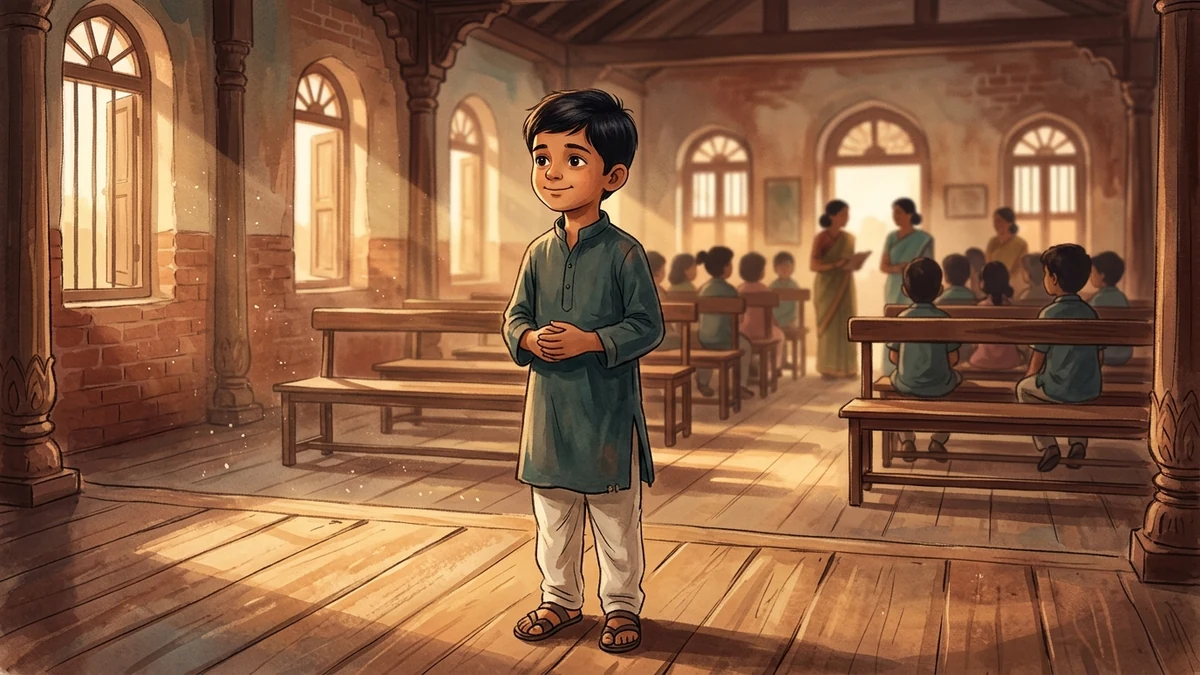
उस दिन गणित क्लब का माहौल बड़ा जोशीला था। राव मैडम के आते ही बच्चों की नज़रें श्यामपट्ट पर टिक गईं। मैडम ने बड़े अक्षरों में लिखा: 'एक आयत का परिमाप 20 सेंटीमीटर है। उसका क्षेत्रफल निकालो।' बस इतना ही। कोई अतिरिक्त जानकारी नहीं, कोई चित्र नहीं। आठवीं कक्षा के अर्जुन ने तीस सेकंड भी नहीं लगाए—उसने 20 को चार से भाग दिया, बोला 'हर भुजा 5 सेंटीमीटर की होगी, इसलिए क्षेत्रफल 25 वर्ग सेंटीमीटर!' और अपनी कॉपी बंद कर ली। उसे गर्व था कि वह सबसे पहले और 'बिना सोचे' उत्तर दे सका—जैसे होशियार बच्चों को देना चाहिए।
The mathematics club that afternoon buzzed with anticipation. The moment Ms. Rao walked in, every eye fastened on the board. She wrote in bold chalk: 'A rectangle has a perimeter of 20 centimetres. Find its area.' Nothing else — no diagram, no additional measurements. Eighth-grader Arjun did not even take thirty seconds. He divided 20 by four, declared 'Each side must be five centimetres, so the area is 25 square centimetres!' and snapped his notebook shut with the satisfied authority of someone who had solved the impossible. He was proud that he had answered first and effortlessly — the way clever students are supposed to.
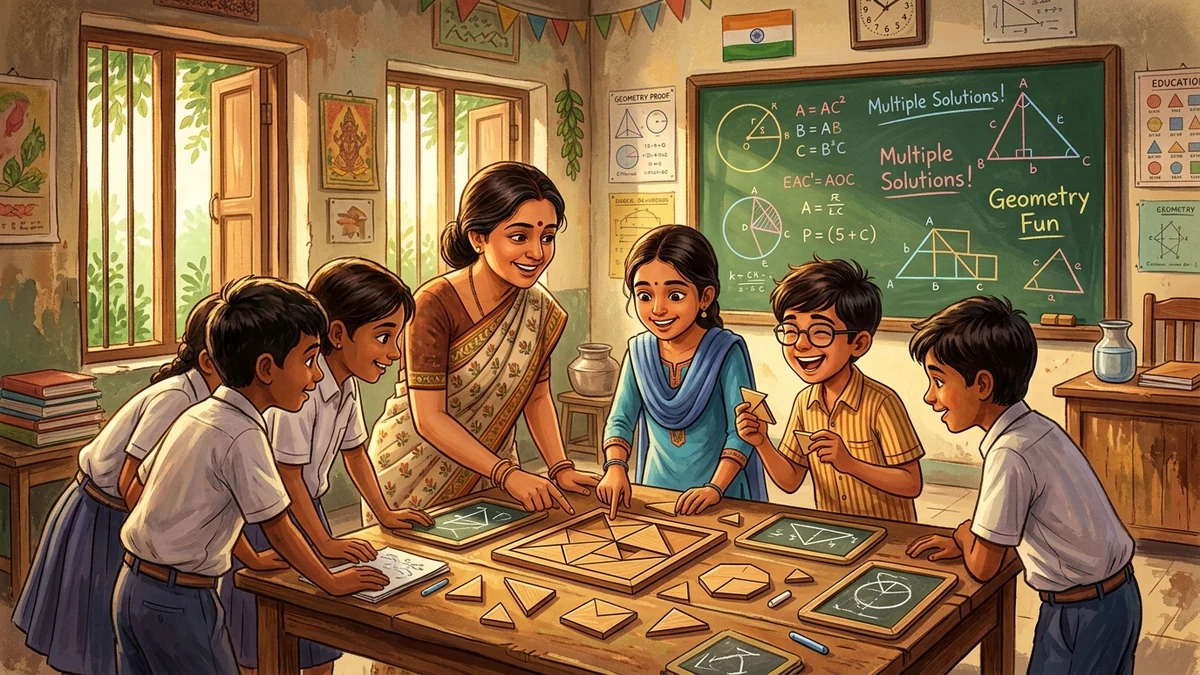
लेकिन लीला अभी भी सोच रही थी। उसने धीरे से हाथ उठाया और कहा, 'मैडम, अर्जुन का उत्तर एक वर्ग का क्षेत्रफल है, आयत का नहीं। प्रश्न में कहाँ लिखा है कि आयत एक वर्ग होगा?' पूरी कक्षा में एकदम चुप्पी छा गई। अर्जुन का चेहरा लाल हो गया। मैडम ने मुस्कुराते हुए कहा, 'बहुत अच्छा सवाल है लीला! तो अब सब लोग स्केल निकालो और देखो—क्या सच में केवल एक ही उत्तर संभव है?' बच्चे चार-चार के समूहों में बँट गए और एक रोचक खोज शुरू हुई। एक समूह ने 4 × 6 सेंटीमीटर का आयत बनाया—परिमाप 20, क्षेत्रफल 24। दूसरे समूह ने 3 × 7 बनाया—परिमाप फिर 20, पर क्षेत्रफल 21। तीसरे समूह ने 2 × 8 बनाया—परिमाप 20, क्षेत्रफल केवल 16!
But Leela was still thinking. She raised her hand quietly and said, 'Ms. Rao, Arjun's answer is the area of a square, not a rectangle. Where in the question does it say the rectangle must be a square?' A sudden silence dropped over the entire class. Arjun's face turned crimson. Ms. Rao smiled warmly. 'Excellent observation, Leela! Now, everyone take out your rulers and explore — is there truly only one answer?' The students split into groups of four and a delightful investigation began. One group drew a rectangle measuring 4 × 6 centimetres: perimeter 20, area 24. Another tried 3 × 7: perimeter still 20, yet area only 21. A third group drew 2 × 8: perimeter 20, area a mere 16 square centimetres!
श्यामपट्ट पर अब पाँच अलग-अलग आयतों के माप सजे हुए थे—सबका परिमाप 20, पर सबका क्षेत्रफल अलग। अर्जुन ने अपनी कॉपी फिर से खोली और ध्यान से देखा। उसकी गलती स्पष्ट थी—उसने मान लिया था कि लंबाई और चौड़ाई बराबर होगी, जबकि प्रश्न में ऐसा कुछ नहीं लिखा था। यह 'छुपी हुई मान्यता' थी, जो उसे गलत उत्तर की ओर ले गई। मैडम ने कहा, 'देखो बच्चो, यह एक बहुत बड़ा पाठ है। अर्जुन ने जल्दी उत्तर देने के लिए एक ऐसी बात को सच मान लिया जो प्रश्न में कही ही नहीं गई थी। इसे कहते हैं—अनुचित धारणा। असली बुद्धिमत्ता वह नहीं जो सबसे पहले उत्तर दे, बल्कि वह जो पहले सही प्रश्न पूछे।'
The board now displayed five different rectangles — all with a perimeter of 20 centimetres, yet each with a distinctly different area. Arjun reopened his notebook and studied the results. His error was glaring: he had quietly assumed that length and width must be equal, though the question had never said so. That hidden assumption had secretly steered him toward a wrong answer. Ms. Rao said, 'Do you see what happened, everyone? Arjun answered quickly by treating an unspoken assumption as a fact. This is called an unexamined premise. Real intelligence is not about answering first — it is about asking the right questions first.'
अर्जुन का दिल थोड़ा भारी था, पर वह समझ गया था। 'मैं समझ गया, मैडम,' उसने कहा, 'मुझे पहले पूछना चाहिए था—क्या यह ज़रूरी है कि दोनों भुजाएँ बराबर हों?' मैडम ने मुस्कुराकर कहा, 'बिल्कुल सही! और यह गलती करने में कोई शर्म नहीं—शर्म केवल तब होती जब हम गलती से कुछ नहीं सीखते।' पूरी कक्षा ने मिलकर बोर्ड पर एक 'जाँच-सूत्र' लिखा: 'क्या मुझे पता है? क्या मुझे नहीं पता? मैं क्या मानकर चल रहा हूँ?' मैडम ने समझाया कि यह सूत्र केवल गणित में नहीं, बल्कि ज़िंदगी के हर फैसले में काम आता है—खरीदारी करते समय, दोस्तों से झगड़ा सुलझाते समय, या किसी खबर पर भरोसा करते समय।
Arjun felt a little humbled, but a genuine understanding had taken root. 'I understand now, Ms. Rao,' he said. 'I should have asked first: does the question require both sides to be equal?' Ms. Rao nodded warmly. 'Precisely! And there is no shame in making this mistake — shame only comes from refusing to learn from it.' The whole class collaborated to write a 'Thinking Checklist' on the board: 'What do I know? What do I not know? What am I assuming?' Ms. Rao explained that this three-question formula works not just in mathematics, but in every real-life decision — while shopping, while resolving a fight with a friend, or while deciding whether to believe a piece of news.
इस खोज ने कक्षा में एक नई आदत की शुरुआत की। अगले कुछ हफ्तों में जब भी कोई बच्चा कोई समस्या लेकर आता, तो साथी पूछते—'पहले अपनी मान्यताएँ जाँचो!' यहाँ तक कि एक दिन जब दो दोस्त आपस में झगड़ पड़े कि 'पहले किसने माफी नहीं माँगी', तो लीला ने बीच में कहा—'रुको, तुम दोनों क्या-क्या मान रहे हो इस बारे में?' उस सवाल ने पूरा विवाद ही पलट दिया और दोनों ने पाया कि उनकी गलतफहमी असल में एक 'छुपी मान्यता' से शुरू हुई थी। गणित की एक पहेली ने उन्हें आपसी समझ का हथियार दे दिया था।
This discovery sparked a remarkable new habit in the classroom. In the weeks that followed, whenever a student rushed to a conclusion, classmates would call out: 'Check your assumptions first!' Even outside mathematics, the habit spread. One afternoon, two friends began arguing about who had first refused to apologise. Leela stepped in: 'Wait — what are each of you assuming about the other?' That single question completely shifted the argument, and both discovered that their quarrel had originated from an unexamined assumption. A maths puzzle had handed them a powerful tool for human understanding.
महीने के अंत में स्कूल की वार्षिक बुद्धि-परीक्षा में एक प्रश्न आया जिसमें जानबूझकर जानकारी अधूरी दी गई थी। जिस बच्चे ने 'अपर्याप्त जानकारी' लिखकर उत्तर दिया, उसे विशेष अंक मिले। वह बच्चा अर्जुन था। उसने बताया, 'मैडम, इस बार मैंने पहले अपनी जाँच-सूत्र वाली तीन बातें याद कीं—और समझा कि जब तक एक भुजा की माप न मिले, क्षेत्रफल का एकल उत्तर संभव ही नहीं है।' राव मैडम को उस दिन जितना गर्व हुआ, शायद उतना पहले कभी नहीं हुआ था। जल्दी में 'गलत सही उत्तर' देने वाला अर्जुन अब वह छात्र बन गया था जो 'सही सवाल' पूछने की हिम्मत रखता था।
At the end of the month, the school's annual intelligence quiz contained a question where information was deliberately incomplete. The student who correctly wrote 'Insufficient data — a unique answer cannot be determined' earned full bonus marks. That student was Arjun. He explained afterwards, 'Ms. Rao, this time I remembered my three-step thinking checklist — and I realised that without knowing one side's length, a single area is simply impossible.' Ms. Rao felt prouder in that moment than perhaps she had ever felt before. The boy who had once rushed to a convenient but wrong answer had transformed into a student with the courage to ask the right questions.
📚 Moral Vocabulary & Key Terms
Enrich your language and character with these inspiring words from the story:
A belief taken as true without evidence while solving a problem, which can silently steer thinking toward a wrong conclusion.
A structured set of questions used before tackling any problem to identify available information, missing data, and unverified assumptions.
Not the ability to answer fastest, but the capacity to ask the right questions and reason through evidence to a sound conclusion.
🧠 Ethical Reflection & Quiz
What have you learned from this story? Choose the most honorable choice below: