The Quietest Alarm
सबसे धीमी चेतावनी
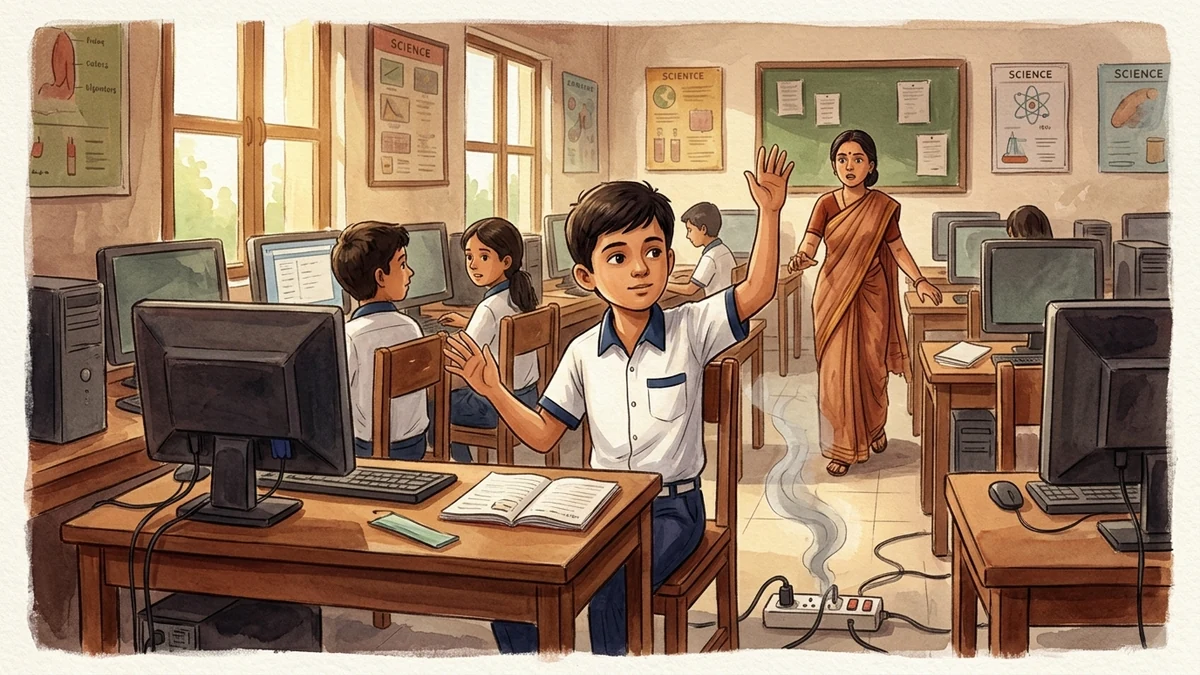
विद्यालय की विज्ञान प्रयोगशाला बच्चों की सबसे पसंदीदा जगह थी। वहाँ रंग-बिरंगी बोतलें, चमचमाते उपकरण और हर हफ्ते कोई न कोई रोचक प्रयोग होता था। सातवीं कक्षा के सीताराम को विज्ञान से बेहद लगाव था। वह हर शुक्रवार को प्रयोगशाला की सफाई में सर रंजीत की मदद करता था—यह उसका अपनी मर्ज़ी का काम था, किसी ने उसे कहा नहीं था। एक शुक्रवार जब वह बेंच पोंछ रहा था, तभी उसे एक बहुत ही हल्की, जली हुई प्लास्टिक जैसी बदबू आई। उसने इधर-उधर देखा, पर सब कुछ सामान्य लग रहा था। 'शायद कुछ नहीं,' उसने सोचा और काम जारी रखा। पर बदबू बनी रही।
The school science laboratory was every student's favourite room — colourful bottles, gleaming instruments, and a fascinating experiment every week. Seventh-grader Sitaram had a deep love for science. Every Friday, he voluntarily helped Mr. Ranjit with laboratory cleanup — nobody had asked him; it was purely his own choice. One particular Friday, as he was wiping down the benches, he caught a very faint smell — like burning plastic. He looked around, but everything appeared normal. 'Perhaps it is nothing,' he thought and continued. But the smell persisted.
सीताराम ने श्री रंजीत से बात की। 'सर, यहाँ कुछ जलने जैसी हल्की सी गंध आ रही है।' श्री रंजीत ने नाक सिकोड़ी, चारों ओर देखा और बोले, 'हाँ, थोड़ी सी आ रही है... शायद बाहर से है।' और वह काम पर लग गए। सीताराम मन में थोड़ा असंतुष्ट था — उसे लग रहा था कि यह बात कहीं और से नहीं, प्रयोगशाला के भीतर से आ रही है। उसने धीरे-धीरे हर कोने को देखा। एक पुरानी विद्युत तार की इंसुलेशन थोड़ी पिघली हुई दिख रही थी, और उसके पास एक बड़ा लकड़ी का रैक था जिसमें कागज़ की फाइलें रखी थीं। सीताराम ने तुरंत श्री रंजीत को बुलाया और उस तार की ओर इशारा किया।
Sitaram mentioned it to Mr. Ranjit. 'Sir, there is a faint smell of something burning.' Mr. Ranjit sniffed, glanced around, and replied, 'Yes, a little — probably drifting in from outside.' He returned to his work. Sitaram felt a quiet but persistent unease — his instinct told him the smell was coming from inside the lab, not from outside. He slowly examined every corner. Near the far wall, he noticed an old electrical wire whose insulation looked slightly melted, positioned right beside a large wooden rack filled with paper files. Sitaram immediately called Mr. Ranjit and pointed directly at the wire.
इस बार श्री रंजीत ने ध्यान से देखा। उनका चेहरा पल भर के लिए पीला पड़ गया। तार की इंसुलेशन जल रही थी — बहुत धीरे-धीरे, पर जल रही थी। अगर यह रात भर ऐसे रहता, और वहाँ रखी फाइलें पकड़ लेतीं, तो सुबह पूरी प्रयोगशाला आग की चपेट में होती। उन्होंने तुरंत बिजली का मुख्य स्विच बंद किया, बिजली विभाग को फोन किया और प्रधानाचार्य जी को सूचित किया। इलेक्ट्रीशियन अगले घंटे में आया और उसने पुष्टि की — तार बेहद खराब हालत में था और शॉर्ट सर्किट का पूरा खतरा था। श्री रंजीत ने सीताराम को देखा और कहा, 'बेटा, तूने आज एक बड़ा हादसा टाल दिया।'
This time Mr. Ranjit looked very carefully. His face paled momentarily. The wire\'s insulation was burning — very slowly, but burning nonetheless. Had it remained that way overnight, with those paper files right beside it, the entire laboratory would have been ablaze by morning. He immediately switched off the main power supply, called the electrical department, and informed the principal. The electrician arrived within an hour and confirmed it: the wire was in critical condition with a full risk of short circuit. Mr. Ranjit looked at Sitaram and said quietly, 'Child, you prevented a very serious accident today.'
अगले सोमवार को सभा में प्रधानाचार्य जी ने सीताराम को सामने बुलाया और सबको बताया कि उसकी सतर्कता ने स्कूल को एक बड़े खतरे से बचाया। बच्चों ने तालियाँ बजाईं। पर सीताराम को इससे भी ज़्यादा खुशी इस बात की थी कि किसी ने सुना — उसकी 'छोटी सी' बात को। एक शिक्षक ने कक्षा में कहा, 'जानते हो, यह सिर्फ बिजली का मामला नहीं था। यह एक सबक है — छोटे संकेत, जिन्हें हम नज़रअंदाज़ करते हैं, अक्सर सबसे बड़े खतरे की आहट होते हैं।'
The following Monday during assembly, the principal called Sitaram to the front and explained to the whole school how his vigilance had saved them from a serious danger. The students applauded warmly. But Sitaram felt even greater satisfaction from something simpler: someone had listened — to his seemingly small observation. A teacher told the class, 'Do you understand? This was not just about electricity. It is a lesson — the small signs we choose to dismiss are often the earliest warnings of the greatest dangers.'
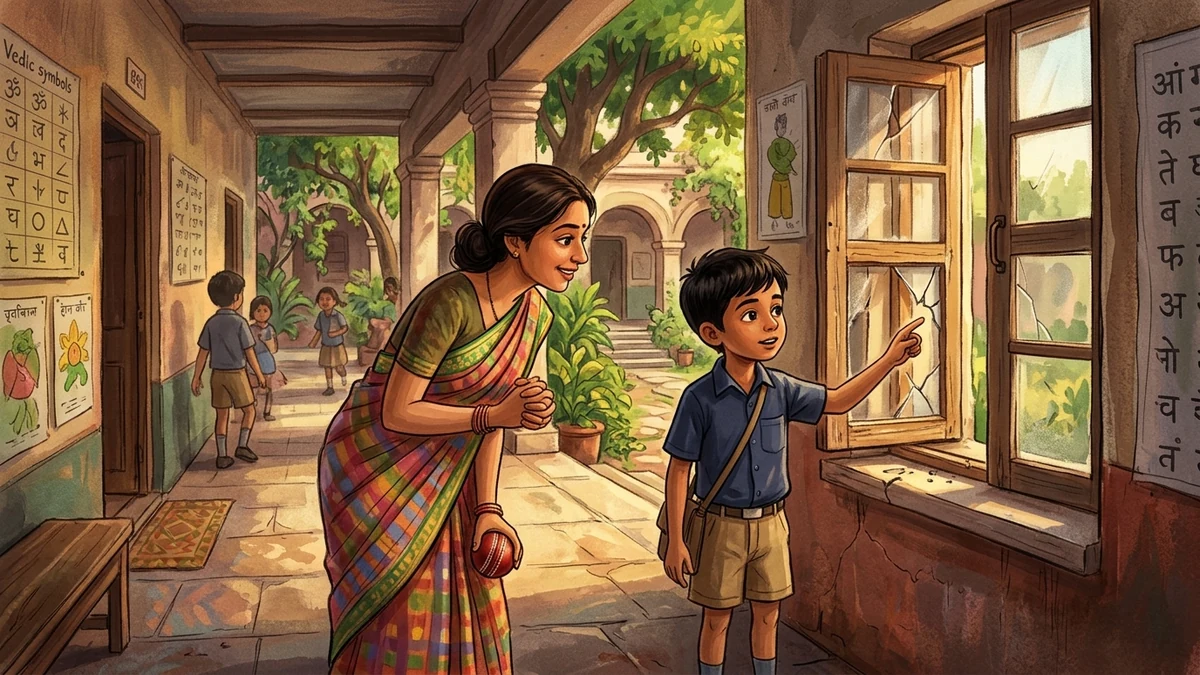
उस घटना के बाद स्कूल में एक नई प्रणाली शुरू हुई — 'सुरक्षा-संदेश बॉक्स', जहाँ कोई भी बच्चा या शिक्षक किसी भी छोटी सी संदिग्ध बात को गुमनाम रूप से लिख सकता था। पहले महीने में ही सात ऐसी सूचनाएँ मिलीं — एक टूटी हुई सीढ़ी, एक लीक करती छत, एक जर्जर खिड़की। इनमें से दो मामले तुरंत खतरनाक थे। सीताराम की एक छोटी सी सावधानी ने पूरे विद्यालय में 'बोलने की संस्कृति' जागृत कर दी थी — यह संस्कृति जो कहती है: 'अगर कुछ ठीक नहीं लग रहा, तो बताओ। चुप रहना समझदारी नहीं, ज़िम्मेदारी से भागना है।'
After that incident, the school introduced a new system — a 'Safety Notice Box' where any student or teacher could anonymously report any small suspicious observation. Within the very first month, seven reports came in: a cracked staircase step, a leaking ceiling panel, a dangerously rotting window frame. Two of these were immediately serious risks. Sitaram\'s single act of careful vigilance had awakened an entire school culture of speaking up — a culture that says: 'If something does not feel right, say so. Staying silent is not wisdom; it is an escape from responsibility.'
सीताराम को उस साल विद्यालय की ओर से 'सतर्क नागरिक पुरस्कार' दिया गया। पर उसने अपनी पुरस्कार-स्वीकृति में जो बात कही, वह सबसे यादगार थी: 'मैं यह नहीं जानता था कि वह तार कितना खतरनाक है। पर मैं यह ज़रूर जानता था कि कुछ ठीक नहीं है। और मैंने सोचा — अगर मैं गलत भी निकला, तो भी बताने में क्या नुकसान? पर अगर मैं सही निकला और नहीं बताया, तो नुकसान बहुत बड़ा होता।' यही उसका सबक था — सबसे धीमी चेतावनी भी हमेशा सुनने लायक होती है।
Sitaram received the school\'s 'Vigilant Citizen Award' that year. But the words he spoke in his acceptance speech were the most memorable part of all: 'I did not know how dangerous that wire was. But I did know something was not right. And I thought — even if I am wrong, what is the harm in saying so? But if I am right and I stay silent, the harm could be immense.' That was his lesson — the quietest warning is always worth listening to.
📚 Moral Vocabulary & Key Terms
Enrich your language and character with these inspiring words from the story:
The conscious ability to pay attention to one's surroundings and recognise warning signs before they become serious dangers.
A dangerous electrical fault where current takes an unintended path, creating serious risk of fire or damage.
An environment where every person fearlessly reports any problem or danger to the right authority, without hesitation.
🧠 Ethical Reflection & Quiz
What have you learned from this story? Choose the most honorable choice below: