The Storyteller’s Two Endings
कहानी के दो अंत
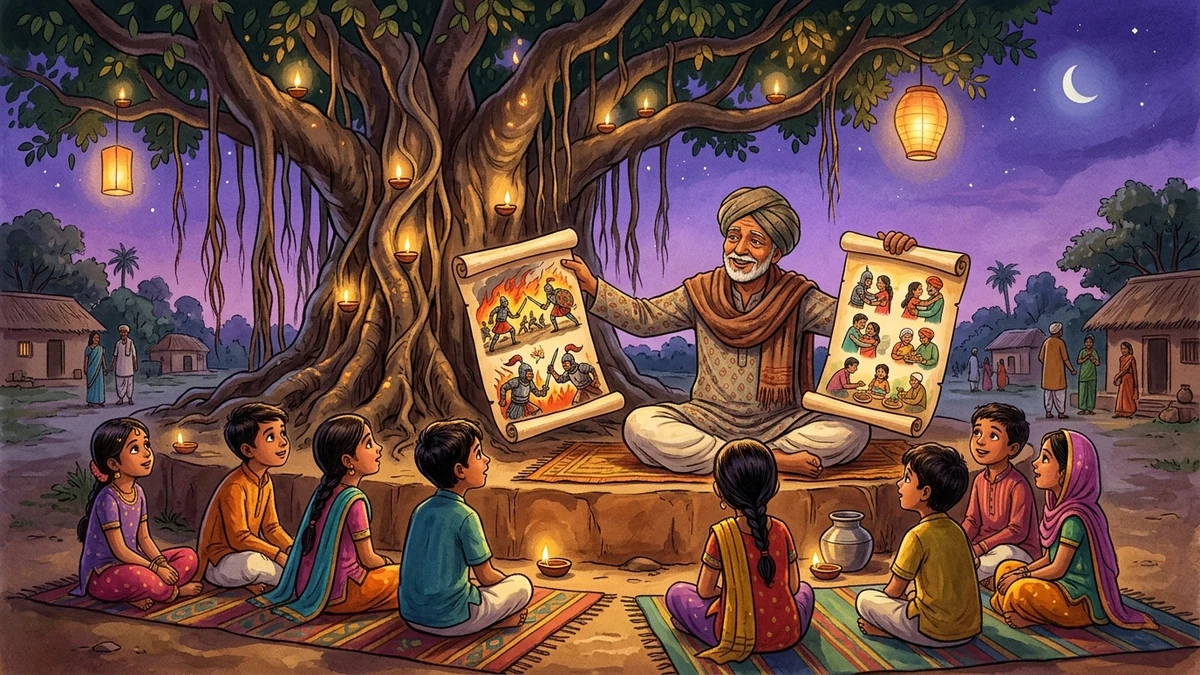
हर शनिवार शाम को नूर गली के वाचन-कक्ष में सामुदायिक पठन-क्लब की बैठक होती थी। बुज़ुर्ग, जवान, बच्चे — सब आते थे। और सबकी सबसे पसंदीदा बात थी — सना की कहानियाँ। सना एक असाधारण कथावाचक थी, जो हर कहानी में एक ऐसा सवाल छिपा देती थी जो घर तक साथ चला आए। उस शनिवार उसने कहा, 'आज मैं एक ही कहानी के दो अंत सुनाऊँगी। पहले अंत के बाद आप बताइए — क्या हुआ और क्यों गलत हुआ। दूसरे अंत के बाद बताइए — क्या बदला।' श्रोता उत्सुक हो गए।
Every Saturday evening, the community reading club gathered in the Noor Lane reading room — elders, young people, and children all together. And everyone\'s favourite part was always Sana\'s stories. Sana was a remarkable storyteller who hid a question inside every tale that followed you home. That Saturday she said, \'Today I will tell the same story with two different endings. After the first ending, tell me — what happened and why it went wrong. After the second — tell me what changed.\' The audience leaned forward.
कहानी शुरू हुई: सातवीं कक्षा के रोहन और मीरा को स्कूल की विज्ञान प्रदर्शनी के लिए एक बड़ा पोस्टर तैयार करना था। मीरा ने पेंट और चित्र बनाए थे, रोहन ने जानकारी लिखी थी। प्रदर्शनी से एक दिन पहले रोहन ने देखा — मीरा पोस्टर मोड़ रही थी। उसके मन में आया, 'वह काम छोड़ना चाहती है!' मीरा ने देखा — रोहन पोस्टर उठा रहा है। उसके मन में आया, 'वह मेरा श्रेय लेना चाहता है!' दोनों की आवाज़ें ऊँची हो गईं। किसी ने एक सवाल नहीं पूछा।
The story began: Seventh-graders Rohan and Mira had to prepare a large poster for the school science exhibition. Mira had done the painting and illustrations; Rohan had written all the information. The day before the exhibition, Rohan saw Mira folding the poster. His mind jumped: \'She is refusing to finish the work!\' Mira saw Rohan picking up the poster. Her mind jumped: \'He wants to take credit for my work!\' Both voices grew loud and sharp. Neither one asked a single question.
पहला अंत: दोनों ने बिना पूछे अनुमान सच मान लिए। रोहन ने गुस्से में खुद एक नया पोस्टर बनाना शुरू किया — रात भर जागकर। मीरा ने मदद करना बंद कर दिया। अगली सुबह रोहन का पोस्टर अधूरा और बदरंग था। मीरा का पोस्टर जिसे उसने मोड़ा था — वह असल में प्रिंटर के कालिख के दाग से खराब हो गया था जिसे वह ठीक कर रही थी। प्रदर्शनी में उनकी टीम को भाग लेने का मौका ही नहीं मिला। सना ने पूछा, 'क्या गलत हुआ?' श्रोताओं ने जवाब दिया — 'दोनों ने बिना पूछे अनुमान लगाया।'
First ending: Both treated their assumptions as facts without asking. Rohan angrily began making a new poster — staying up all night. Mira stopped helping entirely. The next morning Rohan\'s poster was unfinished and dull. Mira\'s original poster — the one she had been carefully folding — had actually been damaged by a printer ink smudge that she was in the process of repairing. Their team missed the exhibition deadline completely. Sana asked, \'What went wrong?\' The listeners answered together: \'Both of them assumed without asking.\'
दूसरा अंत: रोहन ने एक पल रुककर पूछा, 'मीरा, पोस्टर मोड़ क्यों रही हो?' मीरा ने बताया, 'प्रिंटर से कालिख का दाग पड़ गया है — मैं उसे ठीक कर रही हूँ।' रोहन ने माना, 'मुझे पहले पूछना था, बिना पूछे तुम्हारा पोस्टर उठा लिया — यह ग़लत था।' मीरा ने भी कहा, 'मैं भी बता देती कि मैं क्या कर रही हूँ — यह ज़रूरी था।' दाग अभी भी था — पर दोनों ने मिलकर उसे सुधारा, काम बाँटा और पोस्टर समय पर तैयार किया। सना ने पूछा, 'क्या बदला?' एक बच्चे ने कहा, 'दोनों ने पूछा — और सुना।'
Second ending: Rohan paused and asked, \'Mira, why are you folding the poster?\' Mira explained, \'The printer left an ink smudge across the heading — I am trying to repair it.\' Rohan said, \'I should have asked before picking it up. That was wrong of me.\' Mira acknowledged, \'I should have told you what I was doing — that was necessary.\' The smudge was still there — but both worked together to repair it, divided the remaining tasks, and finished the poster on time. Sana asked, \'What changed?\' A child in the audience said, \'Both of them asked — and both of them listened.\'
सना ने फिर एक गहरा सवाल पूछा, 'दूसरे अंत में रोहन और मीरा ने एक-दूसरे के कारण समझ लिए — तो क्या इससे उनका पहला व्यवहार सही हो गया?' कमरे में चुप्पी आई। फिर एक बुज़ुर्ग ने धीरे से कहा, 'नहीं। कारण समझना माफी देने में मदद करता है — पर असर को नकार नहीं सकता। रोहन को बिना पूछे पोस्टर नहीं उठाना था। मीरा को अपना काम बताना था। दोनों ने गलती की — और दोनों ने ज़िम्मेदारी ली।' सना ने मुस्कुराया, 'यही असली न्याय है।'
Sana then asked a deeper question: \'In the second ending, Rohan and Mira understood each other\'s reasons — so does that mean their earlier actions were acceptable?\' A silence settled. Then an elder said quietly, \'No. Understanding the reason helps us forgive — but it cannot erase the impact. Rohan should not have picked up the poster without asking. Mira should have communicated what she was doing. Both made mistakes — and both took responsibility.\' Sana smiled, \'That is what real justice looks like.\'
उस शाम घर जाते हुए क्लब के हर सदस्य ने एक बात अपने साथ ले जाई: जब भी किसी के व्यवहार से मन में सवाल उठे — पहले पूछो। अनुमान दिमाग की सुविधा है, सवाल इंसान की समझदारी। और जब नुकसान हो जाए — चाहे नीयत कुछ भी हो — तो उसे स्वीकार करना और मिलकर ठीक करना ही रिश्तों की असली देखभाल है। सना की दो-अंत वाली कहानी ने उन्हें यह सिखाया कि हम हर पल दो रास्तों पर खड़े होते हैं — और वह पल हमारा होता है।
Walking home that evening, every member of the reading club carried one thought with them: whenever someone\'s behaviour raises a question in your mind — ask first. Assumptions are the mind\'s shortcut; questions are a person\'s wisdom. And when harm occurs — whatever the intention — accepting it and working together to repair it is the truest form of caring for a relationship. Sana\'s two-endings story had taught them that we stand at a crossroads in every single moment — and that moment belongs to us.
📚 Moral Vocabulary & Key Terms
Enrich your language and character with these inspiring words from the story:
The thought or purpose behind an action, known only to the person who performed it — not always visible from outside.
The effect or consequence of an action on others — regardless of the original intention behind it.
A situation where two people interpret each other's words or behaviour differently from the actual meaning — usually because they did not ask.
🧠 Ethical Reflection & Quiz
What have you learned from this story? Choose the most honorable choice below: