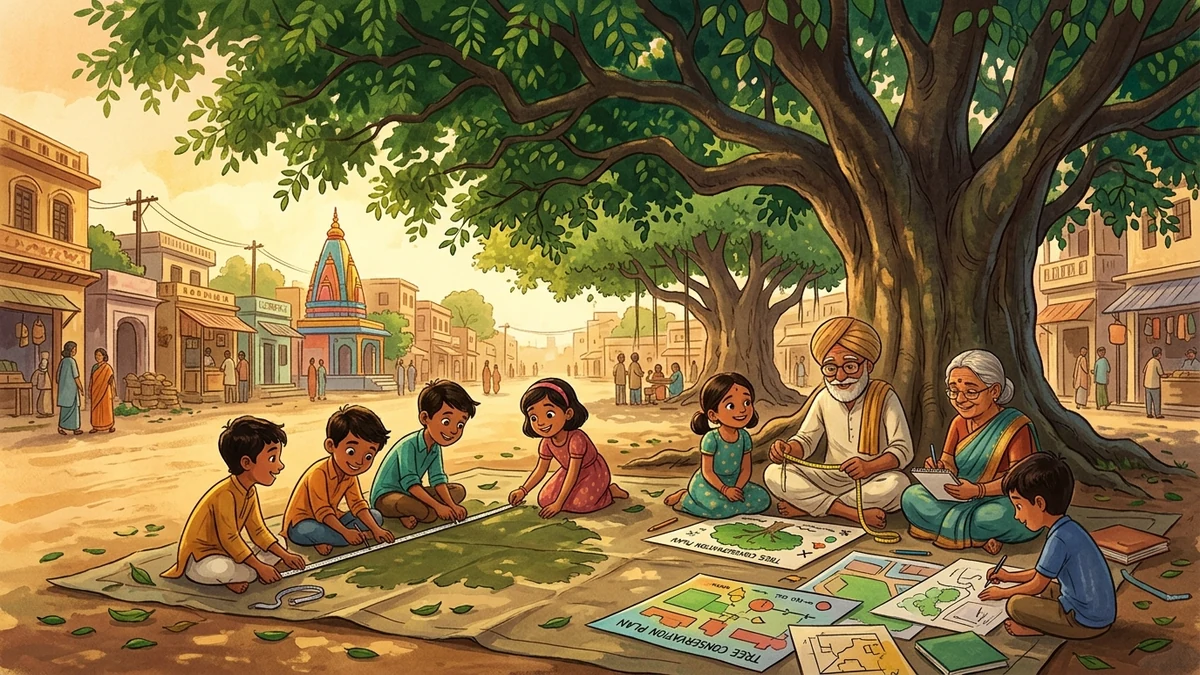
The Town That Counted Its Shade
छाँव गिनने वाला शहर
मई की एक तीखी दोपहर, मीरा बस स्टॉप पर खड़ी थी। सूरज इतनी तेज़ चमक रहा था कि फुटपाथ की पत्थर जलती हुई महसूस हो रही थी। उसने देखा कि पास में एक बुज़ुर्ग महिला छाँव की तलाश में दुकान की दीवार से सटकर खड़ी हो गई थीं। बस स्टॉप से पुस्तकालय तक का पूरा रास्ता खुली धूप में था — एक भी पेड़ नहीं, एक भी छत नहीं। मीरा के मन में एक सवाल आया: क्या हमारा मोहल्ला सच में इतना गर्म है, या हम बस इसकी आदत हो गई हैं?
On a sharp May afternoon, Meera stood at the bus stop with the sun blazing so fiercely that the pavement stones felt hot through her sandals. She noticed an elderly woman pressing herself against a shop wall to find a sliver of shade. The entire stretch from the bus stop to the library was open sunlight — not a single tree, not a single awning. A question formed in Meera's mind: Was their neighbourhood truly this hot, or had everyone simply grown used to it?
घर पहुँचकर मीरा ने अपनी पड़ोसन दीपा दीदी से बात की, जो बागवानी की शौकीन थीं। दीपा दीदी ने बताया कि पेड़ लगाना सुनने में आसान लगता है, पर हर जगह हर पेड़ नहीं लग सकता। बिजली की तारों के नीचे ऊँचे पेड़ खतरनाक होते हैं। संकरी गली में फैली जड़ें सड़क तोड़ देती हैं। पानी की पाइप के ऊपर कुछ पेड़ उगाना मुश्किल होता है। "पहले देखो कि छाँव है कहाँ और कहाँ नहीं, फिर सोचो कि क्या किया जा सकता है," दीपा दीदी ने कहा। यह सुनकर मीरा को लगा कि समस्या को समझना ही असली पहला कदम है।
Back home, Meera spoke with her neighbour Deepa Didi, who loved gardening. Deepa Didi explained that planting trees sounded simple but wasn't so straightforward. Tall trees under power lines could be dangerous. Wide-spreading roots in narrow lanes could crack roads. Some spots near water pipes made planting impossible. "First look at where shade exists and where it doesn't, then think about what can actually be done," Deepa Didi advised. Hearing this, Meera realised that properly understanding the problem was the real first step.
मोहल्ला समिति की अनुमति मिलने के बाद मीरा और दीपा दीदी ने मिलकर एक सरल नक्शा बनाया। उन्होंने गर्म रास्तों को लाल रंग से, छायादार जगहों को हरे रंग से, और ऐसी जगहों को नीले रंग से चिह्नित किया जहाँ नया पेड़ लग सकता था। उन्होंने ध्यान रखा कि स्कूल जाने वाले बच्चों का रास्ता, बुज़ुर्गों की बेंच और बस स्टॉप — सब इसमें शामिल हों। नक्शा बनाते समय उन्हें पता चला कि मोहल्ले में पहले से पाँच पुराने पेड़ थे, जिनकी ठीक से देखभाल नहीं हो रही थी और जो धीरे-धीरे कमज़ोर पड़ रहे थे।
With permission from the community group, Meera and Deepa Didi created a simple map together. They marked hot paths in red, shaded areas in green, and spots where a new tree could realistically be planted in blue. They made sure the map included children's school routes, elderly residents' benches, and the bus stop. While drawing the map, they discovered something important: the neighbourhood already had five old trees that were being neglected and slowly weakening, starved of care.
नक्शा देखकर समिति के बड़े सदस्यों ने पहला काम यह तय किया कि जो पेड़ पहले से हैं, उन्हें बचाया जाए। उनकी जड़ों के आसपास की कठोर मिट्टी को नरम किया गया। सूखी टहनियाँ काटी गईं। एक पेड़ के पास जो टूटी ईंट की बाड़ थी, वह हटाई गई ताकि बारिश का पानी जड़ों तक पहुँच सके। इसके बाद नए पेड़ों के लिए तीन ऐसी जगहें चुनी गईं जहाँ धूप, मिट्टी और जगह तीनों सही थे — और जो गर्म रास्तों पर पड़ती थीं। हर फ़ैसला मिलकर हुआ, बिना जल्दबाज़ी के।
Looking at the map, the community's senior members decided that the first task was to save the trees that already existed. The compacted soil around their roots was loosened. Dead branches were carefully trimmed. A broken brick barrier near one tree was removed so that rainwater could actually reach the roots. After that, three new planting spots were chosen — places where sunlight, soil quality, and space all worked together, and where they fell on the hottest stretches of the path. Every decision was made together, without rushing.
नए पेड़ लगाने के दिन मोहल्ले के कई बच्चे आए। कुछ ने गड्ढे खोदे, कुछ ने पानी डाला, और कुछ ने छोटे पौधों को धीरे-धीरे मिट्टी में रोपा। दीपा दीदी ने हर बच्चे को बताया कि यह पेड़ तुरंत छाँव नहीं देगा — इसमें दो से तीन साल लगेंगे। "पर जब तुम बड़े होगे, तब यह पेड़ भी बड़ा होगा," उन्होंने कहा। एक बच्चे ने पूछा, "तो क्या हम इसे नाम दे सकते हैं?" सबने हँसकर हाँ कहा, और हर पेड़ को उस गली का नाम मिला जहाँ वो लगा था।
On the planting day, many children from the neighbourhood came along. Some dug the holes, some poured water, and some carefully placed the young saplings into the earth. Deepa Didi told each child honestly that the tree would not give shade right away — it would take two or three years. "But when you grow bigger, this tree will grow bigger too," she said. One child asked, "Can we give them names?" Everyone laughed and agreed, and each tree was named after the lane where it was planted.
जब नया नक्शा मोहल्ले के सूचना-पट्ट पर लगाया गया, तो लोग रुककर उसे देखते और आपस में बात करते। अब सबको समझ आया था कि पर्यावरण की देखभाल केवल अधिक-से-अधिक पेड़ लगाने से नहीं होती — वह शुरू होती है ध्यान से देखने से, सही सवाल पूछने से, और हर किसी की ज़रूरत को ध्यान में रखकर मिलकर काम करने से। मीरा को याद आया वह बुज़ुर्ग महिला जो दुकान की दीवार से सटकर खड़ी थीं। उसने मन में सोचा, "उनके लिए भी एक दिन यहाँ छाँव होगी।"
When the updated map was placed on the community noticeboard, people stopped to look at it and talk to one another. Now everyone understood that caring for the environment wasn't simply about planting as many trees as possible — it began with careful observation, asking the right questions, and working together with everyone's needs in mind. Meera thought back to the elderly woman pressing herself against the shop wall. She quietly thought, "One day there will be shade here for her too."
📚 Moral Vocabulary & Key Terms
Enrich your language and character with these inspiring words from the story:
Representing information about a place in an organised visual map
Decisions made collectively to improve a shared space for everyone
Responsible care for the natural environment and the spaces we share
🧠 Ethical Reflection & Quiz
What have you learned from this story? Choose the most honorable choice below: