The Weaver’s Pattern
बुनकर की अलग-अलग बुनावट
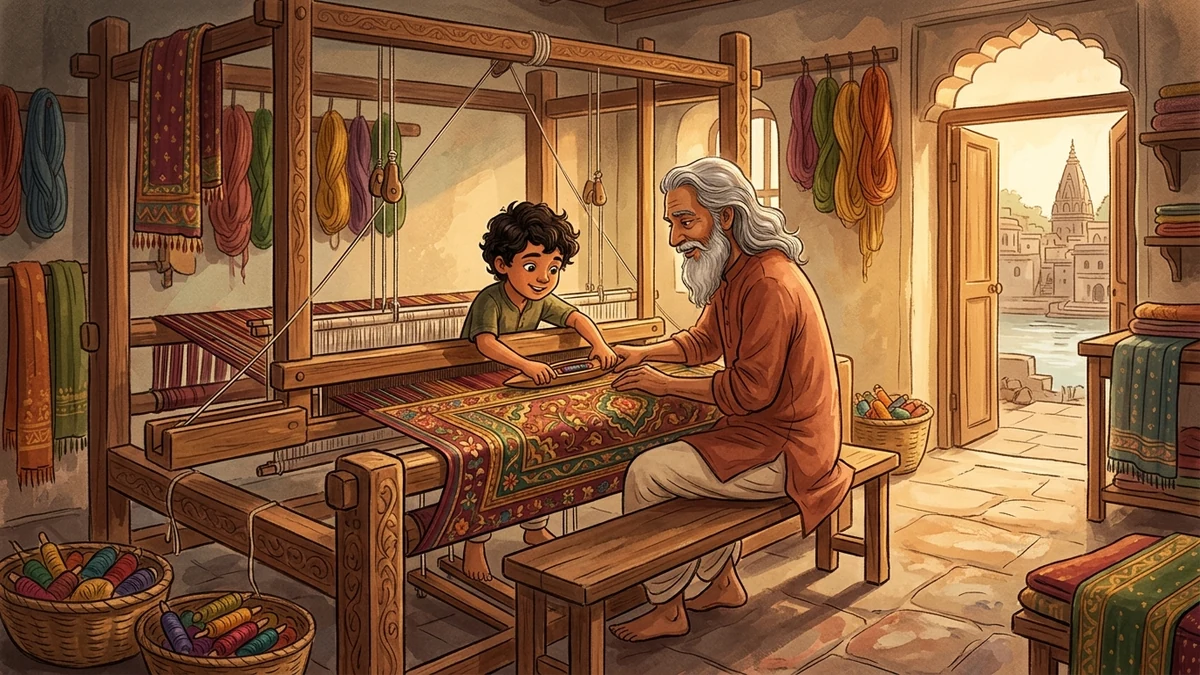
नूर गली के पुराने मकान को नए रूप में बदला जा रहा था — यह मोहल्ले का पहला सामुदायिक वाचन-कक्ष बनने वाला था। दीवारें रंगी जा चुकी थीं, अलमारियाँ किताबों से सजाई जा रही थीं, और उद्घाटन की तारीख तय हो चुकी थी। पर प्रवेश-द्वार अभी भी खाली था। मोहल्ले की बुनकर-समिति ने तय किया कि वहाँ एक विशाल हाथ से बुना कपड़ा लगाया जाएगा — समुदाय के प्रेम और परिश्रम का प्रतीक। समिति में तीन बुनकर थे: आशा, जो हीरे की आकृतियाँ बुनती थी; करीम, जिसे चौड़ी रंगीन धारियाँ पसंद थीं; और लीला, जो अपने कपड़े में पत्ते और पक्षी बुनती थी। तीनों उस्ताद थे — पर तीनों की भाषा अलग थी।
The old house on Noor Lane was being transformed — it was about to become the neighbourhood\'s first community reading room. The walls had been freshly painted, shelves were filling with donated books, and an opening date had been set. But the entrance archway still stood bare. The weavers\' committee decided to hang a large, hand-woven cloth there — a symbol of the community\'s love and collective effort. The committee had three weavers: Asha, who wove intricate diamond patterns; Karim, who favoured bold, wide-striped designs; and Leela, who wove leaves and birds into her panels. All three were masters — but each spoke a different artistic language.
पहली बैठक में उत्साह था, पर धीरे-धीरे बात बिगड़ने लगी। करीम ने सुझाया, 'सब एक जैसी धारियाँ बनाएं — सरल और साफ दिखेगा।' आशा ने कहा, 'पर धारियों में नज़ाकत कहाँ? सब हीरे बनाएं।' लीला चुप बैठी रही — उसके पक्षियों के लिए कोई जगह नहीं थी। जब तीनों ने एक 'समझौते' का नमूना बुना — हर कोने में थोड़ा-थोड़ा सबकुछ — तो नतीजा बेरंग और बेमेल था। कपड़ा देखकर कोई समझ नहीं पाता था कि यह क्या कहना चाहता है। करीम ने थक कर कहा, 'शायद हम एक साथ काम नहीं कर सकते।' उस दिन बैठक बिना किसी नतीजे के खत्म हो गई।
The first meeting started with enthusiasm but slowly turned tense. Karim suggested, 'Let\'s all weave matching stripes — clean and clear.' Asha countered, 'But where is the delicacy in stripes? Everyone should weave diamonds.' Leela sat quietly — there was no space for her birds in either proposal. When all three tried weaving a compromise sample — a little of everything crammed into each corner — the result was chaotic and lifeless. No one could tell what the cloth was trying to say. Karim said in frustration, 'Perhaps we simply cannot work together.' That day the meeting ended with no resolution.
अगले दिन बुजुर्ग बुनकर देव आए — उनकी उम्र सत्तर से ऊपर थी और उन्होंने चालीस साल तक कई समुदायों के लिए काम किया था। उन्होंने तीनों का नमूना देखा, फिर कहा, 'समस्या यह है कि तुम एक जैसा बनाने की कोशिश कर रहे हो। पर असली सवाल यह है — तुम एक साथ क्या बनाना चाहते हो?' उन्होंने एक नया विचार रखा: हर बुनकर अपना-अपना हिस्सा बुनेगा — अपने तरीके से, अपने डिज़ाइन में। बस सबके हिस्सों के किनारे एक जैसे तीन रंगों में होंगे — जो सबके डिज़ाइनों में पहले से मौजूद थे। यह किनारा उन्हें जोड़ेगा, उनकी पहचान मिटाए बिना।
The next day, elder weaver Dev arrived — past seventy, with four decades of working with communities behind him. He examined their sample cloth quietly, then said, 'The problem is that you are trying to make everything the same. But the real question is — what do you want to make together?' He proposed a new approach: each weaver would work on their own panel — in their own way, with their own design — but the borders of every panel would share three common colours already present in all three patterns. This shared border would connect them without erasing any individual voice.
तीनों ने एक-दूसरे की बात सुनी — शायद पहली बार सच में। आशा ने बताया कि उसके हीरे उसकी दादी की पुरानी तकनीक थे। करीम ने कहा कि धारियाँ उसके गाँव के त्योहारी कपड़े की याद दिलाती हैं। लीला की आवाज़ काँपी — 'मेरे पक्षी मेरी माँ के थे। वो कहती थीं, पक्षी स्वतंत्रता का प्रतीक हैं।' उस पल कमरे में एक अजीब सी गर्मजोशी आई। तीनों ने जाना — हर डिज़ाइन के पीछे एक कहानी थी। अब साझा किनारे के रंग चुने गए — केसरी, हरा और सफेद — जो तीनों के कपड़ों में पहले से थे। काम शुरू हुआ।
For what felt like the first time, all three genuinely listened to each other. Asha explained that her diamond pattern was her grandmother\'s technique, passed down through generations. Karim said his stripes reminded him of the festival cloth from his home village. Leela\'s voice trembled slightly: 'My birds were my mother\'s. She always said birds represent freedom.' A quiet warmth spread through the room in that moment. Each of them understood — behind every design was a story. They then chose three shared border colours — saffron, green, and white — already present in all three patterns. Work began.
बुनाई के दिनों में कुछ किनारे ठीक से नहीं मिले। कुछ माप गलत निकले। तीनों ने धैर्य से एक-दूसरे की मदद की — करीम ने आशा के किनारे का माप लिया, लीला ने करीम के रंग का धागा खोजने में मदद की। उद्घाटन के दिन जब कपड़ा प्रवेश-द्वार पर टाँगा गया, तो सब देखते रह गए। हीरे, धारियाँ और पक्षी — तीनों अलग और साफ दिख रहे थे, पर केसरी-हरे-सफेद किनारे उन्हें एक कपड़े की तरह जोड़ रहे थे। एक बच्ची ने उँगली उठाकर पूछा, 'यह एक आदमी ने बनाया?' देव ने मुस्कुराकर जवाब दिया, 'नहीं — यह तीन आदमियों ने मिलकर बनाया। और इसीलिए यह इतना खूबसूरत है।'
During the weaving days, some borders did not align perfectly. Some measurements were slightly off. All three helped each other patiently — Karim measured Asha\'s border, Leela helped Karim find a matching thread colour. On opening day, when the cloth was hung across the entrance archway, the entire gathering fell silent for a moment. Diamonds, stripes, and birds — each distinctly visible, each unmistakably themselves — yet the saffron-green-white borders wove them into a single unified cloth. A little girl pointed and asked, 'Did one person make this?' Dev smiled and answered, 'No — three people made it together. And that is exactly why it is so beautiful.'
उद्घाटन के बाद वाचन-कक्ष की पहली दीवार पर वह कपड़ा टाँगा गया। उसके नीचे एक छोटी पट्टिका लगी थी जिस पर लिखा था — 'आशा की आकृतियाँ, करीम की धारियाँ, लीला के पक्षी। तीन कहानियाँ, एक कपड़ा।' उस दिन मोहल्ले ने जाना कि असली सहयोग वह नहीं जिसमें सब एक जैसे हो जाएँ। असली सहयोग वह है जिसमें हर कोई अपनी आवाज़ के साथ एक साझा धुन बनाए। और देव ने सबसे आखिर में जो कहा, वह सबसे गहरा था: 'दुनिया की सबसे खूबसूरत बुनावटें हमेशा अलग-अलग धागों से बनती हैं।'
After the opening ceremony, the cloth was hung on the reading room\'s main interior wall. Below it, a small plaque read: 'Asha\'s diamonds. Karim\'s stripes. Leela\'s birds. Three stories, one cloth.' That day, the neighbourhood understood that real collaboration is not about everyone becoming the same. Real collaboration is every voice contributing its own note to a shared melody. And what Dev said last was the most profound of all: 'The world\'s most beautiful weavings are always made from the most different threads.'
📚 Moral Vocabulary & Key Terms
Enrich your language and character with these inspiring words from the story:
People with different talents and ideas working together toward a shared goal — with each person's identity and contribution honoured.
The presence of different backgrounds, approaches, ideas, and talents within a group, which enriches collective work and outcomes.
The element or value shared by different people that can unite them despite their differences, forming a bridge between diverse views.
🧠 Ethical Reflection & Quiz
What have you learned from this story? Choose the most honorable choice below: