
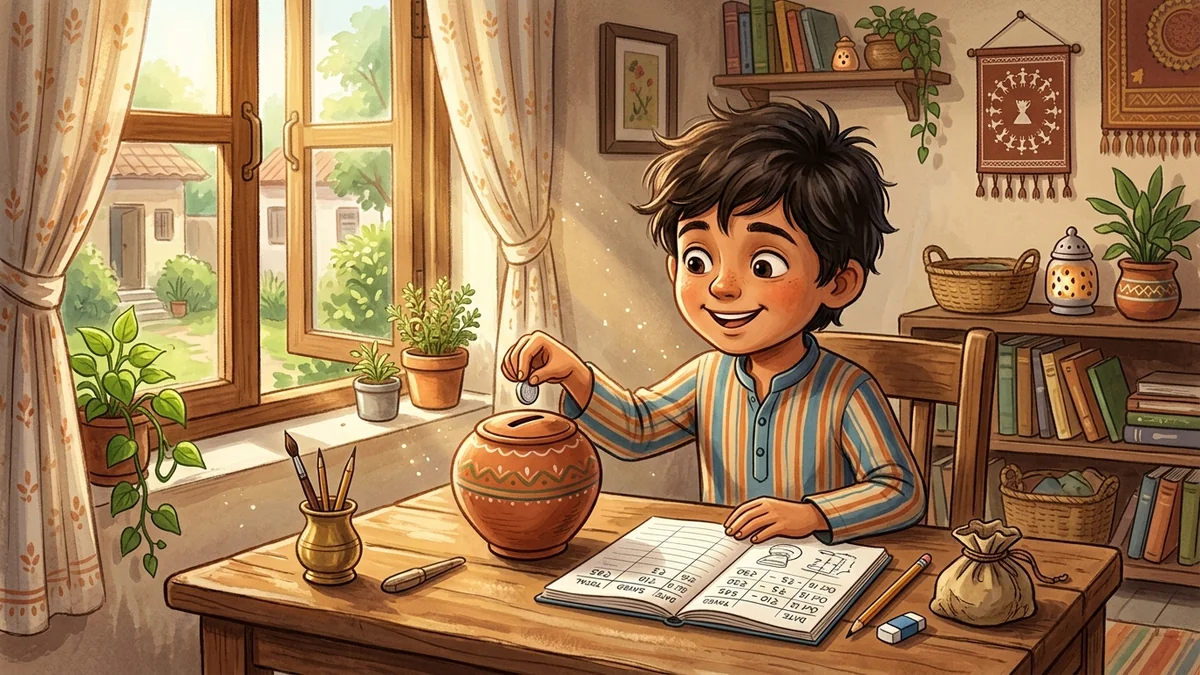
पॉकेट मनी का सदुपयोग
The Pocket-Money Plan
अहमदाबाद के बोपल क्षेत्र के एक भव्य पेंटहाउस में रहने वाली चौदह वर्षीय छात्रा तान्या एक संपन्न परिवार की इकलौती लाडली थी। उसके माता-पिता दोनों बहुराष्ट्रीय वित्तीय कंपनियों में उच्च पदों पर कार्यरत थे। तान्या को हर महीने की पहली तारीख को उसके व्यक्तिगत बैंक खाते में तीन हजार रुपये का उदार जेबखर्च (पॉकेट मनी) मिलता था। चौदह वर्ष की आयु में तीन हजार रुपये एक बहुत बड़ी रकम थी, परंतु तान्या के पास धन के मूल्य और प्राथमिकताओं की कोई समझ नहीं थी। वह उपभोक्तावादी संस्कृति और विज्ञापनों के नशे में पूरी तरह अंधी हो चुकी थी।
Residing within a penthouse duplex in the affluent Bopal sector of Ahmedabad, fourteen-year-old Tanya lived as the cherished only daughter of corporate finance executives. On the first morning of every month, an automated allowance of three thousand rupees was transferred into her digital student account. For an adolescent, three thousand rupees was a substantial sum; yet Tanya possessed zero comprehension of financial stewardship or economic reality. Trapped within the intoxicating algorithmic dopamine loops of fast-fashion portals and food delivery applications, she viewed money as infinite digital tokens meant for immediate consumption.
महीने की पहली तारीख को पैसा आते ही तान्या पर खरीदारी का भूत सवार हो जाता था। वह ऑनलाइन डिलीवरी ऐप्स से महंगे पिज्जा, चॉकलेट शेक और बर्गर मंगाती; इंस्टाग्राम पर दिखने वाले सस्ते प्लास्टिक के ट्रेंडी गहने और मोबाइल कवर्स के दर्जनों ऑर्डर कर देती। परिणाम यह होता कि पांच तारीख की शाम तक उसका पूरा खाता खाली हो जाता था और शेष पच्चीस दिनों तक वह एक-एक रुपये के लिए तरसती थी। जब कोई जरूरी किताब या स्कूल प्रोजेक्ट की सामग्री लानी होती, तो वह अपनी माताजी के सामने रोती, पैर पटकती और अतिरिक्त पैसों के लिए झगड़ा करती थी। घर में हर महीने अशांति का माहौल बन जाता था।
The moment the credit alert chimed, a frenzy of reckless spending consumed her. Ordering artisanal pizzas, bubble teas, and gourmet burgers via quick-commerce apps, she splurged on cheap plastic jewelry, trendy phone cases, and digital gaming cosmetics. By the evening of the fifth day, her ledger balance invariably flatlined at zero. For the remaining twenty-five days of the month, she lived in perpetual frustration and broke anxiety. When an essential school atlas or stationery supplies were required, she threw petulant tantrums, accusing her parents of miserliness and demanding emergency allowances. Financial chaos poisoned the domestic harmony every month.
सर्दियों की छुट्टियों में उसकी नानीजी, जो सौराष्ट्र के एक गाँव से आई थीं और जिन्होंने स्वतंत्रता के बाद के कठिन कालखंड में सूखी रोटियाँ खाकर अपने बच्चों को डॉक्टर और इंजीनियर बनाया था, ने तान्या की इस फिजूलखर्ची को बड़ी सूक्ष्मता से देखा। एक शाम उन्होंने तान्या को अपनी गोदी में बैठाया। नानीजी ने अपने पुराने बक्से से शीशम की लकड़ी का एक अत्यंत सुंदर, हस्तनिर्मित तीन खानों वाला गुल्लक निकाला। उसके तीनों खानों पर पीतल की छोटी-छोटी पट्टियों पर तीन शब्द खुदे हुए थे—'आवश्यकता' (Need - 50%), 'सपना' (Dream - 30%), और 'सेवा' (Give - 20%)।
During the winter break, her maternal grandmother—a formidable matriarch from rural Saurashtra who had endured severe economic recessions, raising three university scholars on frugal agricultural savings—observed Tanya’s behavioral pathology. One evening, summoning the girl to her cane chair, the grandmother opened a vintage tin trunk, retrieving an exquisite three-compartment lockbox crafted from dark seasoned rosewood. Inscribed across the three brass-rimmed slots were three Sanskrit terms: 'NIDHI' (Core Needs - 50%), 'SWAPNA' (Future Dreams - 30%), and 'SEVA' (Sacred Giving - 20%).
नानीजी ने तान्या की हथेली में एक छोटी सी डायरी और पेन रखते हुए कहा—'तान्या बेटी! संसार में दरिद्र वह नहीं है जिसके पास धन कम है; संसार का सबसे बड़ा दरिद्र वह है जिसे अपनी इच्छाओं पर नियंत्रण नहीं है। धन एक बहुत सुंदर और आज्ञाकारी सेवक है, परंतु यदि तुमने उसे अनुशासित करना नहीं सीखा तो वह तुम्हारा सबसे अत्याचारी मालिक बन जाएगा। आज से तुम्हें जो भी तीन हजार रुपये मिलें, उन्हें पहली तारीख को इन तीनों खानों में बाँट दो—पंद्रह सौ रुपये अपनी अनिवार्य जरूरतों के लिए, नौ सौ रुपये अपने किसी बड़े सपने के लिए, और छह सौ रुपये निस्वार्थ सेवा के लिए। और हर खर्च को इस डायरी में लिखो। केवल छह महीने यह तपस्या करके देखो।'
Placing a pocket ledger and fountain pen into Tanya’s palms, the grandmother spoke with unvarnished wisdom: 'Tanya, my child, poverty is not the absence of paper currency; the poorest soul on earth is the slave who cannot command her own impulses! Wealth is a magnificent, loyal servant; but if you fail to master its reins, it will become an executioner that chains your spirit to endless anxiety. Enter into a discipline with me: divide your three thousand rupees the moment it arrives—fifteen hundred into 'Needs', nine hundred into 'Dreams', and six hundred into 'Giving'. Record every penny in this ledger. Endure this discipline for six moons, and watch your life transform.'
तान्या ने नानीजी के आदर में यह चुनौती स्वीकार कर ली। पहली जनवरी को जब पैसे आए, तो उसने नियम के अनुसार तीनों खानों में पैसे डाल दिए। शुरुआती हफ्तों में जब उसके दोस्तों ने उसे कैफे में महंगे कॉफी पीने के लिए बुलाया, तो तान्या की उंगलियाँ ऑनलाइन ऐप खोलने के लिए मचल उठीं। परंतु गुल्लक पर लिखे 'सपना' और 'सेवा' के शब्दों ने उसे रोक लिया। उसने पहली बार 'ना' कहना सीखा; उसने घर से बनी शिकंजी पी और कैफे जाने से इनकार कर दिया। उसने डायरी में एक-एक रुपये का हिसाब लिखना शुरू किया। धीरे-धीरे उसकी अनावश्यक चीजों के प्रति अंधी भूख शांत होने लगी और उसके भीतर आत्मसंयम का जन्म हुआ।
Moved by her grandmother’s quiet authority, Tanya accepted the challenge. On the first of January, as the monthly allowance cleared, she physically partitioned the cash into the three wooden vaults. In the initial weeks, when classmates invited her to boutique coffee houses to buy overpriced frappes, her fingers twitched over delivery apps. But the polished brass plates—'Dreams' and 'Giving'—glowed like moral sentinels upon her desk. For the first time in her life, she wielded the superpower of delayed gratification: she packed homemade lemonade in a flask, politely declining frivolous outings. Recording every expenditure in her ledger, the impulsive hunger for instant dopamine faded, replaced by the profound, serene dignity of self-mastery.
छह महीने बीत गए। जून का महीना आया। तान्या ने नानीजी के सामने उस गुल्लक के ताले खोले। जब 'सपना' वाला खाना खुला, तो उसमें पूरे 5,400 रुपये नकद जमा थे! तान्या पिछले तीन वर्षों से खगोल विज्ञान की एक पेशेवर रिफ्लेक्टर दूरबीन (टेलीस्कोप) खरीदना चाहती थी, परंतु माता-पिता उसे फिजूलखर्ची समझकर नहीं दिलाते थे। तान्या उस दिन अपनी स्वयं की बचत से बाजार गई और उसने अपने पैसों से वह सुंदर दूरबीन खरीदी! जब उसने रात को अपनी छत पर उस दूरबीन से बृहस्पति ग्रह के चंद्रमाओं को देखा, तो उसकी आँखों में अपनी कमाई और बचत का ऐसा स्वर्णिम स्वाभिमान था जो उसने जीवन में पहले कभी महसूस नहीं किया था। परंतु सबसे बड़ा और पवित्र क्षण तब आया जब 'सेवा' वाला गुल्लक खुला जिसमें 3,600 रुपये जमा थे। तान्या को पता चला कि उनकी बिल्डिंग के वयोवृद्ध नेपाली सुरक्षा गार्ड, बहादुर चाचा, की बारह वर्षीय दृष्टिबाधित बेटी आरती आर्थिक तंगी के कारण अपनी विशेष ब्रेल-पुस्तकों और ऑडियो प्लेयर के अभाव में स्कूल छोड़ने वाली थी। तान्या ने बिना एक क्षण गंवाए वह पूरी राशि बहादुर चाचा के हाथों में सौंप दी और आरती के लिए ब्रेल का संपूर्ण पाठ्यक्रम और स्कूल की यूनिफॉर्म खरीद कर दी। जब उस नन्हीं दृष्टिबाधित बच्ची ने अपनी कांपती हुई उंगलियों से उन ब्रेल अक्षरों को छुआ और रोते हुए तान्या को अपनी छाती से चिपका लिया, तो तान्या का पूरा अस्तित्व आनंद के आंसुओं से भीग गया। उस दिन तान्या ने अपने माता-पिता के सामने नानीजी के चरण स्पर्श किए और कहा—'नानीजी! आज मैंने जाना कि पैसों का असली सुख उसे उड़ाने में नहीं, बल्कि उसे साधकर दूसरों के जीवन में रोशनी लाने में है।' यह अमर कथा प्रत्येक युवा को यह पवित्र संदेश देती है कि बजट बनाना कोई बंधन नहीं, बल्कि वास्तविक स्वतंत्रता का द्वार है; जो मनुष्य अपनी इच्छाओं पर लगाम लगाकर बचत और सेवा का संतुलन साध लेता है, वह इस संसार में कभी किसी का मोहताज नहीं होता।
Six months elapsed. Midsummer arrived. Sitting upon the rug before her grandmother, Tanya unlocked the brass padlocks. When the 'Dreams' compartment was overturned, fifty-four hundred rupees spilled onto the cloth! For three long years, Tanya had yearned for a parabolic reflecting telescope to pursue her passion for astrophysics, a request her parents had repeatedly denied as a transient whim. That very afternoon, walking into the optics emporium with her own saved funds, Tanya purchased the instrument outright! Stargazing from her rooftop that midnight, tracking the Galilean moons of Jupiter through the lens, she wept tears of radiant, unshakeable self-respect. Yet the supreme spiritual triumph unfolded when the 'Giving' vault was opened, yielding thirty-six hundred rupees. Tanya had recently learned that the building's night security watchman, Bahadur, was on the verge of pulling his twelve-year-old visually impaired daughter, Aarti, from the blind academy because he could not afford her specialized Braille primers and uniform. Without hesitation, Tanya delivered the entire fund into the weeping father's hands, personally purchasing the complete Braille literature set. When the little blind girl ran her fingertips over the raised dots of the books, throwing her arms around Tanya’s neck in blinding tears of joy, a celestial light flooded Tanya’s soul. Falling upon her knees before her grandmother, Tanya whispered through tears: 'Nani-ji, today I learned the sacred mystery of wealth: true joy is never bought by squandering coins on transient appetites; it is found in mastering our desires so that our savings may ignite a lamp in the dark!' The eternal moral inspires all generations: mindful budgeting is not a cage of austerity, but the golden portal to absolute freedom; the soul that disciplines its desires through saving and compassionate sharing transforms wealth from a selfish vice into an eternal fountain of human dignity.