The Letter to a Future Child
भविष्य के बच्चे के नाम पत्र
स्कूल वर्ष के अंत में श्री थॉमस ने कक्षा से एक अलग तरह का काम माँगा। उन्होंने कहा, "कल्पना करो कि बीस साल बाद इसी स्कूल में एक बच्चा पढ़ेगा। तुम उसके लिए एक पत्र लिखो — जिसमें बताओ कि तुम उसके लिए कैसी दुनिया छोड़ना चाहते हो।" कक्षा में एक पल के लिए सन्नाटा छा गया। "पर हम उस बच्चे को जानते भी नहीं," किसी ने कहा। श्री थॉमस ने जवाब दिया, "ठीक है। और यही इस पत्र की सबसे ज़रूरी बात है।"
At the end of the school year, Mr. Thomas asked his class for a different kind of task. He said, "Imagine a child who will study in this same school twenty years from now. Write a letter to that child — telling them what kind of world you want to leave behind for them." A brief silence fell over the classroom. "But we don't even know that child," someone said. Mr. Thomas replied, "Exactly. And that is the most important point of this letter."
पहले पत्र बड़ी-बड़ी इच्छाओं से भरे थे — "कोई प्रदूषण न हो," "कोई झगड़ा न हो," "कोई अकेला न रहे।" श्री थॉमस ने ध्यान से पढ़ा और फिर पूछा, "ये सब ज़रूरी हैं। पर इनमें से कौन सी बात तुम खुद अभी कर सकते हो?" बच्चों के चेहरे पर सोच आई। "सब कुछ तो नहीं कर सकते," मीना ने कहा। "नहीं — सब कुछ नहीं। पर एक काम ज़रूर कर सकते हो," श्री थॉमस ने कहा।
Their first letters were full of large wishes — "No pollution," "No conflict," "No one should feel alone." Mr. Thomas read them carefully and then asked, "These all matter. But which of these things can you yourself do something about right now?" Thoughtful looks appeared on children's faces. "We can't do everything," Meena said. "No — not everything. But you can each do one thing," said Mr. Thomas.
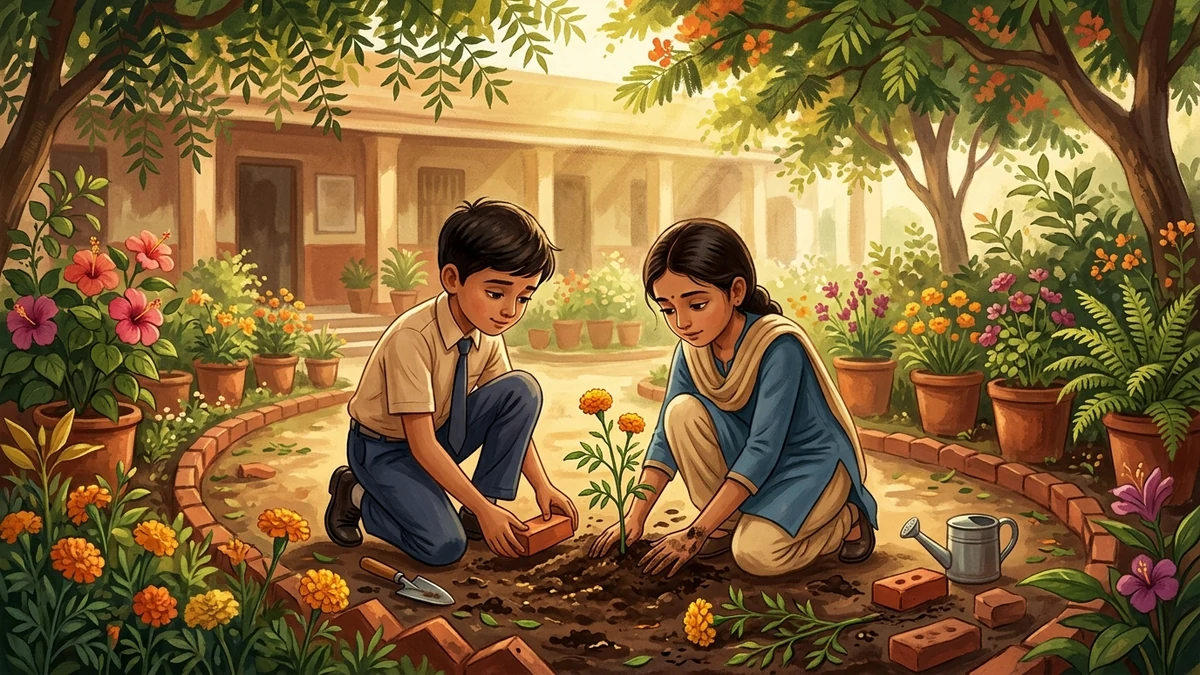
कक्षा ने मिलकर एक दूसरी सूची बनाई — उन छोटे-छोटे कामों की जो वे अभी से शुरू कर सकते थे। कागज़ के दोनों तरफ लिखना जहाँ हो सके। पुस्तकालय की किताबें समय पर लौटाना ताकि दूसरों को मिले। स्कूल के पेड़ों को पानी देने में मदद करना। किसी नए बच्चे से दोस्ती करना जो अकेला हो। गलती होने पर माफी माँगना — न कि बहाना ढूँढना। यह सूची बहुत साधारण थी, पर असली थी।
The class made a second list together — small actions they could actually begin right now. Using both sides of paper where possible. Returning library books on time so others could have them. Helping to water the school trees. Making friends with a new child who seemed alone. Saying sorry when wrong — rather than making excuses. The list was very ordinary, but it was real.
इसके बाद हर बच्चे ने अपना पत्र फिर से लिखा — एक आशा और एक काम के साथ। मीना ने लिखा: "मुझे उम्मीद है कि हमारा पार्क हरा रहे। मैं स्कूल के पेड़ों को पानी देने में मदद करूँगी।" राज ने लिखा: "मुझे उम्मीद है कि तुम कभी अकेला महसूस नहीं करोगे। मैं हर हफ्ते एक नए दोस्त को नमस्ते कहूँगा।" आलिया ने लिखा: "मुझे उम्मीद है कि तुम्हें किताबें मिलें — मैं पुस्तकालय की किताबें समय पर लौटाऊँगी।" हर पत्र अलग था — पर हर एक में एक काम था जो उस बच्चे के लिए था जिसे वे कभी नहीं जानेंगे।
After that, each child rewrote their letter — with one hope and one action. Meena wrote: "I hope our park stays green. I will help water the school trees." Raj wrote: "I hope you never feel alone. I will say hello to one new person every week." Aaliya wrote: "I hope you find books to read — I will return library books on time." Each letter was different — but each one had an action for a child they would never know.
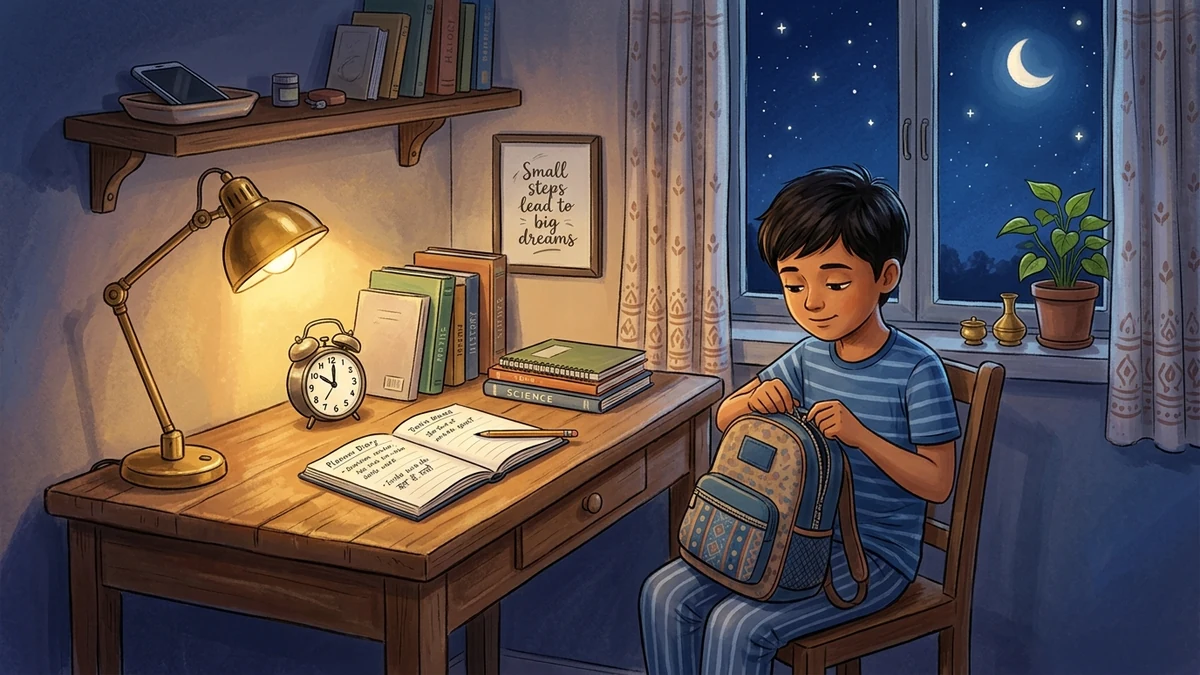
पत्रों को एक विशेष कक्षा-पेटी में रखा गया जिसे बंद करके कमरे के एक कोने में टाँग दिया गया। उस पर लिखा था: "बीस साल बाद खोलना।" श्री थॉमस ने कहा, "तुम्हारे यह पत्र उस बच्चे को नहीं मिलेंगे शायद — पर जो काम तुम अभी से शुरू करोगे, उसका असर ज़रूर मिलेगा।" बच्चों ने समझा — भविष्य कोई अलग जगह नहीं है। वह आज के छोटे-छोटे कामों से ही बनता है।
The letters were placed in a special class box, sealed and hung in a corner of the room. On it was written: "Open after twenty years." Mr. Thomas said, "These letters may not reach that child directly — but the actions you start today will certainly make a difference." The children understood — the future is not some separate place. It is built from the small actions of today.
वर्ष का आखिरी दिन जब आया, मीना ने स्कूल के पेड़ को पानी दिया — शायद पहली बार उसने ऐसा इसलिए किया क्योंकि उसने किसी ऐसे बच्चे के बारे में सोचा जो एक दिन उसी पेड़ की छाँव में बैठकर पढ़ेगा। राज ने एक नई बच्ची को अकेले बैठे देखा और उसके पास जाकर "नमस्ते" कहा। आलिया ने पुस्तकालय की तीन किताबें अपने समय से पहले लौटाईं। तीनों ने कुछ नहीं कहा एक-दूसरे को — पर तीनों ने उस दिन अपने पत्र की बात याद रखी।
On the last day of the year, Meena watered the school tree — perhaps for the first time because she was thinking of a child who would one day sit in that tree's shade and read. Raj saw a new girl sitting alone and walked over to say "hello." Aaliya returned three library books ahead of time. The three said nothing to each other — but all three had remembered what they had written in their letters that day.
📚 Moral Vocabulary & Key Terms
Enrich your language and character with these inspiring words from the story:
The things, habits, or world we leave behind for those who come after us
The understanding that the decisions we make today shape the world of tomorrow
Considering the impact of your actions not just today but across the years to come
🧠 Ethical Reflection & Quiz
What have you learned from this story? Choose the most honorable choice below: