

Kindness
🎯 Topic Pillar Hub 📚 15 Illustrated Stories

Kindness

Compassion toward all living creatures is the heartbeat of nobility. Simple acts of gentleness leave an immortal mark on the world.

✕ Clear
All Stories Friendship Discipline & Duty Courage Honesty Kindness Patience & Humility Digital Ethics Environment Civic Duty & Safety Wisdom Fairness & Inclusion Compassion
The Two Pots (The Cracked Pot)

The Two Pots (The Cracked Pot)

In an ancient river valley, a humble water-bearer faithfully carried water every day from the river to his master's hilltop manor. Balanced across his shoulders rested a sturdy wooden yoke holding two large clay pots. One pot was structurally perfect, delivering its full measure of cool water at the end of every long journey without losing a single drop. The other pot, however, possessed an old hairline crack along its side; by the time the carrier reached the estate, half of its water had leaked away along the dusty footpath. For two years, this routine continued. The flawless pot took immense pride in its accomplishments, while the cracked pot was crushed under bitter shame, believing itself an inadequate burden. One afternoon at the riverbank, the cracked pot wept and apologized to the water-bearer, begging to be replaced. Smiling with deep compassion, the carrier replied: 'Did you notice the vibrant wildflowers blooming along your side of the path?' The water-bearer revealed that, knowing of the flaw, he had scattered flower seeds exclusively along that edge. The leaking water had nurtured those seeds into a breathtaking corridor of blossoms that decorated the master's table every evening. The timeless parable illustrates that no creature is without purpose or value; even our perceived flaws and vulnerabilities can nurture unique beauty and grace in the world when held with love.
The Boy and the Bag of Nails

The Boy and the Bag of Nails

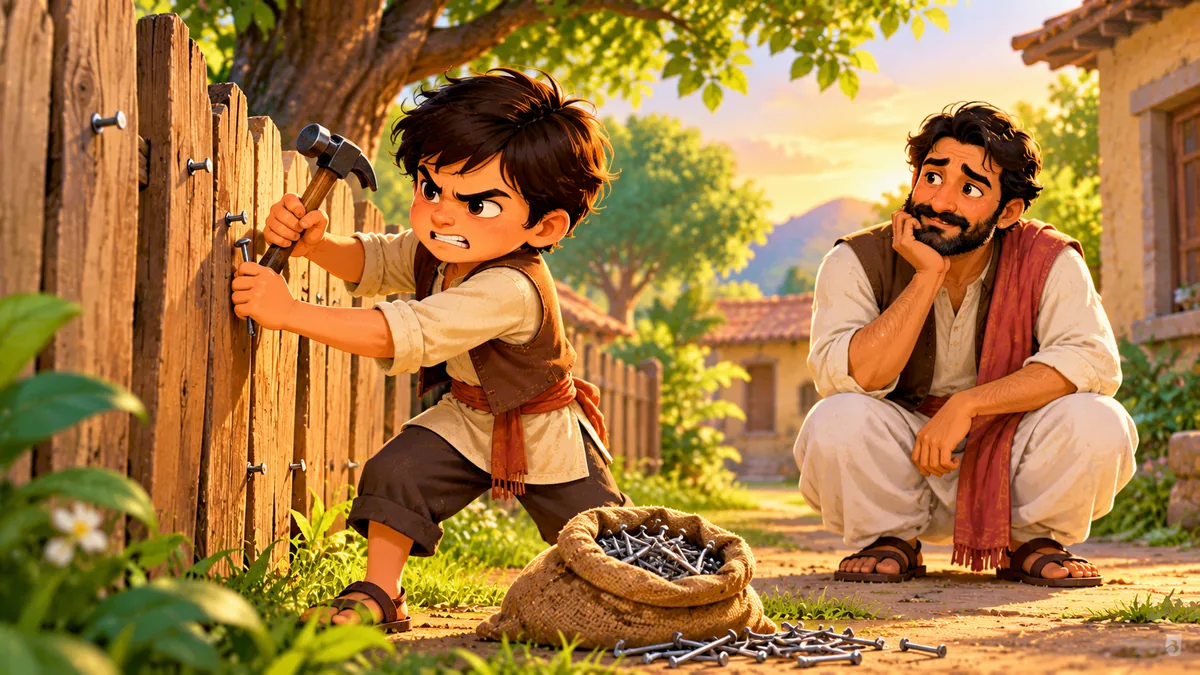
Ajay was an intelligent and capable young boy who suffered from an explosive, volatile temper. Whenever thwarted or contradicted, he erupted into blinding fury, hurling cruel, venomous insults at his parents, siblings, and classmates. His toxic outbursts alienated his companions and plunged his household into distress. Recognizing that lecturing was futile, his wise father devised a tangible object lesson. Handing Ajay a heavy canvas sack filled with iron nails and a carpenter's hammer, the father laid down a rule: 'Whenever you lose your temper, you must walk to the weathered timber fence at the end of the garden and hammer a nail into the wood.' On the very first day, Ajay drove thirty-seven nails into the fence. But the physical exertion of swinging the hammer forced him to pause; gradually, he discovered it was easier to master his temper than to pound iron into seasoned oak. Within weeks, the daily count dwindled until a day arrived when he did not hammer a single nail. The father then issued the second instruction: for every day Ajay maintained unbroken composure, he was permitted to pull out one nail. Months later, the boy triumphantly announced that every nail had been extracted. Leading Ajay to the enclosure, the father pointed to the wood: 'Look at the perforated surface, my son. The nails are gone, but the deep holes remain forever. The timber will never be smooth again. When you utter harsh words in anger, they leave scars upon human hearts identical to these wounds. You may apologize a thousand times, but the scar endures.' Ajay wept in deep realization, pledging lifelong control over his speech. The story warns that wrath inflicts permanent spiritual damage upon relationships that apologies cannot entirely erase.

The Elephant and the Rope

The Elephant and the Rope

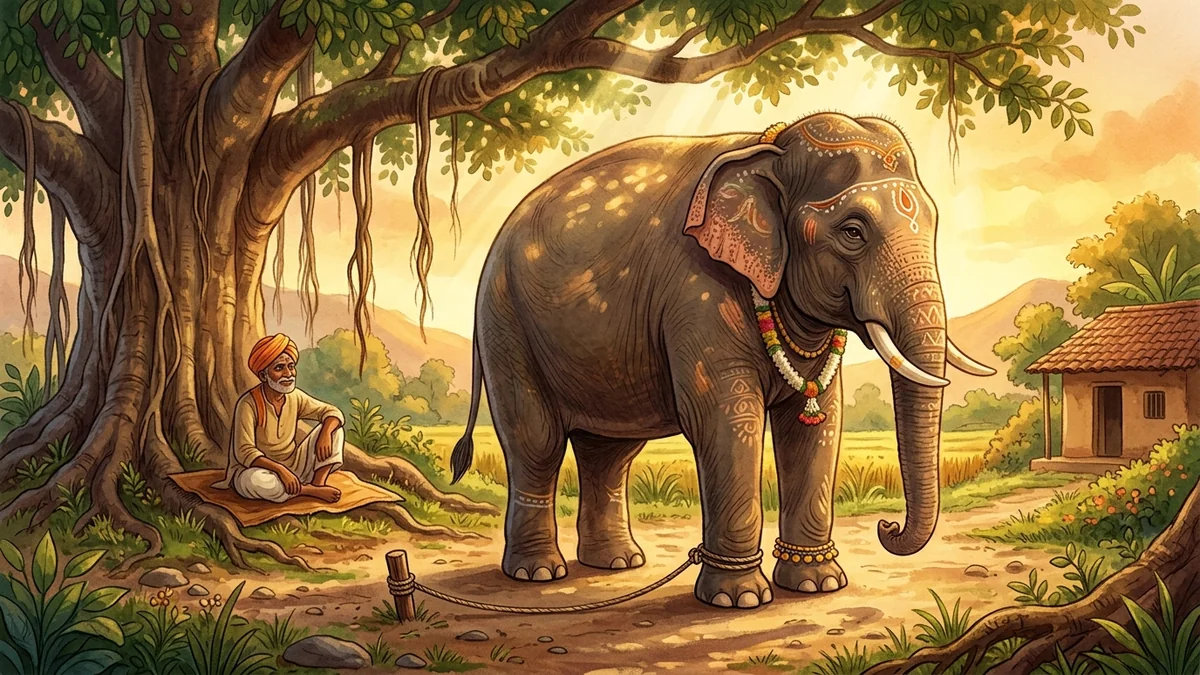
While passing through a sprawling elephant sanctuary in the southern woodlands, a thoughtful traveler observed an astonishing and paradoxical scene. Towering before him were magnificent bull elephants of colossal stature, creatures possessing the raw physical power to uproot ancient banyans and batter down stone fortresses. Yet these titanic beasts were neither confined within reinforced steel stockades nor bound by heavy iron chains. Instead, a single, modest hemp rope was tied around the front ankle of each giant, anchored to a small wooden stake driven into the turf. The elephants stood placidly, making not the slightest attempt to snap the flimsy tether or walk away. Baffled by this strange passivity, the traveler questioned the master trainer (mahout). The trainer smiled, revealing a profound psychological truth: 'When these majestic animals were newborn calves, we bound them with this exact size of rope. At that frail age, their immature muscles could not break the fibers. For weeks they pulled, strained, and thrashed, only to be held fast. Gradually, their developing minds accepted the conditioning as absolute reality: they came to believe that the rope was an unbreakable barrier. Today, though they weigh several tons and possess invincible strength, they never attempt to snap the cord, because their belief remains bound to their childhood conditioning.' The profound parable reveals that the most suffocating prisons on earth are not forged of iron bars, but constructed within human minds by past failures, learned helplessness, and self-limiting beliefs; the moment an individual questions those false mental boundaries, the illusion of impossibility shatters instantly.

The Starfish Thrower

The Starfish Thrower

Following a violent midnight storm that lashed the coastal headlands, the morning tide receded, stranding hundreds of thousands of living starfish upon the vast, exposed sandbars. As the morning sun climbed into the sky, the blistering heat dried the damp sands, and the helpless marine creatures faced certain death from dehydration before the evening tide. A cynical, scholarly writer strolling along the shoreline spotted a young boy in the distance running back and forth, bending down, scooping objects from the sand, and flinging them with all his youthful might back into the rolling surf. Approaching the child, the intellectual chuckled with worldly condescension: 'Foolish boy, why exhaust yourself in this hopeless enterprise? This coastline stretches for miles, and millions of starfish lie dying under the sun. You cannot possibly save even a fraction of them. What meaningful difference can your tiny efforts make to such an immense catastrophe?' Without a word of argument, the boy knelt, gently lifted another writhing starfish in his palm, and hurled it far beyond the breaking waves into the life-giving deep. Watching it sink safely into the blue waters, the boy looked up into the old man’s cynical eyes and smiled softly: 'It made a difference to that one!' The child’s unblemished moral clarity shattered the scholar's cynical paralysis. Kneeling in the sand, the philosopher began tossing starfish beside the boy. The immortal parable teaches that we must never allow the vastness of the world's suffering to paralyze individual compassion; saving a single life may not alter the entire universe, but for that single soul, the universe is transformed forever.

The Stone in the Middle of the Road

The Stone in the Middle of the Road

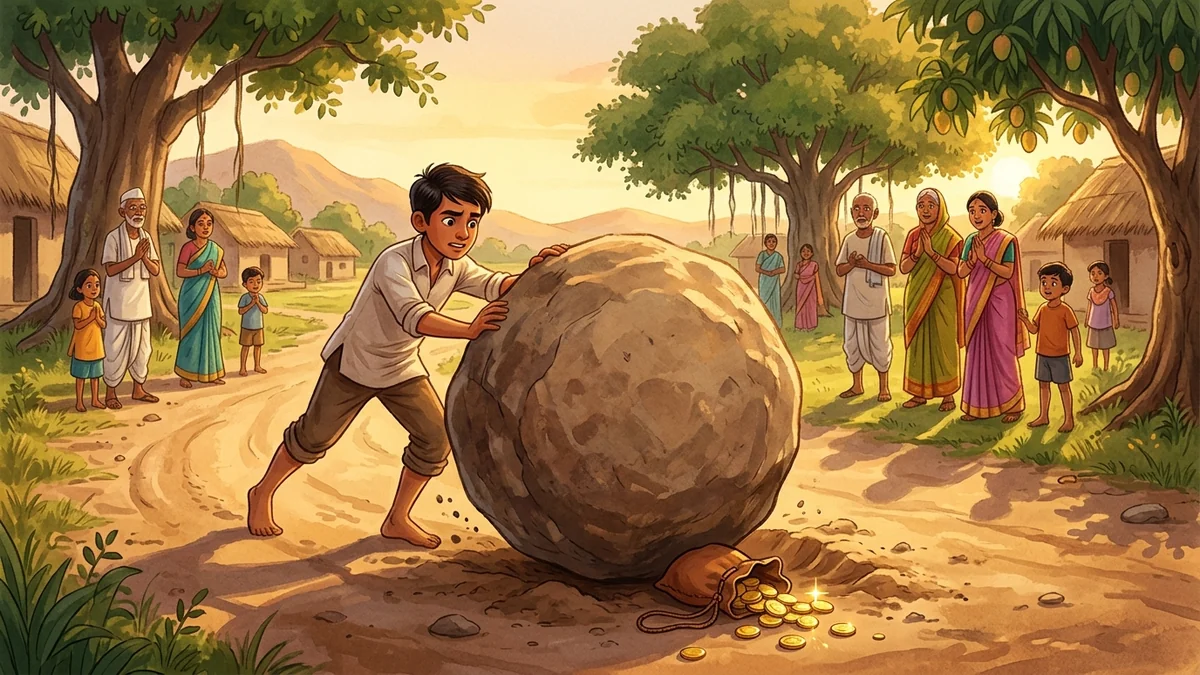
In an ancient kingdom, a benevolent and visionary king sought to evaluate the civic consciousness, initiative, and communal responsibility of his subjects. In the dead of night, the monarch had a massive, heavy boulder placed directly in the center of the kingdom's busiest commercial highway. Concealing himself behind nearby foliage, the king observed the reactions of passing travelers. Throughout the day, wealthy merchants, courtiers, scholars, and peasants skirted around the obstacle. Many stumbled, vehemently cursing the crown for failing to maintain clean roads, yet not a single individual made an effort to move the hazard. At twilight, an impoverished peasant returning from the fields bearing a heavy basket of vegetables approached the stone. Despite exhaustion and aching limbs, he thought of travelers who might be maimed in the dark. Setting down his load, he strained with all his might against the stone. Drenched in sweat, he finally rolled the boulder into the roadside ditch. Returning to retrieve his basket, his eyes fell upon a silk purse resting in the hollow where the stone had lain, containing one hundred gold coins and a royal parchment: 'This gold is the king's bounty for the citizen who removes obstacles from the public path instead of merely complaining.' The story proves that every obstacle in life conceals an opportunity for proactive civic virtue and noble triumph.

The Two Wolves Within

The Two Wolves Within

High amidst the pine-forested plateaus, an ancient, venerable grandfather sat beside a crackling campfire with his beloved grandson Kabir beneath a canopy of stars. Kabir was burning with volcanic anger, spite, and bitter resentment over a cruel betrayal by a trusted school friend, obsessively plotting revenge. Observing the toxic torment consuming the young heart, the grandfather shared a timeless psychological parable of human nature: 'My beloved child, an unceasing, epic war rages every hour within the breast of every human soul. It is a fierce battle between two mighty wolves. The first wolf is of the abyss—he is dark, ferocious, and venomous; he represents fury, envy, bitter resentment, arrogance, self-pity, greed, deceit, and ruthless ego. The second wolf is radiant, noble, and serene—he is light, kindness, empathy, boundless compassion, forgiveness, unvarnished truth, humility, and peaceful joy. These two adversaries fight continuously for dominion over our destiny.' Kabir sat in stunned silence, staring deep into the amber flames. After several moments of intense contemplation, he looked up into his grandfather's weathered face and asked with hushed urgency: 'Grandfather... which wolf wins the battle?' A gentle, profound smile touched the old man’s eyes: 'The one you feed.' The timeless parable reveals that human consciousness is a cultivated garden; whether virtue or malice governs our life depends entirely upon which instincts we nurture through daily choices, thoughts, and actions.

The Echo in the Mountains

The Echo in the Mountains

A young boy named Aarav was hiking through a majestic Himalayan valley with his father. While navigating a rocky ridge, Aarav stumbled against a jagged stone, badly scraping his knee. In an instinctive spasm of pain and frustration, the child screamed across the canyon: 'I hate you!' Instantly, from the towering granite cliffs opposite the chasm, the words reverberated with thunderous clarity: 'I hate you... hate you... hate you!' Shivering in confusion, the boy assumed an unseen enemy was mocking his pain. Bristling with indignation, he shouted back: 'Coward! Show yourself! Who are you?' The mountains faithfully returned the aggressive cry: 'Coward! Show yourself! Who are you?' Terrified by the menacing voices, Aarav buried his face in his father’s tunic, weeping that a hidden demon was threatening his life. The father smiled gently, patted his son’s shoulder, and said: 'Pay close attention, my child.' Facing the majestic canyon, the father projected his deep, melodious voice: 'You are wonderful! I love you with all my heart!' Within seconds, the peaks resonated with an exquisite, harmonious echo: 'You are wonderful... love you... love you!' Astonished, Aarav looked up. The father imparted the immortal law of existence: 'People call this acoustic phenomenon an echo, but in truth, it is the living mirror of life itself. The universe returns to you precisely what you project into it. If you broadcast hatred, suspicion, and anger, life reflects hostility from every quarter; but if you radiate love, kindness, and reverence, the entire cosmos showers blessings upon your path.' The parable demonstrates that our world is a direct reflection of the vibrations of our own heart.

The Pencil Maker's Advice

The Pencil Maker's Advice

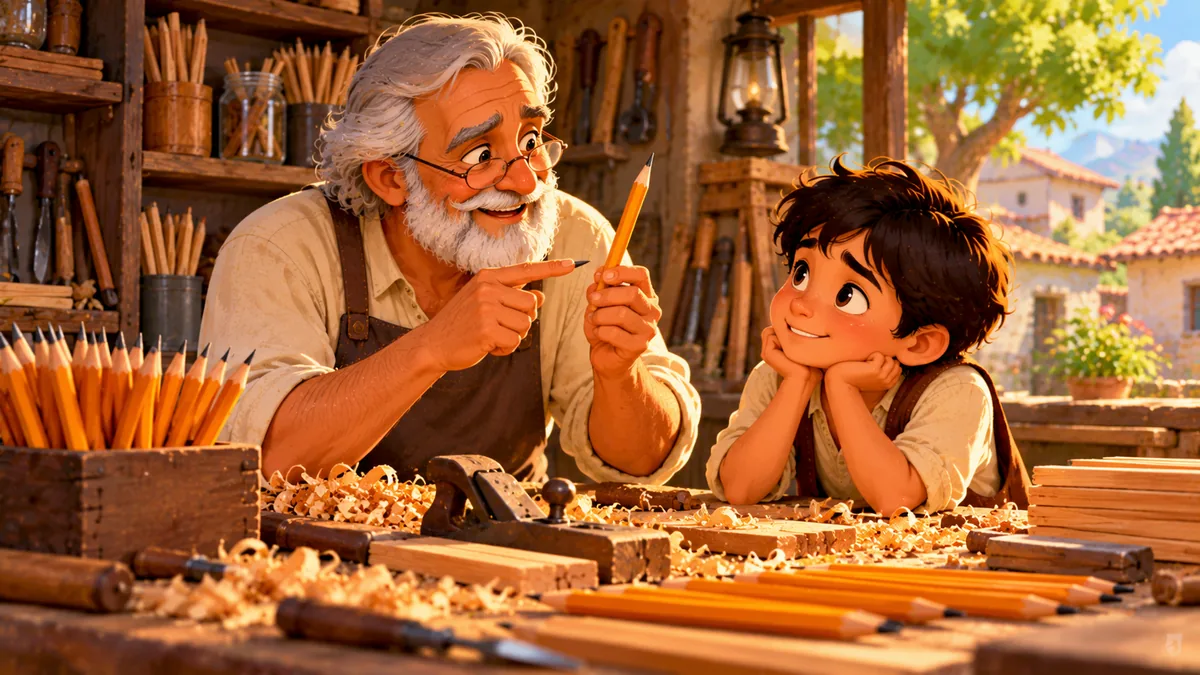
In an idyllic alpine workshop, an elderly master pencil-maker crafted exquisite cedar-and-graphite pencils with meticulous artistry. Before packing a newly finished, polished golden pencil into its presentation box for shipment into the bustling world, the artisan set the delicate instrument upon his workbench and imparted five fundamental tenets for a meaningful existence. The craftsman spoke: 'Little pencil, if you aspire to realize your highest destiny in the wide world, inscribe these five principles upon your soul. First: you have the potential to compose magnificent poetry and map architectural wonders, but only if you allow yourself to be held in the guiding hand of a master. Second: from time to time, you will endure the painful scraping of a razor-sharp sharpener; the process will feel agonizing, but it is indispensable if you wish to remain sharp, precise, and useful. Third: you are equipped with an eraser upon your crown; never allow pride to prevent you from correcting your errors, for an acknowledged mistake is the birthplace of wisdom. Fourth: no matter how lustrous your golden lacquer or polished cedar casing appears, your true essence lies entirely in what is inside you—the quality of your core graphite. And fifth: upon every surface you traverse, leave an indelible, noble mark; never cease writing, regardless of the hardness of the paper.' The timeless parable illustrates that human life resembles a pencil: when we surrender our ego to higher ideals, welcome the sharpening of adversity, rectify our mistakes, and preserve the integrity of our inner spirit, our journey becomes an immortal masterpiece.

The Half-Full Glass

The Half-Full Glass

At the renowned university of Takshashila, Master Vishwanatha entered the lecture hall holding a transparent crystal tumbler filled precisely halfway with pristine water. Placing the tumbler upon the central dais, the preceptor inquired of the gathered scholars what they observed. Predictably, the majority announced that they observed a glass half-empty, while a few optimists noted that it was half-full. Lifting the glass high in his outstretched hand, the master posed an unexpected query: 'What is the absolute weight of this glass?' Students shouted estimates ranging from a few ounces to half a pound. Smiling gently, Vishwanatha imparted a profound philosophical revelation: 'The physical weight of the glass is of no consequence; its true burden depends entirely upon how long I hold it. If I hold it for a minute, it feels light as a feather. If I hold it motionless for an hour, my shoulder will throb with agonizing pain. And if I hold it aloft for an entire day without setting it down, my arm will become paralyzed and I will collapse in convulsions. In each case, the physical weight of the water remains unchanged, yet the longer I cling to it, the heavier and more paralyzing it becomes.' The master revealed that our anxieties, resentments, and pessimistic habits are identical to this glass. Clinging perpetually to what is missing ('half-empty') and holding onto stress day and night paralyzes human potential. But when we train our vision to celebrate what is present ('half-full') with gratitude and master the art of putting down our burdens, the soul remains eternally unburdened and vibrant. The story teaches that happiness is not determined by external circumstances, but by our perceptual perspective and our wisdom to let go of anxiety.

King Shibi and the Dove

King Shibi and the Dove

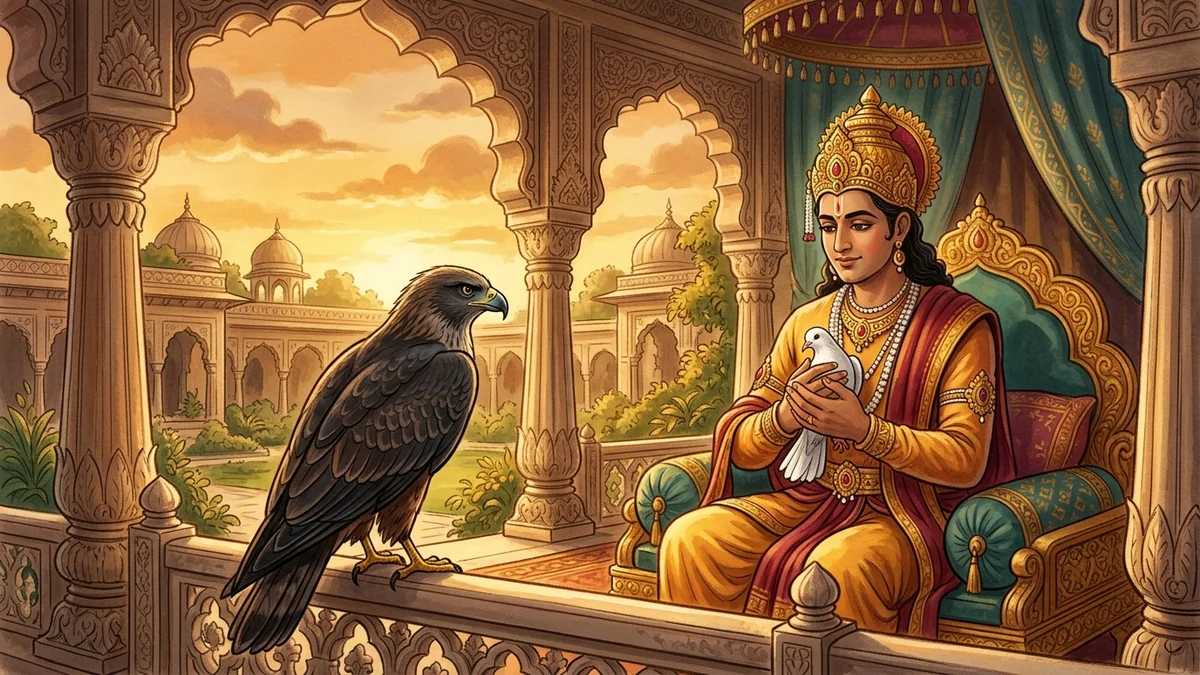
King Shibi of the ancient kingdom of Ushinara was celebrated across the celestial realms for his boundless compassion, righteousness, and absolute protection of those seeking refuge. To test the depth of his virtue, King Indra assumed the form of a famished, predatory falcon, while Agni, the Fire God, took the form of a trembling white dove. Pursued by the raptor, the terrified dove flew into the royal court, collapsing into King Shibi’s lap and imploring sanctuary. The King pledged absolute protection. Immediately, the falcon alighted before the throne, presenting a formidable legal argument: the dove was his natural, God-given prey; depriving a predator of food would cause him to starve, rendering the King guilty of killing the falcon. Placed in an acute moral dilemma, Shibi resolved to preserve the dove's life without starving the falcon: he offered an equivalent weight of his own flesh carved from his living limbs. A balance was brought; the dove was placed upon one scale, while Shibi sliced flesh from his thighs and arms to place upon the other. Yet by divine mystery, no matter how much royal flesh was severed, the dove grew heavier. Finally, drenched in blood, King Shibi climbed bodily onto the scale, offering his entire life. Stunned by such transcendent self-sacrifice, Indra and Agni revealed their radiant divine forms, healing the King's wounds and showering him with immortal glory. The legend demonstrates that honoring sanctuary (Sharanagata-Raksha) and protecting the defenseless—even at the cost of one's own life—is the highest pinnacle of human nobility.

Stone Soup

Stone Soup

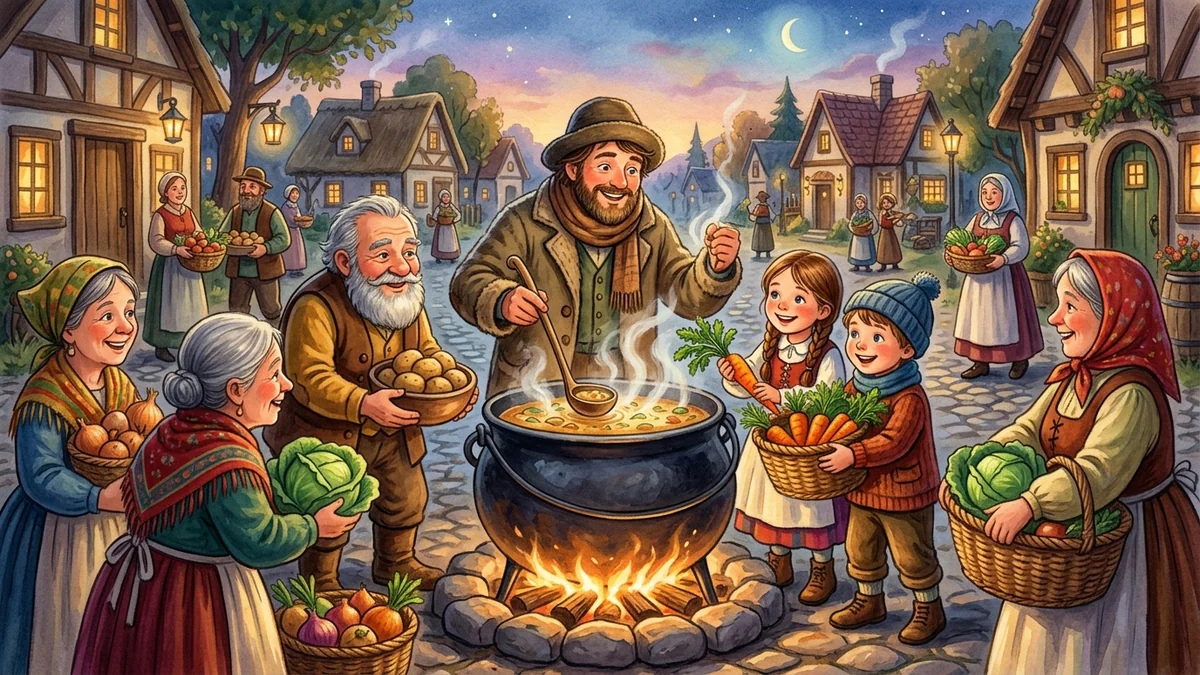
In the wake of war and crop failure, an exhausted, hungry wandering mendicant walked into a remote mountain village. Paralyzed by fear, suspicion, and scarcity, the villagers had locked their heavy oak gates and hoarded their remaining grain beneath floorboards, refusing to share a single crust of bread with the stranger. Rather than complaining or pleading, the wanderer smiled and set up a large iron kettle in the village square, filled it with well water, and lit a crackling campfire. Reaching into his knapsack, he drew forth a smooth, oval river stone and lowered it ceremoniously into the boiling water, stirring it with a wooden ladle. Overcome by curiosity, villagers crept to their windows. The traveler announced that he was preparing the legendary 'Stone Soup'—a dish of royal delicacy. Tasting a spoonful, he mused aloud that while the soup was exquisite, a few carrots and cabbage leaves would make it fit for an emperor's banquet. Enticed by the aroma and curiosity, a farmer ran to his pantry and brought vegetables. Next, onions, potatoes, barley, salt, and butter were contributed by other neighbors who were drawn out of their isolation. Within hours, the communal kettle overflowed with a rich, nourishing, savory feast that fed the entire village to their hearts' content. The villagers marvelled at the 'magic stone', but the true miracle was the alchemy of collective cooperation and generous sharing that transformed a famine into a celebration. The timeless fable proves that when individuals release hoarding and contribute their small portions to the shared common good, poverty dissolves into universal abundance.

The Empty Seat at Lunch

The Empty Seat at Lunch

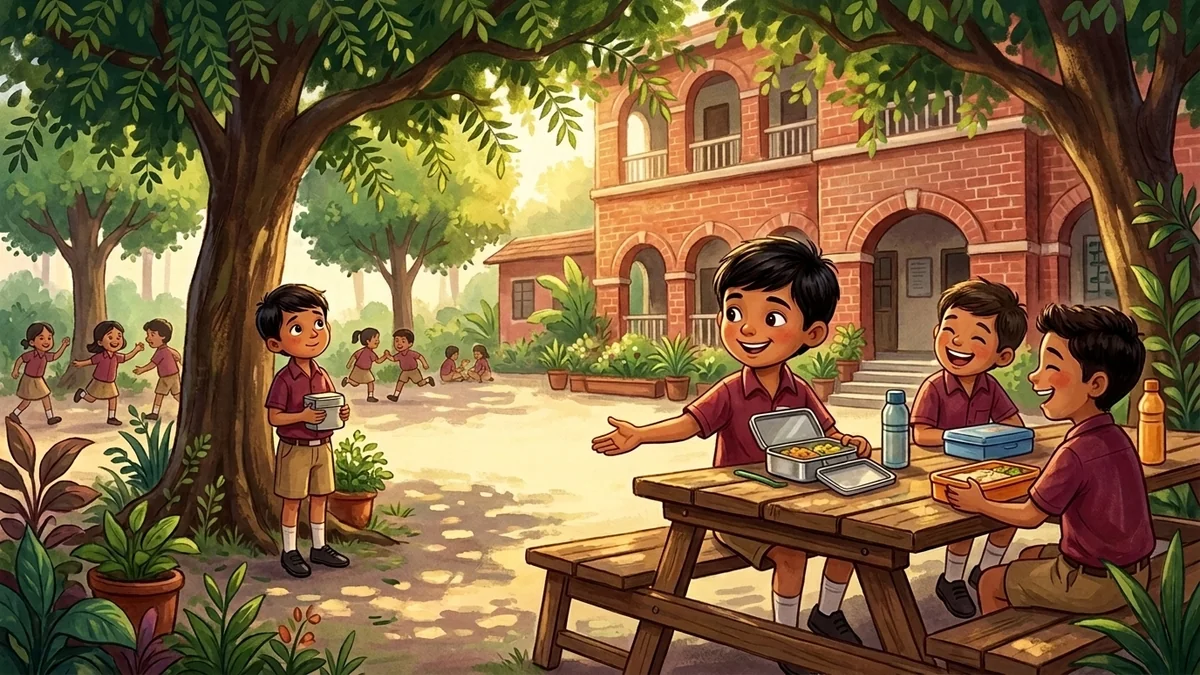
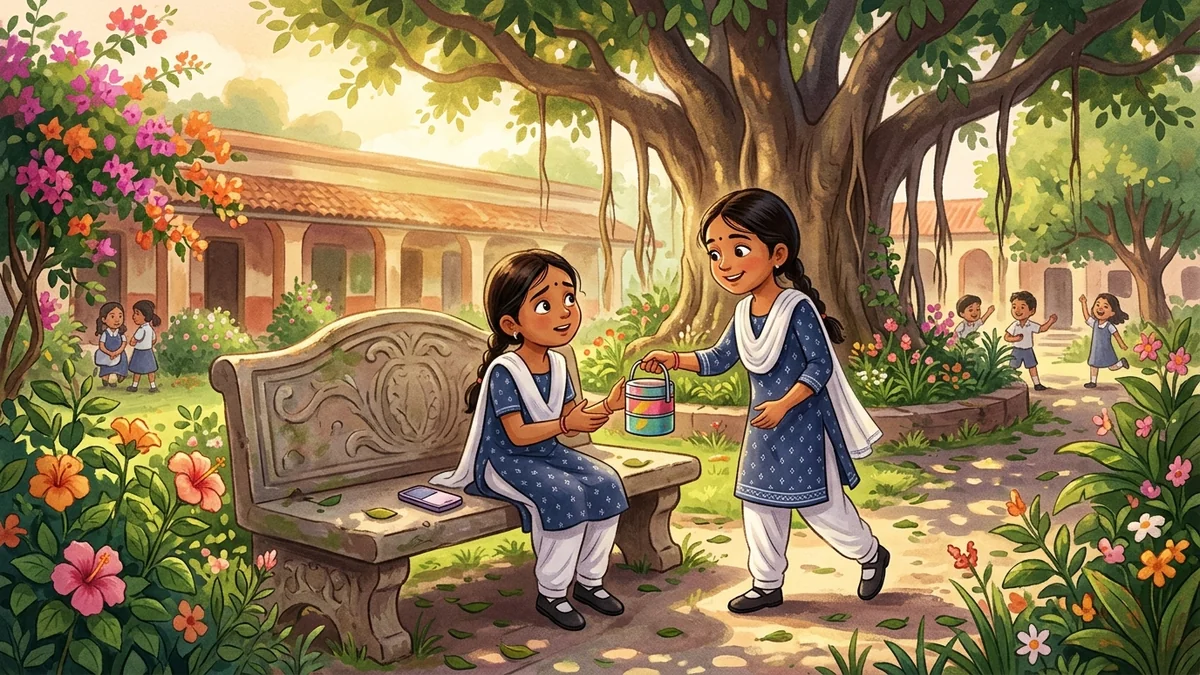
At Arya Public School, eighth-grader Riya was the charismatic leader of an exclusive, popular social circle of four girls. A rigid, unwritten code governed their group: during lunch recess, they occupied the prime circular table in the school cafeteria, fiercely guarding their perimeter against any outsider. In the middle of the winter term, a shy, introverted boy named Dev transferred to the class. Coming from an impoverished rural background, wearing faded hand-me-down uniforms, and speaking with a mild stammer, Dev felt utterly alienated in the elite city academy. While the cafeteria buzzed with laughter, camaraderie, and sharing, Dev sat entirely isolated in a damp corner behind the recycling bins, eating dry flatbread with his face turned toward the wall. Thoughtless bullies frequently targeted his solitude with cruel snickers. One afternoon, Riya observed Dev weeping silently beside the water fountain after an unkind jibe about his patched sneakers. The sight pierced through Riya’s superficial social bubble, awakening a profound moral conscience: 'We boast of our popularity and abundance, yet permit a brother to drown in loneliness before our very eyes.' The following noon, as her clique took their customary seats, Riya deliberately pulled out the prominent fifth chair at the center of their table. Overcoming the initial snobbish resistance of her friends, Riya strode across the crowded cafeteria directly to the shadowed corner where Dev sat alone. Extending her hand with warm sincerity, she smiled: 'Hi, Dev! We have an empty seat at our table today; would you join us for lunch?' The cafeteria fell into stunned silence. Tears of disbelieving relief welled in Dev’s eyes as he walked to the sunlight. Riya shared her meal, included him in discussions, and dissolved the barriers of social segregation across the entire grade. The story demonstrates that looking beyond exclusive social cliques to invite the lonely and vulnerable into our circle is the highest hallmark of authentic empathy and moral nobility.

The Friend Left Out of the Group Chat

The Friend Left Out of the Group Chat

Since early childhood, five boys—Rohan, Kabir, Sahil, Varun, and Sameer—shared an inseparable brotherhood, unified by their primary group chat titled 'The Five Stars.' However, entering ninth grade, Sameer’s family was plunged into severe financial distress following his father's medical bankruptcy. Sameer could not afford designer apparel, expensive weekend café brunches, or gaming consoles. Viewing his frugal simplicity as an embarrassing blemish on their trendy social image, the other four secretly spawned a secondary, exclusive WhatsApp group titled 'The Core Four.' Inside this covert digital circle, they coordinated cinema outings, weekend parties, and private inside jokes, while leaving their main group dormant. On Monday mornings, the four huddled together laughing over shared weekend memories, while Sameer sat beside them isolated, bewildered, and heartbroken by the sudden wall of emotional frost. The agonizing betrayal was exposed when Varun accidentally posted a screenshot into the main chat containing a cruel meme: 'Don't invite Sameer, the pauper will ruin our vibe!' The visceral shock of deliberate digital ostracism crushed Sameer’s spirit; weeping in profound humiliation, he fled the campus and fell into dark reclusion. That midnight, Rohan’s conscience mutinied against his shallow vanity: 'We fancied ourselves gentlemen, yet we weaponized digital exclusion to lynch our brother's self-respect!' Confronting the others, Rohan dissolved the toxic splinter group. Marching to Sameer’s modest home, the four boys fell to their knees before Sameer and his parents, begging forgiveness through bitter tears of repentance. They pledged that true brotherhood is measured by the loyalty of souls, not the currency of wallets or exclusive digital channels. The story proves that excluding someone from a digital circle is a silent psychological dagger; true empathy leaves no brother behind.

The Puppy at the Gate

The Puppy at the Gate

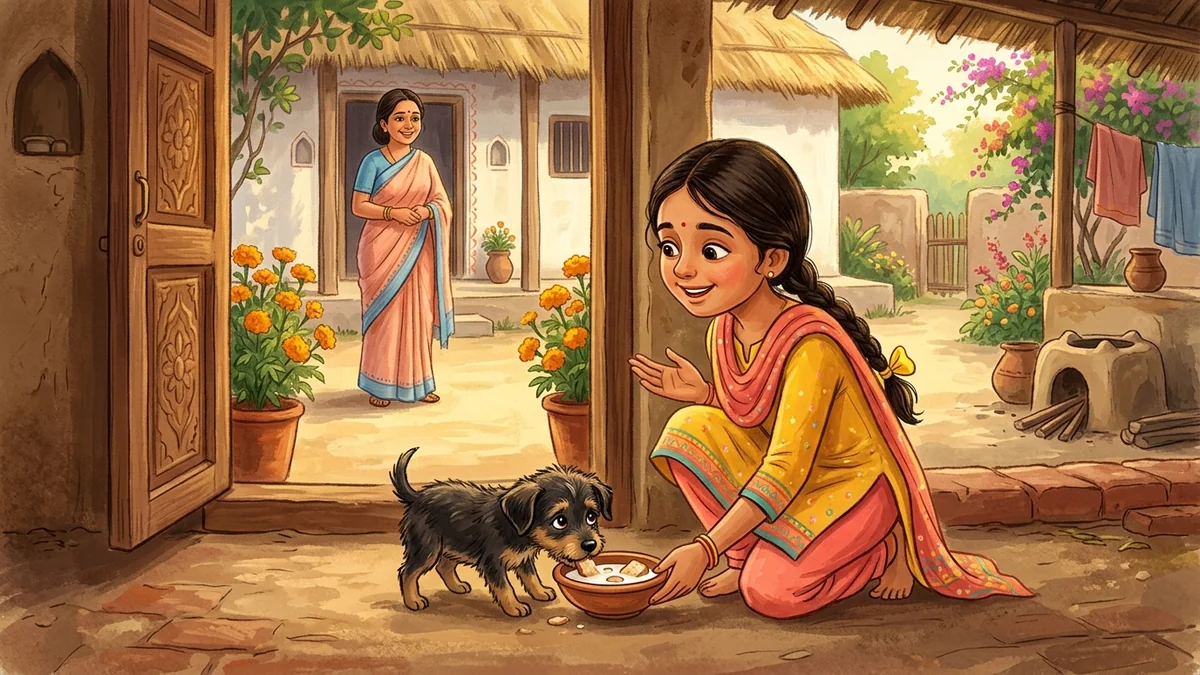
On a catastrophic mid-winter night in Shimla, torrential sleet and freezing blizzards paralyzed the mountain city. Beneath the wrought-iron security gate of tenth-grader Karan’s heated estate, a starving, abandoned stray puppy sought shelter, shivering violently against the freezing stone. The pup’s hind leg was badly lacerated from an automobile collision, leaving a crimson trail in the snow. Karan’s older brother, Rohan—obsessed with pristine aesthetics and pedigree pets—snarled at the 'filthy mongrel,' violently kicking the whimpering creature into the freezing mud and barring the gate. Sitting inside his heated bedroom beneath plush quilts, Karan heard the agonizing, high-pitched cries of the dying animal piercing the storm. His conscience revolted against the inhuman cruelty: 'To leave this defenseless life to freeze to death while I bask in luxury is an unforgivable betrayal of my humanity!' Defying his brother's rage, Karan slipped into the midnight blizzard with a flashlight. Finding the pup unconscious in a freezing puddle, he cradled the muddy creature against his chest, swaddled it in a woolen fleece, and smuggled it into the heated tool shed. Through the dawn, Karan disinfected the wound, dressed the fractured limb, and administered warm milk. When Rohan attempted to throw the dog into the snow the following morning, their grandfather intervened, invoking the climactic chapter of the Mahabharata where King Yudhishthira refused entry to heaven unless accompanied by his loyal stray canine: 'The supreme measure of a civilization is how it treats the voiceless creatures who can offer zero transactional return!' The family adopted the pup, naming him 'Sheru.' Four months later, when an electrical short-circuit ignited an inferno that flooded the villa with toxic carbon monoxide at three a.m., Sheru’s frantic barking and desperate clawing awakened the family, saving all four lives from incineration! The story proves that compassion toward voiceless animals is the highest spiritual test of humanity; kindness rendered to the defenseless returns as a divine shield in the hour of darkest peril.

The Bus Seat and the Tired Passenger

The Bus Seat and the Tired Passenger

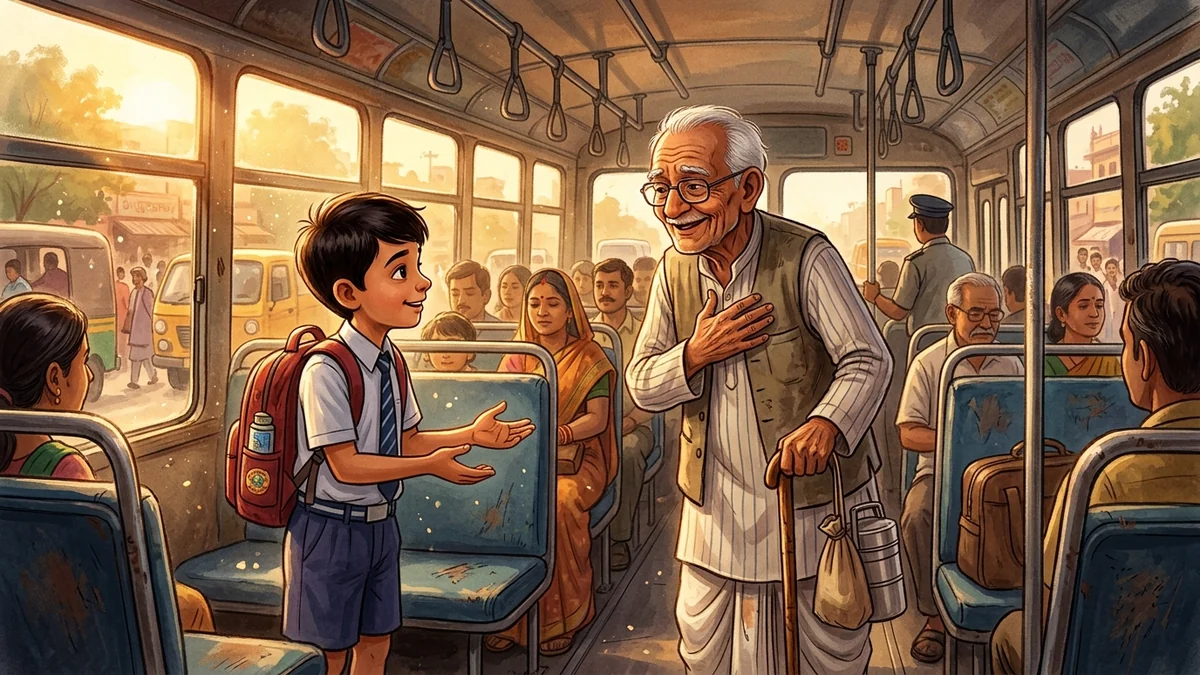
On a suffocatingly hot mid-May afternoon, an overcrowded, ramshackle state transport bus rattled violently along the potholed mountain highway. Eighteen-year-old college football athlete Siddharth, returning exhausted from a grueling inter-district tournament with bruised shins and aching muscles, occupied a coveted window seat with noise-canceling earphones plugged into his ears. Sinking into the faux-leather cushions, he closed his eyes, relishing the mountain breeze. At a dusty rural junction, an eighty-year-old impoverished farmer, Baba Sukhram, boarded the bus. Laden with a heavy gunny sack of harvested bitter gourds, his frail limbs trembled with advanced senility, and he gasped for breath in the dense, humid crush of the aisle. The bus swerved violently along mountain hairpins, repeatedly hurling the frail elder against the iron handrails. Multiple young passengers seated nearby deliberately lowered their visages, feigning deep sleep or burying their faces inside smartphone screens to evade moral responsibility. Siddharth felt the seductive whisper of adolescent selfishness: 'I paid full fare for this seat; my legs are throbbing; why should I endure two hours of standing in this heat?' But opening his eyes, he beheld the elder's calloused, shaking hands clinging desperately to a rusted stanchion, his knees buckling with every brake. Siddharth saw the sacred reflection of his own grandfather. His conscience revolted against the petty comfort. Unplugging his earphones, Siddharth rose with profound humility, gently supporting the elder’s trembling elbow: 'Baba, take this seat. My youth was given to me to stand so you may rest!' Tears cascaded down the patriarch’s weathered wrinkles as he laid his trembling palm upon Siddharth’s brow, conferring blessings of infinite love. Instantly, Siddharth's physical exhaustion evaporated into sublime spiritual ecstasy. Witnessing his noble example, a wave of chivalry rippled through the vehicle as other youths surrendered seats to expectant mothers. The story demonstrates that veneration for the aged and vulnerable is the living heart of human civilization; sacrificing personal comfort to uphold another’s dignity is the supreme nobility of the soul.